This is a follow-up to my previous piece on the collapse of Consumer Energy Solutions Ltd (CES), owned by Cairngorm Capital. I suspect CES will be followed by linked companies that have also been taking advantage of the UK government’s ECO4 scheme, due to end in March.
Even before the scheme ends MPs are calling for an investigation into the shambles into which it degenerated. Demanding the Serious Fraud Office be involved.
Cairngorm is a private equity firm using leveraged buyouts. In other words, borrowing money to buy companies, loading the debt onto those companies, bumping up their value, then getting out as quickly as possible with as much loot as they can.
A business practice many regard as unethical, even a form of asset stripping.
◊
QUICK RECAP
Here’s the group of companies we’ve looked at in earlier posts.

Cairngorm’s arrival was soon followed by loans or Security Accession Deeds with Alter Domus Trustees (UK) Ltd. Which is in turn owned by Alter Domus DCM (UK) Ltd.
A Security Accession Deed is a legal document used to add new parties—such as borrowers, guarantors, or lenders—to an existing security trust deed or loan agreement.
Following the ownership trail brings us – according to latest accounts filed with Companies House – to the Eighth Cinven Fund. Cinven is another private equity firm.
This fund raised $14.5bn. Here’s the Cinven website. Most of the money came from pension funds and sovereign wealth funds. For example, $280m from New York State Common Retirement Fund. A further $167m from California State Teachers’ Retirement System.
It all links up when we see that Alter Domus is listed as one of Cinven’s ‘portfolio companies’. Cinven has offices across Europe, but prefers to be based in, and subject to the easy-going regulations of, Luxembourg and Guernsey.
BlackRock may even be involved.
Alter Domus, the leading global provider of tech-enabled fund services for the private equity, real assets and private debt sectors today appointed Mark Wiseman as Chairman. Mr. Wiseman is the former Head of Active Equities and Chairman of BlackRock’s Alternatives Business, as well as President & CEO of Canada Pension Plan Investment Board.
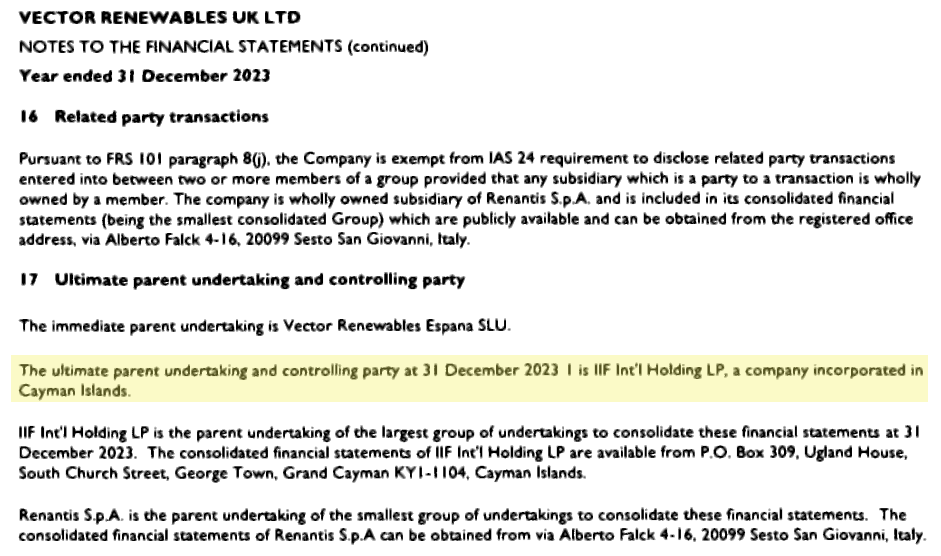
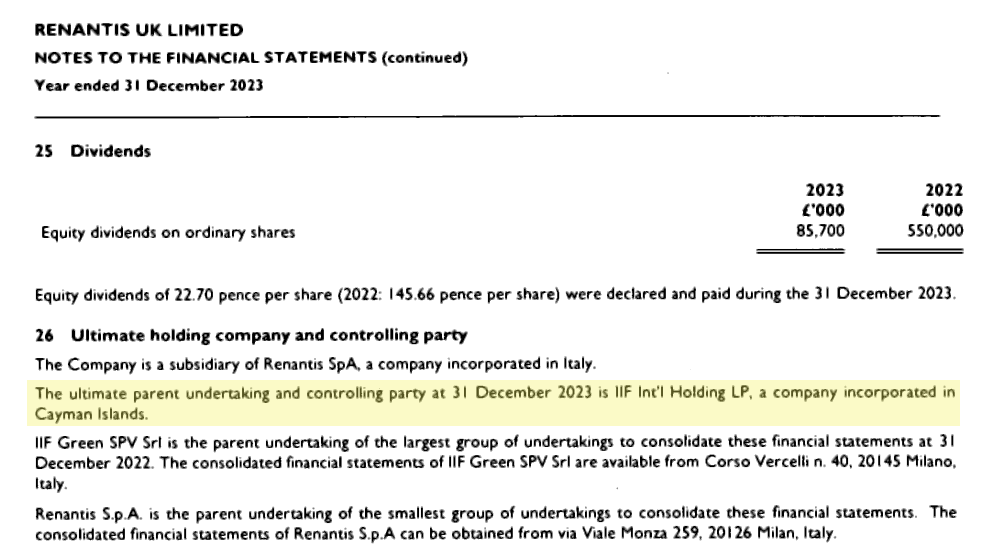
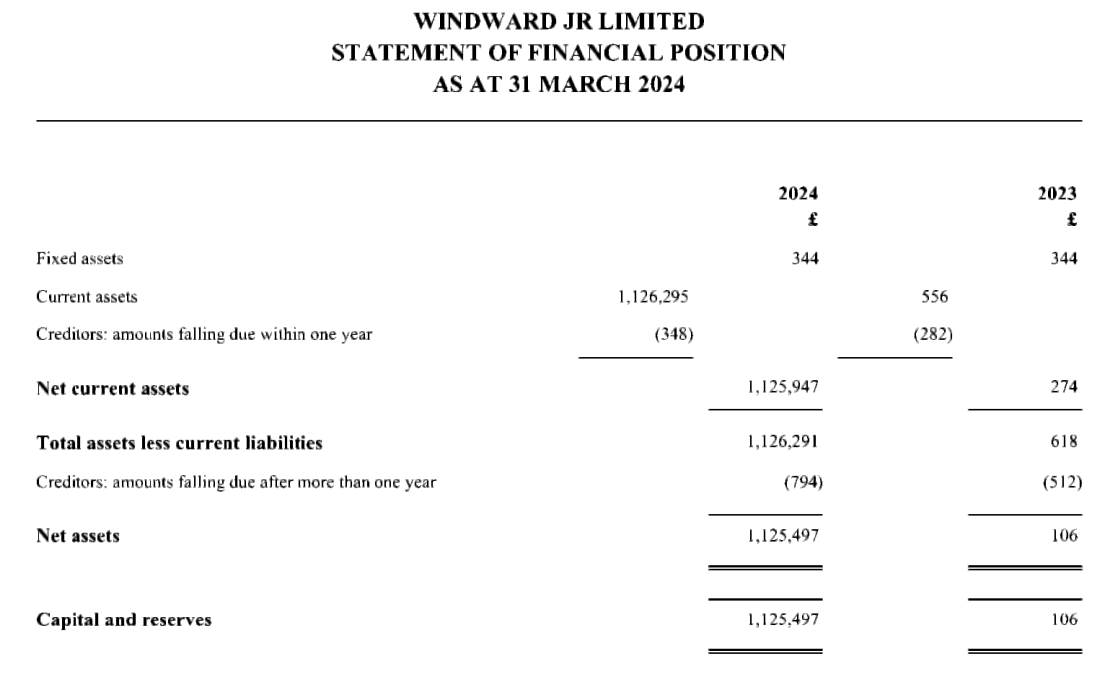
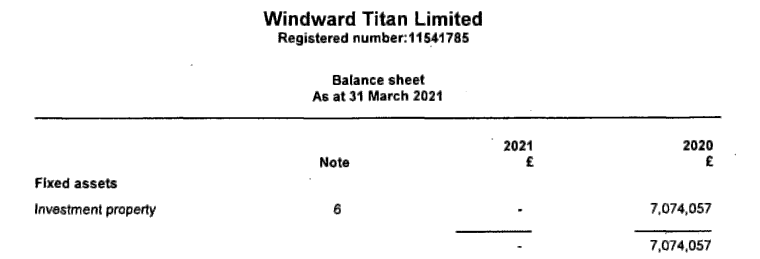
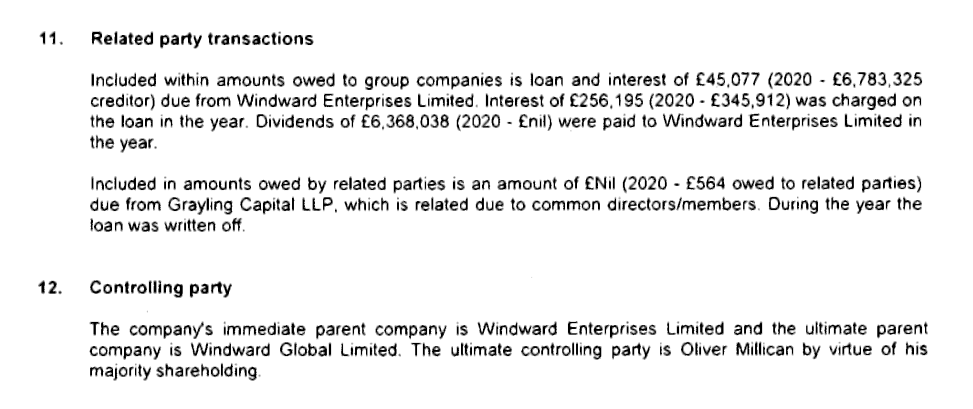
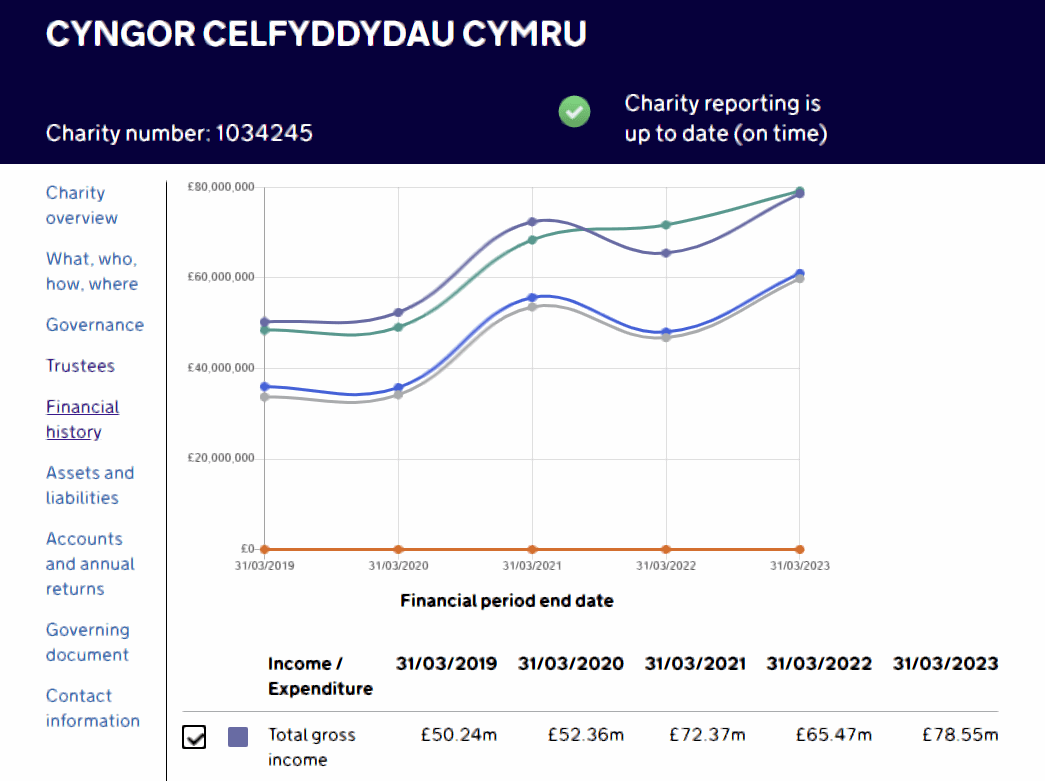
All that said, the latest accounts filed with Companies House by Alter Domus DCM (UK) Ltd tell us what you see below:

Cortland is based in Chicago. Which might explain Alter Domus US LLC. Also involved, and mentioned in this 2017 article, is Permira Funds. This latter entity is ultimately owned by Permira Holdings Ltd of Guernsey.
That’s enough links!
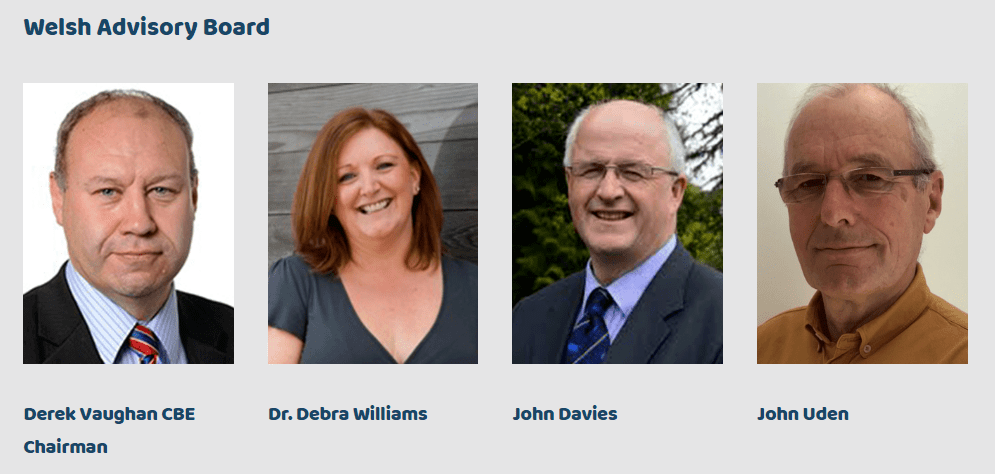
So . . . these Welsh companies pocket lots of money from the ECO4 scheme, get involved with Cairngorm Capital, and more money is pumped in from God knows where.
Which could mean that the pension fund to which Minnie Schwarz, retired teacher of Indian Falls, New York State, belongs, may have been used to do Mrs Jones’s cavity wall insulation in Llansamlet.
Cos it’s a small world.
◊
A LITANY OF ENGINEERED FAILURE
The first link in the chain after our local boys is obviously Cairngorm. And given that these Welsh companies are either already up Shit Creek or heading at full-speed in that direction, I decided to look at other companies with which Cairngorm has become involved.
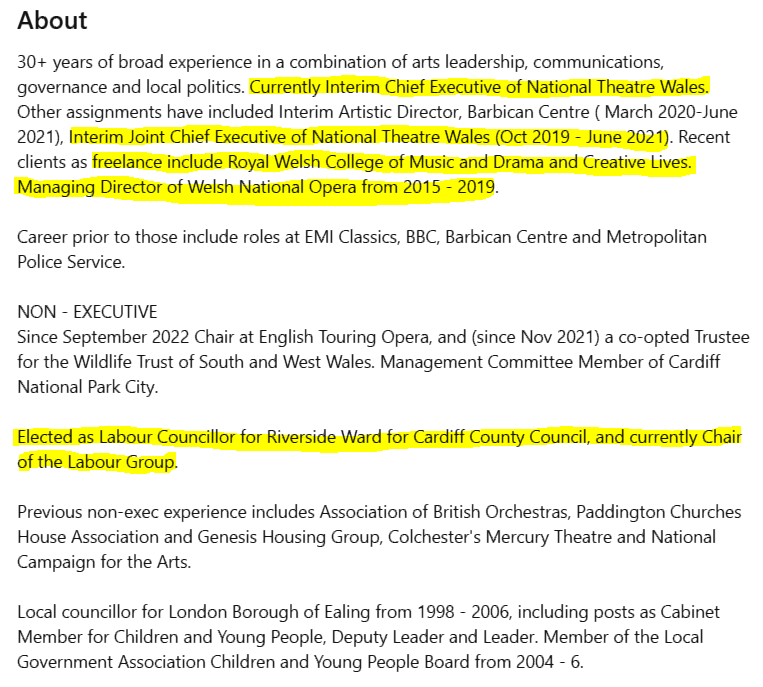
Mindful of what I found on the Cairngorm Linkedin page.

Going through the Cairngorm website I turned up this list. So, naturally, I checked out these companies.

First, Bromborough Paints. And it’s quite an interesting tale.
Let’s start with this report from October 2022, telling us that Bromborough Paints had got involved with Cairngorm in March 2021. Then, after takeover, it rebranded to Paintwell.
And there were loans taken out. With Cairngorm acting as security agent.
Bromborough Paints had been in business for 60 years. The last accounts before the involvement of Cairngorm show a gross profit of £5.9m (Net profit £1.06m) on a turnover of £16.9m. And total equity of £12.4m.
Finally, Paintwell went into administration and was taken over by Brewers Decorator Centres. It’s alleged there is £30m in unsecured creditor claims.
‘Unsecured creditors’ are often redundant employees, local suppliers, the little people, not institutional lenders.
∼
Next it’s Building Supplies Online Ltd. If it’s this company, then it was dissolved in September 2023. Though this article from June 2025 mentions CMO Group Ltd, also in Plymouth. CMO began life in June 2021 with a share issue of £50,000.
Against CMO there are two outstanding charges with Clydesdale Bank.
Not sure what’s going on here but, rather like some women I’ve known, it don’t look good from any angle.
∼
Moving on to E-Zec Medical. (CH entry.) Where, by a long and tortuous ownership route (maybe a dozen companies!) we arrive at Emil W. Henry Jr of 717 Fifth Avenue, Suite 12a, New York, New York, United States. He took control in February 2025.
So who is he? Well, I found this:
Mr. Henry is the CEO and Founder of Tiger Infrastructure Partners, a private equity firm focused on infrastructure investment opportunities. Prior to founding Tiger Infrastructure Partners, he was Global Head of the Lehman Brothers Private Equity Infrastructure businesses, where he oversaw global infrastructure investments
Here’s the website for Tiger Infrastructure Partners.
Along the way, while chasing the ultimate owner, I noticed loans from Glas Trust. A name that’s cropped up on this blog more than once. Control of Glas Trust probably rests with yet another private equity firm, Levine Leichtman.
The most recently filed accounts for EZEC do not paint a healthy picture.
∼
No 4 on the list is Grant & Stone Group. Which Cairngorm took over in November 2019. And things looked good, expansion followed.
Grant & Stone is now owned by Cairngorm Capital Partners III LP. I got that from the most recent accounts filed with Companies House, up to 31.12.2023. Companies House is still waiting for the latest accounts.
There are, predictably, two outstanding charges with Alter Domus Trustees (UK) Ltd.
I suspect Grant & Stone is another one about to bite the dust.
∼
Next up is Independent Builders Merchants Group Ltd. Here’s what Cairngorm has to say. Though it needs updating. Again, two outstanding charges with Alter Domus Trustees (UK) Ltd.
At the time of writing, the accounts are overdue with Companies House.
∼
Now we move on to MRO+ Solutions Group Ltd. This began life in December 2017 as Cairngorm Acquisitions 5 Bidco Ltd. It’s now owned by two-year-old Zinc Group Topco Ltd. Though ownership ultimately rests with Martin Green.
MRO is now losing money, and there are of course outstanding loans.
∼
Millbrook Healthcare is the next stop. Bought by Cairngorm in 2019. At the top of the Millbrook ownership pile is Millbrook Healthcare Holdings Ltd, owned by Cairngorm Capital Partners LLP.
To my untrained eye, this is not a company in good financial health.
∼
Fasten your seatbelts as we look at National Timber Group. This report from just last November might explain where we’re going. However, it seems there was a very recent ‘rescue’ by a Welsh company.
But don’t get carried away, because top of the ownership pile here seems to be National Timber Group Topco Ltd. Owned by Cairngorm Capital Partners II LP. With accounts overdue with Companies House. The most recent accounts filed (y/e 31.12.2023) show turnover dropping and, after returning a small profit in 2022, a whopping loss of £22,738,3045 in 2023!
∼
On now to Sentry Doors. Sentry Doors Holdings Ltd was Dissolved in July last year. Though other companies in the group, such as Sentry Fire Safety Group Ltd, seem to retain the semblance of life. Though I’m not convinced.
Not clear which is the top company, but I am sure that everything is ultimately owned by Cairngorm Capital Partners II LP.
∼
The next entry is Verso Wealth Management. Things seem to be chugging along quite nicely. Though I’d watch for the two outstanding charges with Glas Trust.
∼
The penultimate case study is Whyte Bikes. Here’s the website.
This company was owned by Cairngorm until very recently, then sold to Irish company Causeway Capital. This entry below, listed under ‘Post Balance Sheet Events’ on the most recent accounts suggests the association with Cairngorm was not to Whyte’s advantage.

There are four outstanding charges, two with Cairngorm. So don’t build your hopes up.
∼
Finally, a comment to my blog directed me to this Linkedin post. It’s worth reading. As are some of the comments. Not least because it gives us yet another company with which Cairngorm Capital has been involved. So let’s check it out.
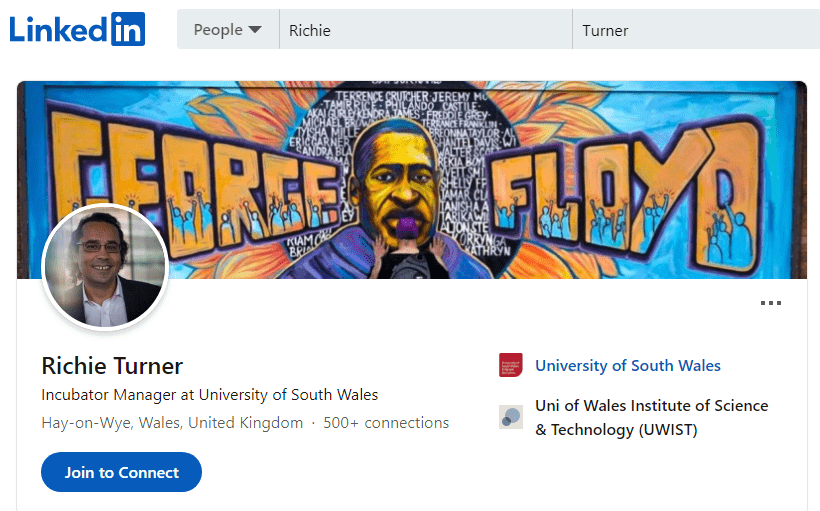
The company is Customade Group Ltd. Dissolved at the end of 2019. I suggest the name to focus on among the directors is Neil Andrew McGill. Here’s his Linkedin page. And here he is getting a special mention from Cairngorm in December 2018.
McGill is now Group CFO at Verso Wealth, which we looked at just now.
Note the four outstanding charges. Two with Cairngorm.
∼
So there you have it. The companies Cairngorm gets involved with are rarely unalloyed successes. In fact, there may not be one success among them.
There’s more chance of finding someone in the WRU hierarchy who understands rugby, and knows something about Wales, than there is of finding a Cairngorm success story.
But then, it all depends how you gauge ‘success’. Somebody, somewhere, is making a packet, but it won’t be the workers at the companies getting shafted by Cairngorm. Nor the small local suppliers left with unpaid bills.
◊
ASSET MANAGEMENT & PRIVATE EQUITY
The financial world in recent decades has seen the rise of those who make nothing, grow nowt, contribute little to the wealth of nations, but become extremely rich, and politically powerful.
I’m referring to asset managers, most of which are US based. The Big Three being BlackRock, Vanguard and State Street. There are many, many others, like Alter Domus and Emil W Henry Jr.
They invest pension funds, personal savings, sovereign wealth funds, and money from other sources, with only one intention – making money. Which may be good news for Minnie Schwarz in Upstate New York, but is often bad news for those at the other end of the chain.
Which always seems to be us.
And while Cairngorm may protest they don’t invest in “distressed companies“, the companies they invest in soon end up in that state.
As for Consumer Energy Solutions, I’m convinced that what happened there couldn’t have been done without the cooperation of some of the directors at CES and the wider group.
So while I support MPs’ call for the Serious Fraud Office to look into the abuse of the ECO4 scheme, I also believe we need our own investigation in Wakes into the collapse of Consumer Energy Solutions and the behaviour of the wider group.
Focusing in particular on certain prominent individuals.
♦ end ♦
© Royston Jones 2026