A Property Empire II

The title is explained by the fact that in December 2022 I put out a piece titled A Property Empire. (I bet you’d guessed that!) Which makes this is, unashamedly, a follow-up.

BACKGROUND

That first piece was about a Rhyl property developer named Christopher Paul Walsh, and his company Walsh Investment Properties Ltd. I only took an interest after reading that someone had bought the hamlet of Aberllefenni, just up Afon Dulas from Corris Isaf.

When I first wrote about the company, it had taken out some 30 loans with various lenders, few of which you’d recognise. That figure is now up to a hundred. But there are other Walsh companies, and we’re starting with one of them.

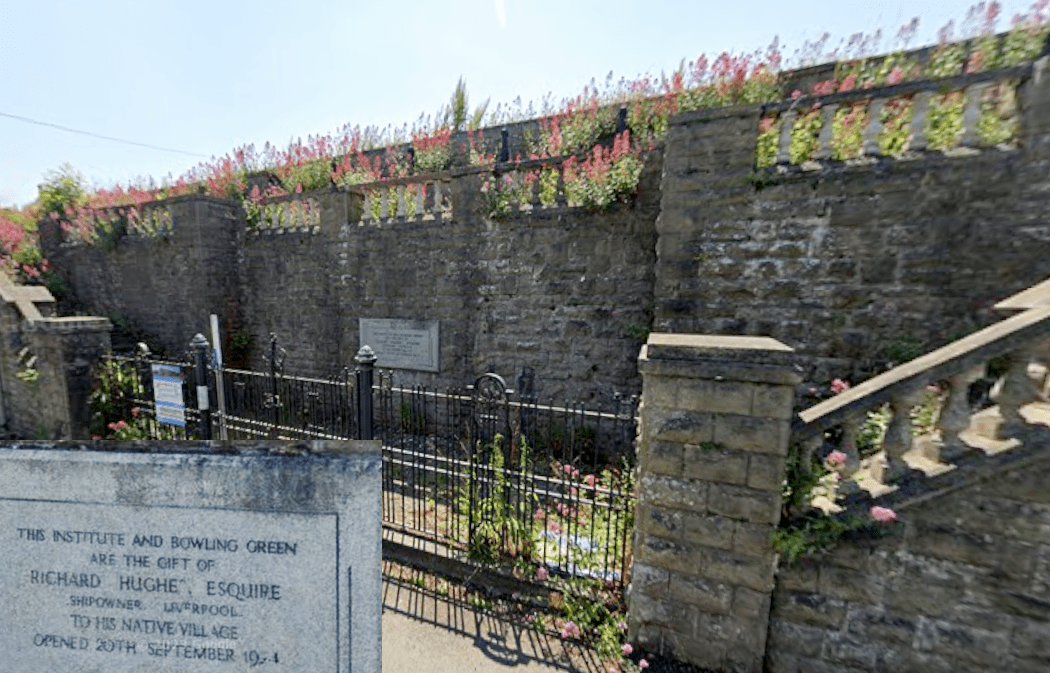
It’s EMW Developments Ltd, and a project in Gronant, Flintshire, east of Prestatyn. To be specific, the Institute building and land in front of it, donated many years ago by Liverpool shipowner and local boy made good, Richard Hughes.

This report from February 2024 says the site is to be converted into “apartments and townhouses“, though it doesn’t make clear whether this involves using, or perhaps demolishing, the Institute itself.

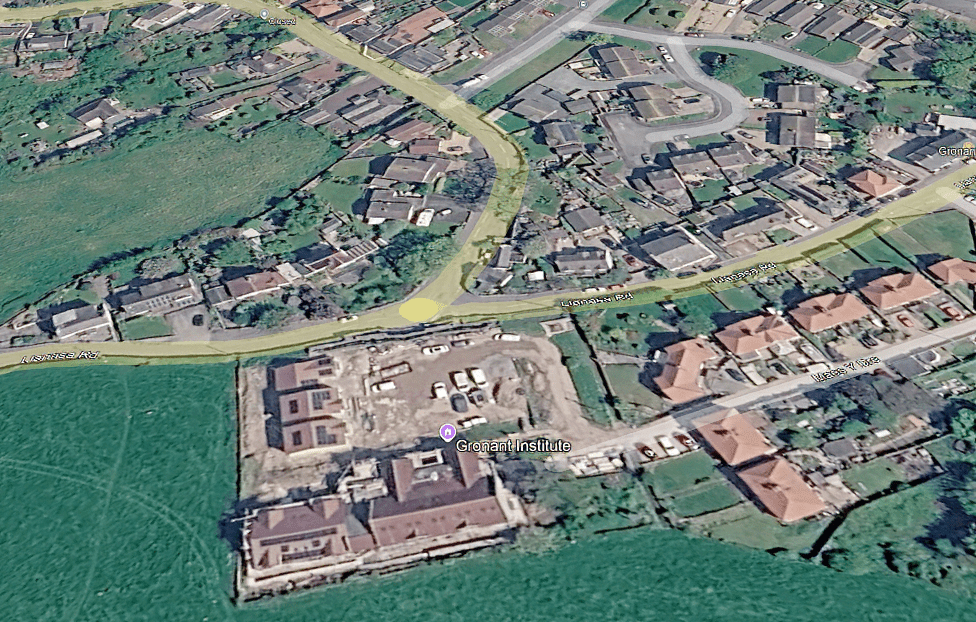
The land in front of the building had been used by locals for parking. As shown in this Google Earth shot from April 2025. It may originally have been a bowling green.

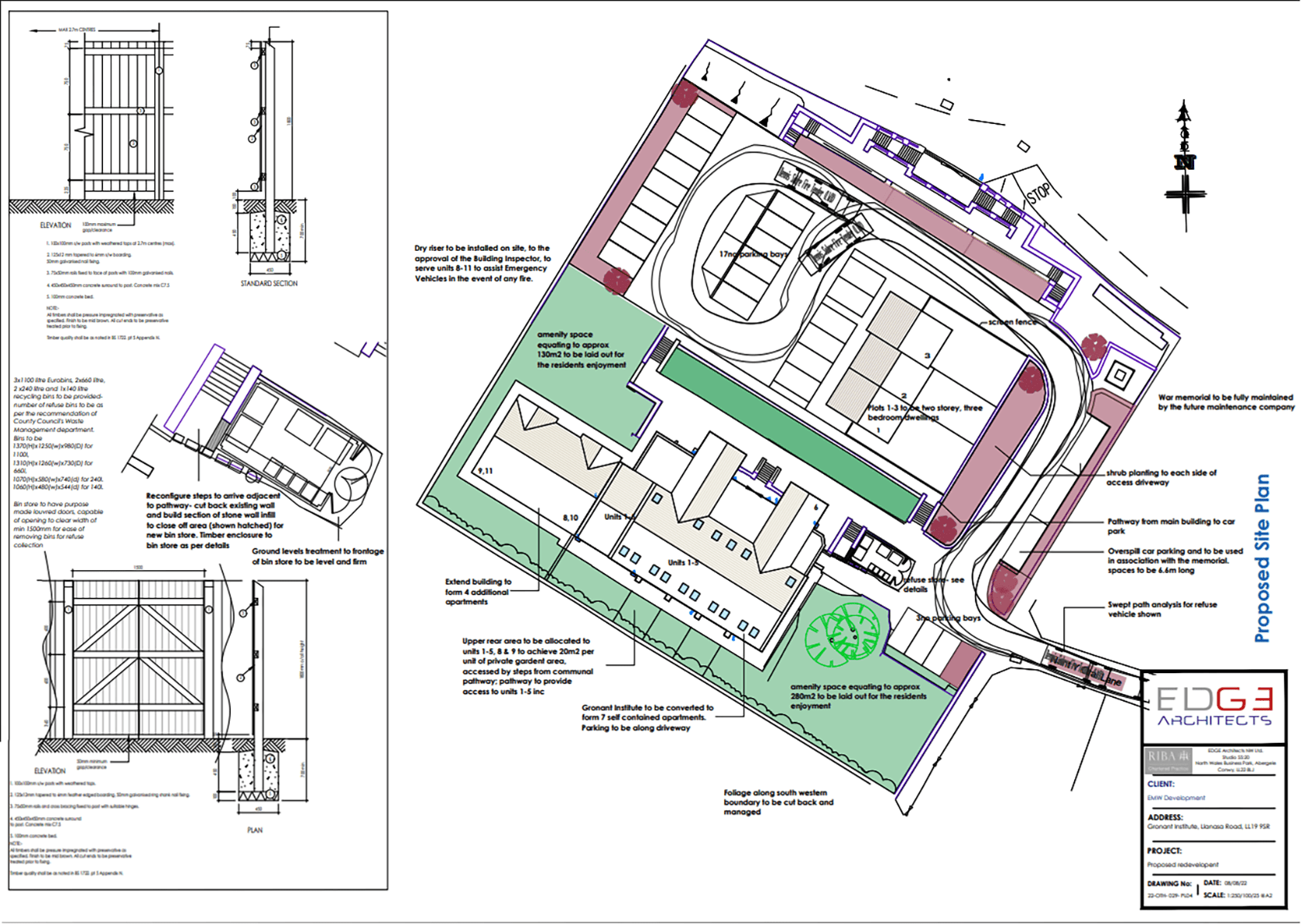
Here’s the plan I found on the Flintshire planning website. You’ll see that the Institute building (green) is to be apartments, with much of the locals’ car park turned into town houses and parking spaces.

Before getting deeper into the Walsh saga, I’d like to tarry awhile in Gronant because, not far away, is another derelict building, the old youth club, on Pentre Lane. Which was also sold recently.

The article I’ve linked to can’t tell us the buyers, so I consulted the Land Registry. Where I learnt that it’s now owned by Golden Acre Developments Ltd, of Leeds. A company formed just a year ago, probably to buy Gronant Youth Club.

So let’s see who’s involved.

One is a Latvian living in Cambuslang, Glasgow, named Arturs Aleksejevs; the other a UK citizen named Robert(s) Opincans, who seems to have been educated in the UK, but whose surname is Latvian.

Last October Opincans started a company called Opincans Retrofit Ltd, using as its address the same Leeds flat as Golden Acre Developments. Opincans Linkedin file suggests he knows something about buildings and building work, but it’s not clear what Aleksejevs brings to the table.

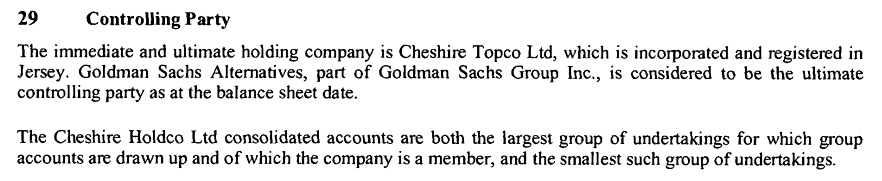
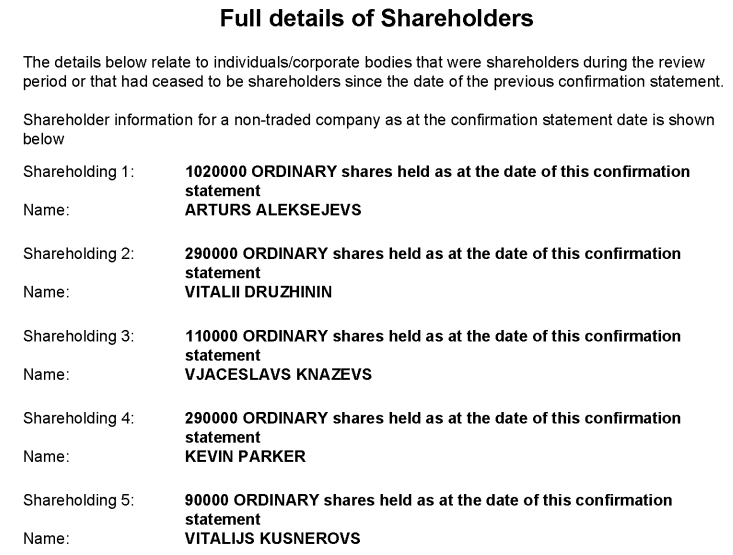
For example, his Linkedin profile (probably lapsed) says he’s managing director at a company called Capsule Systems Ltd – but this outfit was put out of its misery in January 2022. And yet, despite never showing any money passing through the books this company still issued over 1.7 million shares.

How do we explain this? Misplaced optimism might be a generous interpretation. Anyway, I did a quick check on the listed shareholders.

The only Vitalii Druzhinin I found outside the Baltic states lives in New Zealand. Though I did find a few Russians with that surname mentioned on the Offshore Leaks Database. Also, an Alexander Druzhinin with a London address.

Vjaceslavs Knazevs might be in the no-questions-asked mortgage business.

Kevin Parker is too common a name to trace.

And with Vitalijs Kuznerovs I drew a blank.

Now back to Gronant Institute.

WHO’S PUTTING UP THE MOOLAH?

Turning first to the Land Registry title document. Where we see that the owner of Gronant Institute is Walsh Investment Properties Ltd, with EMW Developments Ltd probably doing the work.

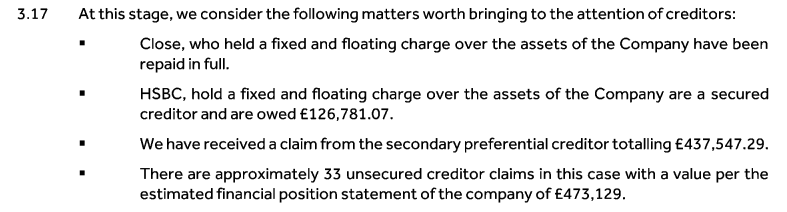
Scrolling to the bottom tells us the money to buy the Institute was put up by Livestock (UK) Ltd in December 2022. Companies House says the accounts for this outfit are long overdue, and there’s an active proposal to strike off this company. A fate it’s escaped a few times in recent years.

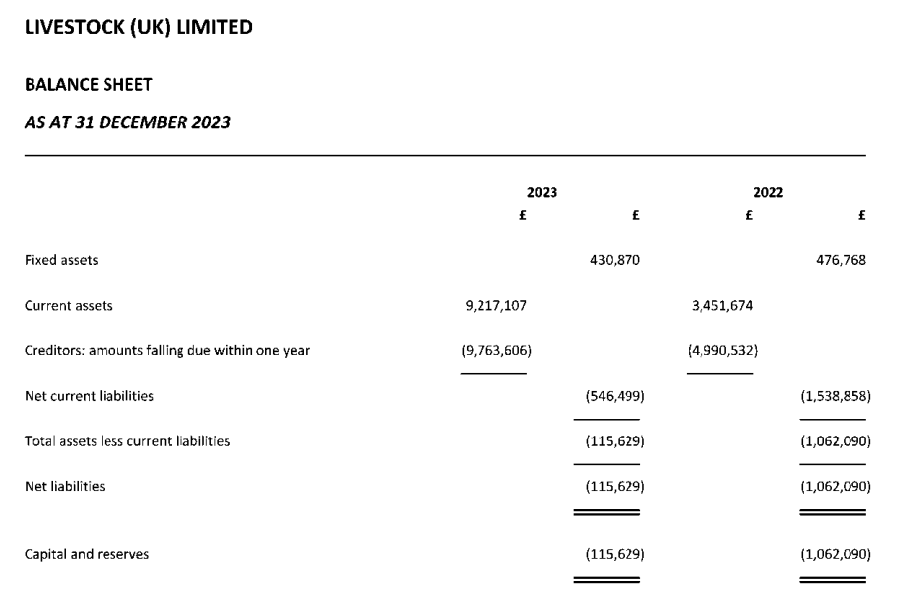
Yet the most recent (unaudited) accounts filed by Livestock (UK) Ltd report assets of over nine million pounds . . . but this is wiped out by (unnamed) creditors owed slightly more.

Livestock (UK) Ltd is run by the Duffell family of Cheshire. Walsh has been dealing with this family for a number of years.

We can safely assume that Livestock (UK) Ltd put up the money to buy the Stiwt. And the amount loaned was £1.2m over 24 months at the rate of 14% per annum. I know that from this document filed with Companies House.

Further loans have been taken out for the project – now named Richard Hughes Close – by Walsh Investment Properties Ltd. (Scroll down.) These loans are for the individual plots. And they’re all Buy-to-Let mortgages, from Quantum Mortgages Ltd.

So, as things stand . . . Walsh owes £2.4m, plus interest, to Livestock (UK) Ltd, and a few million more to Quantum Mortgages. He will then, presumably, own the rental properties at Richard Hughes Close.

THE QUANTUM CONNECTION

As you might have guessed, I looked into Quantum Mortgages, tracing back the ownership to source. Quantum itself was founded as recently as September 2021 by Jason Christopher Neale.

AI tells us Quantum manages funds from AB CarVal, “an established global alternative investment manager and part of AllianceBernstein’s Private Alternatives business“.

AllianceBernstein is primarily owned by Equitable Holdings, which holds a majority ownership stake of roughly 68% in the firm“.

Equitable Holdings entered a merger earlier this year with Corebridge Financial, with Corebridge holding 51%. The major shareholders in Corebridge are given as Nippon Life Insurance Company, Blackstone (Argon Holdco LLC), and American International Group (AIG). Other big shareholders are Vanguard and BlackRock.

(Worth remembering that BlackRock split from Blackstone in 1994 under the leadership of a man with his own key to No 10 – Larry Fink!)

So we’re dealing with foreign investment houses and asset managers funding Welsh developers with Buy-to-Let mortgages.

The first I can find was in November 2020, when Walsh took out a loan with Cynwyd Enterprises Ltd, another Duffell company, to buy the Grosvenor Social Club in Shotton. (£300,000 over 24 months.)

It was demolished for housing. Reported here in August 2022. The Cynwyd loan was cleared in December 2023, then Walsh took out a series of Buy-to-Let loans with Quantum for the individual properties.

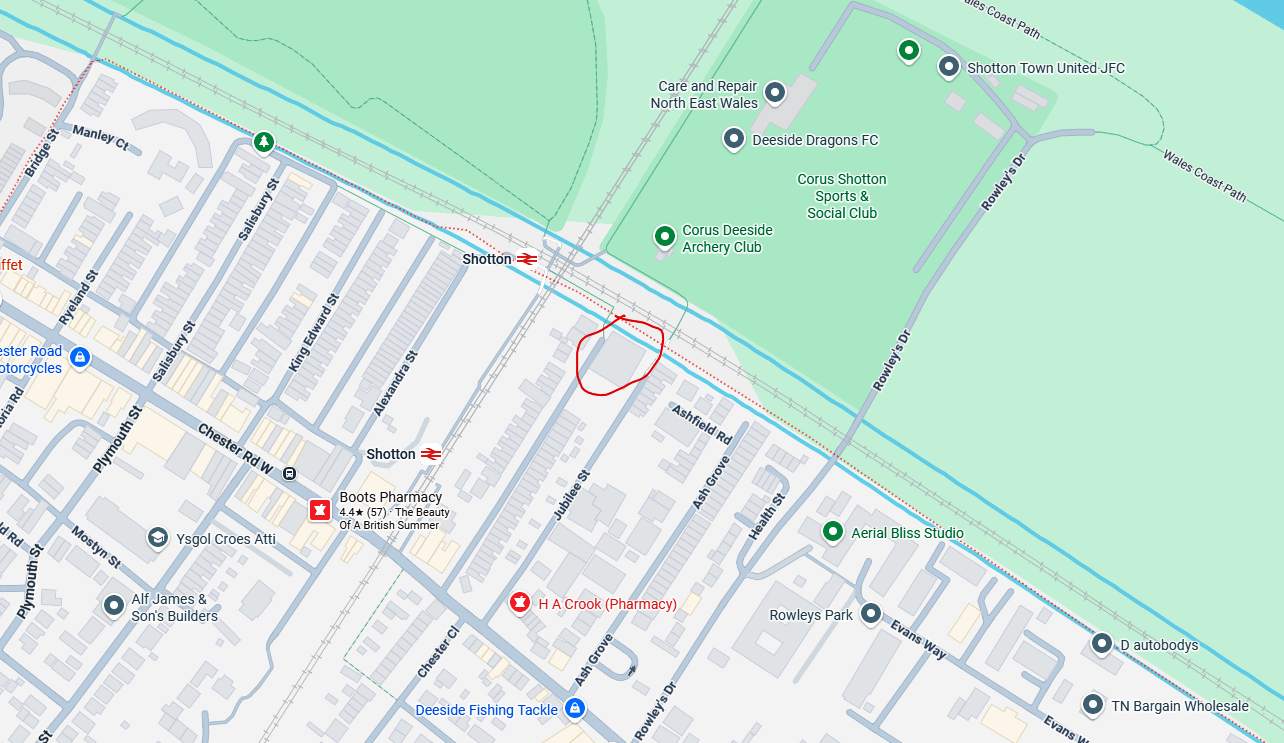
The Shotton project circled

Cynwyd Enterprises is another company with substantial assets . . . outweighed by unidentified ‘creditors’.

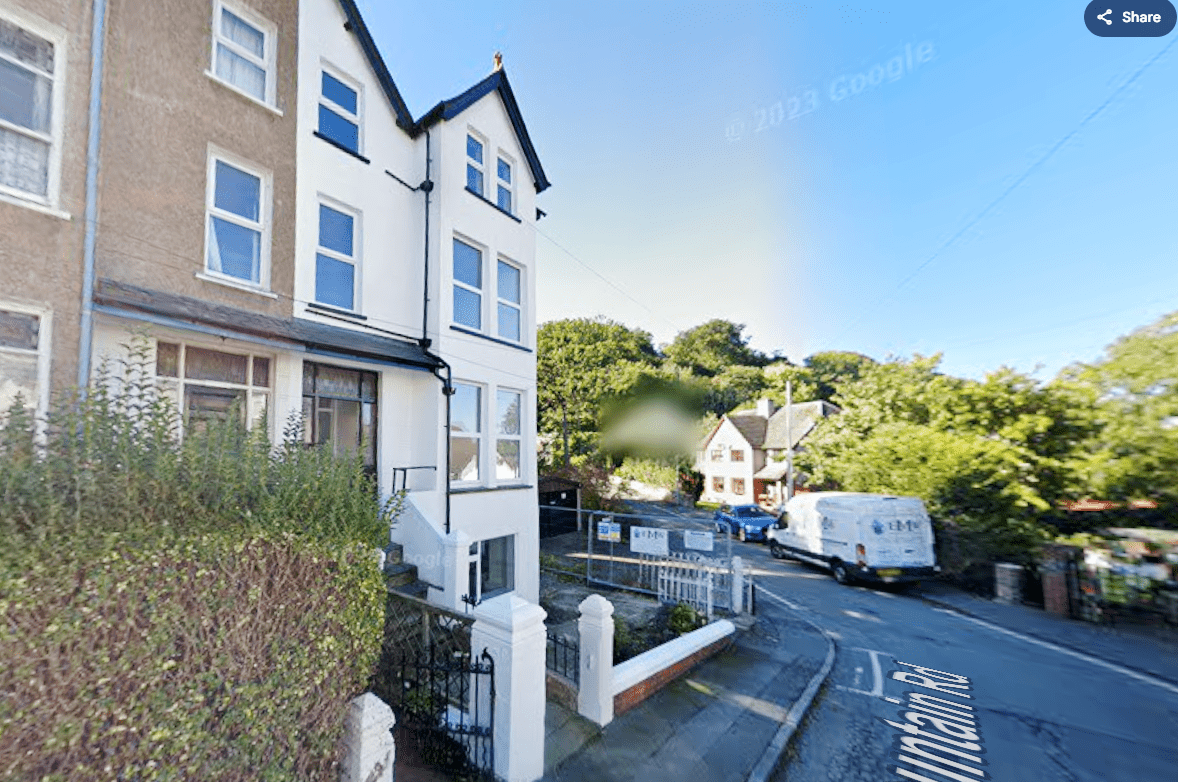
Another early involvement was for Bron Gwalia 7 Mountain Road, Conwy. This Google Maps capture from October 2022 suggests a substantial property containing individual flats. And EMW clearly at work.

The money to buy the building, late in 2021, came from one of the Duffells. With a loan of £205,000 over 24 months. Next, in February 2023, a Buy-to-Let mortgage was taken out with Quantum. Then, the loan was repaid in November 2024. Finally, the flats were, presumably, rented.

Just before the Gronant loans Quantum made over a dozen loans for Aberllefenni.

So we have three instances where the initial funding, to buy the property, came from the Duffell family – Shotton, Conwy, and Gronant – with Christopher Walsh then taking out Buy-to-Let mortgages with Quantum. And plenty of other recent loans from Quantum, such as the dozen or more at Aberllefenni.

But let’s focus on Gronant again, for things have taken a disturbing turn.

LATEST NEWS

Latest news is that a deal has been done for the Gronant properties with Clearsprings, which provides accommodation for migrants; often unvetted, illegal migrants.

The Clearsprings Ready Homes website tells us:

As a provider of accommodation services to the Home Office since 2000, our contracts cover London, the South of England and Wales.

But housing ‘migrants’ is not devolved, so does Clearsprings have an  arrangement, or an understanding, with the so-called ‘Welsh Government’?

And where does Flintshire County Council fit into the picture? For this press release(?) mentions February 2024, the month the Council approved planning permission for Gronant Institute.

This information was released that month, or very soon after, according to Wayback. Does it suggest the Council has known about the plan to house ‘refugees’ at the Institute for over two years?

Whatever the answer, this is a depressing story on a number of levels.

First, it reminds us the housing market is screwed. Young people, who should be setting up home and starting families, find it difficult to buy a place of their own. And renting becomes more difficult as leftist politicians legislate private landlords out of the equation, with social housing providers giving priority to just about everyone ahead of locals.

As if that wasn’t bad enough, asset managers like BlackRock, Vanguard, and State Street are moving into the UK private housing market. Here’s a company called Apollo Global Management. Who do you think is a major investor in Apollo? Go on, have a guess . . . Clue – it rhymes with CockSock!)

One reason for US investors switching their attention to the UK is President Trump’s desire to stop them buying up single-family homes in the USA. (But of course leftists suffering from TDS will fight this.) We need this legislation in the UK.

And it’s no better in the ‘social housing’ sector. Yes, housing associations have stocks of rented accommodation – virtually all of it inherited from local authorities. But they’re not building many for rent anymore.

Instead they’re concentrating on ‘affordable’ housing for sale, or leasing to people who’d prefer to buy. But it’s sadly beyond the vocabulary of anyone working for a housing association, or indeed a civil servant or politician, to explain what ‘affordable’ means.

And who’s funding housing associations now? (Apart from the ‘Welsh Government’.)

Flicking through the documentation on the FCA website one name that turns up regularly linked to Welsh housing associations is M&G Investments. Here are the major shareholders:

Daiichi is of course Japanese. Kingdom Holding is owned by Saudi billionaire Prince Alwaleed bin Talal. And there again we see BlackRock and Vanguard. (Don’t be fooled by the Union flag alongside BlackRock.)

UPDATE 12.08.2026: It seems the ‘migrants’ have arrived!

CONCLUSION

Remember the days when an established family firm built houses in your area, and you went along to the building society where you’d been saving, to discuss a mortgage to buy one of those houses?

Now you don’t have a clue who you’re dealing with. And you’re not supposed to ask.

Because it’s not about you. It’s not about providing decent homes for people like you. The housing market in the modern era is all about profits for big corporations you’ve never heard of. With their enablers also getting their cut.

That’s what’s happening in Gronant. And everywhere else.

♦ end ♦

© Royston Jones 2026
Buy Me A Coffee

Is Plaid Cymru Deaf To The Drone Of War?

This piece is about what can only be described as the militarisation of the west coast of Wales. It takes us from within sight of Harlech Castle to where you can hear the bells of St. David’s Cathedral.

BACKGROUND, LLANBEDR

I’ve written a few times about Llanbedr over the years after receiving information from locals wondering what the hell is going on there. Naturally, I did some digging. So it’s worth looking at what’s happened over the past six years or so, what was promised, and how it all might impact on the wider area.

Let’s start by telling you the airfield is owned by the self-styled ‘Welsh Government’. That’s what I learnt when I downloaded the Land Registry title document in February 2022. I went back to the LR a few days ago and there’s been no change.

The transfer or purchase was done in August 2006. Here’s the LR title doc.

Next, it was leased to Llanbedr Airfield Estates LLP, with the help of two loans delivered in June 2012. One from The Secretary of State for Defence, the other from ‘The Welsh Ministers’.

This company was renamed Snowdonia Aerospace LLP in August 2015. Among the directors we find Lee John Paul and his wife Gillian.

Then a second lease was taken out on April 1 2020, with a different title number, and this time the lease was in the name of Snowdonia Aerospace Estates LLP. Here again we find Mr and Mrs Paul.

UPDATE: I should have remembered that this second lease is in fact a 30-year sub-lease. Granted by the leaseholder to himself. I explained it back in December 2023 in Come Fly With Me . . . But Not From Llanbedr.

This company was formed in October 2019, which suggests it was set up specifically for the new lease. But why two leases? Were there material changes?

The money for this second lease seems to have come from Compass Point Estates LLP (the Pauls again), and the two loans involved were cleared in June this year. So let’s look a little more closely at Compass Points Estates LLP.

The first thing I noticed was the name. Because Compass Accountants is the firm that works for most if not all of Lee Paul’s companies.

Something else worth noting is that in addition to Mr and Mrs Paul the only designated member of Compass Point Estates is Ocean Park Investments Ltd. The directors here are Lee John Paul and Inspired By Ltd. With the latter also acting as company secretary and controlling interest.

The only directors of Inspired By Ltd are Lee and Gillian Paul. Though in these times of economic uncertainty it’s nice to report a company on the up. For in the three years between 2022 and 2025 fixed assets increased by over six million pounds.

What can account for this? I might have an explanation later. But we can safely assume that, while others have come and gone in the Llanbedr saga, and no matter what company and LLP names pop up, the one constant is Lee John Paul.

RECENT DEVELOPMENTS AT LLANBEDR AND ELSEWHERE

Let’s start in November last year with an announcement from European Security & Defence that reads: “Anduril UK launches new test site in northwest Wales“. The unnamed site is of course Llanbedr.

Anduril UK announced on 11 November 2025 the launch of a new test site in Wales.

The site is being used to test “a suite of AI-powered products for UK military use, including reconnaissance, command-and-control, and targeting capabilities”, the company stated, adding that “several of these sovereign capabilities are actively flying in the Welsh countryside while they are evaluated by Anduril engineers”.

So who or what is Anduril? Well, here’s the Anduril website. It’s an arms company closely associated with the US military establishment. Formed as recently as 2017, and specialising in drones.

And to judge by the quote above, these drones were already “flying in the Welsh countryside” in November 2025. Who knew? Because I don’t recall any media coverage, nor hearing anything from politicians.

A report from July 24 tells that Anduril is expanding fast.

Though I’m reliably informed that: “Anduril Industries is not directly ‘approved’ as an entity by the UK Civil Aviation Authority (CAA), but the company actively navigates UK airspace regulations through partnerships with certified specialists“.

So we have a site owned by the ‘Welsh Government’, leased to Lee John Paul, that would appear to be a base for a US company testing drones for the UK military.

And yet, the lease agreement expressly forbids Llanbedr airfield being used “to develop drones for military purposes“. But this is exactly what’s happening there now.

The lease agreement also stipulates the airfield must be open to commercial and general aviation. Which I take to mean private planes. Is this still the case? I doubt it.

And Llanbedr airfield must benefit the local economy. How many locals does it employ?

An AI response I was sent.

In fact, it’s all being done with little regard for the locals. Here’s a letter dated July 1 from Lee John Paul to Cyngor Cymuned Llanbedr (Community Council) addressing complaints about the activities currently being carried out. Presumably for Anduril.

In this open letter he promises that in future there’ll be no “engine start-ups and departures” before 7 am Monday to Friday. Which means locals must have been subjected to noise from the airfield very early in the morning. (Or at night?) And you don’t need to be a sluggabed to think 7 am is still a bit early.

Paul also promises the drones will fly over the sea a little more in future. Which must mean that heavy military drones have been flying across land. Are they armed? Even if they’re not armed, a crashing drone is very, very dangerous. And Llanbedr’s record is not inspiring.

There was a drone crash there about a year ago. The Windracers Ultra Mk II involved can – depending on payload – weigh up to 670 kg. That ploughing into the bar of the Queen Vic would have been the ultimate last orders for many members of the drinking classes!

And there was an earlier mishap in September 2024.

One final thought on Llanbedr. Those familiar with the area will know that the main coast road hits a bottleneck here, partly due to a narrow stone bridge. A bypass was promised, but then cancelled late in 2021 by the ‘Welsh Government to meet “net-zero carbon targets“.

A substitute arrangement has since been mooted, but it might be worth remembering that the original bypass planned would have gone to the west of the village – towards the airfield.

Just a thought.

Let me return now to the uptick in fortunes for Inspired By Ltd, which I alluded to earlier. If we go to the two charges held against this company by Lloyds Bank we see reference to Brawdy, the former Fleet Air Arm base in Pembrokeshire.

You won’t be surprised to learn there have also been developments at Brawdy. Some of you may already be aware of them. Maybe you’ve been protesting.

The latest news is that the plan to install 20 metre high ‘deep space’ radar dishes has now been called in by the ‘Welsh Government’.

Lee John Paul was originally involved with Brawdy through a company called Brawdy Business Park Ltd, which was Dissolved in April 2013. Leaving behind a number of unpaid loans, including one from the Welsh Development Agency.

More recently – as you’ve read above – a loan naming Brawdy has been taken out by Paul’s company Inspired By Ltd. There may be other companies involved, Paul has quite a number.

It could well be that the increase in assets filed by Inspired By Ltd can be explained by a deal Paul struck with those who clearly have big plans for Brawdy. Or maybe Llanbedr.

Moving up the coast we find, just north of Aberteifi, the airfield at Aberporth, which has for some time been used for drone testing, with quite a few mishaps there as well. Such as the one that crashed too near a school for comfort.

Aberporth was taken over about a year ago by Portuguese outfit Tekever. (Here’s the company website.) And as with Llanbedr, “It’s not clear at the moment whether General Aviation access will continue“. Suggesting it’ll be restricted to military use.

UPDATE: 06.08.2026: Here’s what the latest Tekever accounts tell us:

So there’ll be jobs in England, while we have to put up with the noise and the danger. Nothing changes.

CONCLUSIONS AND THOUGHTS

It would appear that these three facilities on our west coast are being turned over entirely to the testing of military drones and associated technology. This will almost certainly mean no access for other users, and no jobs for locals.

All on the west coast, eh – are we being threatened from Ireland? My wife and I had visitors from County Galway on Sunday and they showed no sign of hostile intent. But then, those Irish smiles can beguile.

The reasonable conclusion to draw is that this increase in drone testing is being done to drag out the war in Ukraine, and to keep the Kokehead Klown of Kiev afloat for a bit longer – with more deaths – before he makes the territorial concessions he and everyone else knows he’ll have to make.

From another angle, and a more domestic viewpoint, there’s an interesting timeline involved. For the developments at Llanbedr, Brawdy and Aberporth, while external in origin, seem to have been announced, or took place, when the Labour administration in Corruption Bay was in its final tailspin.

With everybody knowing Labour was going to lose this May’s Senedd elections.

Were these developments some kind of poisoned chalice for Plaid Cymru? They certainly pose a big, big problem for that party.

Not least because Plaid Cymru is, fundamentally and historically, a pacifist party. To explain what I mean, and seeing as we’re dealing with military installations on the west side of the country, let’s remember what happened at Penyberth, on Llŷn, in 1936.

When three Plaid Cymru luminaries, including party president (and World War One veteran) Saunders Lewis, made a symbolic attack on an RAF bombing school.

Plaid Cymru remains a pacifist party. So how it responds to the developments at Llanbedr, Brawdy and Aberporth, will be interesting. We see that the new Plaid government has called in the plans for Brawdy, but of course it doesn’t own that site.

But it does own Llanbedr.

My fear is that these three sites will become some kind of ‘sovereign territory’, beyond the control of any level of government within Wales. Employing no locals, closed to private aviation, contributing little or nothing to the economies of the areas around them, and even putting local lives at risk.

Which is why the Plaid Cymru ‘Welsh Government’ needs to make its position clear, as a matter of urgency. And I’m not sure it can wait until they they get back from their summer hols in mid September.

To not do so – especially if that inaction is on the orders of the UK government – will be another reminder that devolution is a sham.

♦ end ♦

© Royston Jones 2026

Buy Me A Coffee

The Destruction Of The Elenydd

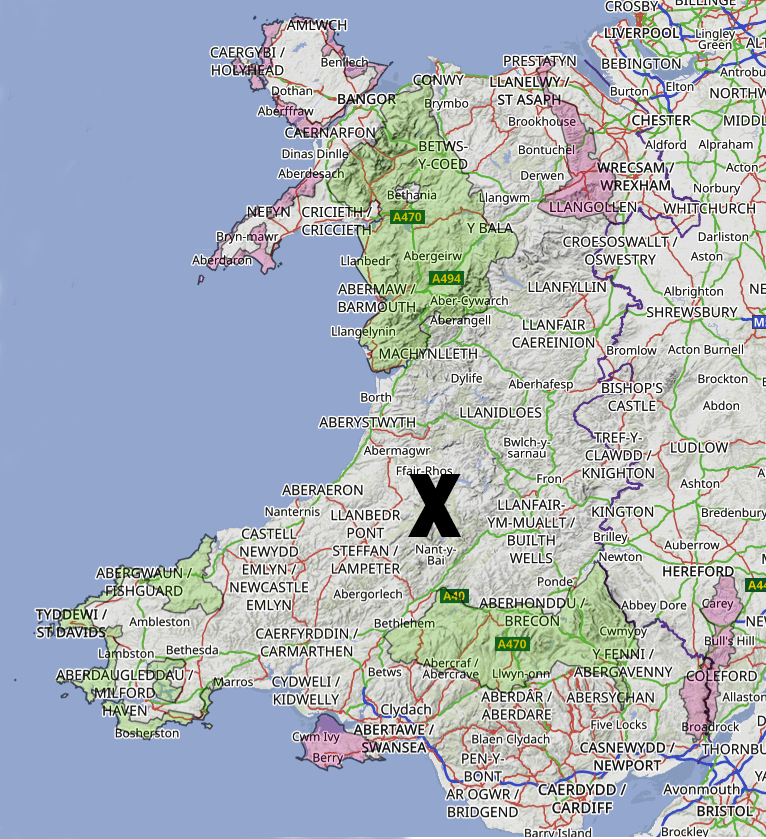
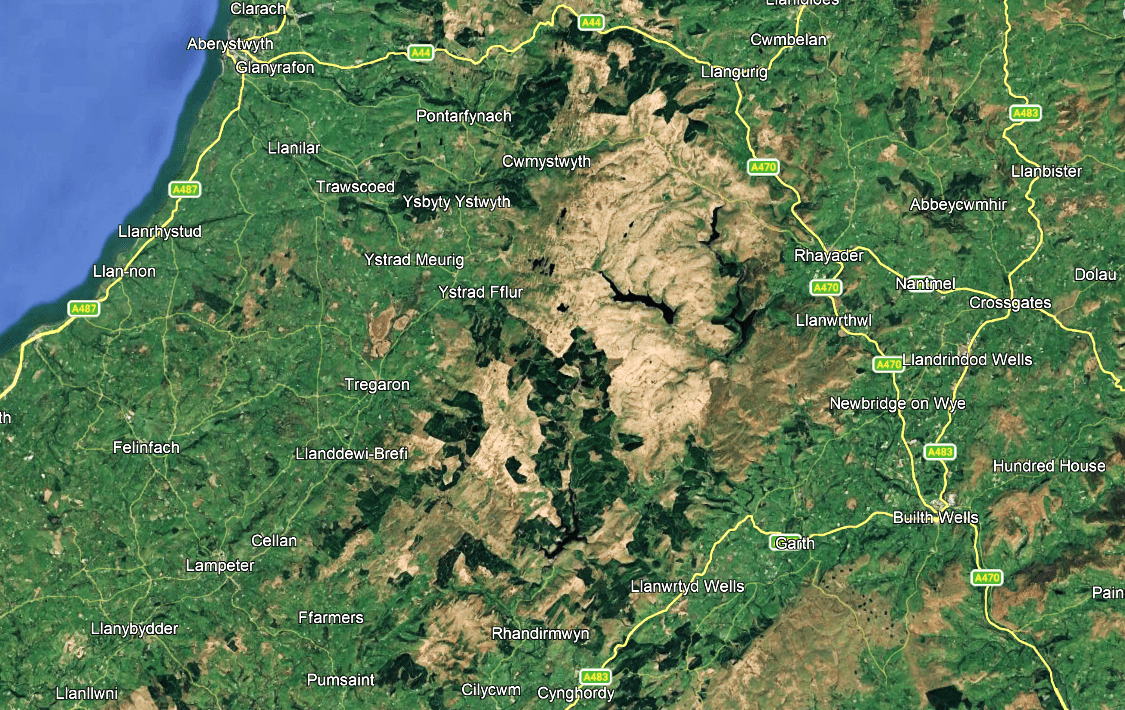
I suppose I’d better begin by explaining where we are when I talk of ‘the Elenydd’. It’s the wild, and largely unpopulated uplands shown on this Google Earth capture.

The last true wilderness in Wales. Now it’s being industrialised and destroyed by the ‘renewables’ industry, all foreign-owned companies.

With other parcels of land being bought by ‘environmental’ groups and other sheep in wolf’s clothing. (That is not an allusion to the Fabian Society.) One of these groups gives the appearance of being Welsh, the others are the usual suspects; National Trust (NT), Royal Society for the Protection of Birds (RSPB) . . .

Here’s how Google AI describes the Elenydd:

The least populated and wildest area in southern Britain . . .

The largest continuous tract of blanket mire in the Welsh uplands, designated as a Special Area of Conservation supporting rare birds like red kites, merlins, and diverse upland flora.

Clearly, we are dealing with a very special area – one that should be left to those who have cared for it for generations. But that would mean farmers and others, now viewed as the enemy by those who have elected themselves our saviours from evils as diverse as the climate crisis and the threat from the far-right.

For the two are invariably linked. Those dictating how we behave, even what we eat, in response to the ‘climate crisis’, are often the same people telling us what’s acceptable thinking in the political sphere.

Because it’s all about control. Controlling us.

FURTHER BACKGROUND

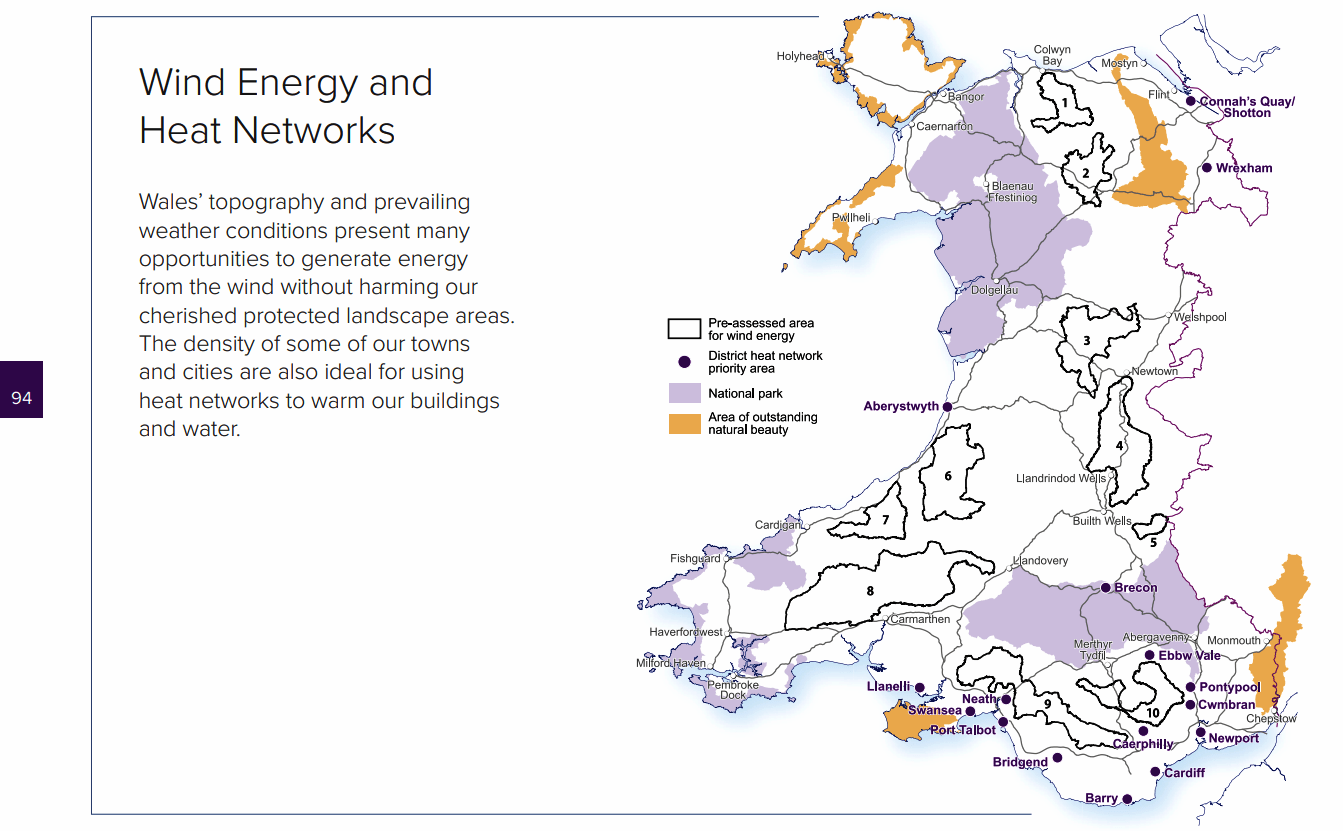
I’m going to start with a document produced by the self-styled ‘Welsh Government’ back in 2019, called Future Wales The National Plan 2040. There, in amongst this melange of hopes, dreams, incoherent ramblings and utter bullshit, on page 94, we find a map showing the areas set aside for wind farms.

They’re numbered and bounded in black. Roughly speaking, the Elenydd is north east of the area 8 panhandle and east of area 6.

Whatever the original purpose of this map showing ‘pre-assessed’ areas, it soon proved worthless and misleading.

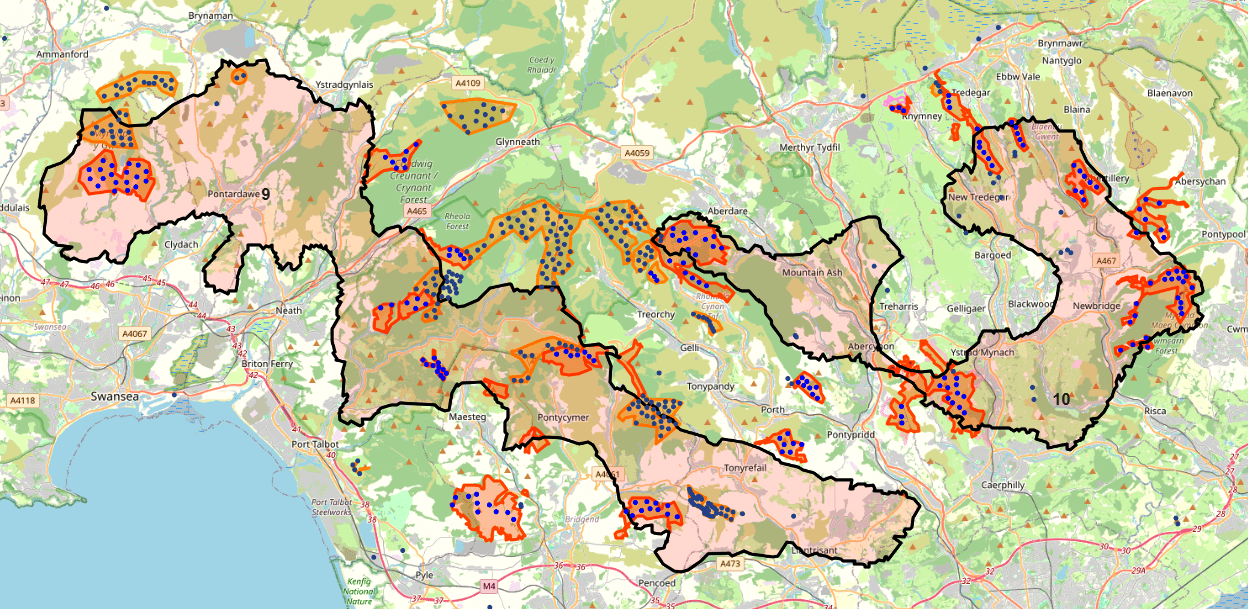
A fact illustrated by the map below, produced by Caru Teifi, a group protesting against the pylon runs needed to take the electricity intermittently generated by wind farms to the grid connection point south of Carmarthen.

In the south it appears that most of the turbines built (light blue), and planned (dark blue) are outside the ‘pre-assessed’ areas.

And as you’ll see in a minute. it’s the same – or worse – in the area we’re looking at.

So what was the point of the ‘pre-assessed’ areas in the 2019 National Plan if the ‘Welsh Government was simply going to allow a “near enough” approach that borders on a free-for-all?

Time now to look at the wind turbine projects on the Elenydd. The known knowns, the known unknowns, the unknown unknowns, and the unknown knowns.

WHAT’S PLANNED

We can safely identify four projects. Three we’ve known about for a few years, with another announced this year.

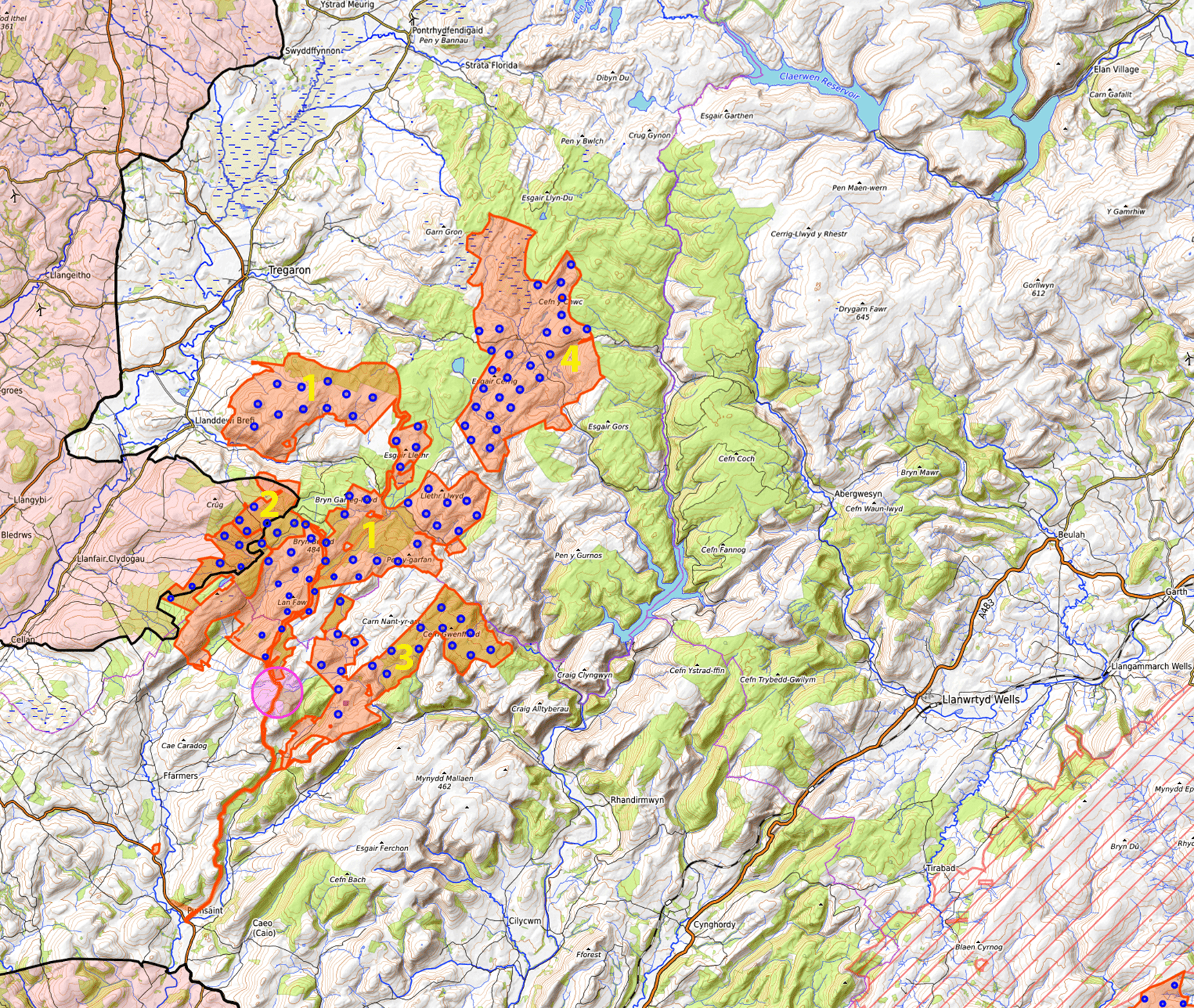
The first involves Scottish company Bute Energy Ltd. Their project is Lan Fawr. There was another project nearby labelled Bryn Brawd, but it seems they’ve merged. Now it’s one sooper-dooper project with 55 turbines up to 800ft in height. Labelled 1 in the image below, and in two parts.

Next is Belltown Power’s Waun Maenllwyd project. Just 4 to 6 turbines. Labelled 2 in the map above. It’s suggested the Belltown project might be taken over by Bute. Alternatively – and I find this interesting – that the Foresight Group, which is behind Belltown, might take over Bute!

Number 3 is Galileo Empower UK’s Bryn Cadwgan project. Galileo has it’s UK office in Edinburgh (and an outpost in Cardiff), but is owned by investors and pension funds from just about everywhere, as far away as New Zealand.

Lastly, we take a brief look at the newest of them, EDF’s Nant y Maen. This straddles the Tregaron to Abergwesyn road. It’s definitely in the pipeline; confirmed by this ‘WG’ document. EDF is wholly owned the French Government.

Local sources insist there are other projects yet to be unveiled. Two, it’s believed.

Access to these projects is planned from the A482 at Pumsaint. Something I covered in The Road To Hell back in November 2023. Then it’s over the old Dolaucothi Estate, now owned, like far too much of Wales, by the National Trust.

After Pumsaint, it’s anyone’s guess, but I guarantee it will involve new roads, hundreds or thousands of trees felled, and massive disruption to the environment over an extended period of time.

But before reaching Pumsaint the turbine columns and blades will be transported on huge diesel smoke-belching trucks along country roads from Swansea docks.

Disruption and destruction all the way so that foreign investors can make money.

Unless, of course, you’re stupid enough to believe that this is all being done to save the planet, and Wales will somehow benefit. Are you that stupid?

‘WILL SOMEONE THINK OF THE NEWTS!’

In the intro I referred to a couple of recent purchases in the Elenydd by rewilders and others. So let’s look at them.

First, is one I covered in Land Of Our Fathers, But Not Our Children, in February. This concerned the purchase of 1195 acres by an outfit called Tir Natur.

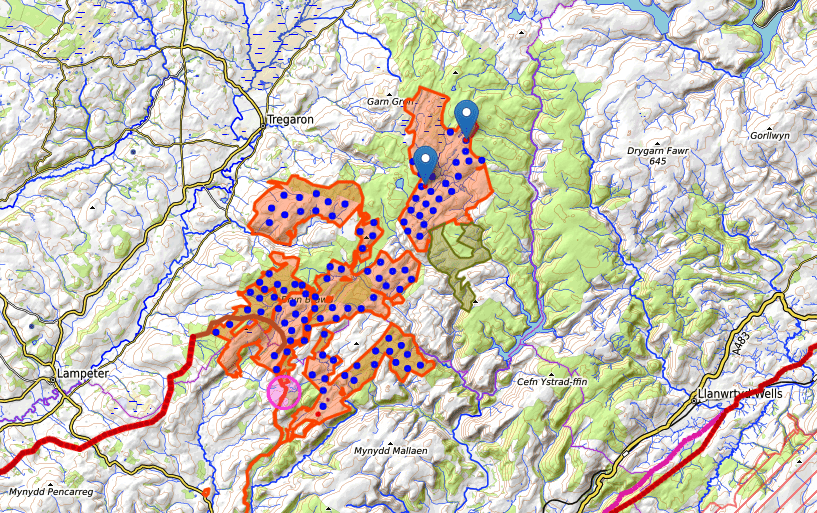
The area bought is shown in this map by Caru Cymru I linked to earlier. It’s the dull green area below EDF’s Nant y Maen project. (I urge you to consult the Caru Teifi website maps and use the layers available to see what’s what in the area.)

Quite a purchase, and achieved with, according to Farmers Weekly and other sources, a “philanthropic bridging loan“. Wasn’t that nice!

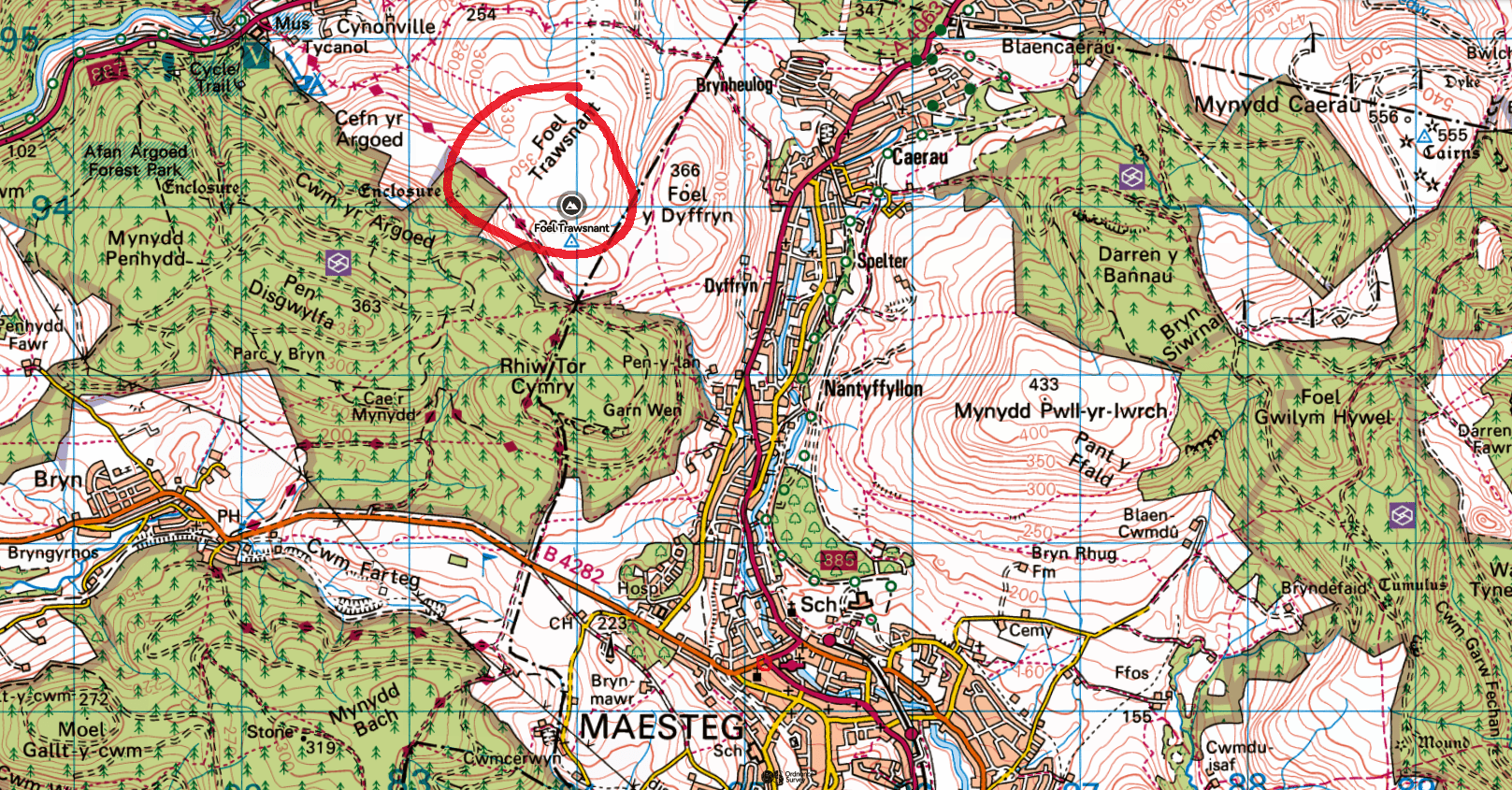
Earlier this month, we learnt that the RSPB had bought 96 hectares at ‘Galltybere’ or ‘Gallt-y-Bere’, which is shown on OS maps (see above) as Craig Alltyberau. This adjoins the planned Galileo Empower Bryn Cadwgan wind farm.

And whaddya know – this purchase also received a “philanthropic loan“.

I wonder where these ‘loans’ come from? Can I have one?

Now for a detour, but not really a digression. We’re going to Scotland, sticking with the RSPB – and there’s more magic money!

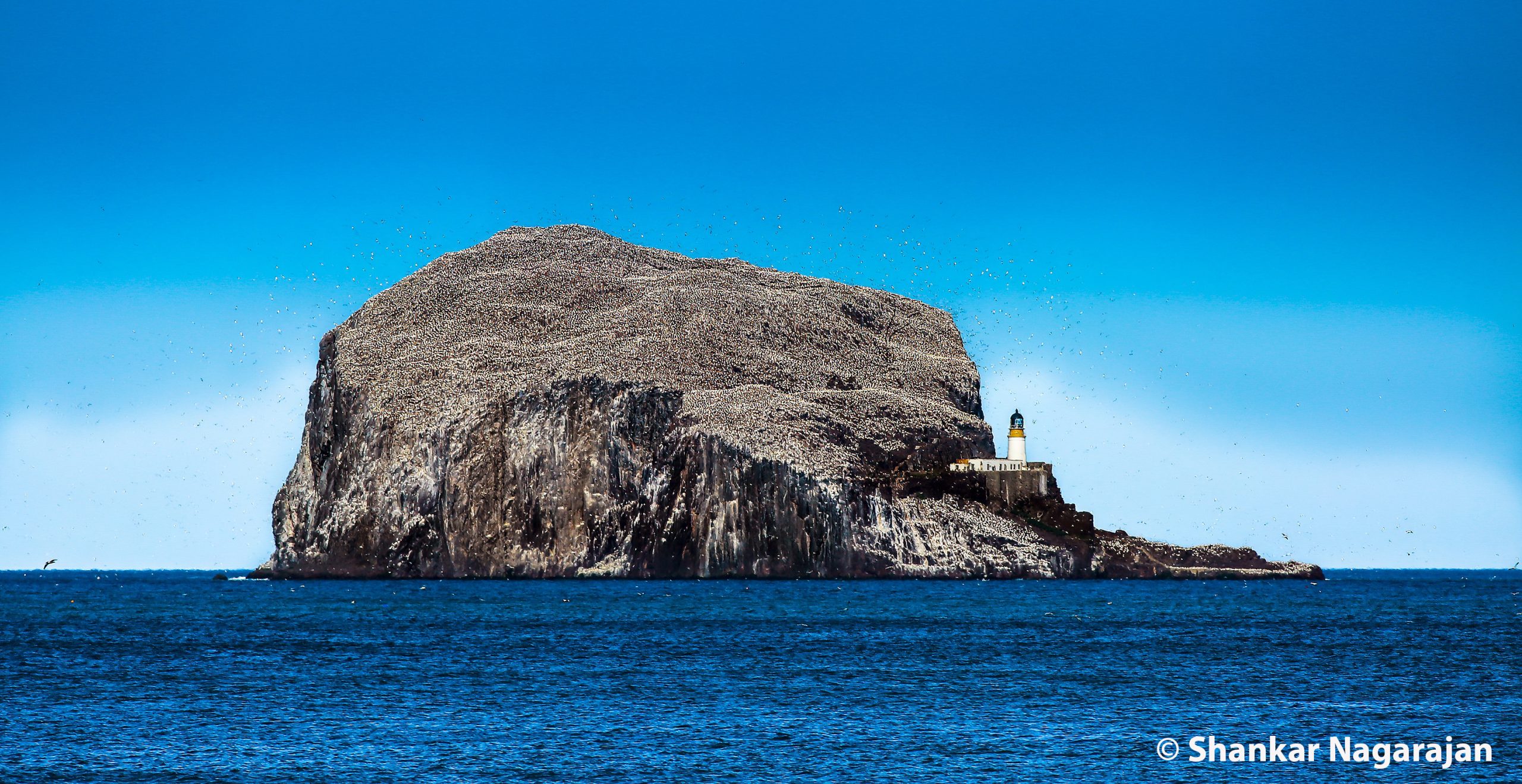
Down the Firth of Forth from Edinburgh, not far from North Berwick, rising from the North Sea is the volcanic plug of Bass Rock. A home to many birds, and the largest colony of Northern Gannets.

These are magnificent birds, with a wingspan of six feet or more. While searching for prey they soar or glide until folding back their wings to dive into the sea.

Not far away is the Isle of May. This is home to 50,000 puffins, plus guillemots, razorbills, and other birds.

Hanging over this avian idyll is the threat of 307 wind turbines, in a project approved last year. As might be expected, RSPB Scotland objected. Stating:

Berwick Bank is a gigantic windfarm. To put it in perspective, it would take up an area four times the size of Edinburgh with more than 300 turbines – each the height of six Scott Monuments

But then something strange happened. Operating through the National Heritage Memorial Fund, the UK government made a grant of £586,000 to RSPB Scotland – to buy Bass Rock!

I can’t help thinking that what was really being bought was the RSPB’s silence.

CONCLUSION

You don’t need to be cynical to believe that when there’s billions of pounds, dollars, euros or whatever in profits to be made, certain measures will be taken to guarantee those profits. Among those ‘measures’ will be neutralising the opposition.

Unless they’re powerful and well organised, local groups can be largely disregarded, developers can even play one off against another. The same principle applies to landowners and farmers. But when it comes to groups that are well-established, with a national or even international structure, and have the ear of politicians, then a different approach is needed.

And this might explain the magic money that appears regularly in the accounts of wildlife and environmental groups. Sometimes it’s out in the open.

Aviva, the institutional investor owned by Vanguard and others, has given just shy of £40m to the Wildlife Trusts to restore Celtic Rainforests along the western edge of Britain. Much of this money will be coming to Wales. Some already has, and it’s gone to the Elenydd.

I dealt with this February, in The Latest Enviro-scam – ‘Celtic Rainforests’.

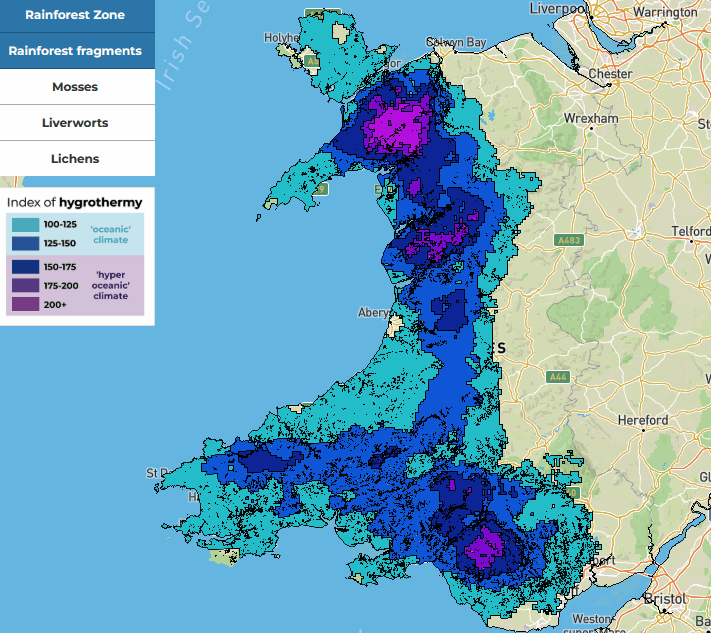
In fact, it seems most 0f Wales is a rainforest. Who knew?

Though the Elenydd seems to be in the ‘Oceanic Climate’ zone rather than that described as ‘Hyper Oceanic Climate’.

At the risk of coming across as a cynical old bastard I’ll spell out what I think might be happening in the Elenydd. Shyster ‘developers’ want to destroy an almost pristine wilderness for profit, and have, by one route or another, given money to environmental groups to buy adjoining land.

The developers will then argue that wind turbines, and the work associated with them, pose no threat to wildlife or the environment. If they did – then surely their neighbours like Tir Natur and RSPB would be complaining. “Stands to reason, squire“.

For their part, the recipients of this largesse will tell themselves that sacrifices must be made for the greater good and the bigger picture.

For you must remember that those I’m describing have bought into the climate scam, making their position ambivalent. And rarely have I seen it more evident than in the RSPB Scotland statement I linked earlier.

We can unlock a future where Scotland’s already struggling seabirds are helped to recover, while producing the renewable energy needed to help fight climate change.  

So, for the greater good, sacrifices must be made. But that’s OK, as long as it’s the dicky birds making the sacrifice.

♦ end ♦

© Royston Jones 2026

Buy Me A Coffee

Bute Energy, Connections & Partners

This piece is in two parts. The first takes us to Ireland, the second . . . well, I’m not quite sure, maybe into a war zone.

For anyone new to the blog, or this topic, Bute Energy is a Scottish company with a Cardiff address planning a dozen or more windfarms in Wales, plus the pylon runs needed to connect them with the main grid. Also solar arrays and Battery Energy Storage Systems (BESS).

The head man is Oliver James Millican who, along with the other Bute principals, Stuart Allan George and Lawson Douglas Steele, left Millican’s father’s Parabola property company towards the end of 2017. They may still be working for Parabola.

IF YOU EVER GO ACROSS THE SEA TO IRELAND, THEN MAYBE . . .

To begin with, I recently learnt that Copenhagen Infrastructure Partners (CIP), Bute’s main funder up to this point, is now operating in Ireland. Taking advantage of Ireland’s Strategic Investment Fund.

The Ireland Strategic Investment Fund (ISIF) has committed €200m to specialist greenfield renewable energy infrastructure investor, Copenhagen Infrastructure Partners (“CIP”) latest flagship strategy, Copenhagen Infrastructure V (the “CI V”)

When I saw ‘CI V’ it rang a bell, because this is (or was?) the CIP fund behind Bute Energy. Mentioned more than once on this blog. Specifically, CI V Dragon Lender Ltd (launched 23.12.2021). Other companies with the CI V Dragon name are; CI V Dragon Topco Ltd (16.03.2023), and CI C Dragon Holdco 2 Ltd (07.12.2023).

All three are still in business, with directors I believe to be working for CIP.

There was a fourth company, CI V Dragon Holdco Ltd, formed 23.12.2021, with CIP directors. Two of whom left in November 2023, but two hung on until June 2025, when they were replaced by Oliver Millican. A liquidator was appointed in January this year. This outfit was clearly replaced by Holdco 2.

A lot of money went into the now-departed company, over £60,000,000. Which seems to have been used in payouts to Bute directors. This has been widely covered in the media; including Nation.Cymru. There are suggestions of, dare I say it – can I even spell it! – jiggery-pokery.

Here’s what Google AI says. Nation.Cymru is quoted, but the info came from this site.

Though a reporter for a London newspaper, who’s been in contact recently over Bute’s activities, tells me his ‘paper’s bean counters are not convinced Bute’s done anything illegal. Devious, maybe, but not, strictly speaking, illegal.

Whatever the answer, it seems that the money was doled out thus: Millican £47.56m, with George and Steele each getting £4.64m, and a few million going to minor players, one said to be Millican’s brother-in-law.

Much of Millican’s money was used to buy real estate in Scotland, often warehouses, and dealt with in this blog in March. Here’s a quote I used then from a Bute insider:

The real estate arm of the Windward portfolio . . . is working with multiple overseas businesses and at least one national government to house interests and commodity items relating to renewables infrastructure. There are warehouses in Wales and Scotland filled to the rafters with BESS and pylon materials – rented and landed for resale exclusively to the UK market to artificially appear to restrict overseas procurement and brand it as available when supply chains pinch in the late 2027 to early 2029 drive.

Windward is another name used by Bute companies, Windward Enterprises Ltd being the ultimate holding company for the Bute empire. Sole director and shareholder Oliver Millican.

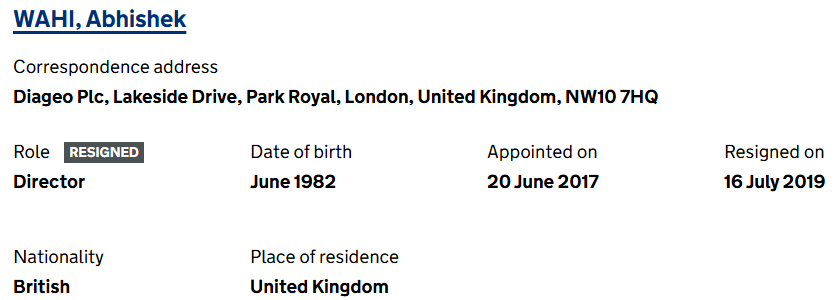
A new director of Windward Enterprises, since June 1, is given as ‘Thomas Anthony Watson’. (Companies House was notified June 25.) A name common enough to be ignored. He is in fact, Labour peer, Baron Watson of Wyre Forest.

Last month Windward Enterprises took out a loan with private bank Brown Shipley & Co Ltd, ultimately owned by the Al Thani family, which owns and runs Qatar. This family also owns some £40bn of real estate in London, including Selfridges, Harrods, The Savoy, Claridge’s, Heathrow Airport . . .

BUT WHY THE INTEREST IN IRELAND?

With Copenhagen Infrastructure Partners investing in ‘renewables’ in Ireland I naturally got to wondering if Bute Energy is similarly involved.

In an idle moment I typed ‘Bute Energy Ireland’ into Google, and it suggested a “corporate address” down by Anna Liffey. Here to be exact: 2nd Floor, Riverview House, 21-23 City Quay, Dublin, D02 AY91.

Which turns out to be the Dublin address of SYSTRA Ireland, part of a big French company, with projects around the world.

Next, I searched for ‘Bute Energy Systra’, and turned this up:

Bute Energy is a Welsh developer spearheading over £3 billion of onshore wind projects. They collaborate with global infrastructure and consulting firm SYSTRA. SYSTRA provides lifecycle services, electrical grid/infrastructure planning, and engineering for Bute’s energy parks to speed up the transition to a low-carbon grid.

Welsh developer“! So there is a link. But why had I never heard of SYSTRA before? Next, my trembling digits tapped in ‘Welsh Government Systra’, and this came up:

SYSTRA is a prominent transport and engineering consultancy that frequently partners with the Welsh Government and Transport for Wales (TfW) to modernize public transport, boost regional connectivity, and achieve net-zero climate targets.

Then I found this on the SYSTRA website. Nice to see another Welsh company getting contracts from the transition to the wonderful Green economy.

On the Systra website I also unearthed these specific projects. A franchised bus service for Wales and an energy from waste facility on Deeside. Are there others?

Despite these contracts in Wales SYSTRA doesn’t even bother with the Bute ploy of having an office here. It seems Wales is handled from Bristol or Birmingham. Though there is of course an office in Edinburgh, which will be handy for the Bute boys. (In fact, SYSTRA’s Edinburgh address looks somehow familiar.)

AI coming up with SYSTRA’s Dublin address for Bute Energy is no real surprise. It’s pretty obvious this French company has its feet under the table with the so-called ‘Welsh Government’.

So, Bute is already linked with SYSTRA and CIP, both are now operating in Ireland, with Systra also well in with the ‘Welsh Government’. It’s therefore reasonable to assume that Bute may also be active in Ireland.

Which brings me to another reason for looking at Irish connections. I’m referring to the pylon runs from windfarms planned in central Wales (many by Bute) to Llandyfaelog, south of Carmarthen, where they connect with the main grid running from RWE’s Pembroke power station to England.

This has been covered extensively, both my blog and on the CPRW website.

While England was always the presumed destination for the electricity generated, it could just as easily go west to Ireland, thanks to the new Greenlink Interconnector at Freshwater West in Pembrokeshire.

This short (2:12 mins) news clip from RTÉ explains it.

The demand for electricity in Ireland is soaring, with some 80 AI data centers already, and more in the pipeline. Understandably, the state electricity board, EirGrid, is getting nervous.

No surprise then, that in addition to the connection from Pembrokeshire there’s another from Bodelwyddan to somewhere near Dublin, with MaresConnect. This is owned jointly by Etchea Energy, with offices in London and Dublin, and our old friends in the Foresight Group.

UPDATE: Bodelwyddan is mentioned in this announcement of an offshore developmententirely in Welsh waters“, between BP and Japanese company Jera, with a “proposed connection to the Bodelwyddan National Grid substation“.

As for Foresight, you may remember this lot attracting bad publicity in recent years for buying up Welsh farms on which to make money from planting trees to offset ’emissions’, or some such corporate bollocks.

And then there are the governmental contacts. Here’s a joint statement issued a year ago after first minister Eluned Morgan visited Dublin to meet Tánaiste Simon Harris.

Forums have enabled us to hear directly from Irish companies including ESB, Simply Blue and DP Energy, who are investing in energy projects in Wales. During the 2023 forum, ministers also visited the Morlais tidal stream energy project on Anglesey in North Wales

Last month, the new Plaid first minister, Rhun ap Iorwerth, was in Dublin.

And the links don’t end with politicos doing photo-ops. Here’s one between French giant EDF and Irish state-owned ESB. This offshore wind project’s called Gwynt Glas. The only thing Welsh about it is the name. (But that’ll be enough to please some.)

So Irish companies, with others from Scotland, England, and further afield, invest in renewable energy projects in Wales. A country that already produces more electricity than it could consume if we all drove electric Humvees and left our lights on 24/7.

But it doesn’t end there, because there’s also electricity being shipped down from Scotland. This was supposed to be taken by a lengthy pylon run from Pentir near Bangor to Swansea North, on the line from Pembroke to England.

Then again, it might not run down to Swansea at all; perhaps it – or some of it – could be sent to Ireland via the Bodelwyddan link. However you look at it, Wales is being covered in windfarms and other installations we don’t need, and criss-crossed with transmission routes going elsewhere.

Something noted by CPRW, which last month put out a press release warning that ‘Wales Must Not Become England’s Energy Corridor‘. Agreed. But I repeat, the way things are shaping up Wales is just as likely to become an energy corridor serving Ireland as well.

All the while those treacherous clowns in Corruption Bay mince around looking smug, and preparing their spare rooms for ‘refugees’ (or maybe not) – cos we is saving the planet, innit.

And anybody who objects is a climate-denying fascist. Well, I guess that’s me.

JUDGED BY THE COMPANY YOU KEEP

Another development concerning Bute worth reporting is the funding from Dutch outfit Rabobank. Here’s the Rabobank website.

There are maybe two points to make about Rabobank. First, it’s big in agriculture and food . . . and buying farmland. Second, it has a rather worrying record.

When it comes to buying farms and land Rabobank operates through the subsidiary Rabo Farm and local intermediaries. These are often corrupt local officials. Worth asking if these officials were always corrupt, or was it the prospect of Rabobank money that corrupted them?

Come to that, how did Rabobank make contact with local officials in remote parts of Poland and Roumania? Did they have intermediaries with good contacts? I mention that Latin outpost because of a scandal just over a decade ago that saw local farmers learning they no longer owned their land. Read about it by clicking on the image below.

Rabobank has strong links with top-tier Globalists the Rothschilds. Maybe the latter rely on Rabobank’s expertise in food supply and pricing to help them towards the Globalists’ wet-dream goal of controlling the food supply. And with it, us.

Rabobank is also believed to be active in that most corrupt of eastern European countries, Ukraine. But the law there states that only Ukrainian citizens and entities can own land. Up to 10,000 hectares.

What this means in practice is that those close to the Cokehead Clown of Kiev often act as intermediaries for foreign investors. This goes some way to explaining the Bugattis, Lamborghinis and Bentleys with Ukrainian plates in Monte Carlo.

Rather cruelly they’re known as the “Monaco Battalion“. Which must be a great consolation to Ukrainians dying at the front to defend their corruption.

But then, dying on the front line nowadays is reserved for little people.

But the question is, why is Bute Energy involved with Rabobank at all? The new funder may now be branching out into ‘renewables’, but the primary interest remains land, farming, and foodstuffs. Are the two connected?

By which I mean, is Rabobank’s link-up with Bute connected to Bute owning ‘Welsh’ Labour, also now buying influence in Plaid Cymru; and Rabobank realising that both these parties want to end livestock farming. Which will bring many farms onto the market.

A Powys farmer confided recently, regarding Rabobank:

From my perspective, the concern is that this extremely powerful financial institution with deep expertise in agricultural land are now also financing infrastructure that competes for that land.

Whatever the answer, Bute Energy linking up with a company with Rabobank’s record should set alarm bells ringing.

CONCLUSION

As I’ve said a few times in recent posts on the subject, I (and others) may have focused too much on Bute’s activities in Wales at the expense of the bigger picture. Which now seems to be emerging.

A picture that, first, confirms the electricity generated in Wales is for consumption somewhere else. I’d assumed that ‘somewhere else’ to be England. But that’s only part of the picture.

Electricity generated in Wales, and off our coasts, is also likely to be going to Ireland. This accounts for the interconnectors from Bodelwyddan and Freshwater West, and it might also explain the Irish companies investing here.

Will electricity generated by Irish companies in Wales be reserved for Irish consumers? I ask because while I appreciate there are interconnectors everywhere, and electricity can flow both ways, consumption in Ireland seems to be outpacing generating capacity.

Then there’s the power coming down from Scotland. It’s not for Welsh consumption. So why can’t it go directly to England and / or Ireland?

Do you remember Alexander Cordell’s book, Rape of the Fair Country, about the 19th century exploitation of Wales by Victorian industrialists? What we see today is the Globalist-Green rape of Wales . . . but without the jobs or any other tangible benefits.

It’s clear beyond doubt that Mam Cymru is being used, and abused. How much longer do we just stand by and let it happen?

♦ end ♦

© Royston Jones 2026
Buy Me A Coffee

Any, Any, Any Old Iron?

A bit of a departure, this one. And certainly not what I advertised last Saturday. Though that element does figure in this bigger picture.

Rather than focus exclusively on Bute’s windfarm plans in Wales, the infiltration of the Welsh political class (especially, but not exclusively, the Labour party), or alleged links to those who sent the tanks into Tianmen Square, I’m going to look into a possibility suggested to me by someone with a keen interest in Bute and associated companies.

In this piece, after the first section, I’m going to look into the companies named as being involved with a new venture at Port Talbot in this press release from Catapult Offshore Renewable Energy. Which seems to tie in with the ‘Celtic Freeport‘, split between Port Talbot and the Haven Waterway.

From one angle, the plan we’re going to look at seems to be, make wind turbine body parts in the electric arc furnaces promised for Port Talbot, from scrap metal, then put them together in Pembrokeshire before mooring them offshore.

That might be the assumption to make, but the press release from Catapult Offshore Renewable Energy clearly states “onshore wind turbines“.

Which might suggest confusion.

Whatever, the companies named in the Catapult press release are Tata Steel UK, RWE, Bute Energy, Hutchinson Engineering, and Ledwood. So I’ll deal with them in the order they’re mentioned.

But let’s start with Catapult itself.

OFFSHORE RENEWABLE ENERGY (ORE) CATAPULT

This outfit, the one apparently pulling it all together, looks to be an extension of Innovate UK, a government-funded body. Google AI says this:

Innovate UK provides substantial funding to ORE Catapult to drive offshore renewable energy innovation, including a recent £85.6 million capital investment for testing facilities.

Note, again: “offshore renewable energy“, yet as we’ve seen, the statement from Catapult clearly says “onshore wind turbines“.

That said, Catapult claims a presence in Pembroke Dock. In a building otherwise known as the Bridge Innovation Centre.

There’s not much more to tell about ORE Catapult, so we’ll move on.

TATA STEEL UK

Indian company Tata Steel is the owner of Port Talbot steelworks. The coal-based blast furnaces have closed and it’s promised they’ll be replaced with a £1.25 billion electric arc furnace. Due to be fully operational by the end of next year.

The project has already received £500 million in UK government funding.

Which means that Tata’s role seems fairly clear. It will produce the steel needed for the onshore and offshore wind turbines, from scrap, much of which will be sourced abroad, as will be explained in the section about Ledwood.

UPDATE 20.04.2026: This article on the feasibility of scrap metal electric arc furnaces appeared in the Western Mail, taken from The Conversation. The authors seems to argue that the supply chain for scrap steel doesn’t exist, and UK electricity prices might make the whole project unviable.

RWE

As many of you will know, RWE is a huge German company involved in ‘renewable’ energy. Let’s also remember that RWE is a big player in Wales.

RWE is the largest power producer and renewable energy generator in Wales, with more than 3GW of energy across 12 sites. Brechfa Forest West Wind Farm comprises of 28 turbines – enough to power 40,000 homes. The site has produced over 1.05TWh of energy since it was commissioned in 2018.

RWE’s Head of Onshore Development: Wales & England is Eleri Davies. She also sits on the UK government’s Onshore Wind Industry Taskforce. As we are reminded in this press release from her company:

As a member of the Government’s newly created Onshore Wind Industry Taskforce, it was incredibly valuable to show the Prime Minister and First Minister how RWE works with and for local communities, harnessing homegrown talent and supporting local communities.

UK Operational Manager for RWE is Nia Griffiths. So there’s a definite Welsh flavour to RWE. At least in senior staff. Of course the money goes back to Germany.

And it seems RWE already has a presence in Port Talbot at the Baglan Innovation Centre. While in 2022 it struck a deal with Associated British Ports, owners of Port Talbot docks, an agreement that also covers Milford Haven.

BUTE ENERGY

Bute Energy appears for obvious reasons. First, wanting to plaster rural Wales with wind turbines and pylons. Second, because this company has bought up ‘Welsh’ Labour and is not without influence within the party at UK level.

But for the purposes of this piece, I think we should concentrate on warehouses.

I touched on this subject briefly with a post back in August 2024 after receiving information from Scotland. It’s here in Parabola Bute Energy, Scottish Echoes. The Bute Boys, using the company Windward Titan Ltd, bought a huge warehouse (below) near Glasgow, then sold it three years later, for double the price paid, to the Lothian Pension Fund; essentially, Labour-run Edinburgh City Council.

Does Bute getting money from Labour-controlled pension funds sound familiar?

Further information received last month, from a different source, suggested Bute companies – often under the ‘Windward’ label – have quite a few warehouses ” . . . in Wales and Scotland filled to the rafters with BESS and pylon materials“.

These have been bought with the help of private bank Brown Shipley & Co Ltd, ultimately owned by the Al Thani family, which also owns Qatar.

I dealt with this a few weeks back in The Windward-Bute Empire, Fresh Insights.

So the question is, why would Bute need all this space, and why are some of these warehouses chock full of pylon components and other equipment for onshore wind turbine installations?

Also note, the insider who contacted me last month made no mention of the actual turbines. Neither towers nor blades. For which I might have an explanation.

HUTCHINSON ENGINEERING

This company has also appeared on this blog quite recently. In a piece I put out in January. (Skip the first section.)

I started out back then by wondering, in a post on X, why a company in Cornwall called Inyanga Marine Energy Group had received £2,000,000 from our wonderful, and now thankfully departed, ‘Welsh Government’.

The man behind Inyanga, Richard James Parkinson, has other companies named HydroWing and Sangoma. All hoping to generate power from wave energy. Explained in the earlier blog piece I’ve linked to. But there seems to be no money, apart from public funding, and little sign of activity.

Though I did find this piece in the Falmouth Packet, which introduces Hutchinson.

Inyanga Marine Energy Group, based in Penryn, has tasked Hutchinson Engineering with constructing its HydroWing tidal energy device.

The 20 MW HydroWing tidal energy array will be deployed at Morlais, off Anglesey in Wales.

Naturally, my attention then turned to Hutchinson Engineering of Cheshire. Here’s the Companies House entry. You’ll see that ownership rests with Modernuser Ltd. In turn owned by Dean Clark Drinkwater.

And here’s Dean, a fan of both Starmer and Miliband!

What’s more, Drinkwater has also been appointed to the UK Government’s Onshore Wind Industry Taskforce, chaired by ‘Mad Ed’ Miliband.

It would appear that Dean is another who’s well in with the Labour party.

LEDWOOD

Ledwood Mechanical Engineering Ltd, based in Pembroke Dock, is owned by Ledwood Protective Coatings Ltd, which is in turn owned by Nicholas David Revell, and may rely to a great extent on a loan from the ‘Welsh Government’-controlled Development Bank of Wales.

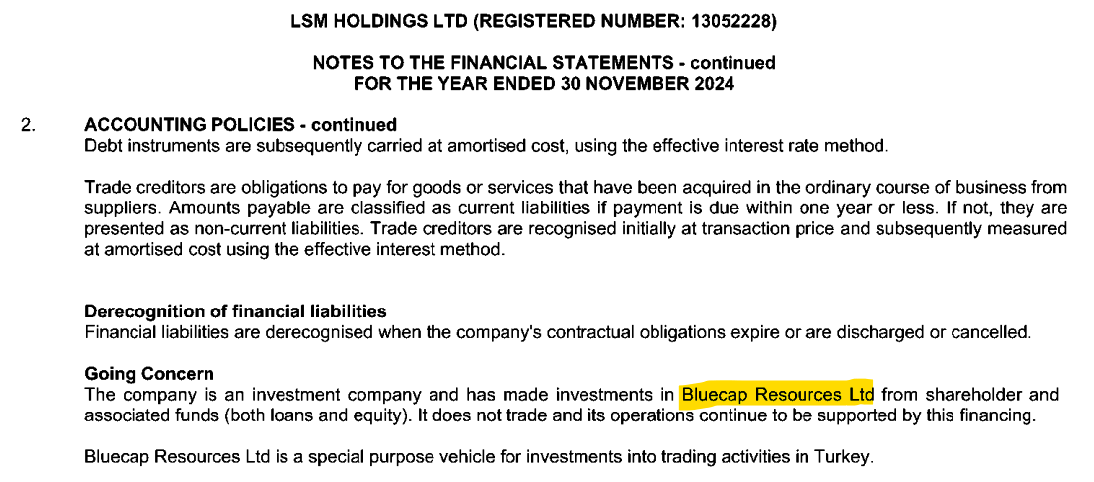
Another Revell company is Ledwood Holdings Ltd. Revell has a further company, LSM Holdings Ltd. (‘Ledwood Scrap Metals’?)

I suggest that name due to this reference in the LSM accounts, and where it leads.

Nick Revell, also gets a mention in this press release from January 2025 from the Wales Office, not ‘Welsh Government’. Again, the “Celtic Freeport” is mentioned.

Bluecap Resources Ltd, highlighted in the clip above, is based in Newport. But with its R&D in Penryn, Cornwall where, you’ve just read, we also find Inyanga, builder of wave energy machines, and beneficiary of ‘Welsh Government’ largesse.

The company is owned by:

 . . . a consortium of European shareholders from the natural resources industry, both corporate and individual, including two publicly-quoted companies . . .

(Here are the Bluecap Resources shareholders.)

Yet the website tells us very little. But if we turn to the filings with Companies House we see big share issues in recent years – all in US dollars.

Bluecap is in the business of “extraction and recovery“. That it uses US dollars suggests to me it conducts much of its business outside of the UK. A belief reinforced by the company Bluecap Poland Ltd, formerly known as Bluecap Turkey Ltd.

THE THEORY

Someone who’s given the consortium some thought has suggested to me a theory. Which, after doing some research of my own, I find both elegant and plausible.

It all hinges on the electric arc furnace at Port Talbot. On it being built, and then on that furnace using scrap material. This explains Tata Steel’s presence in the consortium.

The scrap will be provided by Ledwood-Bluecap. And will almost certainly come from outside of the UK. That’s why they’re involved.

That scrap material will be smelted at Port Talbot, a magical process to transform it into the “UK Steel” promised in the headline of the Energy-pedia article.

Next, it will be knocked into the shapes and sections desired for 250 metre tall wind turbines by Hutchinson Engineering of Cheshire, who might set up an operation in Wales, or co-operate with a locally-based company.

If my Bute source is correct about the warehouses being “filled to the rafters with BESS and pylon materials”, then Windward-Bute can supply pylons and the Battery Energy Storage Systems (BESS). This is one reason why Bute is involved.

RWE might provide the motors and other mechanisms required by the wind turbines. Then again, as a major player, RWE may be thinking ahead to replacing its clapped-out turbines, even erecting new ones.

Alternatively, the blades might come from somewhere else.

For the largest manufacturer of turbine blades in Europe is Danish company Vestas. A director of Vestas is former Danish PM Helle Thorning-Schmidt. Her alter ego is Mrs Kinnock, for she’s married to Stephen Kinnock MP, in whose Aberafan Maesteg constituency we find Port Talbot steelworks.

Furthermore, Vestas has a 25% stake in Copenhagen Infrastructure Partners (CIP), which seems to be Bute Energy’s main financial backer.

CONCLUSION

Let’s start by remembering that in the Ore Catapult press release we read that the consortium involved is “largely based in Wales“.

Yet Tata Steel is an Indian company. RWE German. Bute Energy is Scottish. Hutchinson Engineering is an English company. Ledwood and Bluecap have addresses in Newport, but source their scrap metal from God knows where.

Pushing this lot as Welsh is like describing the German army in September 1939 as Polish because it was “largely based in Poland“.

And as if that idiocy wasn’t enough, remember that almost all the electricity that’ll be generated will go to England!

If the theory is correct, or only partly correct, we can clearly see who’s going to benefit from turning scrap metal into wind turbine parts, and who’ll make money from supplying whatever else is needed.

It’ll be the same faces that have been ripping Wales off for too long.

There might be a few hundred jobs at Port Talbot, small compensation for the thousands lost. A few hauliers might get contracts. The turbines and pylons will be erected by specialist crews brought in from outside.

But let’s not forget – it might keep Kinnock Jnr in a job.

Yet we’ll have to put up with the ugly bloody turbines and pylons, and you can bet your sweet life that whatever the colour of the ‘Welsh Government’ after May 7 – we’ll be paying out plenty in public money.

All done so that demented individuals in Plaid Cymru, for whom politics is all gestures, who prefer ‘positions’ over policies that would benefit the long-suffering Welsh people, can claim that Wales is a “world leader” – in being exploited.

For God’s sake, don’t vote for these clowns!

♦ end ♦

© Royston Jones 2026
Buy Me A Coffee

The Latest Enviro-scam – ‘Celtic Rainforests’

I ended last week’s piece on the purchase by Tir Natur of land in the Elenydd, the beautiful ‘wilderness’ between Lampeter and Llanwrtyd, by saying that I was waiting for further information on what was planned to have been the second part of that offering.

Well, I’ve since had a response from the self-styled ‘Welsh Government’, but it’s not entirely satisfactory. More on that in part two. But first . . .

TIR NATUR AND ‘CELTIC RAINFORESTS’

I pointed out last week that the land bought by Tir Natur, is in the Cwm Doethïe-Mynydd Mallaen Site of Special Scientific Interest (SSSI). Which means it is already protected, and in the care of Natural Resources Wales (NRW).

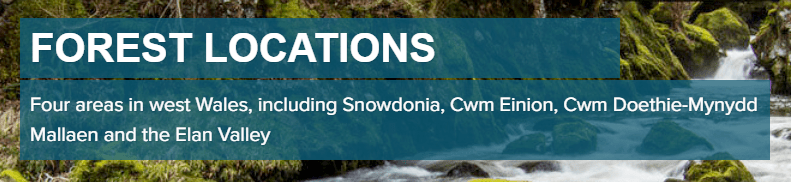
That being so, why does it need ‘rewilding’? Well, I have since learnt that this SSSI is one of four sites in Wales already appearing on the Celtic Rainforests (Wales) website. (Maybe someone should tell them that ‘Snowdonia’ is now Eryri.)

So why isn’t the rainforest aspect mentioned on the Tir Natur website?

Of the others, Eryri is of course a National Park; Elan Valley is owned or managed by Dŵr Cymru; and Cwm Einion (aka ‘Artists Valley’) is another SSSI that runs up behind Ffwrnais in north Ceredigion.

Which means that all four sites so far chosen for restoration to their imagined pristine state of ‘Celtic Rainforest’ are under some form of public agency control. So why can’t the bodies involved do the work themselves?

Perhaps I’ve given the game away in the title to this week’s piece. The Celtic Rainforest baloney is just another way for ‘environmentalists’ to grab land, and for big business to make money.

Checking the background of Celtic Rainforests I ran across this advertisement put up by Wildlife Trusts Wales (WTW). This is the name of a body that abolished itself on 31 March 2021. So it has no official registered or regulated standing

Before that date the individual Welsh Trusts had been represented by WTW in dealings with the Englandandwales Wildlife Trusts (WT). Now they belong directly to WT, just like English county Trusts.

Attributable to the almost complete absence of Welsh involvement in ‘Welsh’ wildlife trusts.

Getting back to the Celtic Rainforests, The manager vacancy was filled by Gethin Davies, who also works for Parc Eryri. Which, if nothing else, explains why the project is based at the Park’s HQ in Penrhyndeudraeth.

Anyway, seeing as this land bought by Tir Natur is already a SSSI, and is to be planted with native trees, how much rewilding will actually happen? Or does planting trees count as rewilding?

To finish this section let me introduce one of Celtic Rainforests volunteers, who believes, ” . . . systemic racism is built into the way we view and use land; how it’s parcelled up and managed.”

For someone I can confidently locate on the political left she’s strangely blind to the class dimension to land ownership. Instead, she prefers a more simplistic, black and white interpretation. Literally! White people bad, everybody else good.

This Rainforests volunteer condemns colonialism but seems blind to a ruling group’s middle class, aligned with corporate capital and serving Globalist aims, working against an indigenous ethno-cultural minority.

Are there any depths of idiocy this anti-white bullshit can’t plumb? Perhaps not; for to believe a US academic this week, drinking cows milk makes you a Nazi.

Arthur Caplan, a bioethics professor at NYU, criticized The Whole Milk for Healthy Kids Act, which President Donald Trump signed into law on January 14. In a blog post, Caplan claimed that whole milk has been used as a symbol by white supremacists.

As you can guess, I’ve had a gutsful of this nonsense. Despite being difficult to take it seriously at times it’s still racism. It must be called out and defeated.

But of course, in this context, it’s another weapon in the anti-farming arsenal.

RHOS-FARCH, PENNAL

If the name sounds familiar it’s because I wrote about this farm in July last year, in the piece, ‘Farming’ – The Globalist Way!’. So this is by way of an update.

Last July I told you it was suspected that Montgomeryshire Wildlife Trust had bought Rhos-farch, a farm of 625 acres overlooking the historic village of Pennal. Here’s how Savills describes the holding.

And here’s a map to help you further. Rhos-farch is coloured in pink.

I can now confirm that Montgomeryshire Wildlife Trust (MWT) received £3,000,000 to buy Rhos-farch. Certainly, that’s what’s suggested in the accounts. The clip below says the money came from Aviva via the Royal Society of Wildlife Trusts.

Note “restore it to Celtic Rainforest“. This is the reason for the funding.

But that clip above also says that Rhos-farch will be “open to visitors as a MWT nature reserve“. We can almost guarantee that some visitors will get lost, or think the nature reserve extends over neighbouring farms.

Seeing as Savills had priced the property at £3,500,000 I wondered if MWT had received money from anywhere else. So I wrote to the self-styled ‘Welsh Government’, asking if any money had come from that quarter.

The answer was no. But I was sent copies of email correspondence, from last summer, between interested parties. Despite redactions we can assume the ‘Welsh Government’ was a participant, if only because it was holding the copies.

Other participants that can be clearly identified from the emails are Wildlife Trusts Wales (conduit for the Aviva money), and the Celtic Rainforest Creation Manager (Wales). Confirming that even though Rhos-farch is not mentioned on the Rainforests website it is obviously lined up.

The wildlife trust’s purchase is not welcomed by locals. Certainly not by local farmers.

One reason for that is the farms in the area, including Rhos-farch, benefit from a local shoot, a useful addition to their income. Of course, Montgomeryshire Wildlife Trust will not allow shooting, and this will impact negatively on other farms.

The issue even got an airing in Nation.Cymru last year, which reported retirees and good-lifers trying to impose their views on locals. The giveaway was the paragraph beginning, “I was upset when moving here that there seemed to be an us and them atmosphere in the village.”

(Of course it never occurs to these buggers to ask how this division arose.)

Thankfully, the answer came later in the piece:

I and all my family are Pennal born and bred, and it winds me up terribly that incomers want to change our way of life and also tell us what we can and can’t do. If all the anti shooting brigades in the village don’t like what we do in the countryside, maybe they should move back to where they came from.

I find it interesting that Nation.Cymru should run this article around the same time as the emails I’ve mentioned were being exchanged. And perhaps as the Rhos-farch sale was being finalised. But N.C is extremely well connected in Corruption Bay.

Though seeing as Rhos-farch is not mentioned on the Celtic Rainforests website, how many other farms, other sites, are being lined up?

One final thought. Rhos-farch was never in Montgomeryshire, or Powys. It was in the old county of Merioneth, now in Gwynedd. So why was it bought by the Montgomeryshire Wildlife Trust?

Is it because the vendors, one of them a senior ‘Welsh Government’ civil servant, live in the old county of Montgomeryshire?

CONCLUSION

If it was simply about preserving and perhaps enhancing rainforests, then I’d be fine with that. We could ban felling, clear the rhododendrons and other invasive species, plant more trees – and then leave it to Nature.

Given that the rainforests I know locally are typically dark, dank places, steep slopes and narrow valleys, no good land would be lost and no one would be inconvenienced.

And the website agrees with me.

You are never far from the sound of cascading water, and with the huge boulders and ravines galore, these forests are an ideal place for adventures.

Adventures“?

That description also tells us these sites are unsuitable for the grazing that is constantly advocated! Though bear in mind that what these areas might have known in the past was not the right kind of grazing.

For that’s how it works when ‘environmental’ arguments are used against Welsh farming. It starts with dreaming up ways to make money, grab land – and then comes the excuse.

Step 1: Think of imaginative ways to achieve the objective.

Step 2: Dream up a ‘problem’ to justify what you’ve decided on.

Deception is the essence of the ‘climate crisis’; responsible for Net Zero impoverishing the West through ruinous electricity bills that drive industry away and make life more difficult for ordinary people.

Feeding off this prime lunacy are associated disorders such as the ‘threat’ from CO2! All too predictably, this is one of the justifications used for the Celtic Rainforests scheme.

It should go without saying that the World Economic Forum (WEF) is to the fore in connecting trees with corporate money-making.

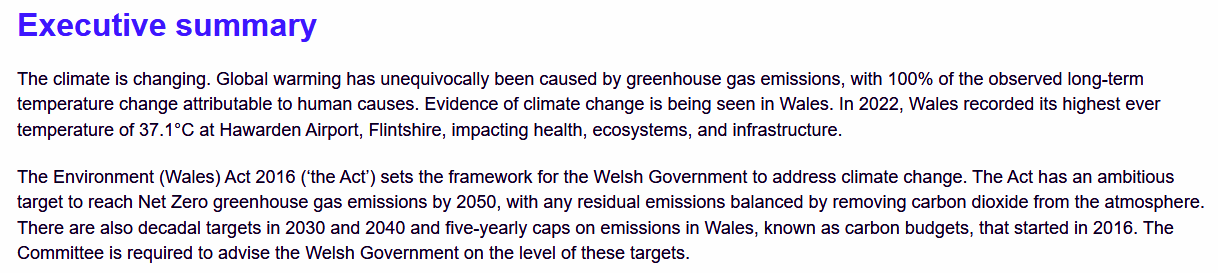
Pushing the same message on the UK level is the Climate Change Committee. Here’s an extract from a CCC report on Wales published less than a year ago.

Removing carbon dioxide from the atmosphere“! Life on Earth depends on carbon dioxide. Remove it, and everything – including we humans – dies.

Seeing as we’re talking of rainforests it’s worth remembering that this all started decades ago, in attempts to save the Amazon rainforest, and the rainforests of south east Asia. But more recently, someone realised it could be brought nearer home and used in the Globalist-environmentalist war on farming.

And remember! “Just 4.3% of the entire rainforest landscape is ancient woodland“, says the State of Wales Rainforest Report (page 8). So plenty of room to expand. Plenty more farms to buy.

And who’ll decide what must be ‘restored’? A fair question – because most of Wales qualifies as “Rainforest Zone”.

The map comes from an article in Nation.Cymru in October 2022. It seems to be attributed to Guy Shrubsole, whose name crops up a lot in such discussions. The article even names the Elenydd.

Shrubsole is said to have founded Right to Roam, a gang of self-entitled narcissists who feel they have the right to traipse wherever they damn well please. Among their number we find the ‘racist countryside’ woman we encountered earlier.

In conclusion . . . I often watch Neil Oliver’s monologues on YouTube. Neil’s persona non grata with the Beeb for challenging Covid, climate change, and all the other lies. He rambles a bit, and he’s not always right, but he’s a sincere guy.

Anyway, and as Neil Oliver always says: “It’s never about what they say it’s about“.

How true that is. Bear it in mind.

♦ end ♦

© Royston Jones 2026
Buy Me A Coffee

Land Of Our Fathers, But Not Our Children

This post is about what’s described as “Wales’ largest rewilding site“. I suspect it’s about more than ‘rewilding’. Because there’s usually big money involved with ‘environmental’ schemes nowadays.

TIR NATUR: WHO’S WHO?

I’ve written about this outfit a few times in recent years. But to get you started, here’s the Tir Natur website, and here’s the Charity Commission entry.

When I first encountered Tir Natur it seemed to be a very amateurish outfit, but now it appears more professional. (That’s not always a compliment.) And there also seems to have been an almost complete change of personnel.

The name I recall from the beginning was Stephen Jenkins. And he gets a mention on the website, telling us he’d left:

The capture above confirms that Tir Natur was formed in 2021. But not actually registered with the Charity Commission until June of 2022.

The only founding member still with Tir Natur might be Gwenan Jenkins-Jones. She’s had training in how to spot money laundering. Which might come in useful at a ‘rewilding’ charity.

These changes are also reflected in the address given.

For the address now shown with the Charity Commission is Moat Farm, Trimsaran, to the west of Llanelli. Though the old address, Y Beudy, Lanlwyd, Pennant, Ceredigion SY23 5JH, also appears on the website.

The Pontyberem address is perhaps where we’ll find the chair of the trustees, Tatatia ‘Tash(a)’ Reilly; for one of the farm owners is a Lindsey Reilly.

Tatatia was the director of a company called Dashtan Ltd. In the business of ‘Residents property management’, which was formed and folded in less than a year. A phenomenon which, as you know, always gets my antennae twitching.

Her co-director was Bogdan Edward Staniaszek. The company address was given as this property not far from Swansea city centre.

Did this in any way link with Tir Natur’s activities?

I suspect those living at Moat Farm are relative newcomers to Wales. ‘Nice little place in the country’ and all that. Same applies to a number of other Tir Natur trustees. I see two smallholders among them.

Definitely getting a whiff of good-lifers here. Though these are the ‘farmers’ Tir Cymru claims to be working with. None are real farmers.

Then there’s a couple of eco loonies who also come from outside of Wales. James Hitchcock, formerly of Montgomeryshire Wildlife Trust, and now Rewilding Britain. And Tim Birch, still looking over his shoulder for the Derbyshire gamekeepers he smeared, and now involved in just about every enviroscam.

Next, Bronwyn Jamie Bunt-Brown, who may be American. And was living in Surrey when she ran this short-lived company. And there was another company that never filed accounts, or seemed to do anything, before being struck off.

Bronwyn became a trustee 25 March, 2025. Someone who joined on the same day was Pamela Louise Noakes. While Bronwyn seems to have moved to Wales Pamela still lives in London, where she works for M&C Saatchi Group.

This company has worked with Rewilding Britain. Fancy! And is keen to offset its carbon emissions. Noakes’ role is Global Director of Sustainability. Curiously, this day job is not mentioned in her Tir Natur bio. Why would that be, I wonder?

Turning to the ‘Executive Team’, those who run Tir Natur day to day, presents very much the same picture, with the obvious exception of Gwenan Jenkins-Jones. I hope she’s getting well paid, because her mere presence is invaluable to this scam.

To help her provide a Welsh gloss there’s Dr Elen Robert, whose full-time job is as a translator for Natural Resources Wales. Is NRW – that is, us – paying her to do translation work for Tir Natur?

Kilner’s the one on the left, I think

Dan Ward’s day job is with North Star Transition, another interloper organisation.

I could go on, but I’ll just mention David Kilner who, as Development and Programme Lead, might be the top man. Dai is also involved with Climate Cymru, where ‘diversity’ seems to be more important than the climate or the environment.

I say that because you may recall it was the BAME department of Climate Cymru, back in 2024, that called for dogs to be banned from the countryside because they offended a certain group that really should start adapting and integrating.

MONEY, MONEY, MONEY?

With money from somewhere, Tir Nature has bought (or “secured“) 1195 acres of Ceredigion. Here’s a report on the purchase from the County Times.

And here’s a video put out by Tir Natur.

According to an article last week in Nation.Cymru half of the £2.2m has been raised. Farmers Weekly talks of “a philanthropic bridging loan

The Charity Commission website shows that over £900,000 appeared from somewhere before the end of June last year. But where?

Less than two years ago Tir Natur was skint. Though there is now at least one active Crowdfunder page. And there seems to have been an earlier Crowdfunding attempt that closed about a year ago after raising £60,000.

With a sizeable donation in match funding coming from Aviva which, as we know, works with BlackRock. Here’s more information on the Aviva Communities Fund, which has donated £28,264, that we know of.

One of the reasons I’m focussing on the money is because there are many examples of ‘rewilding’ projects and the like that have gone financially awry, perhaps taken on burdens that became too heavy.

One example of overreach would be Highlands Rewilding, which may be the model being followed by Tir Natur. This outfit struggled to pay off the bank loan.

If it’s not overreach then ‘rewilding’ is often a front for milking government schemes.

An example of this would be another case from the Highlands. With Aberdeen Investments being honest about the motives behind the company’s interest in ‘rewilding’.

The estate was acquired by abrdn three years ago for £7.5m as a way to offset carbon emissions from its property portfolio.

The Highlands now are over-run with investment funds and asset managers looking for ‘environmentalists’ to front for them so they can rake in the money from carbon capture and other wheezes.

And there are plenty willing to play the acceptable public face of corporate greed. New groups sprout quicker and better than any fungi they claim to grow.

Just yesterday a good contact drew my attention to Wild Cymru, which is rewilding 210 acres of Ceredigion, at Cefn Garthenor, near Tregaron. The farm is owned by Neil Alistair Hughes of Savoir Beds.

The Chair of Wild Cymru is Daniel Gruffydd Jenkins-Jones. Might he be related to Gwenan Jenkins-Jones of Tir Natur?

A few days earlier a different source told me about another outfit also operating in Ceredigion. This is Oxygen Conservation, which now owns the 300 acres of Esgair Arth.

The guy who seems to own the company, Roy Barry Bedlow, has a string of similar companies. And it’s all about investment, not the environment.

A number of his companies carry the ‘L C’ handle, which stands for ‘low carbon’. One of those companies is L C Energy, which supplies woodchip. But don’t worry, this isn’t shipped across the Atlantic, it’s all “sustainably sourced within the UK“.

Biomass is a scam within a scam. Get big grants to plant native hardwood trees, instead plant quick-growing foreign species, grab the grants and subsidies, chop ’em down, flog off the wood as ‘renewable energy’, sell the land, move on to the next scam.

It should go without saying that Roy Barry Bedlow is based in Jersey.

Finally, a worrying possibility raised by someone who knows about these things, is that this Tir Natur project might qualify for payments under the Sustainable Farming Scheme (SFS), which would not have been the case under the old Basic Payments Scheme.

This would be wrong, and can be avoided if the self-styled ‘Welsh Government’ insists that food must be produced for any land or landowner to qualify for SFS payouts. Otherwise, it’s not farming, is it?

NEIGHBOURS

Let’s take a closer look at the land in question, and its surroundings. Such as the planned windfarms. Didn’t I mention the windfarms! How remiss of me.

The map shows four planned windfarms and the land Tir Natur is claiming. As you can see, they are very, very close. (I am indebted to the group that provided the map.)

The orange access road running south from Bryn Cadwgan goes over National Trust land to the village of Pumsaint. This is the only viable access for the turbine parts and the vast amounts of concrete needed for each turbine base. I covered this issue in November 2023 in The Road To Hell.

Now you might think that the peace and tranquility promised by an area returned to nature doesn’t sit well with an industrial site next door. With work going on for years.

But it doesn’t end there. Word I’m getting from locals says Bute is scouting more land over towards Teifi pools and Pontrhydfendigaid, north east of Tregaron.

And then there are the three farms in the area reportedly bought by the Foresight Group, which has been been busy in recent years buying Welsh farms and planting trees for investors.

But now it gets rather curious. Because I’m told the farms sold to Foresight had not long before been bought by a stranger to the area who’d made his pile in pet cremations! Yes, honestly.

This man, James Uys, is originally from Stroud in Gloucestershire. He played rugby and cricket for the local teams, and is big in sheepdog sales.

His business was almost certainly Limekiln Pet Crematorium, sold to Pet Cremation Services. Pet Cremation Services Ltd is the trading name for Time Right Ltd.

I don’t know how much Uys got for the pet cremation business, but he seems to have sold it in November 2017. And subsequently sold Limekiln Farm in September 2023 for a stated £3,000,000.

Some locals think Uys is a stalking-horse for Foresight, maybe others. Which would be odd, given what he’s on record as saying.

The value of agricultural land is hitting record highs as rich people seek loopholes to avoid inheritance tax, it is being reported.

Wealthy investors who have discovered the legal technicality are snapping up fields – and as a consequence prices are soaring to around £11,000 an acre, making life difficult for farmers. One newspaper reported on the case of a 50-year-old farmer from Gloucestershire who is in the process of selling his hundred-acre estate so he can buy a larger plot elsewhere. James Uys says he hopes to make £3m from the sale.

Did Uys move west, where land is cheaper, to find that “larger plot“. For in addition to what’s discussed here, I’m also told he’s bought a farm near Rhandirmwyn.

Bizarrely, the most recent report I have of Mr Uys is that he is the new tenant of Penlan Farm, Upper Chapel, near Brecon. There were 22 other candidates, including many young locals.

The farm is owned by the Penllergaer Estates in Swansea. Which has an interest in solar farms, as I reported in November 2021. (Scroll to the section ‘Follow the Money’.)

UPDATE: As this section is headed ‘Neighbours’, here’s two of Tir Natur’s supporters talking about the project. One is Jon Moses of Right to Roam. The other is Alasdair Campbell, Executive Director of Somerset Wildlands.

Campbell talks dismissively of “these guys“, who are of course the local farmers. Believing, it would seem, that people like him should have more say about what happens in Wales than local people.

Two arrogant outsiders. Which about sums up ‘rewilding’ in Wales.

CONCLUSION

Whatever Tir Natur may say, I believe they’re fronting for somebody else. Somebody hoping to make lots of money. I say that for a number of reasons.

First, the land Tir Cymru claims to have acquired is, as the video I linked to tells us, already a Site of Special Scientific Interest. It is already protected. For Tir Cymru to want to take it over can only mean they want to make changes.

Perhaps ‘reintroduce’ species like the Eurasian lynx.

‘I’m going to live in Wales’

Second, and in addition to be being an SSSI, the Elenydd is perhaps the last true wilderness in Wales. Consequently, to suggest it needs ‘rewilding’ is absolute bullshit. Like suggesting the Mona Lisa would be improved with a moustache and sunglasses.

Only those with a hidden agenda would insult our intelligence in this way.

But let’s take the claim at face value. If ‘developers’ have their way this ‘rewilded’ area will be surrounded by wind turbines. How will the constant hum and vibration, the flicker, affect wildlife? The lynx and other species will move out.

And the large, slow-moving birds that Tir Natur hopes to attract won’t stand a chance against the blades of the wind turbines.

Going back to the video again, the commentary claims to be “celebrating Welsh history and culture” – while snidely condemning that heritage for the bad farming practices Tir Natur wants to remedy.

Tir Natur promoting themselves as knights in shining green armour coming to save the Welsh environment – from those who have cared for it for over two millennia.

The video talks of bringing in Carneddau ponies. But a contact who knows the farmers that look after these animals says they’ve had no approach from Tir Natur. Which makes me remember a ‘rewilding’ scheme, near Machynlleth, that talked of “reintroducing” Welsh  horses – then they brought in a Polish breed!

Put it all together and you might understand why I’m a wee bit cynical. Why I don’t buy the story that the land Tir Natur has acquired in the Elenydd is just a ‘rewilding’ project, and nothing more.

I believe there’s much more to it.

FOOTNOTE: This week’s piece was to have been in two parts. The second part about a 625 acre farm on the Gwynedd side of Machynlleth bought by Montgomeryshire Wildlife Trust with Aviva-Blackrock money. I’m waiting for further information.

But that’s the state of rural Wales today. Those with roots in this land are being elbowed out by recent arrivals and groups serving the Globalists’ anti-human agenda. With many of them funded and supported by the ‘Welsh Government’ to do the elbowing.

It’s a form of Clearance.

♦ end ♦

© Royston Jones 2026

Buy Me A Coffee

Wales Ruled By The Wampis?

I am indebted to a good source for introducing me to an outfit I’d never heard of, called Local Partnerships LLP. Here’s the website, and here’s the Companies House entry.

Sticking with the CH filings, we see three names under ‘Officers’. The Designated Members are H M Treasury and the Local Government Association, but the self-styled ‘Welsh Government’ is just a ‘Member’.

INTRODUCING THE WAMPIS

Let’s start with the Local Partnerships website, which tells us . . .

Our purpose is to help public sector organisations face the ever-increasing challenge of meeting rising demands for services, with shrinking budgets.

Last week Local Partnerships brought out their Wales Annual Impact Report 2025. So let’s go through it, see what joys it offers up.

In Chair Keith Fraser’s Foreword, in the very first paragraph, we read a reference to the Well-being of Future Generations (Wales) Act 2015. Insane legislation, the authorship of which is claimed by privately-educated, globe-trotting climate fanatic, former Assembly Member for Pontypridd, and now good-life smallholder, Jane Davidson.

Though I’m persuaded there was much input from others.

This Act now dictates everything done by the ‘Welsh Government’, public bodies, local authorities, and just about everybody else. Forcing Wales to commit economic suicide on the false premiss that we are threatened by an anthropogenic climate crisis.

But now it gets rather strange. For as the Introduction to the Act itself says:

No disrespect to the Wampis . . . but are we seriously expected to run a complex, post-industrial society by following the example of a Stone Age Amazonian tribe?

And if you’re wondering about “the Seventh Generation Principle“, it also comes from Native Americans, this time the Iroquois, whose territory I believe straddled the eastern border between the USA and Canada.

I don’t know about you, but I’m getting the strong whiff of bollocks here with all this “indigenous wisdom“. It echoes all the other ‘wisdom’ and advice attributed to sage old Indians . . . that was made up by LSD-dropping hippies in the 1960s.

Despite the patronising ‘noble savage’ trope being widely debunked it inspires and infuses the 2015 Act; and even though it’s hailed as an “example to the world” . . . the Act remains, eleven years on, an example nobody has been daft enough to follow.

Who’s gonna tell the Wampis!

GEMS FROM THE REPORT

As I pointed out earlier, on the surface, Local Partnerships describes itself as a body helping public sector organisations. But I don’t think that’s strictly true. Let’s delve into the Report again.

And let’s go to page 11, where we encounter a rather curious juxtaposition:

Sustainable Farming Scheme business case approved for a national, multi-year programme

new National Park in Wales progressed toward designation.

What public sector bodies or small local projects are being aided here?

The Sustainable Farming Scheme (SFS) is designed to reduce farming in the name of saving the planet. (On the advice of the Wampis?) And it’s being pushed by the ‘Welsh Government’ in its war against the Welsh family farm.

The truth is that it’s a policy to free up land for investors and the wildlife trusts and other bodies said investors control or influence through funding and other means. But this ambition doesn’t confine itself to land. For those behind it want to put a value on everything, including the air we breathe – and then make us pay for it.

The new national park proposed for the north east, provisionally named Glyndŵr National Park, is rejected by local authorities and most people living in the area.

Proven by the fact that in a survey conducted by Natural Resources Wales (NRW) most of the support for the idea came from outside the area affected, even from outside of Wales. And it still only managed 53% backing.

The groups that want the new park are the usual suspects, like the Open Spaces Society, urging its largely English membership to show their support. But this is supposed to be a decision made within Wales.

Despite local objections, and external interference, it seems to be a done deal.

Whatever happened to ‘local democracy’? Well, that concept is only invoked when it supports a pre-determined outcome. Which, in this case, means it’s disregarded.

The SFS crops up again, on page 23. In fact, it gets the whole page. And it’s mentioned again on page 24.

Is Local Partnerships helping with local projects or dictating ‘Welsh Government’ policy?

On page 17 we find a reference to “Re:fit“. Does this refer to what I think it refers to? I suspect it does because later in that same sentence we see ” . . . fuel poverty and energy efficiency programmes including Warm Homes, NEST and ECO“.

Was Local Partnerships involved in the ECO4 fiasco that led to the collapse of Consumer Energy Solutions, which I wrote about last month in, ‘Grab The Money And Run!‘?

Climate bullshit in a domestic setting

Next, a remarkable map of where Local Partnerships operates. Now I’m not very good with figures, but I don’t need to do any counting to see that the bulk of the projects being helped and funded are in Cardiff, or within 15 or 20 miles of Corruption Bay.

So many dots that some have to be located out to sea!

Pembrokeshire has a single project! Conwy two. Gwynedd three. Yet this is how devolution works. This is how devolution was always supposed to work. Cardiff gets the lion’s share of everything.

Preferential treatment that even extends to rugby.

Page 17 mentions the UK government’s Climate Change Committee (CCC). I know it describes itself as an “independent advisor“, but that’s a smokescreen.

Here’s a letter from the CCC, in July last year, to Huw Irranca-Davies SM, Deputy First Minister and Cabinet Secretary for Climate Change and Rural Affairs. It says:

We recommended that the Fourth Carbon Budget should be set to require average annual emissions over the five-year period from 2031 to 2035 to be at least 73% lower than the 1990 baseline, including Wales’ contribution to international aviation and shipping.*

I suppose 73% lower than the 1993 baseline is achievable, if you close the odd steelworks, stop people driving cars, etc. But why do we need to make this reduction?

And what the hell is Wales’ contribution to “international aviation and shipping“? Are they suggesting Powys closes Llanfair Caereinion International Airport?

Later in the letter we read:

Carbon units, also known as international carbon credits, represent a reduction or removal of greenhouse gases from the atmosphere. Under the Environment (Wales) Act 2016 (‘the Act’), the Welsh Government has the option to purchase international credits to help meet Wales’ emissions targets.

So not only are we expected to pursue the self-destructive idiocy of Net Zero, and swallow the scientific illiteracy that says CO2 is destroying the planet, but if Wales falls short ‘we’ can buy ‘International carbon credits’ to make up the shortfall.

Where would the ‘Welsh Government’ get these ‘credits’? Has it bought any?

Throughout the Local Partnerships document there’s hardly any reference to jobs, or the economy; just the fabled ‘green economy’, and the equally mythical ‘green jobs’.

Why am I not surprised!

CONCLUSIONS

It seems to me that the “close cooperation” Local Partnerships claims with the ‘Welsh Government’ means ensuring that Wales follows the Westminster line. It may even mean that Wales is used to test certain ‘initiatives’ before they’re rolled out in England.

So much for devolution, you might say. But again, this was always a purpose for which devolution was intended.

Here’s another thought. One of the two full partners in Local Partnerships LLP is the Local Government Association (LGA) which represents local authorities. Local Partnerships bangs on relentlessly about green energy, and how we must invest in it.

So did the LGA have a role in Welsh local authorities investing £68m of their pension pot in Bute Energy? Will there be further investment?

Finally – and I make no apologies – I’m returning to the Future Generations legislation, and the reference in the Act’s preamble to taking direction from “indigenous wisdom“.

The Act to which all other legislation, initiatives, polices, must submit or conform, and predicated on the claimed ‘wisdom’ of Indian tribes in the Americas.

Or look at it this way . . . What about the genuine wisdom of Welsh farmers, whose families have been on the land for generations? Wisdom that’s more relevant to Wales than that of Wampis and Iroquois.

So why are our farmers ignored, even vilified?

Only a fool, or an enemy of Wales, would ignore our farmers and claim to be guided by those who’ve never heard of Wales. Unfortunately, there are too many fools and enemies dictating what we must do in our country.

Which makes Local Partnerships suspect in my book. So watch out for it in future.

♦ end ♦

© Royston Jones 2026
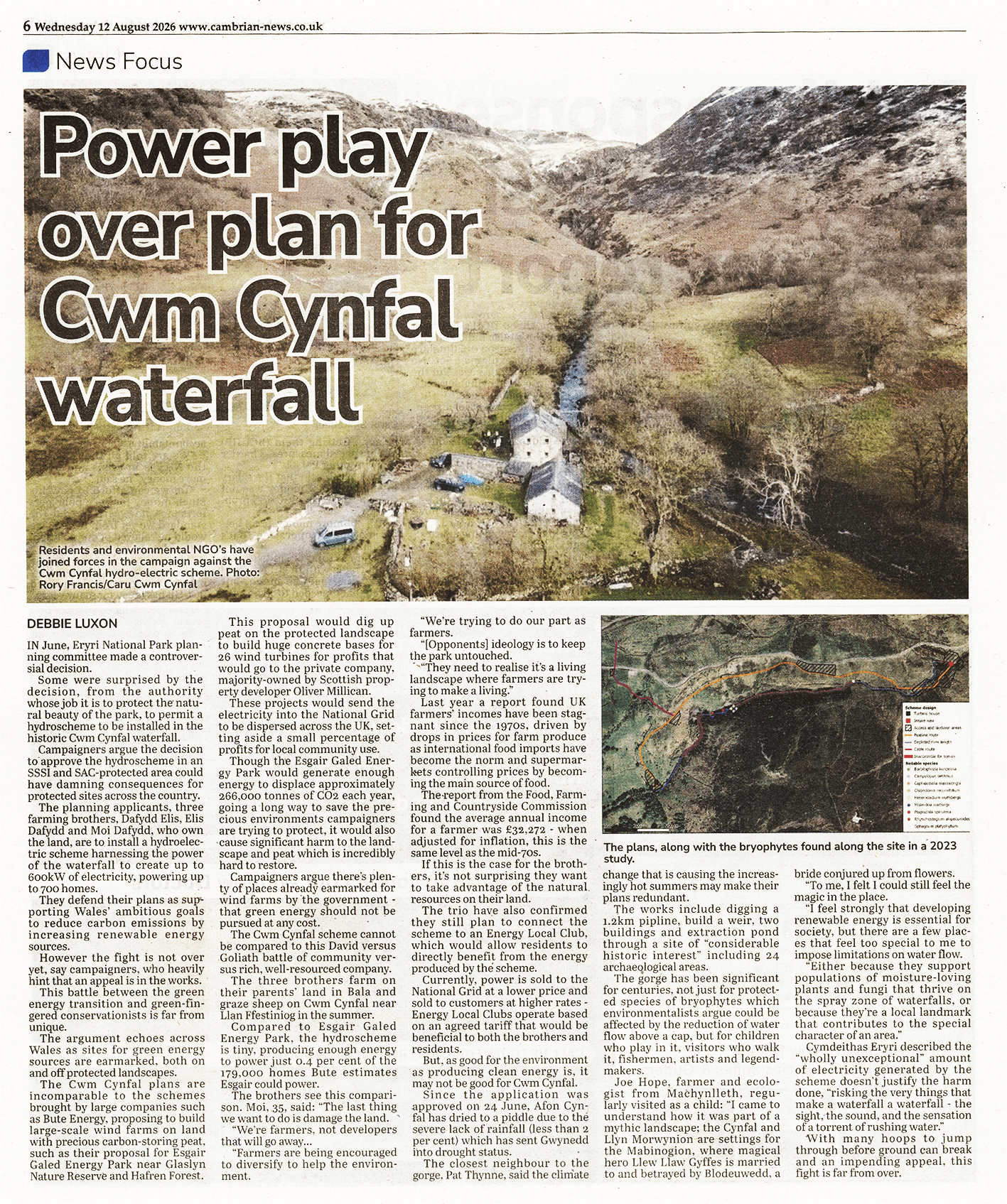
Buy Me A Coffee

Gilestone: It’s All About Water

Over three years ago, with ‘Gilestone: Thinking Outside The Box‘, I suggested that the ‘Welsh Government’s controversial £4.25m purchase of Gilestone farm is about the transfer of water.

Much of what follows may look, superficially, like a rehash of that earlier piece; if so, it’s because that’s unavoidable in bringing the story up to date.

But there is more evidence. Which convinces me I was right.

THE BACKGROUND

We’ll start by looking at what I think are the major milestones in this saga, in the order they happened.

1/ The Thomas family, who owned Gilestone pre-2010, had problems with the (then) Brecon Beacons National Park. They felt hounded. It cost them a lot of money to fight officialdom, and resulted in them selling up in October 2010.

(A curious feature of the business was that the solicitor acting for the Park was a Julie James. Who, in May 2011, became the Labour Assembly Member for Swansea West.)

2/ Next, seemingly out of the blue, a buyer in the form of Charles Weston turned up. He bought Gilestone for £900,000 through his company Sharpness and Severn Transport Ltd, re-named CWW Farming Ltd in November 2019. (Though the title document I’ve linked to does not cover all the Gilestone land.)

(Sharpness, Bristol, Newport, and Cardiff, are the major ports on the upper Severn estuary.)

3/ In March 2018 Dŵr Cymru Welsh Water (DCWW) organised a trip to Wales for representatives of the Watershed Agricultural Council based in the Catskill Mountains of New York State. This is the body responsible for keeping the Big Apple’s water supply up to standard. This visit was reciprocated in October 2019, when a party from the Beacons visited the Catskills.

(Which meant DCWW was studying a model under which a rural catchment area supplied water to a metropolis some 100 miles away.)

4/ This link resulted in DCWW setting up the Brecon Beacons Mega Catchment (BBMC). Though apart from the change of name to Bannau Brycheiniog I can’t see much recent activity on the website. There’s been nothing on the Facebook page since July 2022 and the Twitter/X account has been closed.

Next, in May 2020, the Beacons Water Group CIC (BWG) was launched.

The Beacons Water Group was established under Welsh Water’s Bannau Brycheiniog Mega Catchment initiative (BBMC), our landscape-scale approach to safeguarding our drinking water sources now and for the future.

Among the founders we find Weston of Gilestone and his next-door neighbour across the River Usk. (Weston left BWG in October 2022.)

BWG definitely enjoys political support. As does DCWW, which seems to get a free pass from the ‘Welsh Government’ and ‘environmental’ groups when it comes to river pollution, with farmers copping all the blame. One director, Hugh Martineau, was an ‘advisor’ with Coleg Soros in Talgarth.

5/ In March 2022 the ‘Welsh Government’ bought Gilestone farm for £4.25m. The reason given was to allow the Green Man Festival to expand from its Glanusk Estate site.

OK, that’s enough background. Let’s try to put meat on the bones and get up to date with other developments and findings.

FILLING IT OUT, RECENT DEVELOPMENTS

What I suggested back in October 2022 was that the key to understanding the purchase of Gilestone might lie in the proximity of, on the one side, the River Usk, and the other side, The Monmouthshire and Breconshire canal.

Even so, this in itself tells you little. For it to make sense we need to link this abundance of H2O in Wales to southern England running dry of the stuff.

And let’s remember that, in addition to the river and the canal, Gilestone is just a couple of kilometres from Llangorse Lake to the north east and the same distance from Talybont reservoir to the south west.

The reservoir already connects with the Usk very near to Gilestone. It would be relatively simple to connect the lake.

I explain this because taking water from Wales has long been a favoured option to meet the increasing shortages in southern England. Boris Johnson talked about it in 2011. Johnson’s name was invoked in August 2022 in renewed calls for a national water grid.

As Nation.Cymru put it, quoting the Daily Mail:

Senior Conservatives are floating the idea of a ‘Great Boris Canal’ named after the outgoing Prime Minister to transfer water from the north of Wales to the south of England.

Though this plan has water from Llyn Efyrnwy diverted into the river and then into the Severn just over the border. As this Guardian article from March 2023 explains.

The “Cotswold canals” mentioned must be the Thames and Severn Canal, currently being restored.

Alternatively, the water will be piped straight into the Severn. Then it will be abstracted lower down, either at Deerhurst, north east of Cheltenham, or near to Sharpness.

Which serves to remind us that Charles Weston bought Gilestone farm in the name of Sharpness and Severn Transport Ltd, based in Sharpness docks. Where the Gloucester and Sharpness canal begins, connecting with the Thames and Severn canal in Gloucester.

It seems like every which way we turn in the Gilestone saga we hit water.

Taking us further and further away from farming and music festivals.

While the plan to transfer water from Wales to southern England has been mooted for decades, one reason for increased urgency in recent years is the planned growth in the numbers of AI data centres.

But it’s not just London and the south of England affected, there are other areas that will need much more water. Such as Cambridge, where there are (somewhat vague) plans for a ‘Forest City‘ of one million people.

One of those behind the plan, while admitting that water from Wales is a serious option, fears we Welsh are a bit touchy about the subject. Us!

Maybe that’s why the talk is of using rivers and canals. Perhaps some people think we’ll be too stupid to notice.

Having mentioned AI data centres, it’s worth remembering we have them in Wales, too. Especially around Newport and Cardiff. With more planned. Let’s get back to Gilestone.

We’ve seen that the River Usk and the Monmouthshire and Breconshire canal flow over or close by the property. Both waterways then run in a southeasterly direction towards Newport and the Bristol Channel.

My original thinking was that water could be transferred in either direction, whichever best suited the purpose of the exercise at any given time. But the canal only runs to Cwmbran, and is now effectively banned from taking water from the river.

As this piece from the Brecon & Radnor Express last month explains:

Earlier this year, Natural Resources Wales imposed new restrictions on the canal’s long-standing abstraction licence from the River Usk. It means that during periods of low water, the canal is no longer permitted to draw water from the river – a supply it has relied on for more than a century.

This has affected those who rely on the canal for their livelihoods, largely in the tourism businesses. Which seems to have resulted in intervention by the ‘Welsh Government’ with what looks like compensation.

With £5m announced in July. And what appears to be further funding announced earlier this month.

It seems clear that the flow of water in the Usk is a priority, and must be safeguarded.

CONCLUDING THOUGHTS

Earlier I said that Charles Weston of Sharpness & Severn Transport had turned up at Gilestone out of blue. Perhaps I made him sound like a wraith appearing from nowhere. Which would be misleading.

Because before buying Gilestone Weston had, in 2004, bought 182 acres at Tan-y-fedw, south of Sennybridge. This sits on Afon Crai, which runs into the reservoir a few kilometres south.

And as AI Overview says of the reservoir: ” . . . much of its water is diverted to the Swansea Valley, while the remainder flows down to meet the Usk”.

Four years later he bought 76 acres at Allt-fechan, a couple of kilometres north west of Brecon. This holding stands on Ysgir Fechan, which runs into Afon Ysgir, which runs a few more kilometres into . . . the Usk.

Having received its orders from London the ‘Welsh Government’ plays its loyal part in this scheme. We see politicos, DCWW, and Natural Resources Wales, all working towards the objective . . . without being able to say what they’re really up to.

With the ‘environmental’ lobby chipping in. Remember Gail Davies-Walsh, former employee of DCWW, now of front organisation Afonydd Cymru, which shields the water company from criticism by blaming farmers for all river pollution?

Re-acquaint yourself with Gail by scrolling down in this piece from three years ago. Read her contribution to this article from March this year.

In the very same building in Talgarth where Afonydd Cymru is based we find the cross-border Wye and Usk Foundation, with its staff of 34 and its considerable income. Roughly half the grant money comes from that generous old soul, “Other“.

Ah! sweet Talgarth. Home of that noted and venerable seat of learning – Coleg Soros.

Finally . . . We know there’s a plan to take water from Llyn Efyrnwy, into the Severn, and then, via pipe and canal, to the Thames. I believe there’s a wider plan that includes the Usk, Wye, and other sources. And this may be where Gilestone fits.

It would be relatively simple to connect Usk and Wye to the plan shown above. It would then be a multi-source option less likely to draw attention and criticism. For as Severn Trent is keen to stress (my emphasis):

This will be using water that is currently taken from Vyrnwy and occasionally redistributed elsewhere.  No additional water will be taken from Wales.

This, “some from here, some from there” approach, with no valleys drowned, will avoid another Tryweryn.

And seeing as Usk and Wye are within Dŵr Cymru’s territory, it explains the Catskills connection, Mega Catchment and Beacons Water Group. Why else would DCWW study how a hilly rural area supplies water to a metropolis 100 miles away?

Another factor worth considering is flooding. The existing wind farms on hills above the Severn and its tributaries cause greater run-off of rainwater, increasing the risk of flooding. With more windfarms planned, this risk will only increase.

So taking water from the Severn could also serve a flood prevention purpose. Though this is unlikely to be admitted, and never linked to wind turbines.

The wider plan I’m suggesting would also explain the quasi-sacred status given to the Wye by writers like George Monbiot, and bodies such as the Wye & Usk Foundation and Afonydd Cymru. For no other river in Wales gets this attention.

Whatever the details, it’s clear that Wales is to supply water to southern England. Much of it from resources in Wales owned by Severn Trent of Coventry.

But Wales won’t get paid a penny.

Ain’t devolution wonderful!

♦ end ♦

© Royston Jones 2025

‘Corruption Bay’ Living Up To Its Name?

This is a big post, in two ways. First, because there’s a lot of money involved. And second, because an incredible claim I stumbled upon throws up a very disturbing possibility.

HITTING THE BIG TIME (REVISITED)

In July I wrote about companies in south east Wales being bought out and having lots of money pumped into them. You’ll find it here; ‘Saving The Planet – The Globalist Way!’.

These companies are involved in, “energy efficiency“; which means ‘retrofitting’ homes with solar panels, cavity wall insulation, heat pumps, loft insulation, that kind of thing.

They’re all linked under the holding company Dragon 2023 Topco Ltd. From the most recent accounts submitted to Companies House here’s a list of the companies owned.

And here’s my table of the interlinked companies and individuals involved, in pdf format with working links. (And helpful notes!)

The majority shareholding in Dragon 2023 Topco lies with Cairngorm Capital Partners LLP of Edinburgh. Part of the Cairngorm group of companies. Dragon 2023 Topco’s directors are: Robert Brodie; Chris McLain; Andrew Steel, managing partner of Cairngorm Capital Partners LLP; and Jonathan Neale.

Steel is also named as the controlling interest.

Another key player is, or was, Matt Anstead, managing director of Cairngorm Capital Partners LLP. Below is a clip from Anstead’s Linkedin page.

You’ll see Anstead joined Cairngorm around the time they took over the Welsh companies. Was he brought in for that job? And was the takeover funded with three loans in 2024 from Metro Bank?

Funding to the companies themselves comes from Alter Domus, a company registered in Luxembourg, that seeks ‘alternative investments’, and was recently taken over itself by another private equity firm Cinven.

What’s really behind it is, as ever, money. Local companies expand thanks to the UK government ECO4 scheme, making them attractive to bigger fish; while also offering opportunities for others to profit from investing in these companies and then claiming to be saving the planet in some way.

There are obviously pay-offs for those who’ve been previously involved in the companies, and of course jobs are created; but as ever – this being socialist Wales – the real money leaves the country.

I make that point because, as you should know by now, I support the capitalist model, and I have no objections to profits being made. But as a Welshman, and a nationalist, it pisses me off to see the profits leave Wales.

Wasn’t devolution supposed to improve things?

Before pushing on maybe I should remind you that July’s post was in two parts. One dealt with the companies taken over by Cairngorm Capital; the other with companies in the same area, and the same line of business, that were taken over by Buckthorn Partners LLP of Jersey.

Maybe I’ll return to this second lot another day.

NICK PRITCHARD

Now we’re going to look at another man with a role in (he certainly benefitted from) the takeovers we just looked at. Though it’s not always easy to figure it out.

If the name rings a bell, it might be because Pritchard appeared in a Nation.Cymru article a few weeks back written by Martin ‘Shippo’ Shipton. It recounted Pritchard’s conviction in 2010 for growing cannabis, or providing premises where it might be grown.

So why bring it up now? Because Pritchard is associated with Reform UK, and may wish to stand for the UK parliament. This interest in his past is another sign of the desperate establishment that recently sent down Nathan Gill for something he said in 2018, and is now hunting for people Nigel Farage might have thrown milk over in kindergarten.

All done because the Globalist elite, and the political and media establishments they control, are getting worried by the rise of the ‘far right’ across the Western world. And so, as a mouthpiece for the Corruption Bay Uniparty, Nation.Cymru must get stuck in . . . or risk losing its ‘Welsh Government’ funding.

That said, Nick Pritchard is an interesting character; he seems to be a bit of a Jack the Lad, always looking for ways to make money. Nothing wrong with that as long as you stay on the sunny side.

But things never seem to be simple with Pritchard. Take this piece from Ideas Fest promoting his appearance at some event next year (my highlighting):

In 2013, Nick founded City Energy Network, an innovative energy efficiency consultancy based in Cardiff. The company specialises in the full retrofit journey from initial consultation to the implementation of the renewable measures recommended, his group of companies plan, and installs energy efficiency and low carbon measures for both homes and businesses and also specialises in Local Authority large scale projects.

But it makes no sense.

For a start, City Energy Network Ltd (CEN) was formed in 2011, but Pritchard’s name never appeared as a director or a shareholder. Perhaps because, Pritchard, sent down in 2010 for three-and-a-half years, would have been in prison when CEN was formed.

And what’s included in “the group of companies“?

Seeing as 2013 is mentioned by Ideas Fest, Pritchard may have been represented by one or both of Nicola Vaughan and Michelle Roberts, who became CEN directors 31.01.2014.

But even after he was released from prison I’m fairly sure Pritchard would have been disqualified from acting as a director for a few years. If he was operating through Roberts and / or Vaughan at CEN then “proxy management” is a criminal offence.

Coinciding with the arrival of Roberts and Vaughan all 100 CEN shares were transferred to Diversity Network Holdings Ltd (DNH), which Roberts and Vaughan had joined 28.01.2014. Pritchard didn’t become a director until April 2020.

A declaration dated 28.01.2015 shows the 100 DNH shares now distributed thus:

Though Pritchard did join Diversity Network Ltd 14.05.2012, which might have been not long after he was out of prison. And surely disqualified? Also directors were Michelle Roberts and Shelley Roberts.

There are other anomalies I could point out. Check names, DoB, dates.

When he was sent to prison Pritchard was reported to be in the “lettings business” in Bangor and other parts of north west Wales. He’s from Bangor, passionate about the local football club, he serves on the city council, so how and why did he get involved with companies in a totally different line of business at the opposite end of the country?

Hoping to make sense of it on a wet night with no football on the telly, I compiled a list of the companies Pritchard’s been involved with. Here it is, with the company name serving as a hyperlink.

You’ll see three company names in yellow blocks. These are also found in the previous table I linked to, showing the companies taken over by Cairngorm Capital. His past involvement with these companies perhaps accounts for Pritchard’s sizeable share allocation in holding company Dragon 2023 Topco Ltd.

You’ll see other individuals there with sizeable shareholdings. All have been involved with the companies we’re looking at. And Ahmud Saleem Eamon Furreed is a Labour party donor. (There may be other donors.)

Obviously, companies doing the kind of work we’re looking at need a stamp of approval, some accreditation. From a company like Quidos of Bath. And as you can see if you scroll down on that link, you have to pay for it.

But Pritchard now seems to own Quidos through year-old Quidos Holdings Ltd!

It could make life easier when you’ve got big stakes in companies ‘retrofitting’ and you also own a company that’ll give them a certificate to put up on the office wall saying they know what they’re doing.

Though many would disagree. Such as those involved with this website. Or those who gave these reviews to a company that’s among the clutch bought up by Cairngorm.

And we’ve all heard tales of cavity wall insulation resulting in damp and other horrors. I could tell you my own story.

You might have noticed that in some of his most recent business ventures Pritchard has been joined by celeb economist Dylan Jones-Evans.

What the hell is that about?

WHERE IT GETS WEIRD

While researching this article I stumbled upon a remarkable letter addressed to Paul Davies AS/SM, in his capacity as chair of the Senedd Economy, Trade and Rural Affairs Committee.

It gets included in this piece because I’m convinced there’s a connection to what you’ve just read. Anyway, here’s the (redacted) letter. I urge you to read it carefully and consider what it alleges.

After reading it I last Monday I e-mailed Paul Davies asking what had happened to the complaint. Here’s his response. (The links don’t work as there’s an issue with linking to pdf docs created from e-mails.)

So here’s the link to the report on the DBW he references (Section 9).

I asked if I could use his response and he agreed.

I would have tried to contact the complainant, but one problem was that I believe he’s moved from his original address. The other reason will be given later.

What the letter alleges is that the complainant (hereinafter referred to as ‘A’) came up with a good idea, and was doing quite well . . .

The company grew quickly and gained significant market traction with companies such as Sainsburys Supermarkets and BT Openreach.

But presumably needing to expand, ‘A’ in 2017 applied to Finance Wales (now Development Bank of Wales) for a loan. That’s when things started going wrong.

Not only does ‘A’ claim he had to take on “a bank-appointed expert”, and pay that ‘expert’ £150,000 pa, but . . .

Less than 1 year later, I was accused of taking “unauthorised funds” from the company’s bank account and sacked.

This happened to be just 1 month after my refusal to sell the business to BT Group.

I lost my job, my shares (approx £3.8m at that time), my patent (£13m-£17m valuation) and was forced to go bankrupt in September 2018.

Is the complainant suggesting a link between him refusing to sell up to the BT Group and the criminal charges that soon followed?

Things got even worse. ‘A’ was arrested, tried at Swansea Crown Court – but was acquitted by the jury. (Which might explain why the Labour government in Westminster wants trials without juries.)

To add insult to injury . . .

To note, after my dismissal the business was moved from Lampeter . . . where we employed up to 17 local people to Cardiff. Where they employed only 3.

After the business moved to Cardiff, both [name redacted] and [name redacted] set up new battery storage business, using my invention, and even got further funding from DBoW for these copy cat companies.

That is one hell of a story. And yet, if you think about it, the danger of such an outcome is always there. Just imagine . . .

Dai Schmuck out in the sticks comes up with a good idea, but he needs money to expand. So he goes to the Development Bank of Wales. They appoint ‘advisors’, who may move in the same circles as the bank officials who give them the gig.

The DBW admits to appointing the same favourites as ‘advisors’ again and again.

In a follow up letter to the Committee’s session with the Bank, the Chief Executive noted that it did re-appoint the same people
multiple times if it thought that person was a good match and had capacity.

Though an unscrupulous ‘advisor’ might say to himself: “Hang on, this bloke’s got a good idea – let’s nick it and make a fortune“. It’s a sweet system, but only if you’re well connected in Corruption Bay.

I could tell you more, but I’d be sticking my scrawny neck out. What I will say is that as I know the name of the company ‘A’ is referring to I can probably identify those he claims ripped him off.

From what I can see, ‘A’s allegations seem to have been kicked into the long grass. Maybe nobody in Corruption Bay wants to know the truth. Or perhaps they don’t want us to know the truth.

But the real twist is that ‘A’ is now teamed up with Nick Pritchard. And this happened soon after he started making waves with his letter to Andrew Davies.

What the hell is that about?

CONCLUSION

We need an independent investigation into the Development Bank of Wales.

In particular, we need to know how it chooses ‘advisors’ for small companies needing help. We also need to know the conditions imposed on those companies. And the behaviour expected of the ‘advisors’.

But then, it’s unlikely anyone will get straight answers. Because Wales is corrupt.

All devolution has done is give Labour more chances to be corrupt, more money to squander, while also providing more opportunities for cronyism. Third sector outfits, pressure groups (closed to non-socialists), are funded to fight problems that don’t exist.

Sinecures and non-jobs for insiders proliferate.

In recent decades Labour’s joined forces with Plaid Cymru. Together, they’ve built a fortress they see as a bastion from where they combat racists, homophobes, climate deniers, Islamophobes, a white supremacist countryside, misinformation, and colonialist Welsh cakes!

In truth, it’s ‘Corruption Bay’, and its enemies are honesty and openness.

Because what they get up to must be kept secret. This explains why Corruption Bay is unique in the Western world in refusing to have a register of lobbyists. “Why do you need to know?

But I’m forgetting Cairngorm Capital, Nick Pritchard and the rest . . . here we have a man with a ‘colourful’ past, dubious associates, now teamed up with Professor Dylan Jones-Evans, who’s often critical of the DBW. Pritchard also teamed up with ‘A’ soon after ‘A’s complaint against DBW was heard.

What the hell is that about?

Answers on a postcard please. (I will not accept diagrams or flowcharts.)

♦ end ♦

© Royston Jones 2025

Globalist Muppets Seek (Somebody Else’s) Land

Over the years I’ve written about people and organisations in Wales dreaming up problems and pushing agendas with you and I expected to fund their activities through a captured political class.

In recent years, I’ve had to widen my horizons. Because it’s clear these shysters are now getting corporate funding from the USA and elsewhere. Which is often carefully ‘filtered’ to disguise the source. But always remember – He who pays the piper . . .

Which introduces the latest offering . . .

THE OLD HOME TOWN LOOKS . . . WELL, DIFFERENT

Last Wednesday saw a conference in Swansea organised by an outfit claiming to be the Welsh branch of the global Wellbeing Economy Alliance (WEALL). Basically, local faces hoping to fool us into thinking WEALL cares about Wales.

Much like the so-called ‘Welsh Government’. Or devolution itself.

It was held at the Swansea Building Society Arena on Oystermouth Road, which pedestrians can access over the ‘Crunchie Bar Bridge’.

To check out who was starring at this ‘Festival of Ideas’ just scroll down to ‘Speakers and Panellists’.

There was Derek Walker, the Future Generations Commissioner. A man with a first-class seat on the gravy train. And his successor at Cwmpas, Bethan Webber.

Cwmpas is the UK’s largest development agency for social enterprises and co-operatives. The organisation develops and delivers innovative programmes to support enterprise, increase employment, tackle poverty and promote inclusion.

Translated that means socialists interfering in things they know nothing about. Terrified of letting the economy be run by people who know what they’re doing because such people would be unlikely to take advice from the comrades.

They prefer socialism which, as history tells us, has always been a great success.

There was a couple at the conference from Oxfam. Assorted jobsworths from health boards and ‘Welsh Government’. A man of whom I know nowt except that he must have the whitest teeth in Gwynedd. Then there’s the ‘Welsh Government’s early warning siren for Islamophobia who runs the Kumbaya Caff in Cardiff.

Finally, Yvonne Murphy, of Omidaze Productions, which I mentioned in May last year in connection with that nest of bruvvers, the Tramshed. Though I don’t know why Omidaze needs a website, because Companies House tells us it files as dormant, with nary a penny in the kitty.

Omidaze was mentioned last year because of Murphy’s collaborator Leonora Thomson, who’d come down from London to take over the Welsh National Opera . . . and became a councillor in Cardiff. A good example of the link between the Labour party in Wales and public appointments.

But if Omidaze was Murphy’s ticket to this knees-up, then it don’t say much about the credibility of the others. Anyway, here’s the full run-down of the speakers.

I bet you’re sorry you missed it!

(‘Weall’ is someone’s play on weal, meaning well-being, as in ‘common weal’.)

WHO’S WHO IN THE WELLBEING ECONOMY ALLIANCE?

Let’s first go to the Charity Commission entry for the parent body, and click on the Trustees tab, who do we see? Why, it’s Sophie Howe, Derek Walker’s predecessor as Future Generations Commissioner (and another Labour stalwart). Her entry reminds us she’s also a trustee of Coleg Soros in Talgarth.

Then trustee Professor Kate Pickett gets a mention on the Club of Rome website. (I was astonished to see such a connection.)

Pedro Tarak is an Argentine, which would normally put him in my good books, but he too has dodgy connections.

Jumping to the top of the list, as chair and co-founder of the Wellbeing Economy Alliance with Professor Pickett, we find George James Stewart Wallis. And this link explains:

Stewart Wallis served as Executive Director of the New Economics Foundation (NEF) from 2003 to 2016. Prior to coming to NEF, he worked as a development consultant at the World Bank, and the International Director of Oxfam GB. Currently he is leading a major new initiative to create a global “new economics movement” called WE All (Well-Being Economy Alliance).

Finally, Ashis Tajhya. Who is also connected with the New Economics Foundation.

Multiple organisations overlapping, interlinking, reinforcing and echoing each other’s nonsense. All soaking up money from corporations, taxpayers, or charities. But wherever it comes from it’s money that could be better spent alleviating real problems.

The real problems of the people they claim to be serving.

Turning to Wales, here’s the website and the blog for what claims to be the local incarnation of this organisation. These seem to be the individuals involved.

WEALL Cymru/Wales Ltd is registered with Companies House from an address in the Swansea Uplands. One of the directors is Siân Jones, whose husband Rowland seems to be in the property business; to judge by the companies he’s involved with, and the loans from building societies and banks to buy property.

Though one company, Tirnod, is indebted to the ‘Welsh Ministers’ and also Tai Tarian (re-named NPT Homes Ltd). So is he buying property for a housing association, or for himself and then renting or leasing to the housing association?

Another of the WEALL Cymru directors is Dawn Lyle.

While the Joneses and Lyle live in Swansea, the fourth director, Stephen Priestnall, can be found in Abergavennyshire. His day job seems split between two companies he founded. One is Decision Juice, the other Oomph Ltd, both now owned by Person Centred Software Ltd.

And by following a long and tortuous trail we learn that Person Centred Software is ultimately owned by City ‘escapee’ Matthew Rourke, and Leona Campbell. Through Cow Corner Holdings Ltd, an investment company.

Cow Corner can be found in that bastion of the Greens, Brighton. For Priestnall is a former Green party candidate.

My guess is Priestnall brought WEALL to Wales through his connection with Person Centred Software and that company’s connection with NEF. But why did he recruit people in Swansea?

But forget the property dealing and the investments – it’s all about wellbeing.

LAND REFORM 1

Another offering for those who’d gaily tripped over the Crunchie Bar Bridge was a meeting to discuss land reform. (I can’t believe I wrote that!)

But who, exactly, is demanding, or even debating, land reform? Are there wild-eyed yokels in your area, pitchforks raised, burning torches at the ready, demanding that you all march on the ‘Big House’.

What the hell are these people talking about?

For God’s sake, this is twenty-first century Wales, not late-nineteenth century Ireland, with the Land League defending tenants against absentee landlords.

Then again, seeing as Leanne Wood was part of this circus, maybe Russia in the 1920s would be a better analogy. I can see her now, stirring up the peasants against the kulaks. (Though I’m not sure what she knows about ‘land’.)

Just as there were those serving bigger agendas in both Ireland and Russia, so history repeats itself with ‘The Big Land Reform Debate‘ in Wales.

The Irish Republican Brotherhood (IRB) was the organising force behind land reform in Ireland, as part of the bigger struggle for Home Rule. The Bolsheviks were behind the campaign against the kulaks, in order to facilitate collectivisation.

And so it is here in Wales. Because the objective is to grab land currently being farmed by Welsh families.

And while it was possible to sympathise with Irish tenant farmers, and Russian peasants, I find myself repulsed by faux ‘environmentalists’, vegans, rewilders, socialists, hippy farmers, and anyone calling themselves ‘progressive’.

Behind those discussing land reform in Wales, filling the role of the IRB, and the Communists, we see the Globalists. Who want that land so they can profit from wind turbines, greenwashing, tree planting or ‘natural capital‘.

And of course, with farming destroyed, they’ll also control the food supply.

And that is what ‘Land Reform’ is all about in this context. Though I worry that those attending the Swansea event may be too stupid to realise they’re being manipulated.

LAND REFORM 2 (OR ‘GIMME ACCESS!’)

Also in attendance at the carnival of posturing and virtue signalling was the British Mountaineering Council (BMC). Represented by ‘Eben Myrddin Muse‘. A graduate of Cardiff University who did work placement with the ‘Welsh Government’.

Eben is also an academic researcher with Greener Edge Ltd. Another outfit run by a couple who moved from England (Kent) because the grass in Wales is greener . . . as are those running health boards, councils, and other bodies with public money to fritter away on ‘consultants’.

Anyway, here’s something of Eben’s I was sent. (From Facebook?)

I’d like to focus on a few points from the above contribution. For example, he says:

Improving Welsh communities’ access to land should be a top priority for any party seeking to lead Wales in 2026

Really! Who the hell is talking about improved access to land – is it those wild-eyed yokels again? The truth is, nobody gives a toss – apart from those who were in Swansea last week.

Just ask yourself, is it more important than the economy? The NHS? The education of our children?

Of course not. And to pretend otherwise is absolute bollocks!

What’s more, it has nothing to do with ‘Welsh communities’ being denied access to land. In order to understand what’s really behind this nonsense we must remember that young Eben was there representing the British Mountaineering Council.

And the BMC wants ‘wild camping’. Which means irresponsible buggers going onto someone else’s land, public or private, and doing what they damn well like.

Also, let me explain why the Scottish example quoted cannot work in Wales.

Wales in total is 20,779 km², but the area of Highland Council alone is 25,653 km². The Highlands has vast open spaces, grouse moors and shooting estates almost as big as a Welsh county, with much of the land owned by foreign billionaires and corporations. Wales, by comparison, a few areas excepted, is a patchwork of family-owned farms.

Another consideration is reachability. Tyne-Wear (pop 1.1 million) is the only major urban centre within three or four hours travelling time of the Highlands. Whereas Eryri and the Bannau are both within two hours or so of Merseyside (1.47 million), Greater Manchester (2.8 million), and the West Midlands (6.2 million).

With Bristol, Leeds, Sheffield, East Midlands, even London, not much further away. Altogether, that’s most of England’s population.

I’m sure you’re a tidy boy, Eben, and you mean well. So stop pushing silly agendas that work against your own people’s interests. I mean, how can you claim to care about the environment then push for wild camping with results like this?

Perhaps we can re-visit this topic after the ‘Welsh Government’ has decolonised our rural areas because, as everyone knows, the countryside is deeply racist.

CONCLUSION

Socialism has always wanted to bring down the West, thanks to an absurd belief that it would raise something better from the smouldering ashes.

Countless examples proved that socialism fails. Everywhere. Every time. So it needed to rebrand itself.

Which explains why it re-emerged spouting the fresh idiocies of Wokery, and pushing the self-destructive lunacies of degrowth and Net Zero; while also preaching DEI, anti-white racism, and open borders.

All designed to achieve the old objective of bringing down the West.

As before, private property will be targeted. Whether it’s a family farm or a home you paid for 30 years to own. But it’ll be dressed up as “wellbeing” and “access“.

And this explains why Globalism allied itself with, and now directs, this revamped variant of socialism.

And that’s what last week’s conference in Swansea was really about.

♦ end ♦

© Royston Jones 2025

Riding Along On The Crest Of A Wave

The title above is shared with a song I remember from my Sea Scout days. I can still smell those jumpers we had to wear. But by God, I looked good! And you should have seen my woggle!

This week’s contribution to help you understand Wales takes us down to Pembrokeshire. And a tip I received from the ever-alert Nicola Lund (@MrsLund1). It’s about a small company that seems to be doing remarkably well. Or maybe it’s folded.

Unless I get distracted and go down too many rabbit holes this should be a quickie.

G’DAY, MATE

Yes, it’s an Australian company. By the name of Bombora Wave Power Europe Ltd, which has facilities in Pembroke. Here’s the website.

Consulting the Companies House entry we see it’s a one-man band, and that one man is Sam Russell Leighton. Turning to ‘significant control’ tells us ownership rests with Bombora Wave Power Pty Ltd in Australia. The company address given is a PO Box in the northern suburbs of Perth.

If we scroll down to the Certificate of Incorporation we see the UK company was originally named Bombora Europe Ltd, but the address given for Russell was an enterprise centre just south of the Swan River in Perth. The single share issued for the European entity is of course held by the Australian company.

To find out more about the holding company in Oz I went to the Australian equivalent of Companies House. Where I learnt the parent company was registered 04.07.2011.

Here’s the company document I downloaded. You’ll see there are two directors; Sam Leighton and Allyn Murray Wasley, who is still based in Perth. Directors who left the company last year include two Japanese, a Dutchman living in India, and Andrew Clive Buglas of Worcestershire.

Here’s the announcement from 2020 of Buglas becoming a Bombora director.

Confusingly, Buglas’ Linkedin page says he left Bombera in November 2022 but the company document from Australia says he left February 2024. Could be a typo, I suppose. The point is, he’s gone.

Why did so many directors leave Bombora last year?

Turning to the shares, 304,591,633 have been issued. Which is impressive. Though Leighton himself seems to be a minority shareholder. The biggest shareholders would appear to be the family of Glen Lee Ryan, who may have invented the wave power machine Leighton has been working on in Pembroke.

Here’s Ryan telling us about his invention.

Anyway, you can go through the shareholders yourself. You’ll see there’s a Welshpool in Western Australia, and the only shareholder from Wales I could see is Stepan Labounek, a Czech living in Bridgend.

The only other UK address among the shareholders is that for Enzen Ltd in Solihull. Now owned by NXZEN, with just over 73 million Bombora shares. The accounts for Enzen are almost a year overdue with Companies House. As are the accounts for NXZEN Global Ltd.

To cut a long story short, I believe NXZEN is owned, via the Glas Trust Corporation, by global equity firm Levine Leichtman Capital Partners of Beverly Hills. I find this interesting because in July Glas cropped up when I wrote about small companies in Cardiff suddenly hitting the big time in retrofitting homes with expensive equipment to save the planet.

It’s all here in Saving The Planet – The Globalist Way!

And now we see Levine Leichtman cropping up again in connection with a ‘green’ project in Wales. What a remarkable coincidence!

Apropos of nothing, Capital Law is a big firm in Cardiff that works for the self-styled ‘Welsh Government’. And as the website makes clear, Capital Law also works with the ‘Welsh Government’-owned Development Bank of Wales (DBW).

Google AI even tells us:

So I was not entirely surprised to read that Capital Law has also had some involvement with the boys from Beverly Hills.

MONEY, MONEY, MONEY

Let’s go back to the (UK) Companies House documents for Bombora, and in particular, the finances, or rather, the loans. And Google AI Overview:

Bombora secured a £10.3 million European Regional Development Fund (ERDF) grant, administered through the Welsh Government, to support its Pembrokeshire Demonstration Project for the mWave wave energy converter. This funding is part of a total project investment of £17 million. 

So if that’s £10.3m from the ERDF, can we assume that the remainder of the project cost of £17m came from the ‘Welsh Government’ through the DBW? Which would be explained by the five outstanding charges, from 2019, with the DBW?

There was a further arrangement in 2022 with HSBC.

Also the £3.54 million from Mitsui O.S.K. Lines Ltd of Japan. Which would account for the Japanese directors of the Australian parent company. But they left last year, so what does that tell us?

I checked addresses for Bombora, and found the correspondence address given is a residential property in Milford Haven. But the business premises is a rather strange-looking building in Pembroke Dock, which might be owned by the county council.

Clearly, a great deal of money has gone into Bombora. At least £20 million. Was it worth it? Are the wave energy machines Bombora produces viable? Is the company creating employment for locals?

I don’t want to sound overly negative, but I have many questions. And sometimes my doubts can be triggered in the strangest way. Let’s go back to the website to give you an example.

On the homepage, top right, we see the tab ‘News’. I always find this irresistible. So let’s click on it. There’s nothing after August 2022. Before that there were regular entries, but nothing for over three years. Why?

The whole website has a kind of ‘neglected’, not updated, look to it.

Then, in May this year, Companies House was notified that the man behind Bombora, Sam Russell Leighton, had either moved back to Australia, or perhaps had never left.

The most recent accounts show a company in debt to the tune of over £5 million.

It would be a hell of a lot more were it not for ‘Intangible assets’ of over £18.5 million. But ‘intangible’ could be anything, or nothing. I could value my ready wit and beguiling demeanour at £50 million. (And they’d be undervalued!)

It makes me fear these wave energy machines may already be at the bottom of Shit Creek rather than heralding a brave new dawn on the Cleddau.

CONCLUSION

An Australian company turns up in Wales and gets the red carpet treatment.

This sort of thing happens all the time. Just give out some spiel about the environment, green energy, diversity, fascist farmers, misinformation, and some clown in Corruption Bay will respond with, “How much do you need?“.

But there’s no benefit to us from any of it. We’re just expected to feel morally uplifted while we watch out for the bailiffs.

So let’s finish with a mix of questions and observations.

If my fears are unfounded, and Bombora’s wave machines are a huge success, where will the profits go? Answer: back to the shareholders of the parent company in Australia. And of course, Levine Leichtman Capital Partners of Beverly Hills.

If the wave energy machines are a failure, who’s out of pocket? Answer: those who’ve put up money, including the Development Bank of Wales. In other words, you and me.

Which then prompts the question: how much exactly has DBW-‘Welsh Government’ given to Bombora? Similar question for Pembrokeshire County Council.

I’m not the first to wonder this. A Freedom of Information request was sent to the ‘Welsh Government’ about a year ago. Here’s the response. A similar request went to the county council. Here’s the very slippery reply.

I thought that the job of the Development Bank of Wales was to encourage the growth of Welsh businesses. So why did it fund an Australian company?

How odd that I should mention, twice in six months, Glas and owner Levine Leichtman.

How well known to each other are Levine Leichtman, DBW, and Capital Law? Mayhap they co-operated on the Bombora project? Other projects?

How many more foreign companies will be fawned over and funded before politicians, Development Bank of Wales, civil servants and others, realise the only way to achieve a healthy Welsh economy is to encourage indigenous businesses?

Of course, I’m assuming they want Wales to be an economic success. But after 26 years of the disaster that is devolution, I’m no longer sure.

♦ end ♦

© Royston Jones 2025