Gilestone And Other Developments

For those who don’t know the story, or have chosen to forget, Gilestone farm, near Talybont-on-Usk, was bought in 2022 by the self-styled ‘Welsh Government’ for £4.25m.

The excuse given was that Gilestone was to be a new home for the Green Man Festival, which holds its knees-ups not far away on the Glanusk Estate. They got away with it for a while, but the story was never really convincing.

Then ospreys appeared at Gilestone – the first sighting of these birds in southern Wales for over 200 years! Some said they’d been attracted there to cover the collapsed Green Man deal and justify ‘Welsh Government’ imposing access restrictions.

GILESTONE, WATER, FARMING

As you might have guessed from previous postings on this blog, I soon stopped believing that Gilestone had been bought for the Green Man Festival. Especially after talking to a previous owner who claimed her family had been forced out of Gilestone by the (then) Brecon Beacons National Park Authority, using a solicitor in Swansea who soon after became a Labour Assembly Member.

Another factor for rejecting the Green Man explanation was learning that a new group called the Beacons Water Group (BWG) had been formed (May 2020), and among the directors were the owner of Gilestone, and his neighbour across the River Usk. And that this group had travelled to Upstate New York to study how the Watershed Agricultural Council manages the water supply to the the Big Apple.

Given the regular talk of moving water from Wales to southern England, and the fact that both the River Usk and the Monmouthshire and Brecon Canal flow across Gilestone land, I concluded that the answer to why the farm was purchased lay in water supply.

A suspicion firmed up by learning of another group formed by Dŵr Cymru Welsh Water (DCWW) following the US trip (and a reciprocal visit). This was the Bannau Brycheiniog Mega Catchment group, copying what was found in the USA.

Matters covered in these posts: ‘Green Man, Red Herring?‘; ‘Gilestone Revisited‘; and ‘Gilestone: Thinking Outside The Box‘;

And there was definitely a political dimension to it all.

I say that due to the involvement of ‘Welsh Government’ civil servant David Ashford. He’d been working on “sustainable land management policies to replace the Common Agricultural Policy (CAP) in Wales“, was then seconded to Dŵr Cymru just after the US visits (in the same month the BWG was formed), before returning to WG to work on the Sustainable Farming Scheme (SFS).

Why would a senior civil servant dealing with farming spend two years “Developing new partnerships to improve water quality and a range of other benefits across water catchments within the Brecon Beacons” . . . unless farming was involved?

And of course it was. Those who formed the Beacons Water Group were all farmers. Water quality figures prominently in the SFS (and other) legislation.

The US example contains powers of compulsory purchase (‘Eminent domain’ in the USA) to guarantee water quality. Compulsory purchase is not mentioned in the Welsh SFS legislation but it is covered in the UK government’s Planning and Infrastructure Bill (Part 5), which became law in December last year. The Sustainable Farming Scheme in Wales launched the following month.

And let’s remember that the prominent Globalist, and CEO of JPMorgan Chase, Jamie Dimon was, in April 2023, openly calling for compulsory purchasefor wind and solar builds“.

So while the visit from the Watershed Agricultural Council in March 2018, and the visit to the Catskills in June 2019, followed by the formation of the Beacons Water Group CIC and the Bannau Brycheiniog Mega Catchment group, were ostensibly about water quality, farming was inextricably involved.

LATEST DEVELOPMENTS, ABERGAVENNYSHIRE LINKAGES

A very recent development was the launch last month of Beacons Rural Energy Ltd (BRE). Three of the current seven directors of the Beacons Water Group are found among the nine directors of the new company.

But what’s the purpose of Beacons Rural Energy Ltd? Here’s what the Certificate of Incorporation filed with Companies House tells us:

So it’s “smart renewable energy projects“. But how will they produce, transmit, distribute and trade electricity? Being in a national park rules out large wind turbines and fields filled with solar panels. So what’s left?

Well, “Hydro” is mentioned. Which takes us back to water. And of course, DCWW.

Clearly, there’s a connection between Beacons Water Group and Beacons Rural Energy, and I believe it extends beyond the principals involved in both; Richard James Roderick (of the farm next-door to Gilestone), Keri Howell Davies, and David Stephen Thomas. Other links would be the Brecknockshire Agricultural Society, the National Farmers Union (NFU), and Farming Connect.

In February 2022 the NFU stated it would “do its bestto meet the 2030 net zero target. John Davies, outgoing NFU Cymru president, reminded us, “we were the first farming organisation to set the goal of net zero by 2040“.

The clip below is from the current NFU website. Rowing back a bit?

Our position remains that journeying towards net zero must not compromise food production, farm profitability, or export emissions overseas by replacing British food with imported food produced to lower standards of environmental protection.

As for Farming Connect, this is run by the ‘Welsh Government’ as a kind of club for farmers who go along with Corruption Bay diktats. Either from Ministers, or from civil servants, like David Ashford, answering to their bosses in London.

Maybe some of the ‘good’ farmers from Farming Connect and Beacons Water Group will be helped make some money through renewable energy projects.

But will these projects be economically viable? And will public funding be involved?

One name among the directors of Beacons Rural Energy, Andrew Geoffrey Matthews, was new to me. But I think I found him in this document of the Aberhonddu Lodge of Freemasons. It may be ten years old, but it’s still informative.

In addition to Worshipful Master Bro Andrew G Matthews you’ll see that I’ve also highlighted Steward Richard J Roderick. There may be others involved with the Lodge, it’s not easy to tell with so many common Welsh surnames.

Think about it, here we are in 2026, after 27 years of ‘progressive’ administrations in Wales; and a bunch of men who like to dress up and spout nonsense in a men-only group still have influence with politicians and civil servants.

Then again, in Globalist-left Wales, men in funny outfits spouting bollocks are almost the norm. Certainly accepted. And influential.

Back to the bigger picture.

Abergavennyshire has proved very attractive to left-liberal do-gooders with ideas on how to save the planet – usually with our money. And how to make better human beings of us all – but only if we listen to them.

They’ve been colonising the area for a few decades. Which would be bad enough in itself, but they also have political clout. The results are everywhere. So are the linkages.

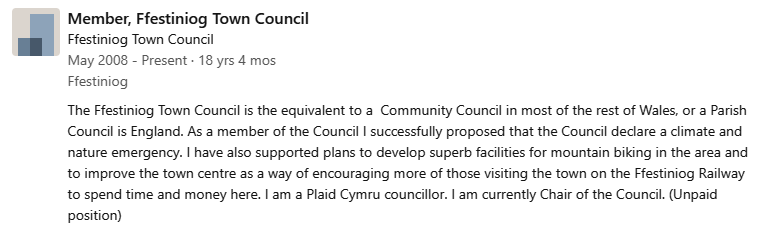
A director of BWG is Anthony Hugh Martineau, who has, or had, connections with Coleg Soros in Talgarth. The current chair of the trustees there is Chris Blake. Here’s his Linkedin bio.

One of his current ventures is The Green Valleys (Wales). Below is a clip from the most recent accounts filed with Companies House, for year ending 31.10.2024.

I’m not sure what happened, but it don’t look good. Turnover and profits slumped, and it all seemed to go tits up. Then, the other directors left last month. Among them Grenville Ham, former capo in the Greens, who switched to Plaid Cymru when the Greens refused to set up a Welsh party.

Green Valleys would appear to have folded. Is the recently-launched Beacons Rural Energy some kind of replacement?

CONCLUSION

One of the attractions of the Abergavennyshire and Bannau area is of course its scenic beauty, helped by the absence of wind turbines and vast acreages of solar panels. But this is problematic for the ‘Welsh Government’, which wants every area of Wales to be seen to be saving the planet.

The maps below might help. On the left is the official map showing areas “pre-assessed” for industrial scale wind turbines in southern Wales. On the right, a map produced by the Campaign for the Protection of Rural Wales (CPRW), showing existing or planned windfarms. (In the case of the latter category, those that are known about.)

The red lines on the CPRW map are pylon runs.

Outside and to the east of area 6 there are a number of projects planned. These are in the wild, unspoilt Elenydd. Reminding us that the “pre-assessed” areas are just a rough guideline, but national parks are still off-limits . . . for the time being.

Which must also vex the fanatics who want Wales to have more ‘renewables’. Clearly, something else, a different approach, is needed. Which is where the various outfits mentioned above may give a clue.

Because I still believe water is the key to understanding the developments we’ve seen over the past eight years or so, and that includes buying Gilestone. So with wind turbines and the rest ruled out, are the Bannau to become a hot-spot for hydro schemes?

Another hoped-for advantage of focusing on doing good things with water resources might have been generating good publicity for Dŵr Cymru Welsh Water. Unpopular with the public at large but long defended by the ‘Welsh Government’, Natural Resources Wales, and environmental groups.

Who, for differing reasons, blamed farmers for every discharge or spillage.

If so, then it failed. Because too many recent cases have made everyone aware of what many of us always knew. Here’s a recent case that resulted in a £45m fine.

But then, what’s one more lie added to all the rest? As George Carlin used to say in explaining how shadowy forces control things: “It’s a big club – and you ain’t in it“. (This short video is worth a watch.)

Difficult to believe that was recorded over 20 years ago. He was right then. And it’s a hell of lot worse now. R.I.P. George Carlin.

♦ end ♦

© Royston Jones 2026

Buy Me A Coffee

Gilestone: It’s All About Water

Over three years ago, with ‘Gilestone: Thinking Outside The Box‘, I suggested that the ‘Welsh Government’s controversial £4.25m purchase of Gilestone farm is about the transfer of water.

Much of what follows may look, superficially, like a rehash of that earlier piece; if so, it’s because that’s unavoidable in bringing the story up to date.

But there is more evidence. Which convinces me I was right.

THE BACKGROUND

We’ll start by looking at what I think are the major milestones in this saga, in the order they happened.

1/ The Thomas family, who owned Gilestone pre-2010, had problems with the (then) Brecon Beacons National Park. They felt hounded. It cost them a lot of money to fight officialdom, and resulted in them selling up in October 2010.

(A curious feature of the business was that the solicitor acting for the Park was a Julie James. Who, in May 2011, became the Labour Assembly Member for Swansea West.)

2/ Next, seemingly out of the blue, a buyer in the form of Charles Weston turned up. He bought Gilestone for £900,000 through his company Sharpness and Severn Transport Ltd, re-named CWW Farming Ltd in November 2019. (Though the title document I’ve linked to does not cover all the Gilestone land.)

(Sharpness, Bristol, Newport, and Cardiff, are the major ports on the upper Severn estuary.)

3/ In March 2018 Dŵr Cymru Welsh Water (DCWW) organised a trip to Wales for representatives of the Watershed Agricultural Council based in the Catskill Mountains of New York State. This is the body responsible for keeping the Big Apple’s water supply up to standard. This visit was reciprocated in October 2019, when a party from the Beacons visited the Catskills.

(Which meant DCWW was studying a model under which a rural catchment area supplied water to a metropolis some 100 miles away.)

4/ This link resulted in DCWW setting up the Brecon Beacons Mega Catchment (BBMC). Though apart from the change of name to Bannau Brycheiniog I can’t see much recent activity on the website. There’s been nothing on the Facebook page since July 2022 and the Twitter/X account has been closed.

Next, in May 2020, the Beacons Water Group CIC (BWG) was launched.

The Beacons Water Group was established under Welsh Water’s Bannau Brycheiniog Mega Catchment initiative (BBMC), our landscape-scale approach to safeguarding our drinking water sources now and for the future.

Among the founders we find Weston of Gilestone and his next-door neighbour across the River Usk. (Weston left BWG in October 2022.)

BWG definitely enjoys political support. As does DCWW, which seems to get a free pass from the ‘Welsh Government’ and ‘environmental’ groups when it comes to river pollution, with farmers copping all the blame. One director, Hugh Martineau, was an ‘advisor’ with Coleg Soros in Talgarth.

5/ In March 2022 the ‘Welsh Government’ bought Gilestone farm for £4.25m. The reason given was to allow the Green Man Festival to expand from its Glanusk Estate site.

OK, that’s enough background. Let’s try to put meat on the bones and get up to date with other developments and findings.

FILLING IT OUT, RECENT DEVELOPMENTS

What I suggested back in October 2022 was that the key to understanding the purchase of Gilestone might lie in the proximity of, on the one side, the River Usk, and the other side, The Monmouthshire and Breconshire canal.

Even so, this in itself tells you little. For it to make sense we need to link this abundance of H2O in Wales to southern England running dry of the stuff.

And let’s remember that, in addition to the river and the canal, Gilestone is just a couple of kilometres from Llangorse Lake to the north east and the same distance from Talybont reservoir to the south west.

The reservoir already connects with the Usk very near to Gilestone. It would be relatively simple to connect the lake.

I explain this because taking water from Wales has long been a favoured option to meet the increasing shortages in southern England. Boris Johnson talked about it in 2011. Johnson’s name was invoked in August 2022 in renewed calls for a national water grid.

As Nation.Cymru put it, quoting the Daily Mail:

Senior Conservatives are floating the idea of a ‘Great Boris Canal’ named after the outgoing Prime Minister to transfer water from the north of Wales to the south of England.

Though this plan has water from Llyn Efyrnwy diverted into the river and then into the Severn just over the border. As this Guardian article from March 2023 explains.

The “Cotswold canals” mentioned must be the Thames and Severn Canal, currently being restored.

Alternatively, the water will be piped straight into the Severn. Then it will be abstracted lower down, either at Deerhurst, north east of Cheltenham, or near to Sharpness.

Which serves to remind us that Charles Weston bought Gilestone farm in the name of Sharpness and Severn Transport Ltd, based in Sharpness docks. Where the Gloucester and Sharpness canal begins, connecting with the Thames and Severn canal in Gloucester.

It seems like every which way we turn in the Gilestone saga we hit water.

Taking us further and further away from farming and music festivals.

While the plan to transfer water from Wales to southern England has been mooted for decades, one reason for increased urgency in recent years is the planned growth in the numbers of AI data centres.

But it’s not just London and the south of England affected, there are other areas that will need much more water. Such as Cambridge, where there are (somewhat vague) plans for a ‘Forest City‘ of one million people.

One of those behind the plan, while admitting that water from Wales is a serious option, fears we Welsh are a bit touchy about the subject. Us!

Maybe that’s why the talk is of using rivers and canals. Perhaps some people think we’ll be too stupid to notice.

Having mentioned AI data centres, it’s worth remembering we have them in Wales, too. Especially around Newport and Cardiff. With more planned. Let’s get back to Gilestone.

We’ve seen that the River Usk and the Monmouthshire and Breconshire canal flow over or close by the property. Both waterways then run in a southeasterly direction towards Newport and the Bristol Channel.

My original thinking was that water could be transferred in either direction, whichever best suited the purpose of the exercise at any given time. But the canal only runs to Cwmbran, and is now effectively banned from taking water from the river.

As this piece from the Brecon & Radnor Express last month explains:

Earlier this year, Natural Resources Wales imposed new restrictions on the canal’s long-standing abstraction licence from the River Usk. It means that during periods of low water, the canal is no longer permitted to draw water from the river – a supply it has relied on for more than a century.

This has affected those who rely on the canal for their livelihoods, largely in the tourism businesses. Which seems to have resulted in intervention by the ‘Welsh Government’ with what looks like compensation.

With £5m announced in July. And what appears to be further funding announced earlier this month.

It seems clear that the flow of water in the Usk is a priority, and must be safeguarded.

CONCLUDING THOUGHTS

Earlier I said that Charles Weston of Sharpness & Severn Transport had turned up at Gilestone out of blue. Perhaps I made him sound like a wraith appearing from nowhere. Which would be misleading.

Because before buying Gilestone Weston had, in 2004, bought 182 acres at Tan-y-fedw, south of Sennybridge. This sits on Afon Crai, which runs into the reservoir a few kilometres south.

And as AI Overview says of the reservoir: ” . . . much of its water is diverted to the Swansea Valley, while the remainder flows down to meet the Usk”.

Four years later he bought 76 acres at Allt-fechan, a couple of kilometres north west of Brecon. This holding stands on Ysgir Fechan, which runs into Afon Ysgir, which runs a few more kilometres into . . . the Usk.

Having received its orders from London the ‘Welsh Government’ plays its loyal part in this scheme. We see politicos, DCWW, and Natural Resources Wales, all working towards the objective . . . without being able to say what they’re really up to.

With the ‘environmental’ lobby chipping in. Remember Gail Davies-Walsh, former employee of DCWW, now of front organisation Afonydd Cymru, which shields the water company from criticism by blaming farmers for all river pollution?

Re-acquaint yourself with Gail by scrolling down in this piece from three years ago. Read her contribution to this article from March this year.

In the very same building in Talgarth where Afonydd Cymru is based we find the cross-border Wye and Usk Foundation, with its staff of 34 and its considerable income. Roughly half the grant money comes from that generous old soul, “Other“.

Ah! sweet Talgarth. Home of that noted and venerable seat of learning – Coleg Soros.

Finally . . . We know there’s a plan to take water from Llyn Efyrnwy, into the Severn, and then, via pipe and canal, to the Thames. I believe there’s a wider plan that includes the Usk, Wye, and other sources. And this may be where Gilestone fits.

It would be relatively simple to connect Usk and Wye to the plan shown above. It would then be a multi-source option less likely to draw attention and criticism. For as Severn Trent is keen to stress (my emphasis):

This will be using water that is currently taken from Vyrnwy and occasionally redistributed elsewhere.  No additional water will be taken from Wales.

This, “some from here, some from there” approach, with no valleys drowned, will avoid another Tryweryn.

And seeing as Usk and Wye are within Dŵr Cymru’s territory, it explains the Catskills connection, Mega Catchment and Beacons Water Group. Why else would DCWW study how a hilly rural area supplies water to a metropolis 100 miles away?

Another factor worth considering is flooding. The existing wind farms on hills above the Severn and its tributaries cause greater run-off of rainwater, increasing the risk of flooding. With more windfarms planned, this risk will only increase.

So taking water from the Severn could also serve a flood prevention purpose. Though this is unlikely to be admitted, and never linked to wind turbines.

The wider plan I’m suggesting would also explain the quasi-sacred status given to the Wye by writers like George Monbiot, and bodies such as the Wye & Usk Foundation and Afonydd Cymru. For no other river in Wales gets this attention.

Whatever the details, it’s clear that Wales is to supply water to southern England. Much of it from resources in Wales owned by Severn Trent of Coventry.

But Wales won’t get paid a penny.

Ain’t devolution wonderful!

♦ end ♦

© Royston Jones 2025

Plaid Cymru Abandons Welsh Farmers

Last Saturday I put out a post on X drawing attention to something that had been said at the Plaid Cymru conference in Swansea. This piece follows on from that.

‘IT’S THEM FARMERS WOT DONE IT!’

Speaking from the main stage Alex Phillips of the WWF wanted the audience to believe that when it comes to polluting our rivers, then, “it’s beyond reasonable doubt” that it’s the fault of farmers. And only farmers.

But he’s wrong. And he knows he’s wrong. Where to start?

First, the biggest polluter of our watercourses is, in its various operations, Dŵr Cymru Welsh Water. Which leads a charmed life due its ‘closeness’ to Natural Resources Wales, an agency of the self-styled ‘Welsh Government’.

This ‘closeness’ guarantees Dŵr Cymru an easy ride from the planet savers.

Second, ‘agriculture’, is a rather vague, all-encompassing, term. Possibly misleading.

Maybe he’s referring to the chicken farmers of Herefordshire, or arable farmers using chicken manure fertiliser, both polluting the Wye before it runs back into Wales.

But he can’t be referring to Welsh livestock farmers, certainly not those of the uplands.

And I’m damn sure his sweeping statement didn’t include the hippies and good lifers growing non-binary carrots on Powys county council land, often at the expense of Welsh families.

So what exactly was he talking about?

Some background might help. Alex was a ‘Special Advisor’ in the Assembly for 3 years from October 2011. After that, he was in PR for another 3 years. Then he joined the WWF in July 2017.

Here’s Alex, just a few months ago, celebrating legislation he helped push through.

To understand a bit more about the WWF, and its essentially anti-humanity agenda, go to this piece I put out last November and scroll down the section, ‘Darker Past’. Where you’ll read:

The founder and first president of the WWF was Prince Bernhardt, consort to Queen Juliana of the Netherlands. Though he himself was German and had, like many other princelings, joined the Nazi Party in 1933.

Here’s a recent example from the Congo basin of how the WWF operates. Making clear that it prioritises ‘Nature’ over people. Indigenous populations seem to be inconvenient, if not expendable.

Maybe we Welsh fall into that category.

The WWF was launched in 1961 by a body few have heard of, International Union for Conservation of Nature (IUCN). Which modestly says of itself:

Founded in 1948, IUCN has become the global authority on the status of the natural world and the measures needed to safeguard it.

I don’t think you’re supposed to know about the IUCN; it keeps a low profile, but it’s very influential.

The IUCN European Regional Office plays a key role in addressing these challenges by shaping EU policies, promoting effective regulation, and supporting conservation efforts at both national and regional levels.

The WWF was founded by Nazis, who believed in eugenics, and drastically reducing the global population by removing the “useless eaters“. A term adopted by the WEF. Whose founder, Klaus Schwab, is the son of an enthusiastic member of the Herrenvolk.

The WWF today serves a new elite; and pushes an apocalyptic message (scapegoats provided), in order to get politicians to enact legislation, and provide funding, to serve the ambitions of their Globalist masters.

HE’S RIGHT‘, SAYS PLAID CANDIDATE NERYS EVANS

The sentiments of the short speech I’ve linked to above were echoed by Nerys Evans, Plaid Cymru’s No 2 candidate for Sir Gaerfyrddin / Carmarthenshire.

Nerys has an interesting past. One that sums up devolutionary Wales perfectly. A denizen of Corruption Bay, its outliers and appurtenances; one of the in-crowd.

Let’s take a look at Nerys Evans’ Linkedin page.

Her career begins with a few years as ‘Political Officer’ (which means what, exactly?) at the Notional Assembly; then four years as an Assembly Member; followed by a job with a charity, and ‘Welsh Government’ appointments; next was Ofcom, overlapping with ACT and Portal Training (both publicly funded); then seven and a half years as non-executive director with the Farmers Union of Wales (FUW); with a job for going on 14 years with lobbyists Deryn Consulting, now Cavendish Cymru.

Every job there is either the result of political influence, or it’s one seeking to exert political influence. Either way, it makes a mockery of you going to put your cross on a bit of paper every so often.

While at Ofcom and Deryn simultaneously, there was some, er, embarrassment, when it became known that Evans, and another Deryn director advising Ofcom, Huw Roberts (Labour), had steered contracts the way of Deryn.

For this and other reasons the reputation of Labour-Plaid joint venture Deryn took a bit of a knock, and it was taken over earlier this year. But those running Deryn were kept on because their political and other contacts in Corruption Bay and beyond were priceless to the new owners.

Given the association with FUW her contribution to the WWF propaganda show was something to behold. According to Nerys Evans, ninety per cent of the pollution in our rivers is the fault of them wicked farmers.

Later, she tried to go back on what she’d said by protesting she’d meant 90% of pollution on the Wye. Which is also untrue.

But remember, this is a Plaid Cymru Senedd candidate, hoping to represent a constituency next May with many farmers; and this nonsense was spouted, not at a fringe meeting, but on the main stage at the Plaid Cymru conference.

Why did the WWF get such favoured treatment from Plaid Cymru?

Perhaps because Gareth Clubb is CEO of WWF Cymru, and he used to be CEO of Plaid Cymru. Now he also runs Community Energy Cymru (backed of course by the ‘Welsh Government’).

His Linkedin profile tells you everything.

The secretary of Community Energy Cymru is someone named Leanne Wood.

Another example of Labour-Plaid collaboration. Perhaps confirmed by this gem I found in the Articles of Association. But what the hell does it mean?

Another who was on the same stage in Swansea was Shea Buckland-Jones. From a very similar background to the others we’ve looked at. His Linkedin profile spells it out.

Have you noticed it yet? – every one of them has a background in PR and politics, charities and pressure groups.

Another issue here is that Cavendish-Deryn has the WWF as a client. This is kept secret because Wales – unlike England, Scotland, and just about everywhere else – has no register of lobbyists.

So Nerys Evans, Plaid Cymru candidate, director of Cavendish, was on stage at the Plaid Cymru conference with one of her company’s clients putting the boot into the farmers she so recently claimed to represent.

And all the while pretending she was only concerned with water quality.

FOLLOW THE MONEY

Farmers are under pressure as perhaps never before, and it can all be traced back to acceptance by politicians and others of the ‘climate crisis’ scam, and measures such as Net Zero and carbon capture that we’re told are needed to combat this contrived threat.

With more of the same in the pipeline.

But it’s not just farmers suffering. We are all paying for this insanity; through higher electricity bills, brainwashing us into changing our diets, even telling us how we’re allowed to heat our homes.

Which is why the farmers’ fight is your fight.

And many farmers feel increasingly isolated. Some have lost faith in their unions, the National Farmers Union and the Farmers Union of Wales.

They also feel abandoned by political parties, which is understandable. For as we’ve seen, there’s no real difference between Plaid Cymru and Labour. On anything.

Those who control the Uniparty know Labour is dead in the water and something else is needed to challenge Reform. In Wales, that ‘something’ is Plaid Cymru. Talk of independence would frighten off many voters, so Plaid’s leaders were told to drop it.

Another feature that needs highlighting is the funding of the charities and pressure groups that leftist politicians use to justify the legislation they implement. A system we now see being exposed in the USA.

Over here, for example, funding from the National Lottery, especially the Heritage Lottery Fund, is openly political. But the same can be said for major private funders.

One of which would be the Esmée Fairbairn Foundation. Which has clearly been captured. Just look at some the recipients here of big sums. Check out all the grants.

‘FFCC’ is the Food, Farming and Countryside Commission. One of a regiment of such bodies, and very influential in Wales. Regularly quoted by the FFCC is Derek Walker, Future Generations Commissioner for Wales. Just check his CV.

Also mentioned on the FFCC website is Hywel Morgan, who appears regularly on the ‘Welsh Government’ website Farming Connect.

Another faux ‘farmers’ organisation, with too much influence on the ‘Welsh Government’, and of course funded by the Esmée Fairbairn Foundation, is the Nature Friendly Farming Network.

If you think of Welsh farming as a sinking ship (as some wish), then there are voices in the murk calling out: “You can swim to the lifeboat“. Farming Connect is such a ‘lifeboat’, and some, like Hywel Morgan, have clambered aboard.

Because it’s not outright confrontation, there’s also stick and carrot. Which is an attempt to set farmers against each other.

ALL IS NOT LOST

It’s easy to get downhearted when you look at the forces ranged against us.

At the top we have the UN, with its Agenda 2030, supported by other supranational bodies like the WEF, EU (Commission); together, these fund and / or influence a host of international charities and pressure groups that then convey the instructions to governments at national and sub-national level.

And because they’re charities, and ‘cuddly’ groups like WWF, it makes the message more acceptable, and disguises its origin.

It’s all top down, without a democratic mandate. Because no electorate was ever consulted about Net Zero except in the vaguest and most misleading terms: ‘You don’t want to destroy the planet, do you?

And it’s the same with open borders: ‘Will you allow thousands of women and children to be butchered in ———, or should we welcome refugees?’

In both cases, utterly dishonest. Because the results people have to live with bear no relation to the deceits that sought popular support.

And profiting behind the scenes are the Globalist corporations such as BlackRock, Vanguard, and oligarchs like increasingly megalomaniac Bill Gates.

You know how powerful and influential these men are when you recall that a year ago, Gates and BlackRock CEO Larry Fink were over giving Starmer his orders.

Larry Fink even sat in on a cabinet meeting!

The Uniparties the Globalists control in various countries perform like a chorus, and when anyone sings a different tune they’re vilified by the mainstream media.

Here in Wales, the Uniparty is made up of Labour, Plaid Cymru, Conservatives (until they fall apart), Greens and Lib Dems. It doesn’t matter which of these parties you vote for, you’ll be voting for the Globalist agenda.

But thankfully, there is an alternative. Councillor Gwyn Wigley Evans, party leader, has this to say: “Gwlad understands the need for farmers to produce food and keep the countryside a safe and thriving community, join us“.

I can extend that invitation to anyone fed up with lies from Uniparty politicians and insults from Globalist shills. You deserve better.

So check out the new Gwlad manifesto today. We don’t promise you the Earth because it’s not ours to give, or to take. But we do promise to fight for the earth and the soil that belongs to you, and to nobody else.

♦ end ♦

© Royston Jones 2025

Climate Cult Killing The Welsh Family Farm

In this piece I’ll explain that the ‘Welsh Government”s Sustainable Farming Scheme (SFS) is just the latest in a long series of attacks on the Welsh family farm, and all that that means.

The SFS demands that 10% of every farm be given over to trees, with a further 10% to ‘habitat’. Many farms will become unprofitable. Which is the whole point of the SFS – to release more land for other uses.

Today’s piece is bigger than others I’ve put out recently, some 3,400 words; but it’s broken up into sections, so take it a chunk at a time.

2008: ONE WALES: ONE PLANET

I’ve chosen to start in May 2008 with the publication One Wales: One Planet. Sub-titled, ‘The Sustainable Development Scheme of the Welsh Assembly Government’. You’ll find a revealing extract below.

Click to open enlarged in separate tab

Let’s look at the first bullet point. Who decides Wales’s “environmental limits“? Who calculates our “fair share of the Earth’s resources“? Who measures our “ecological footprint“? (I’m a size 9.) And how can anyone work out, “the global average availability of resources“.

This is the kind of gobbledegook you can only get away with when you live a very sheltered life, mixing only with others in your bubble.

The final paragraph (below, my emphasis) leaves us in no doubt that everything that’s done in Wales from now on will be predicated on the belief that human beings are killing the planet.

To achieve this, sustainable development (the process that leads to Wales becoming a sustainable nation) will be the central organising principle of the Welsh Assembly Government, and we will encourage and enable others to embrace sustainable development as their central organising principle.

But as I’ve explained, there’s something more sinister behind it all. Which is not to say that those pushing the nonsense don’t believe it, I’m sure many of them do. But there are also many who go along with it because it’s become the accepted wisdom of the circles in which they mix.

Before I forget, chapter 8 is headed: ‘The Wellbeing of Wales’. (Now there’s a clue!)

The administration at the time was a Labour-Plaid Cymru coalition, and to jog your memory, here’s a cabinet group photo. The minister for environment and sustainability was Jane Davidson.

Click to open enlarged in separate tab

2010: TECHNICAL ADVICE NOTE 6, ONE PLANET DEVELOPMENTS

July of 2010 brought joy unbounded with the announcement that hippy encampments, thrown up illegally (but with a nod and a wink from Corruption Bay), were now to be legitimised

Making TAN 6 little more than a general amnesty, or granting retrospective planning approval.

Dressed up as ‘sustainable living’, ‘self-sufficiency’, and God knows what else, they were in reality just a way around planning regulations for hippies and others to build ugly shacks in open country.

There were conditions attached, of course, not least, being able to prove that these impositions were to some degree self-sufficient . . . but nobody ever checks.

Interestingly, OPDs came to the notice of the World Economic Forum, which exposed the fundamental contradiction by urging people to move to Wales.

Click to open enlarged in separate tab

For OPDs were justified by arguing they’d reduce Wales’ carbon footprint. But this could only happen if local people moved out of traditional dwellings into OPD shacks. That never happened.

Instead, people moved from England to previously unused land . . . where they kept farting animals, burned wood, and drove old diesel vehicles; so that by these and other means increased Wales’ carbon footprint.

In a recent publication I noticed that DEI had been added to the chicken entrails in the voodoo stew. This news came from Sophie Howe herself, just before she stepped down as Future Generations Commission in 2022:

I am pleased to see the emphasis given to Equality, Diversity and Inclusion, a key component of sustainability . . .

But despite the posturing, OPDs remain exclusively English, White, middle class.

2011 OCTOBER: ALUN DAVIES AND ORGANIC ARABLE FARMING

Then there was the plan to help farmers go organic.

Alun Davies, deputy minister of agriculture, announced that priority would be given to arable farmers, and those converting to arable farming . . . in a country where climate and topography dictate that livestock farming will dominate.

But let’s not be picky, for I’m sure this news was welcomed in the pomegranate groves of Pembrokeshire and the broccoli orchards enhancing the Vale of Clwyd, but it offered sod all to most Welsh farmers.

This initiative might reveal the growing vegan influence. For these had been brought in from the fringes to serve the Globalists’ plan to eliminate livestock farming and take control of the land and the food supply.

2013 DECEMBER: ALUN DAVIES AND HIS TWO-PILLAR TRICK

The above date was when Alun Davies, now farm minister, announced that funding from the EU’s Common Agricultural Policy (CAP) Pillar 1 (direct payment to farmers) would be moved to Pillar 2 (‘other rural activities’).

Davies could have transferred anything up to 15%. Almost inevitably, he opted for the full whack. Defending the decision by saying Pillar 1 should not be seen as a “never-ending subsidy“.

To understand Alun Davies, and the socialist attitude to farming, here’s an outburst from him in October 2014.

Click to open enlarged in separate tab

The former minister in the Labour ‘Welsh Assembly Government’ (for he was  sacked in July 2014) rails against ‘subsidies’; yet his administration had built up a vast third sector of cronies – all living off public funding!

And things have got worse, for now the ‘Welsh Government’ throws millions of pounds at Sustrans, Stonewall, wildlife trusts, and other pressure groups.

Clearly, in the eyes of Labour politicians there’s nothing wrong with subsidies per se, it all depends who’s getting them.

UPDATE 05.03.2024: But has Alun Davies recanted?

2015: WELL-BEING OF FUTURE GENERATIONS (WALES) ACT

This legislation was a long time in the planning, but we know who wrote it.

For this article from Sustainable Brands (scroll down) tells us it was Jane Davidson, who we met earlier as the minister for environment and sustainability in the 2007 – 2011 Labour-Plaid Cymru coalition.

Click to open enlarged in separate tab

The article also says Davidson, ” . . . had her damascene moment at the Earth Summit in Rio in 1992“. But I don’t buy that.

For at the time she was a researcher for Labour MP for Cardiff West, Rhodri Morgan, who of course went on to become first minister of the Assembly. So was she representing him, or the Labour party, at Rio?

I think she’d already had her ‘damascene moment’, and she was there as one of the converted.

When she became Assembly Member for Pontypridd in 1999 Ponty was her ticket to more power and influence to push the anthropogenic global warming (AGW) narrative.

Which she did relentlessly and effectively.

And even though she stepped down as an AM in 2011 she never really left. For she was always in the shadows, nudging, hectoring, demanding. Now she chairs the ‘Welsh Government’s Wales Net Zero 2035 Challenge Group.

The significance of the Well-being Act is that, as was hinted in One Wales: One Planet in 2008, all other considerations must be subordinated to fighting the so-called ‘climate crisis’.

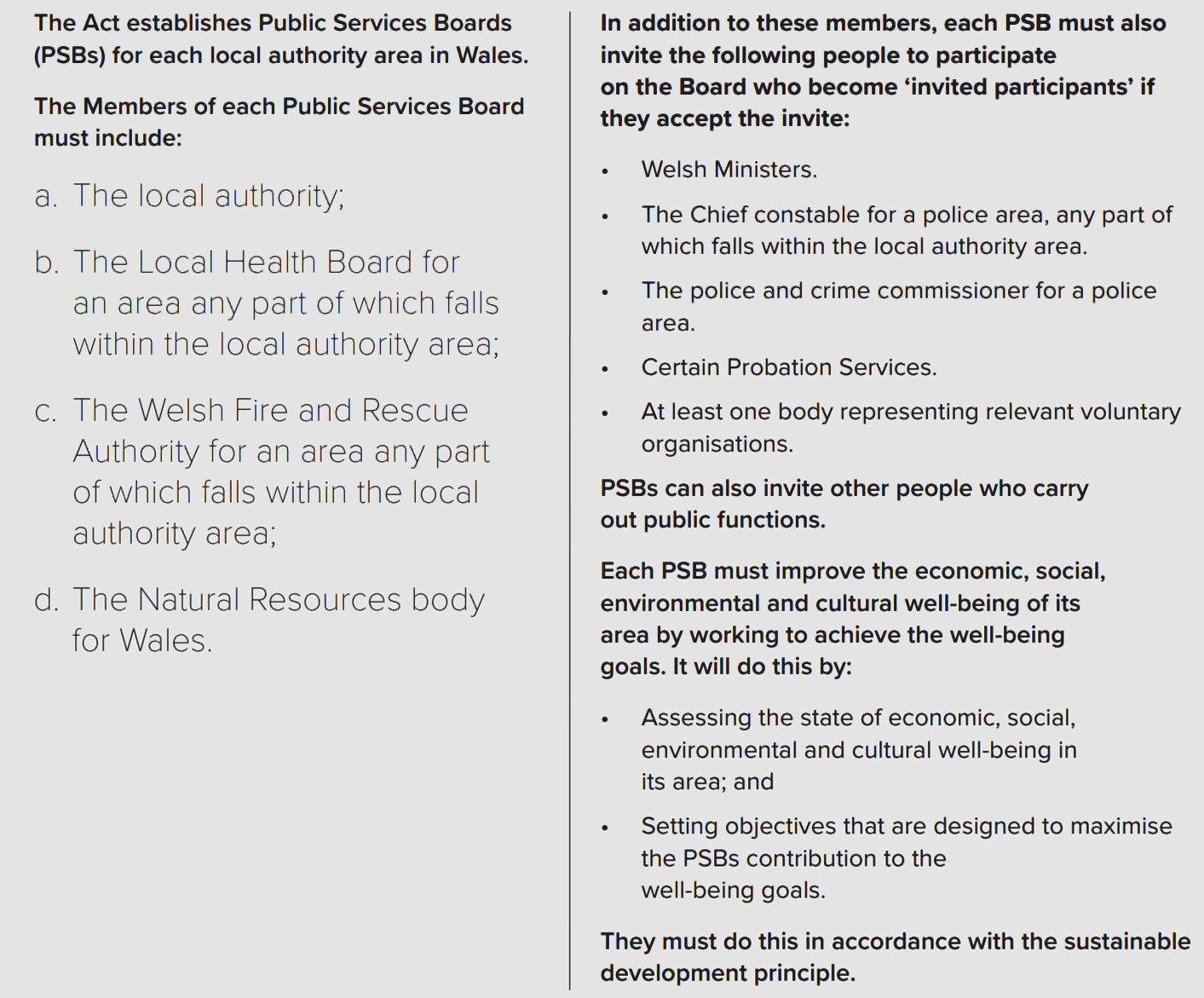
And this being the socialist hell that is Wales, the Act introduced yet more pointless bureaucracy and more opportunities for virtue signalling, with Public Services Boards for each of our 22 local authorities. (Yes, that’s right, 22 local authorities for a country of 3.2 million people.)

Click to open enlarged in separate tab

Perhaps the real lesson Wales could teach the world is how to bring a country to its knees. For this is the Globalist plan for the West.

The politicians and their pet parasites who achieved this resent giving money to farmers and others, who actually work, and produce necessities.

2016 SEPTEMBER: START OF NVZ ‘CONSULTATION’

A Nitrate Vulnerable Zone (NVZ) is, according to the ‘Welsh Government’, “an area of land draining into ground or surface waters that are currently high in nitrate, or may become so if appropriate actions are not taken“.

It had always been accepted there was a problem, but it had also been understood that the problem was very localised, and seemed to be associated with dairy cattle.

Ostensibly to get a better understanding of the situation, the ‘Welsh Government’ launched a consultation process in September 2016.

Click to open enlarged in separate tab

The map above, produced by Natural Resources Wales (NRW), shows that Water Framework Directive (WFD) catchment areas covering some 90% of the country reported 0 – 4 incidents in the period 01.01.2010 to 01.01.2016.

The problem was clearly very localised.

Which is why NRW suggested increasing the area covered by NVZ legislation from 2.4% (750 farm holdings) to 8%. But, and here I quote from:

The (now) Minister for Environment, Energy and Rural Affairs, Lesley Griffiths, responded to the consultation replies a year later, in December 2017. She said she was “minded to introduce a whole Wales approach”.

Truth is, that had been the plan all along.

As an example of politicians going out of their way to make life more difficult for farmers – because of course there would be more expense and increased form-filling – the handling of NVZ legislation would be difficult to surpass.

This is how NFU Cymru described it:

Click to open enlarged in separate tab

As things stand, the ‘Welsh Government’ has been forced to be marginally less vindictive. With slightly less punitive measures being introduced in stages, the next due in August.

Click to open enlarged in separate tab

NVZ was part of a wider campaign to blame farmers for all pollution. To the extent of bribing river groups and other ‘environmentalists’. Done to protect the bigger culprit, Dŵr Cymru Welsh Water.

2018 JULY: ‘BREXIT AND OUR LAND’

Wales voted to leave the European Union 23 June 2016.

That is, the people voted to leave. The political class was outraged at the stupidity of the hoi polloi. The media agreed. While the ever-multiplying legions of third sector parasites were aghast at the thought of losing such a lucrative funding stream.

In response the ‘Welsh Government’ produced ‘Brexit and our Land‘. Wherein we read (page 3) what was to replace the CAP.

Click to open enlarged in separate tab

But how can it talk of “food production” when we know Labour’s attitude towards farmers? While the reference to timber did not mean developing a genuine timber industry, it referred to what I’m now going to highlight.

Idly flicking through the annual accounts of Stoke engineering firm Goodwin Plc the other night I found this, on page 17.

Click to open enlarged in separate tab

The site of this enviro-colonialism is north west of Llanwrtyd. But it’s happening all over Wales.

This is how it works: Land is bought and trees are planted by investors like Goodwin, who will own the land, the trees, and the carbon they capture. This carbon can not be included in Wales’ carbon inventory.

Which means that outside investors could buy up 50% of Welsh land, make billions from carbon capture, none of which would contribute to Wales’ national figure (or economy) – and the ‘Welsh Government’ would pay them to do it!

The rest of rural Wales, and the post-industrial areas, will be surrendered to foreign-owned wind farms whose owners will dole out beads and blankets to the desperate inhabitants of doomed communities.

And it’s all built on a scam, for carbon is no threat to the environment.

As for “Public Goods“, this is a phrase picked up from the bad company Welsh politicians keep. It can mean whatever the person using it wants it to mean.

Just think of it as bollocks; usually delivered in Estuary English.

2018 AUGUST: SUMMIT TO SEA

This project links with Brexit, and the publication you read about in the previous section. It’s ‘environmentalists’ seeking to capitalise on the new reality to grab a huge swathe of Welsh land.

The project began before the date I’ve just given, but I used that date because it’s the first time I mentioned the project on this blog. Click here and scroll down to the section ‘Re-wilding’.

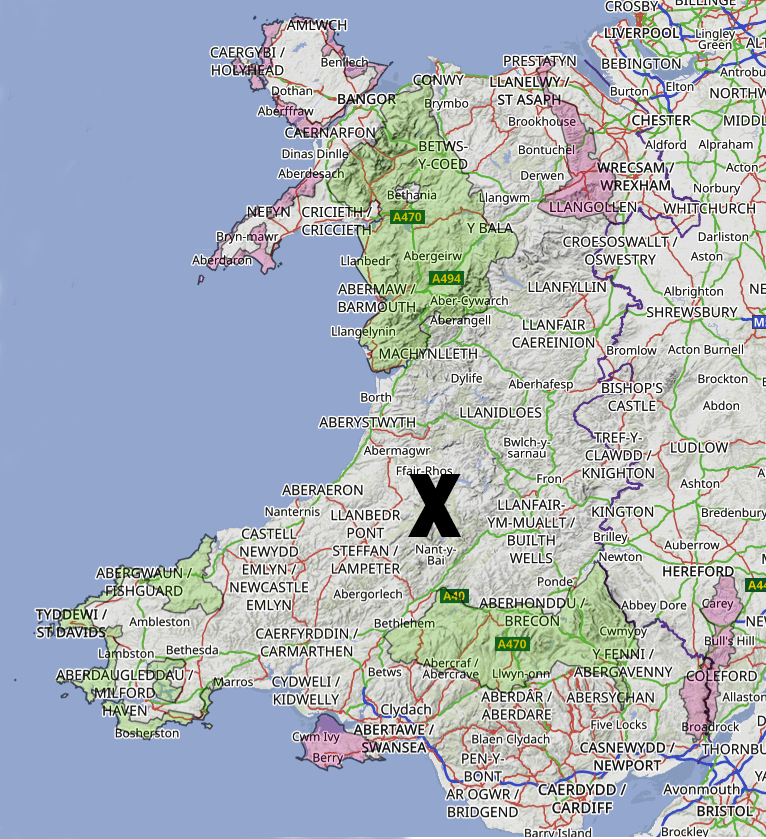
In essence, a number of individuals and organisations came together and hatched a plan to requisition 10,000 hectares, from Pumlumon up to the Dyfi estuary, and out to sea for a few miles.

Below you’ll see two maps. The one on the left was produced by those behind the project; the one on the right tells us who’s really behind it. But I’m not sure who produced the second.

Click to open enlarged in separate tab

Admittedly, this was not a ‘Welsh Government’ policy . . . but I believe those involved had discussions with politicians and civil servants, and had been assured that Brexit could be the excuse used to withhold or ‘redirect’ farm subsidies.

Those involved were so confident of success, so arrogant, that they saw no need to engage with those whose land they wanted to appropriate. For it was a done deal.

Among the partners with Rewilding Britain was the Woodland Trust (WT). Here is Natalie Buttriss of the WT being interviewed on BBC Radio 4’s Farming Today in October 2018. And she plays the admonishing memsahib for all she’s worth.

Summit to Sea met its Waterloo at a public meeting in Talybont, north of Aberystwyth on 31 July 2019, when locals made their feelings unmistakably clear to even the thick-skinned individuals involved.

Partners such as Ecodyfi and Rewilding Britain soon withdrew, and the project was then taken over by the RSPB. The organisation that cares so much for birds, but has no issue with bird-killing wind turbines. (I wonder how much that silence costs.)

The Woodland Trust is still taking over Welsh land to plant trees and profit from the carbon capture scam you read about earlier. But all done of course to save the planet.

Summit to Sea was an attempt by ‘environmentalists’ and ‘conservationists’ to grab Welsh farmland using the threat of subsidy withdrawal. So it’s no surprise to learn that many see the Sustainable Farming Scheme as Summit to Sea repackaged.

LATE 2018: TIT-BITS

In September, Lesley Griffiths, Cabinet Secretary for Energy, Planning and Rural Affairs, was in Frisco, at a UN bunfight giving business leaders a chance to impress politicians from the sub-national level.

What could possibly go wrong?

Griffiths came back, her rechargeable batteries humming, and a week or so after her return delivered this speech.

A month later the Daily Post produced this article in which farmers accused wildlife groups of lying about bio-diversity loss in order to grab farm funding. I include it because it introduces an important new tactic into the ‘Welsh Government’s war on farmers.

Hoping to hide the source of the attacks the Corruption Bay establishment was now funding wildlife trusts and other groups to do the dirty work. I wrote about this just last month, in Wildlife Trusts, Crazy Money, Hidden Agendas.

Quoted in the DP article was Katie-Jo Luxton of the RSPB:

Writing in today’s Daily Post, RSPB Cymru director Katie-jo Luxton said it was in farming’s interest to work with wildlife groups – and take what’s being offered.

Only by doing this can the industry justify its receipt of taxpayers’ money, she said. Otherwise the industry risks losing out in the post-Brexit scramble for public funding.

That sounds like dialogue from a very bad Mob movie! “Dis is da best deal ya gonna get, Louie, take it – if ya knows what’s good for ya!

Also note, another reference to “taxpayers’ money“, and “the post-Brexit scramble for public funding“. They’re all reading from the same script.

Having pissed off many, many people, Luxton left the RSPB towards the end of 2021 and joined BirdLife International.

In four years between 2018 and 2022 BirdLife’s income shot up from £22 million to over £40 million. Another indicator of how governments and corporations are using wildlife groups and conservationists to undermine agriculture globally.

Wildlife trusts here saw their income more than double between 2019 and 2022. But income from ‘Welsh Government’ grants and contracts rocketed from £769,310 to £6,821,800 in the same period.

2019 APRIL: ‘WELSH GOVERNMENT’ DECLARES CLIMSATE EMERGENCY

April 2019 was tough in Wales. I recall people running into the streets screaming, “Lesley Griffiths (and Gary) have declared a climate emergency!

Well, maybe I exaggerate a wee bit. For truth is, nobody really paid any attention to this pronunciamento.

Nevertheless, it was followed, in June, with a ‘10-point Plan To Fund Wales’ Climate Emergency‘ from the Future Generations Commissioner.

As might be expected, planting trees and making life even more difficult for farmers figured big in this mercifully short document.

Click to open enlarged in separate tab

The reality is that despite all the grandstanding, no other country on this doomed planet has allowed OPDs, created the useless post of Future Generations Commission, or declared a climate emergency.

There’s a message there.

2019 OCTOBER: ‘WALES MAY BE A SMALL NATION . . . ‘

In full: “Wales may be a small nation, but we have a big ambition“.  The words spoken by Lesley Griffiths, at a Climate Change conference in Cardiff City Hall.

Among the world-renowned climate experts attending was “ITV weather presenter Ruth Wignall“. Further down we read:

For every attendee at the conference a tree will also be planted in Mbale, Eastern Uganda, as part of the Welsh Government’s Wales for Africa programme.

Farmer Nimrod Wambette, from Mbale, will speak at the conference about how his home region is already feeling the impacts of climate change.

After enjoying an expenses-paid trip to Cardiff and a bit of pocket money Nimrod could be guaranteed to stick to the script.

It’s just more of the same, a rather sad and desperate combination of hyperbole and hysteria for which, in kinder and saner times, people would have received treatment. But what really caught my eye was this sentence:

Representatives from Extinction Rebellion will be attending to share some of their ideas about how we should be responding to the climate emergency

When you read that you know the nutters have really taken over the asylum.

2023 NOVEMBER: AGRICULTURE (WALES) ACT 2023

This new legislation is designed to increase the influence of ‘environmentalists’ and ‘conservationists’ over Welsh farming. How do I know? Because the World Wildlife Fund (WWF) takes credit for influencing it.

It’s there, on page 4 of the WWF Annual Report.

We launched and led a successful campaign to help put the climate and nature emergencies at the core of the new Agriculture (Wales) Bill. Through a survey of rural Wales, an open letter signed by more than 50 organisations, a petition and more, WWF Cymru’s Land of Our Future/Gwlad Ein Dyfodol campaign advocated for agroecology to be central to the bill

Those experts on Welsh farming, the British Mountaineering Council, signed the WWF petition . . . but our farming unions did not.

The same WWF that’s in partnership / funded by Tesco which, like other supermarket chains, is screwing our farmers.

Makes you think, eh!

CONCLUSION

And so we come to the Sustainable Farming Scheme, for which ‘consultations’ end on Thursday. Though I suspect that, as with NVZ and other proposals, it’s a done deal.

For Labour’s attitude towards farmers is clear. In recent months we’ve heard Joyce Watson, Mike Hedges, and first minister Drakeford himself express contempt.

To leave us in no doubt about Labour’s hatred for farmers Anna McMorrin, (former?) partner of Alun Davies, called hard-working Welsh farmers extremists, climate deniers, and conspiracy theorists in the House of Commons last week.

I could have introduced other examples of the ‘Welsh Government’s contempt, such as the refusal to do anything about bTB . . . other than to order the killing of cattle.

But I’ve given enough clues for you to guess how I see the big picture.

Wildlife and environmental groups, and more recently the ‘Welsh Government’, tell us that 80/90% of Wales’s land is taken up by farming. There’s a reason for that.

By ‘farming’ they mean livestock farming. But it’s not really about farming, it’s about the land used by farming. The talk of farting cows, dirty rivers, biodiversity loss, etc, are the excuses used to destroy farming and to facilitate a land grab.

Land that’s wanted for carbon capture trees and rewilding. Which go together. Can’t have beavers without trees. And almost all the critters planned to be re-introduced are forest dwellers.

UPDATE 05.03.2024: I’ve been sent a pro forma letter that English ‘environmental’ groups have asked members and supporters to submit to the SFS consultation.

In the first line of the second paragraph: ” . . . upwards of 84% of land in Wales managed for farming”. It really chokes them, all this land – and they want it!

This also explains the involvement of vegans, and the backing for organic arable farming. Meat will be an imported luxury item that most of us will be unable to afford. (We’ll be offered insects, and factory-made ‘meat’.)

The countryside of the future will belong to an elite that will justify its advantages, and the restrictions placed on the rest of us, car-less in our 15-minute, constantly-surveiled cities, as being necessary to save the planet.

Having submitted to this cult-agenda, Labour politicians will destroy Welsh farming as we know it. And with it, a culture, a language, and a way of life.

♦ end ♦

© Royston Jones 2024

Grant-grabbers, How They Are Related

‘BESPOKE ACTIVITY SESSIONS’

I am indebted to Brychan, a regular visitor to this blog, for drawing my attention to another example of misguided do-gooding, this time linking with enviroshysters and the ‘heritage’ racket – yea! even unto the Strata Florida Trust! (You couldn’t make this up!)

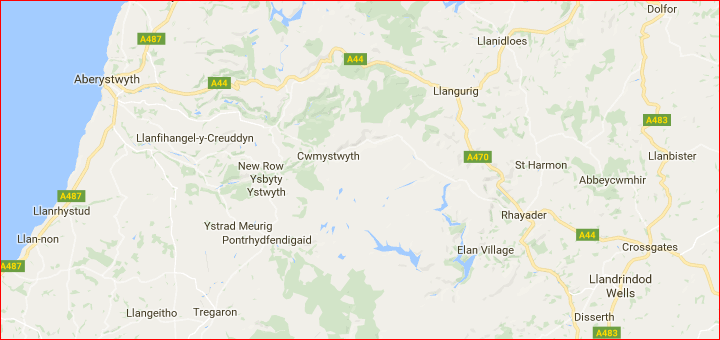
We start in the Elan Valley, the collective name for a number of reservoirs vaguely south east of Aberystwyth that supply fresh water to Birmingham. Built in the late nineteenth century and early twentieth century these reservoirs occupy land much of which was compulsorily purchased.

But let’s not be negative, for as the Elan valley website tells us, “The choice of the Elan Valley as the source of Birmingham’s future water supplies was to lead to the creation of a spectacular new landscape in mid-Wales.” (Who writes this patronising crap!)

elan-lakes

“The Elan Estate is owned by Dŵr Cymru Welsh Water although a greater part of it is vested in the Elan Valley Trust on a 999 year lease.” Does Dŵr Cymru own the reservoirs and dams or just the land surrounding them? Either way, the water goes to Brum for free.

From what I can see, the Elan Valley Estate is a tourist playground doubling up as a nature reserve. But the estate also runs ‘courses’ for superannuated hippies and others who have washed up in Wales. Now it’s branching out.

Some of these courses are run by an outfit called Tir Coed, which describes itself as ” . . . a charity and social enterprise that engages people with woodlands through volunteering, training and bespoke activities that develop skills and improve woodlands for the benefit of everyone”. The kind of gibberish I encounter all the time, dreamt up to justify the existence of a group and, more importantly, its funding.

Here’s a screen capture from the Tir Coed Charity Commission page. We shall refer to this later.

tir-coed-charity-commission

The project to which I want to draw your attention is something called Elan Gives Back, the premise of which is so unutterably colonialist that you’ll have trouble believing it, but just bear with me.

Last month, representatives of Tir Coed, acting for the Elan Valley Estate, visited Birmingham ” . . . explaining how the project would like to reconnect the people of Birmingham with their water source . . . before explaining about the weekend retreats and bespoke activity sessions in the Elan Valley available through Elan Gives Back.” Read it for yourself.

(‘Bespoke activity sessions! Bloody hell! I know people who’ve been done for offering that sort of thing.)

If this venture is a ‘success’, then we can expect to see Brummie drug addicts, petty criminals and others having a jolly old time on the Elan Valley Estate. And at our expense, because of course Tir Coed, being a charity and a social enterprise, relies almost exclusively on grant funding.

The biggest single funder for year ending March 31 2015 was the Big Lottery Fund, which coughed up £82,783; but in there with other grants we see the Countryside Council for Wales, £35,000; Natural Resources Wales, £20,000; Llanidloes Town Council, £3,000; and Jobs Growth Wales, £11,276.

The only way I can interpret Elan Gives Back is that someone, somewhere, believes the area owes Birmingham something. But, surely, Birmingham, responsible for the enforced eviction of the area’s population, and the subsequent exploitation of Welsh resources, owes us. If Liverpool can apologise for Tryweryn then why can’t Birmingham apologise for Elan?

And if that is the thinking behind it, then what twisted colonialist mind could have dreamed up Elan Gives Back?

Finally, we need to consider what it says on the Charity Commission website, shown in the screen capture I referred you to earlier. Tir Coed’s stipulated ‘Area of Benefit’ is Wales. Birmingham is not in Wales, and I object strongly to public funding, much of it Welsh, being used to give bespoke weekends in the Welsh countryside to Brummie ne’er-do-wells. I further object to this being done as some kind of ‘apology’ for them having to drink our water!

Someone, maybe the Charity Commission, or the funders, needs to investigate this bollocks.

LINKS AND COINCIDENCES

Take yourself back to the Charity Commission website for Tir Coed and click on the box ‘Contact & trustees’ (on the left), you’ll bring up a list of trustees. Top of that list is a ‘Mr J Wildig’.

Wildig is also a trustee of the Plynlimon Heritage Trust (note the corrupted spelling of Pumlumon) and also Ymddiriedolaeth Yr Hafod Hafod Trust.

In fairness, the first of those seems to have raked in very little money and is now almost defunct, but give it its due, it used the tried and tested method, even the descriptive template, “The Trust enables work on heritage projects within the Ceredigion uplands”.

The second of Wildig’s trusts is connected with the Hafod Estate near Cwmystwyth. He is also a director of Pentir Pumlumon Cyf, which markets the area to tourists, while of course giving plugs to various trusts, such as Strata Florida, which is ‘flagged’ on its interactive ‘attractions’ map.

The Hafod Estate is managed by Natural Resources Wales “in partnership with the Hafod Trust”. It’s noticeable how many of the ‘trusts’ and individuals this blog has looked at recently work with NRW.

hawthorn-cottage
Hawthorn Cottage, available for rent on the Hafod Estate

When talking of 19th century mining operations the Pentir Pumlumon website is keen to remind us that “Miners migrated to the area from Cornwall, Yorkshire, and elsewhere: their names can be found on gravestones in country churchyards and some of their descendants are here still”. Stressing a long-standing English (and Cornish) presence in the area seems to have been important for whoever wrote that.

Sites like this, written by English people trying to describe a country of which they have no real understanding beyond its perceived potential to benefit them; and for which they have little appreciation beyond the visual, the scenic, remind me of those 19th century posters encouraging English settlement in some benighted corner of the empire where the natives had recently been quelled.

Also involved with the Plynlimon Heritage Trust is Jennifer Jill Macve, whose name crops up a number of times in connection with Wildig. Macve is also a trustee of the Welsh Historic Gardens Trust where, again, you’ll struggle to find any Welsh involvement.

Before bidding the omnipresent J Wildig adieu it should surprise no one to learn that he is also a trustee of the Strata Florida Trust, the body you’ve read about on this blog over recent weeks. (If you haven’t, then read Ystrad Fflur – The Heritage Industry Moves On and Conserving Heritage, Maintaining Colonialism.)

To make sense of the plethora of ‘heritage’ and ‘preservation’ trusts that have sprung up in Wales during the past couple of decades it might help if you visit the website for the United Kingdom Association of Preservation Trusts (APT). Here’s the APT’s Wales page.

The screen capture below explains it all. There was a development officer in Wales 2004 – 2008, and “over a third of Trusts in Wales were formed in the past seven years”. And to cheer you up even more, “There are also examples of Trusts still being formed, such as the Welsh Georgian Building Trust, and the Llanelli Goods Trust.” (I suspect there might be Welsh involvement in the latter, but not the former.)

apt-wales

HEADING SOUTH

If we go back for a sec to the Tir Coed website, and look at the ‘Contact’ page, then we see that it offers three addresses. One is presumably its HQ in Aberystwyth. Another is its Elan operation, where it ‘Gives Back’ bespoke weekends, and the third is Denmark Farm, Betws Bledrws, near Lampeter.

So now you’re wondering what denizens of that parallel universe sustained by grants await at Denmark Farm. You will not be disappointed. (Oh, yes, before any of you narrow-minded nationalists think the name has been changed, it was always Denmark Farm. Explained here.)

As is the way with these things, Denmark Farm is not just any old farm, run by primitive Welshies who keep animals and grow crops. No, sir, this is a conservation centre, offering eco-friendly holidays, nature trails and, yes – courses!

Confusingly – but not for old Jac! – this lot are registered with the Charity Commission as the Shared Earth Trust. Though the CC website tells us that income is falling, down from £135,000 in 2012 to a mere £45,000 in 2015.

A correspondingly sombre picture is to be found on the Companies House website, with the most recent accounts available (y/e 31.03.2015) informing us that this venture has tangible assets (almost certainly the farm buildings and land) of £310,666 (£324,991 in 2014). Yet ‘total assets less current liabilities’ brings that figure down to £258,346 (£277,418 in 2014). Denmark Farm is in trouble, perhaps it will soon be recycled.

Companies House also tells us there are charges against Denmark Farm. First there’s the mortgage of £170,000 with the Ecology Building Society of West Yorkshire. Then, on the same date, 25.07.2012, there was a loan of £25,000 made by the trustees of the Shared Earth Trust to the Denmark Farm Conservation Centre.

So who’s running things? Well, the three individuals who are both trustees of the Shared Earth Trust and directors of Denmark Farm Conservation Centre are Guy Alistair Hopwood, who lives at Denmark Farm, David Andrew Bradford Smith of Llandrindod, and Glenn Edward Strachan of Penuwch.

denmark-farm-activities

The staff at Denmark Farm – apart from one who seems to be married to a real farmer, living on a real farm – are the usual crew of ecocharlatans. Reading their potted bios reminds us how many silly little projects there are out there.

Take Gary Thorogood, who “moved to this part of Wales with his family 9 years ago after retiring from the Fire Service in London.” His bio mentions his involvement with the Lampeter Permaculture Group and Transition Lambed. (Don’t say you haven’t heard of them!)

Then there’s Mara Morris who lives with chickens, which I suppose is one way of guaranteeing fresh eggs. Next up is James Kendall, ” . . . responsible for procuring external funding so that we can maintain and increase our staffing resource, deliver engaging projects and develop the Shared Earth Trust membership”. The Accounts I’ve quoted would suggest that Kendall is not doing very well as a fund-raiser.

But in fairness, maybe he’s too busy with the Long Wood Community Woodland, where he serves as project manager. “He also works as a Forest School leader(?), woodland skills tutor and runs an outdoor after-school club, Young Rangers.”

Companies House also tells us there is a charge against Long Wood Community Farm. The mortgagee is the Big Lottery Fund and the property is described as “all that freehold property known as land at Long Wood, Llangybi, Lampeter registered at H M Land Registry under title numbers CYM271065, CYM271131, CYM270610”.

What becomes clear when we look into these projects, whether they are heritage and conservation, environment, or even social enterprises and community benefit companies, is that they are not businesses a bank would lend money to for the very simple reason that they are just not viable businesses. So they have to rely on grant funding.

Because they are not financially viable they invariably fail, which results in funding that could be better used being wasted. Those involved in such failures often re-form, take on a new name, and wait for the grant-giving agencies to come up with new funding streams and priorities. It’s a merry-go-round.

Those involved are simply indulging a private passion at public expense, there is no public benefit whatsoever . . . unless of course, you include the ‘courses’ and the ‘bespoke activity sessions’, which are not intended for the likes of us.

What I found interesting in writing this post is that, in J Wildig, we have unearthed a link between the environmental, the social enterprise, and the heritage sectors. Looking beyond this individual there are other linkages and overlaps to be found.

What is also clear is that many of these grant-grabbing groups are located in Ceredigion and Carmarthenshire, spilling over into neighbouring local authority areas. Suggesting that these two councils offer encouragement; but the major funders remain the ‘Welsh’ Government, in its various guises, and assorted Lottery funding streams.

Everywhere I look in the environmental lobby I see hypocrisy and contradictions. Perhaps the most glaring is the commitment to ‘Nature’ . . . discredited by the belief that Nature would be lost without them managing it.

George Monbiot and others talk of wanting to ‘re-wild’ large tracts of Wales, yet if they were allowed their way they’d produce little more than a manicured woodland where everything down to the last fungus would have its allotted place. They want to play God.

george-monbiot

This sylvan idyll of overbearingly managed ‘wilderness’ would of course provide many jobs and businesses for the kind of people we’ve met in recent posts. Almost all funded from the public purse.

They’d offer courses in yurt construction and other ‘traditional’ crafts. James Kendall could bring his Young Rangers from the Long Wood. With weekend retreats and bespoke activity sessions so that we could fulsomely apologise to Brummies, Scousers, and all the others we’ve wronged. And of course there’d be the tourists. Combining to give us wildlife-free woods constantly ringing to the sound of human voices . . . none of them Welsh.

My idea of re-wilding would be to set aside an area of land and take human beings out of the picture entirely (especially those I’ve been writing about). Let Nature reclaim the land, naturally, as it did when the last ice retreated. Anything else is just a veiled attack on Welsh farming and a scam to milk the public purse.

Fortunately, the figures tell us the funding is drying up, and now, with Brexit, things can only get better. Let’s hope that the ‘Welsh’ Government, the Big Lottery Fund and others come to their senses and free us from heritage racket con men (and women), enviroshysters and all the rest.

UPDATE: I am informed that Monbiot has departed whence he came. That probably accounts for the sounds of raucous celebration that has been reported emanating from local farmhouses.

END

Early on the morrow, Mrs J and I are off to the Old North. I shall be back next weekend. But keep sending in your comments, for Big Gee is in charge as moderator.