Gilestone: It’s All About Water

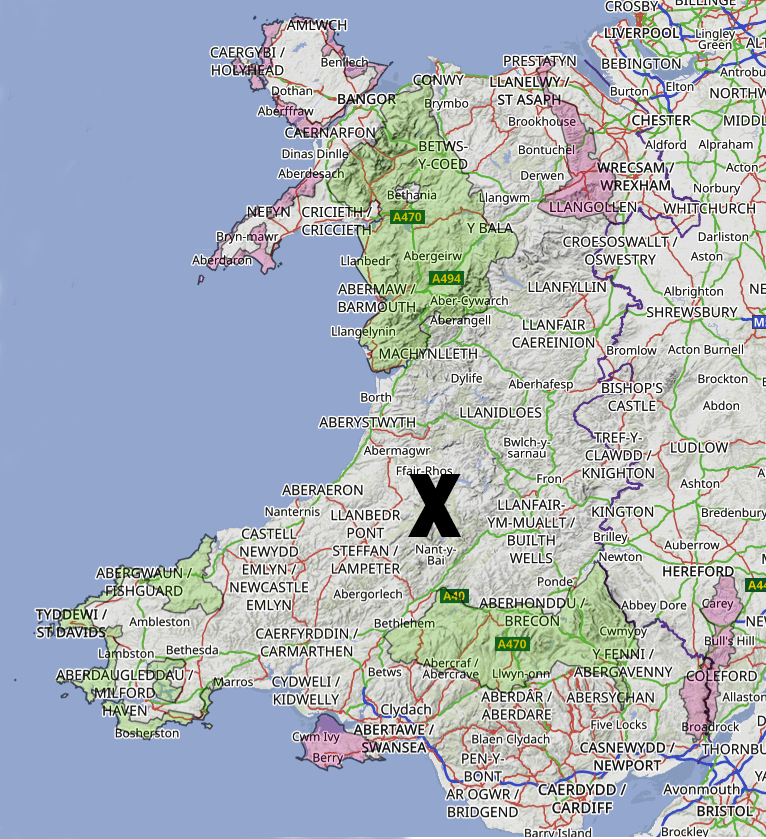
Over three years ago, with ‘Gilestone: Thinking Outside The Box‘, I suggested that the ‘Welsh Government’s controversial £4.25m purchase of Gilestone farm is about the transfer of water.

Much of what follows may look, superficially, like a rehash of that earlier piece; if so, it’s because that’s unavoidable in bringing the story up to date.

But there is more evidence. Which convinces me I was right.

THE BACKGROUND

We’ll start by looking at what I think are the major milestones in this saga, in the order they happened.

1/ The Thomas family, who owned Gilestone pre-2010, had problems with the (then) Brecon Beacons National Park. They felt hounded. It cost them a lot of money to fight officialdom, and resulted in them selling up in October 2010.

(A curious feature of the business was that the solicitor acting for the Park was a Julie James. Who, in May 2011, became the Labour Assembly Member for Swansea West.)

2/ Next, seemingly out of the blue, a buyer in the form of Charles Weston turned up. He bought Gilestone for £900,000 through his company Sharpness and Severn Transport Ltd, re-named CWW Farming Ltd in November 2019. (Though the title document I’ve linked to does not cover all the Gilestone land.)

(Sharpness, Bristol, Newport, and Cardiff, are the major ports on the upper Severn estuary.)

3/ In March 2018 Dŵr Cymru Welsh Water (DCWW) organised a trip to Wales for representatives of the Watershed Agricultural Council based in the Catskill Mountains of New York State. This is the body responsible for keeping the Big Apple’s water supply up to standard. This visit was reciprocated in October 2019, when a party from the Beacons visited the Catskills.

(Which meant DCWW was studying a model under which a rural catchment area supplied water to a metropolis some 100 miles away.)

4/ This link resulted in DCWW setting up the Brecon Beacons Mega Catchment (BBMC). Though apart from the change of name to Bannau Brycheiniog I can’t see much recent activity on the website. There’s been nothing on the Facebook page since July 2022 and the Twitter/X account has been closed.

Next, in May 2020, the Beacons Water Group CIC (BWG) was launched.

The Beacons Water Group was established under Welsh Water’s Bannau Brycheiniog Mega Catchment initiative (BBMC), our landscape-scale approach to safeguarding our drinking water sources now and for the future.

Among the founders we find Weston of Gilestone and his next-door neighbour across the River Usk. (Weston left BWG in October 2022.)

BWG definitely enjoys political support. As does DCWW, which seems to get a free pass from the ‘Welsh Government’ and ‘environmental’ groups when it comes to river pollution, with farmers copping all the blame. One director, Hugh Martineau, was an ‘advisor’ with Coleg Soros in Talgarth.

5/ In March 2022 the ‘Welsh Government’ bought Gilestone farm for £4.25m. The reason given was to allow the Green Man Festival to expand from its Glanusk Estate site.

OK, that’s enough background. Let’s try to put meat on the bones and get up to date with other developments and findings.

FILLING IT OUT, RECENT DEVELOPMENTS

What I suggested back in October 2022 was that the key to understanding the purchase of Gilestone might lie in the proximity of, on the one side, the River Usk, and the other side, The Monmouthshire and Breconshire canal.

Even so, this in itself tells you little. For it to make sense we need to link this abundance of H2O in Wales to southern England running dry of the stuff.

And let’s remember that, in addition to the river and the canal, Gilestone is just a couple of kilometres from Llangorse Lake to the north east and the same distance from Talybont reservoir to the south west.

The reservoir already connects with the Usk very near to Gilestone. It would be relatively simple to connect the lake.

I explain this because taking water from Wales has long been a favoured option to meet the increasing shortages in southern England. Boris Johnson talked about it in 2011. Johnson’s name was invoked in August 2022 in renewed calls for a national water grid.

As Nation.Cymru put it, quoting the Daily Mail:

Senior Conservatives are floating the idea of a ‘Great Boris Canal’ named after the outgoing Prime Minister to transfer water from the north of Wales to the south of England.

Though this plan has water from Llyn Efyrnwy diverted into the river and then into the Severn just over the border. As this Guardian article from March 2023 explains.

The “Cotswold canals” mentioned must be the Thames and Severn Canal, currently being restored.

Alternatively, the water will be piped straight into the Severn. Then it will be abstracted lower down, either at Deerhurst, north east of Cheltenham, or near to Sharpness.

Which serves to remind us that Charles Weston bought Gilestone farm in the name of Sharpness and Severn Transport Ltd, based in Sharpness docks. Where the Gloucester and Sharpness canal begins, connecting with the Thames and Severn canal in Gloucester.

It seems like every which way we turn in the Gilestone saga we hit water.

Taking us further and further away from farming and music festivals.

While the plan to transfer water from Wales to southern England has been mooted for decades, one reason for increased urgency in recent years is the planned growth in the numbers of AI data centres.

But it’s not just London and the south of England affected, there are other areas that will need much more water. Such as Cambridge, where there are (somewhat vague) plans for a ‘Forest City‘ of one million people.

One of those behind the plan, while admitting that water from Wales is a serious option, fears we Welsh are a bit touchy about the subject. Us!

Maybe that’s why the talk is of using rivers and canals. Perhaps some people think we’ll be too stupid to notice.

Having mentioned AI data centres, it’s worth remembering we have them in Wales, too. Especially around Newport and Cardiff. With more planned. Let’s get back to Gilestone.

We’ve seen that the River Usk and the Monmouthshire and Breconshire canal flow over or close by the property. Both waterways then run in a southeasterly direction towards Newport and the Bristol Channel.

My original thinking was that water could be transferred in either direction, whichever best suited the purpose of the exercise at any given time. But the canal only runs to Cwmbran, and is now effectively banned from taking water from the river.

As this piece from the Brecon & Radnor Express last month explains:

Earlier this year, Natural Resources Wales imposed new restrictions on the canal’s long-standing abstraction licence from the River Usk. It means that during periods of low water, the canal is no longer permitted to draw water from the river – a supply it has relied on for more than a century.

This has affected those who rely on the canal for their livelihoods, largely in the tourism businesses. Which seems to have resulted in intervention by the ‘Welsh Government’ with what looks like compensation.

With £5m announced in July. And what appears to be further funding announced earlier this month.

It seems clear that the flow of water in the Usk is a priority, and must be safeguarded.

CONCLUDING THOUGHTS

Earlier I said that Charles Weston of Sharpness & Severn Transport had turned up at Gilestone out of blue. Perhaps I made him sound like a wraith appearing from nowhere. Which would be misleading.

Because before buying Gilestone Weston had, in 2004, bought 182 acres at Tan-y-fedw, south of Sennybridge. This sits on Afon Crai, which runs into the reservoir a few kilometres south.

And as AI Overview says of the reservoir: ” . . . much of its water is diverted to the Swansea Valley, while the remainder flows down to meet the Usk”.

Four years later he bought 76 acres at Allt-fechan, a couple of kilometres north west of Brecon. This holding stands on Ysgir Fechan, which runs into Afon Ysgir, which runs a few more kilometres into . . . the Usk.

Having received its orders from London the ‘Welsh Government’ plays its loyal part in this scheme. We see politicos, DCWW, and Natural Resources Wales, all working towards the objective . . . without being able to say what they’re really up to.

With the ‘environmental’ lobby chipping in. Remember Gail Davies-Walsh, former employee of DCWW, now of front organisation Afonydd Cymru, which shields the water company from criticism by blaming farmers for all river pollution?

Re-acquaint yourself with Gail by scrolling down in this piece from three years ago. Read her contribution to this article from March this year.

In the very same building in Talgarth where Afonydd Cymru is based we find the cross-border Wye and Usk Foundation, with its staff of 34 and its considerable income. Roughly half the grant money comes from that generous old soul, “Other“.

Ah! sweet Talgarth. Home of that noted and venerable seat of learning – Coleg Soros.

Finally . . . We know there’s a plan to take water from Llyn Efyrnwy, into the Severn, and then, via pipe and canal, to the Thames. I believe there’s a wider plan that includes the Usk, Wye, and other sources. And this may be where Gilestone fits.

It would be relatively simple to connect Usk and Wye to the plan shown above. It would then be a multi-source option less likely to draw attention and criticism. For as Severn Trent is keen to stress (my emphasis):

This will be using water that is currently taken from Vyrnwy and occasionally redistributed elsewhere.  No additional water will be taken from Wales.

This, “some from here, some from there” approach, with no valleys drowned, will avoid another Tryweryn.

And seeing as Usk and Wye are within Dŵr Cymru’s territory, it explains the Catskills connection, Mega Catchment and Beacons Water Group. Why else would DCWW study how a hilly rural area supplies water to a metropolis 100 miles away?

Another factor worth considering is flooding. The existing wind farms on hills above the Severn and its tributaries cause greater run-off of rainwater, increasing the risk of flooding. With more windfarms planned, this risk will only increase.

So taking water from the Severn could also serve a flood prevention purpose. Though this is unlikely to be admitted, and never linked to wind turbines.

The wider plan I’m suggesting would also explain the quasi-sacred status given to the Wye by writers like George Monbiot, and bodies such as the Wye & Usk Foundation and Afonydd Cymru. For no other river in Wales gets this attention.

Whatever the details, it’s clear that Wales is to supply water to southern England. Much of it from resources in Wales owned by Severn Trent of Coventry.

But Wales won’t get paid a penny.

Ain’t devolution wonderful!

♦ end ♦

© Royston Jones 2025

Clear Water, Poisoned Debate

For decades we’ve been hearing that water is a diminishing commodity, and with an ever-expanding global population we’ll soon be fighting over water resources.

Though these predictions often came from the same people who at different times – or even simultaneously – could predict icebergs in Swansea Bay and no snow on Yr Wyddfa.

It was the usual nonsense from the usual sources.

And yet, in Wales now, water is being used as a weapon. Not by us against our village-drowning neighbours but by politicians and others, supposedly serving Wales and Welsh interests, against a section of the Welsh population.

If that necessitates twisting the facts, and taking control of certain bodies, either through funding or placement of personnel, then so be it.

This is another big one, so I’ll say what I always say: Don’t rush it, take your time, savour it, and you’ll enjoy it far more.

BULLSHIT FOR WHICH BULLS ARE BLAMELESS

It’s been accepted for many years that there might be a problem with nitrate discharges, from some dairy farms, mostly in the south west. This highly localised problem explained why Natural Resources Wales classified just 2.4% of Welsh farmland as ‘vulnerable’.

Click to open enlarged in separate tab

When asked to revisit the issue NRW produced a report in September 2016 that (on page 13) suggested, ‘Adoption of the targeted approach would mean an increase in the total area designated from 2.4% to approximately 8% which includes those areas newly identified by NRW’.

A targeted approach was obviously the sensible and fair way to go, but then the politicians got involved. One politician in particular.

The elections of May 2016 saw Lesley Griffiths re-elected for Labour in Wrecsam. Her Senedd bio then tracks her meteoric rise to voodoo doll status in farmhouses across the land. (Soon to be accompanied by Gary.)

First, she was made Cabinet Secretary for Environment and Rural Affairs. In November 2017 the job title changed to Energy, Planning and Rural Affairs. Then, 0n 13 December 2018, she was handed her baton as Minister for Environment, Energy and Rural Affairs.

Despite the facts of the matter, and the sensible proposal from NRW, just before Christmas 2017 Lesley Griffiths declared that the whole of Wales was at risk of NVZ pollution. Using this to announce an all-Wales regime.

After a year of being fed a diet of undiluted pollution La Griffiths announced in November 2018 that her mind was made up and she would introduce what she considered to be the necessary legislation.

After a slight delay due to Covid the implementation date was set for April 1, 2021.

But then things started to go awry for the so-called ‘Welsh Government’.

Despite an (unsuccessful) appeal by NFU Cymru the debate was noticeably widening as others took an interest, and could see how disproportionate to the scale of the problem Cruella de Griff’s proposals were.

For in addition to the all-Wales approach the acceptable nitrogen level in Wales was to be 170kg/ha, compared to 250kg/ha in England and Scotland. This was so obviously unfair, in a country where farmers are, on average, less affluent than their English and Scottish counterparts, that it tended to give the game away.

Because there would of course be a financial burden for farmers. Though I’m sure that those trying to put livestock farmers out of business knew exactly what they were doing

The backtracking had begun. With Plaid Cymru taking the credit. For despite being Labour’s partner in a coalition that dare not speak its name, the reaction from Plaid’s large rural vote was giving the party’s leaders serious concerns.

Click to open enlarged in separate tab

A Plaid Cymru source said their party had pushed Labour ministers to act‘.

Some cynics – not me! – might wonder what Plaid has offered in return.

The NVZ proposals couldn’t withstand scrutiny from any fair-minded observer because they had little to do with pollution. NVZ was a stick with which to beat livestock farmers, hopefully putting many out of business to release land for other purposes. Land coveted by many in the offstage chorus influencing our Lesley.

To support and legitimise this attack on livestock farming we were expected to believe that only farmers are responsible for polluting our waterways and seas.

Which meant that Dŵr Cymru (Welsh Water), the worst culprit, got a free pass. How did that come about?

All will be explained later in this piece.

THE MEMSAHIBS OF KNIGHTON AND CONSIDERATIONS OF CHICKENSHIT

This section is part digression, part lead-in.

A group that has figured on this blog a few times is a coven of Green-Left-Woke crones who’ve imposed themselves on the border town of Knighton. There are a few men associated with them, perhaps even more unhinged than their female comrades.

Catch up with them in Colonialism in microcosm, or Knighton.

They perform the full far left agenda:

Rather than doing the honest thing and just staying away altogether on Remembrance Sunday they insist on making a nuisance of themselves by placing wreaths of white poppies on the war memorial. (Dressed à la mode Michael Foot.)

Are they reprising a scene from a horror movie? Click to open enlarged in separate tab

You will not be surprised to learn that these biddies have formed a Knighton and District Refugee Support Group. Reluctance to welcome with open arms complete strangers from far-off lands will see you labelled a ‘racist’.

An epithet also hurled at those not condemning the fascists of the Israeli state.

Click to open enlarged in separate tab

The gang’s environmental credentials are on extravagant display with Sustainable Food Knighton. Which, in practice, is little more than a vendetta against a local chicken farm.

The attack is mounted on two fronts. One, it’s cruel to the chickens. Two, intensive chicken farms are a big, big source of river pollution.

Click to open enlarged in separate tab

Without being able to consult the chickens it may be impossible to address the first point. The second is more relevant to this article because it’s used over and over again by environmental Non-Governmental Organisations (eNGOs).

Especially those that allege chicken farms in Powys are severely damaging the rivers Usk and Wye.

But what are the facts?

Well, for a start, there are more, and bigger, chicken farms in Shropshire and Herefordshire, as the map below shows. So if chicken shit is a problem in Wales then it could well be coming from over the border.

Then again, it might not be a problem at all. Or, it’s a problem that’s being exaggerated.

Knighton is circled in green. Note on which side of the border the chicken farms south of the town are to found. Click to open enlarged in separate tab

For anecdotal evidence suggests there are even more chicken farms in the Severn catchment area, the Trent catchment area, etc. But there are far fewer complaints from these areas.

Which could mean that either shit from Welsh chickens is particularly toxic – in which case every one of the little buggers should be killed immediately! – or there’s a purpose behind the lying.

It’s the latter.

A suspicion reinforced by the Environment Agency recently concluding that the bigger culprit in the Wye catchment is arable farmers, who are mainly found on the England side of the border.

Confirmed by this graphic released by the Environment Agency relating to the Wye in England. Note the section I’ve highlighted in the second level. The tributaries mentioned are also in England.

Click to open enlarged in separate tab

Something also worth contributing here is that arable farmers use chicken manure as a fertiliser.

So even if chicken shit is the problem, it’s more likely to come from over the border; either directly from chicken farms or indirectly from arable farms.

And there’s yet another consideration to take into account. Certain interests are pushing us towards a meat-free diet, and in this scenario many view arable farmers as part of the solution. Which might explain them also getting a free pass.

The suspicion of an anti-livestock farming agenda being served was strengthened last month by a ‘report’ on BBC Wales about pollution on the Wye. One of the most biased pieces of television journalism I have ever seen.

Let me explain why I say that:

  • Passing references were made to sewage, but we were left in no doubt that the real culprits are farmers.
  • But only livestock farmers, with the programme focusing on one particular chicken farm.
  • There was no reference to the fact that the Wye is a cross-border river.
  • Despite being fronted by Wyre Davies the star of the show was Gail Davies-Walsh, who became CEO of Afonydd Cymru Cyf on February 22 2021, and secretary on March 11.
  • Afonydd Cymru (Rivers of Wales) serves as the umbrella body for the more local river groups.
  • Her Linkedin profile (here in pdf) tells us that until September she was Head of Natural Capital for the Wye and Usk Foundation‘. ‘Natural Capital’ seems to be code for, among other things, greenwashing. Certainly tree planting.
  •  Revealingly, Linkedin also tells us that Gail Davies-Walsh worked for Dŵr Cymru for almost 14 years, up until January 2020.
Gail Davies-Walsh. Click to open enlarged in separate tab

I wouldn’t be surprised to learn that Gail Davies-Walsh took the idea for the programme to the BBC. Which would raise more concerns about linkages, and influence.

Another who joined Afonydd Cymru recently is Harriet Alvis, (Linkedin in pdf) CEO at West Wales Rivers Trust, and co-editor of FISH, the magazine of the Institute of Fisheries Management.

More on both in a mo.

And the situation herein described is very much the same with more terrestrial eNGOs. ‘Environmentalists’ opposed to livestock farming take control of existing groups or set up new ones – and never go unfunded again!

A phenomenon reported on this blog many times. Try Enviroshysters flock to Wales for easy money, Invasion of the Enviroshysters (PG), or Back to the Land!.

TINKLING RILLS AND STREAMS OF POLLUTING CASH

Time now to turn our attention to the increasingly well-funded bodies looking after our various rivers, and we find new ones forming all the time. With the money available perhaps explaining the proliferation?

Here’s a table I’ve draw up, in pdf format (with working links) that I hope lists all the various river outfits operating in Wales. If you know one I’ve left out, then please let me know.

You’ll see that some are specific to one river while others are more general, some even claiming to be national in their scope.

Let me say at the outset, there are many genuine people involved in river trusts, boards, etc; not least, anglers, whose only concerns are for the health of our rivers, fish stocks, and other environmental matters.

But unfortunately, there are others, either looking out for themselves, or involved for a different purpose.

Go through the table I’ve linked to, particularly the ‘Comments’ section, and you’ll see substantial inputs of official funding in recent years.

Take the North Wales Rivers Trust for example. Total income in the year ending 31.03.2022 was £241,790. Of which £241,690 came in ‘Welsh Government’ grants.

From the Charity Commission entry under ‘Financial history. Click to open enlarged in separate tab

And it’s a similar story with other river bodies. Though much of the increase, instead of being shown as coming from ‘government grants’ or ‘government contracts’, is disguised as, ‘Income – charitable activities’ on the Charity Commission entry.

Such as here with the West Wales Rivers Trust. The Charity Commission graph shows income soaring from just £3,750 in y/e 31.03.2017 to £541,140 for y/e 31.03.2021.

That is one hell of a jump in just four years! One way of interpreting the big increase is the ‘Welsh Government’ – or Dŵr Cymru? – paying CEO Harriet Alvis’s salary.

Because don’t you find that strange?

A river group that has meandered happily along for 15 years suddenly needs a CEO.

Equally thought-provoking is Gail Davies-Walsh becoming CEO of Afonydd Cymru.

Making me wonder if Gail Davies-Walsh and Harriet Alvis were ‘placed’ in the West Wales Rivers Trust and Afonydd Cymru to push the ‘Welsh Government’s anti-farming campaign, and also to protect Dŵr Cymru.

For there is a certain ‘circularity’ to it all. ‘Welsh Government’ and Dŵr Cymru would no doubt explain the increase in funding by the ‘state of the rivers’, which then justifies the attack on livestock farming.

A ‘circularity’ made even more suspicious by the fact that these vast increases in funding occur at exactly the same time Lesley Griffiths was hatching the absurd and punitive NVZ legislation.

If I’m wrong then maybe someone can give another reason for our river bodies being showered with cash from 2016.

Back to the riverbank . . .

On the other side of the country the wealthy Wye and Usk Foundation’s income from government grants and contracts jumped from £404,950 in 2018 to £934,670 in 2020.

Not far away is the South East Wales Rivers Trust, which also saw its income more than double between 2017 and 2021. Explained as funding from, ‘Natural Resources Wales, Welsh Water, Merthyr Tydfil County Borough Council, Welsh Government with European Funds’.

The ‘disguised grants’ I referred to earlier was money paid to Afonydd Cymru Cyf and then distributed to the individual water groups. Afonydd Cymru’s own accounts tell us ‘Income from government grants’ jumped from zero in 2019 to £894,700 in 2020.

Afonydd Cymru may operate like the Wales Council for Voluntary Action does in relation to the third sector. That is, acting as a conduit for ‘Welsh Government’ funding in the hope of disguising the source of the funding.

But the money filtered through Afonydd Cymru is small beer compared to the £13.8m up for grabs in the Four Rivers For Life project, administered by Natural Resources Wales. (Though £4.5m actually goes towards ‘quaking bogs’.) The four rivers being the Tywi, Teifi, Cleddau and – it should go without saying – the Usk.

This might explain the recent formation of the Save the Teifi campaign. Though information is difficult to find. For example, the social media links at the foot of the website home page don’t work.

This report in the Tivy-side Advertiser in August links the group with Ffynnone-Community Resilience and mentions ‘spokespersons’, but gives no names. Is it a secret society?

The only name mentioned in the Tivy-side article is ‘Councillor John Davies’. This must be ‘John Cwmbetws’, of Bute Energy’s Welsh Advisory Board. Bute being a Scottish company that wants to build twenty or more wind farms in Wales, some with the tallest towers yet seen on land.

Well connected, is John. In Llanelwedd, Corruption Bay, and other places.

The Ffynnone group might be trying to stay anonymous, but one name has been given to me. It’s Jessica McQuade who, I’m told, not long ago moved to Llandudoch, across the Teifi estuary from Aberteifi.

Her Twitter account confirms the link with the Save the Teifi campaign.

Click to open enlarged in separate tab

What struck me was that McQuade and Harriet Alvis, the CEO at the West Wales Rivers Trust and, since last month, a director at Afonydd Cymru, are both followed by the Brecon Beacons Mega Catchment.

This is the group created by Dŵr Cymru following its link-up with the Watershed Agricultural Council in New York State, in the area that supplies New York City with water. I wrote about this group in my previous post. It’s another outfit with very little information publicly available.

But what is McQuade’s and Alvis’s connection with this Dŵr Cymru outfit? And with Dŵr Cymru itself?

Jessica McQuade’s Save the Teifi / Ffynnone group has already received ‘Welsh Government’ funding. She could be another one ‘placed’ to push the ‘Welsh Government’s anti-farming campaign / WEF’s Agenda 2030 and, of course, to shield Dŵr Cymru.

As I suggested earlier, all the money recently being splashing around, with a veritable tsunami of new funding approaching, may also explain the new groups springing up. Here are some more.

There’s the Cardiff Rivers Group, containing a few Sherman luvvies, set up in October 2020. Bay-watchers may recognise one or two of the trustees.

Then there’s the Welsh Rivers Union, which has a website, and a Twitter account from February last year, but seems to be unregistered as either a company or a charity.

Next, there’s the Wye Salmon Association, whose Twitter account started in September last year. This too seems unregistered.

Finally, and most recently, there’s Friends of the Upper Wye. Which registered as a charity in March this year.

Let me conclude this section with a tweet from Jessica McQuade who, you’ll remember, is busy with the Save the Teifi campaign since moving to north Pembrokeshire, but whose day job is with the World Wildlife Fund.

Click to open enlarged in separate tab

Now why would the WWF be interested in food? And trust me – that is human food she’s referring to.

Because, gentle reader, the WWF is no longer about saving pandas; it is a full-on, far left organisation totally committed to the anti-farming and the anti-human – ‘reduce the population’ – agenda.

And also believe me when I tell you that the WWF wields great influence with the ‘Welsh Government’, and in the Bay more generally.

‘FIRST THEY CAME FOR THE FARMERS . . . ‘

The ‘Welsh Government’ – and, indeed, the Bay establishment – has bought into the UN’s Agenda 2030 and the World Economic Forum’s Great Reset.

Both posit that burping, farting farm animals are destroying the environment; so we should switch to eating plant-based foods, insects, and gunge marketed as ‘artificial meat’.

Obviously, this will mean many fewer livestock farmers in Wales. Perhaps none. But that’s no problem, because the land vacated is already earmarked for tree planting, rewilding, conservation projects and other activities from which Welsh people will be largely excluded unless needed for window-dressing.

To facilitate this clearance programme livestock farmers must be blamed for things that are not their fault. This frees Dŵr Cymru from criticism. An objective easy to achieve given the influence the water company wields within ‘Welsh Government’.

To ensure that everyone sings from the same hymn sheet the ‘Welsh Government’, Dŵr Cymru and other official bodies are more than willing to fund assorted eNGOs which, in return, may accept ‘appointees’.

What I’m alluding to is little different to Bill Gates funding the BBC, the Guardian, New York Times, CNN and countless other media outlets around the world. He doesn’t do it in defence of the truth, he does it to ensure the media he funds will promote his and the World Economic Forum’s agenda.

‘He who pays the piper calls the tune’.

Headlines like this, frightening people into obeying the WEF agenda, don’t come cheap. Click to open enlarged in separate tab

Wales, being a poor country, and a corrupt, one-party state, with no effective political opposition, and no functioning media, is especially vulnerable to powerful forces seeking to impose an agenda.

If farmers can be defeated, and the food supply controlled by forces you will have difficulty identifying, let alone challenging, then we will have already lost. Because who controls the food supply controls the world.

It’ll be too late to complain when your car is confiscated, or when your access to your bank account is blocked because you said something on social media that somebody, somewhere, didn’t like.

So stand with the farmers, and stand up to those who threaten them. Because those who threaten the farmers also threaten you.

♦ end ♦

© Royston Jones 2022