Devolution Is Cardiff Council On Stilts

To explain the title . . . Back in the 1960s and 1970s, when there was any talk of a Welsh Parliament, Home Rule, or devolution, one of the arguments used against the idea was that such a creation would just be “Glamorgan County Council on stilts“.

The implication being that other parts of Wales would be ignored. That investment, jobs and other goodies resulting from self-government would be concentrated in that area.

In this piece I’ll try to persuade you that what we’ve seen since 1999 is even worse.

FIRST SECRETARY, FIRST MINISTER

I’m going to begin by looking at the first secretaries and first ministers we’ve had since the beginning of the devolution experiment.

The first, said to be Tony Blair’s choice, even “Blair’s poodle“, was Alun Michael. He was never very popular, either within the Labour party or the country at large, and was first secretary for just nine months, until May 2000.

A former Cardiff City councillor, he later served as Labour MP for Cardiff South and Penarth. Then Regional Assembly Member for Mid & West Wales. And PCC for South Wales.

Michael was replaced by the much more popular Rhodri Morgan. Who stayed in the first minister role until December 2009.

Cardiff-born Morgan was MP (until 2001 GE) and AM for Cardiff West from 1999.

Next came Carwyn Jones. Despite being born in Swansea, and practising law there for a number of years, he represented the Bridgend constituency. His Cardiff connection was established by being a tutor for a few years at Cardiff University.

I’ve said it many times on this blog, and I’ll say it again, Cardiff University is joined at the hip to the local Labour establishment. The School of Journalism should be renamed the School of Globalist-Left Propaganda.

Jones stood down as leader in December 2018. He now sits in the House of Lords as Baron Jones of Penybont.

He was succeeded by Mark Drakeford, a former South Glamorgan County councillor who became the Assembly Member for Cardiff West in the May 2011 elections.

Drakeford was born and raised in Carmarthenshire, but moved to Cardiff over 40 years ago. And was a lecturer at Cardiff University.

From 1985 to 1993, Drakeford represented the Pontcanna ward on South Glamorgan County Council, with fellow future Welsh Assembly members Jane Hutt and Jane Davidson as his ward colleagues.

(Jane Davidson was at the Rio Earth Summit in 1992, Labour AM for Pontypridd (1999 – 2011), and wrote the Well-being of Future Generations legislation that enforces ESG and DEI in every aspect of Welsh life.)

Drakeford stood down as first minister in March 2024. He will not stand again in May.

Then came the brief tenure of his successor Vaughan Gething. After serving as councillor for the Butetown ward on Cardiff City Council he became the Senedd Member for Cardiff South & Penarth in 2011.

Gething is also standing down.

Gething was succeeded in August 2024 by the current incumbent, and former MEP, Eluned Morgan, the Regional Member for Mid & West Wales.

Born and raised in Cardiff she sits in the House of Lords as Baroness Morgan of Ely.

So we see a Cardiff connection with all first secretaries or first ministers Wales has known in 27 years of devolution. And with five out of the six a strong connection.

Given that Cardiff makes up some twelve per cent of Wales’ population, this statistic is truly remarkable. And should be concerning.

SOME INTERESTING SENEDD MEMBERS

Beginning with Bridgend, where we find Sarah Murphy. Who was born and raised in Pontypridd then, after Reading University, worked in Seoul and London. She came back to Cardiff; held posts with the Labour party, and the University. More exactly, the School of Journalism.

Next, Cardiff Central. The patch of uber wealthy Jenny Rathbone since 2011. She’s a member of the Rathbone dynasty of Liverpool, where she was born. Her knowledge of Wales is on a par with that of a stay-at-home Eskimo. Limited to Cardiff and the area around her holiday home up in Llanfihangel Glyn Myfyr.

Hubby, John Uden, who knows as much about wind power as the heretofore mentioned Innuit knows of Wales, somehow managed to get on the ‘Welsh Advisory Board’ of Bute Energy. Which was handy, seeing as Mrs Uden sits on the Senedd’s Climate Change, Environment and Rural Affairs Committee.

She’s standing down in May. Her vacuous wittering will not be missed.

Cardiff North is where we find Julie Morgan, widow of Rhodri. Cardiff born and bred, she is a former South Glamorgan and Cardiff City councillor, and was elected to the Senedd in 2011 after losing the Westminster seat of Cardiff North in 2010.

She is also standing down.

Cardiff South & Penarth is held by former first minister, Vaughan Gething. (See above.)

Cardiff West is held by former first minister Mark Drakeford (See above.)

Cynon Valley brings up Vikki Howells, who was born and raised in the constituency, and attended Cardiff University.

The SM for Llanelli Lee Waters is definitely a member of the Corruption Bay in crowd. A former ITV Wales journalist, director of think tank IWA, then director-lobbyist for bike charity Sustrans, he’s the man responsible for the 20mph restrictions.

Despite being SM for a seat west of Swansea, he lives just outside Cardiff.

He’s standing down in May.

Now we head up to Merthyr where the local representative is Bristol City fan Dawn Bowden. Another Bay insider who worked her way up through union ranks but who knows as much about the Heads of the Valleys as the denizen of the frozen north I mentioned earlier.

But that doesn’t matter – she was promised a safe seat.

Which she’ll thankfully vacate in May.

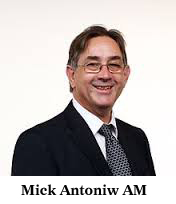
Another carpet-bagger can be found in Pontypridd in the form of Mick Antoniw. He came to Wales to study at Cardiff University, and stayed. One of those who drove through the absurd and corrupt voting system we’ll be using in May.

Of Ukrainian descent, he’s made a number of very public trips there to deliver ‘aid’. If Wales was independent he’d want us to declare war on Russia.

Another one standing down.

A odd one now, in Julie James, SM for Swansea West. Odd, because even though she was born in Swansea, travelled around a lot in her early life, she was involved in the Gilestone farm saga before being elected to the Assembly in 2011. As a solicitor working against the then owners, which paved the way for the land to be bought by someone’s chosen buyer.

Also standing down.

Moving east to Torfaen, ‘though born in Merthyr, Lynn Neagle is definitely part of the Bay Bubble. Wife of former Labour AM Huw Lewis.

Neagle has worked for, “Shelter Cymru, Mind and the CAB. She was Carers Development Officer with Voluntary Action Cardiff and also worked as a researcher for Glenys Kinnock MEP“.

And, finally . . . Jane Hutt, who sits for the Vale of Glamorgan, is another who moved to Wales to involve herself in charities and third sector bodies: National Co-ordinator of Welsh Women’s Aid, South Glamorgan Women’s Workshop, Tenant Participation Advisory Service and Chwarae Teg (Fair Play) . . .

Thankfully, she’s also standing down.

REGIONAL SENEDD MEMBERS

Due to winning so many seats in the south and the north east Labour has just three Regional SMs. One in the North. Here are the two from the Mid & West.

One of course, is Eluned Morgan, the current first minister. (See above.)

The other is Joyce Watson. And she may be unique among Labour SMs because her official bio says: “Joyce has run several small businesses – public houses, restaurants and retail outlets – in Ceredigion, Carmarthenshire and Pembrokeshire.”

But did she own them?

But even that ray of hope is dimmed by the usual charity/third sector involvement: “Joyce managed the Wales Women’s National Coalition . . . senior member of the Wales Gender Budget Group . . . NHS Equality Reference Group”.

Watson is another jumping the sinking ship of devolved politics in May.

WHAT IT MEANS

Let’s start with a statistic. The population of Wales grew between the census years of 2001 and 2021 by 6.8%. In the same period Cardiff saw growth of 18.7%. According to some, Cardiff is now the fastest-growing city in the UK.

Most areas of Wales saw negligible growth, with some even recording a fall. Ceredigion, Blaenau Gwent and Gwynedd have declining, and ageing, populations; while Merthyr and a few other areas struggle to maintain their numbers.

Newport’s population increases steadily since charges on the Severn Bridge were abolished, which allowed buyers from England to access the cheaper housing in south east Wales and commute daily to Bristol, or even further. While in many rural areas population increase is due to retirees and good-lifers moving in.

But turning Newport into a Bristol suburb and rural areas into al fresco retirement homes is neither desirable nor sustainable.

Welsh life is increasingly focused in Cardiff, for the benefit of Cardiff. This can be explained by a number of factors. The first, quite obviously, is political power. Then there’s the third sector, charities, pressure groups, which both feed off and feed into the political system.

A political machine serviced by regiments of spads, assistants and researchers, whose loyalty can be guaranteed by the carrot of a council seat, or, for the very lucky – a seat in the Senedd.

But let’s not overlook other beneficiaries, such as those to be found among the movers and shakers of the local business community.

An example would be the Thomas brothers, of the pie and pasty dynasty. It’s universally accepted that the ‘Welsh Government’ paid way over the odds to buy Cardiff airport. But who was the vendor?

And who bought that criminally undervalued land on the outskirts of Cardiff?

In both cases the lucky boy was Stan Thomas. Hot pies all round!

If you want a fuller picture, read a couple of pieces I put out ten years ago. Pies, Planes & Property Development, and Pies, Planes & Property Development 2.

But it’s not just the Thomas brothers. There are others.

Then there’s sport. Through funding, the ‘Welsh Government’ effectively took control of the Football Association of Wales and the Welsh Rugby Union.

Which explains why, when Cardiff Rugby went bust the WRU stepped in to buy it. And why the most successful region, the Ospreys, based in Swansea, is threatened with extinction.

The last-but-one owner of Cardiff Rugby was the late Peter Thomas, Stan’s brother.

The clowns currently wrecking Welsh rugby are political appointees, and they’ve been told to prioritise the interests of Cardiff. To the detriment of Welsh rugby as a whole.

Finally, there’s the media. Based in Cardiff and little more than a mouthpiece for those I’ve described above.

And all the while, our economy and our essential services decline and decay.

WHAT MIGHT THE FUTURE HOLD?

If polls are to be believed then Plaid Cymru will emerge in May with most SMs, but not a majority. This will mean Plaid going into coalition, or having an ‘agreement’, or an ‘understanding’, most likely with Labour, possibly with the Greens.

We might even see a ‘progressive’ alliance of all the Globalist-Woke parties. It really won’t make much difference. (But what a nightmare that could be!)

Now some might think that with so much of its support being in the west and the north Plaid Cymru will adopt a different approach. And there might be a few moves away from the obsessive focus on Cardiff, but Plaid would be no real improvement.

Because Plaid wants to take Wales further than Labour on ‘ishoos’ such as Net Zero, trans ‘rights’, DEI, Gaza, ‘Islamophobia’, and decolonising Welsh cakes. And faster down the road of economic implosion and civilisational decline.

Party leader Rhun ap Iorwerth may be the Senedd Member for Ynys Môn, the seat furthest from the Bay, but he’s a former BBC journalist. He was educated at Cardiff University and he’s lived in Cardiff.

And ap Iorwerth may be a figurehead; for many believe the party is still controlled by the acolytes of a previous leader, the PoundShop Pasionaria of Penygraig.

Whatever the outcome in May in party terms, it won’t make much difference. Plaid, Greens, Labour, Tories, Lib Dems, they’re all just differently-badged elements of the Globalist Uniparty. That’s why they repeatedly tell us the upcoming election is solely about defeating Reform.

Is it?

Then again, Labour might welcome a ‘break’. Shun any co-operation, then come back untainted and refreshed in 2031. Hoping electors will have forgotten their record in the Senedd.

And who might lead the Labour comeback? If I was a betting man I’d put a few quid on Huw Thomas. If you’ve never heard of him, let me introduce him.

Huw Thomas, courtesy of Getty Images

He’s 41 years old and from Aberystwyth, he’s bilingual, and he’s been leader of Cardiff Council for nearly 10 years. In May, he’s top of the Labour list for the Caerdydd Penarth constituency.

He’s guaranteed to be elected because Cardiff is an area where Labour will do well.

UPDATE: Soon after posting this article at 9am I went to Tywyn, picked up a Western Mail, read it while having my first coffee of the day. In this article Huw Thomas gets a mighty plug.

If it comes to pass as I predict, and Labour gets back into power in 2031, under his leadership, then everything will revert to the status quo ante Plaid, with Cardiff grabbing the lion’s share of investment and jobs.

Which, to respectfully amend Lincoln’s Gettysburg Address, will mean a return to: Government of Wales, by Cardiff, for Cardiff.

♦ end ♦

© Royston Jones 2026

Buy Me A Coffee

Miscellany 18.07.2024

I suppose I could have done a piece on Vaughan Gething’s belated resignation; but I’ve said almost all I want to say on that nice Mr Musk’s platform. He’s moving to Texas, you know. (Musk, not Gething.)

I will just add that Gething’s resignation speech was a classic of ‘Welsh’ Labour. He took no responsibility whatsoever for his fate; the mistakes, the errors of judgement, the lies, being an arrogant prick, no – it was all somebody else’s fault!

And of course, he was the victim of racism. Ideas of victimhood, and exploiting it, are now so embedded in the Labour party in Wales that they direct policy and legislation. As you’ll read in the third section of this offering.

Which is a Miscellany! A section on Woodknowledge Wales, yet another gang of enviro-shysters. Part three is on yet more tinkering by the ‘Welsh Government’ with the democratic process. And finally, some thoughts on wind turbines, and pylons.

WOOD YOU BELIEVE IT!

An outfit that’s been in the news lately is Woodknowledge Wales (WKW). It encourages greater use of wood. I quote: “We champion the development of wood-based industries for increased prosperity and well-being in Wales“.

Well-being‘! That meaningless term used to justify anything and everything.

I have no issue with timber-framed buildings, or even buildings made entirely of wood. The issue is the politics, the funding, the peripheral messages and hidden agendas that always attach to outfits like WKW.

So who runs this show, and where might we find them?

Looking through the early directors of what was originally the Welsh Timber Forum I saw a few names I recognised, in fact, people I know personally. But there seems to have been a kind of takeover in 2016.

Of the six directors at the start of 2017, two have since left. The four remaining directors – of what converted to a Community Benefit Society (CBS) on St Patrick’s Day 2022 – all joined in 2016.

The two departures may even have been connected with the change to a CBS. Strangely, perhaps, of the 36 directors who’ve come and gone since 2001 those two were the only ones to describe themselves on the Companies House listings as ‘Welsh’.

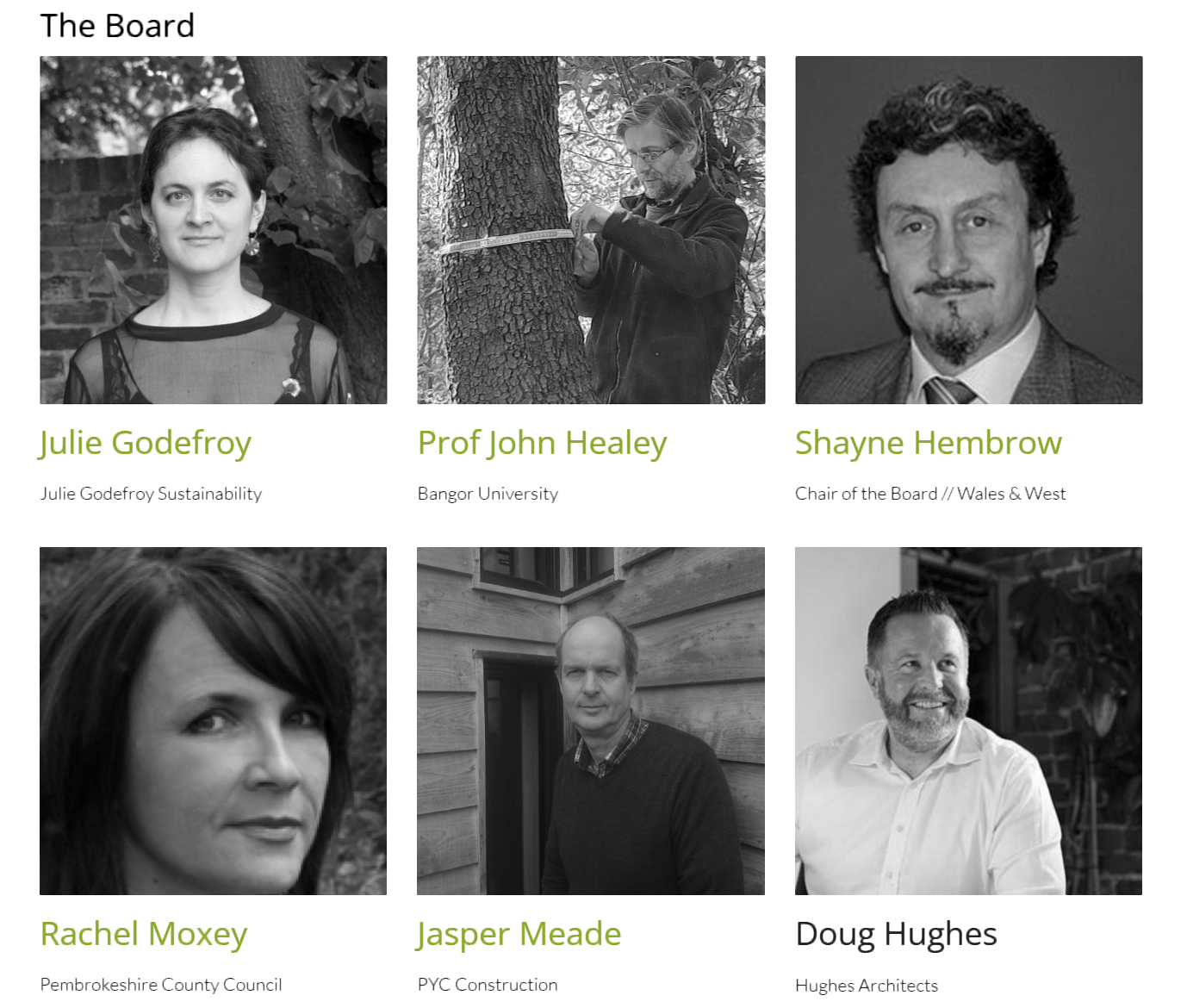
Below you see the current WKW directors from the latest accounts (to 31.03.2023) filed with the Financial Conduct Authority. Also the companies they run or, in the case of Rachel Moxie, the day job. This filing still uses the address of one of the departed.

Click to open enlarged in separate tab

Though I’m unclear on the status of Gary Newman. He was a director when WKW was a company, yet he’s signed the most recent accounts from the FCA as secretary.

But if Newman is now WKW secretary, rather than a director, this would explain why he isn’t listed as being a director of The Foundational Economy Alliance Wales Ltd.

This lot moved in November 2022 from the United Welsh housing association offices in Caerffili to an address in Porthaethwy (Menai Bridge), which is quite a move.

However, the new address for WKW, the one given on the website, is 22 Cathedral Road in Cardiff. (Possibly out back.) Also known as Pentan House, for at this address we also find, Pentan, Rant Media, Moxie PeopleLRM Planning, The Green Business Centre, and who knows who else?

With Woodknowledge Wales we have another outfit serving the ‘Welsh Government’s self-destructive obeisance to the Net Zero cult. With councils and housing associations made to use more wood in their new builds.

Much of which will be from timber grown by foreign corporations on what used to be Welsh family farms. Or wood from monoculture plantations poisoning land and water.

Click to open enlarged in separate tab

The role I suggest for WKW would explain the presence on The Board of Shayne Hembrow of Corruption Bay’s favourite housing association.

Deputy Chief Executive / Commercial Director of Wales and West Housing Association . . .  In addition Shayne is chair of Shelter Cymru and Chair of Woodknowledge Wales.

Hembrow is yet another third sector grifter who came to Wales to help third-rate politicians wreck our country. But I can’t see him listed on the W&W website. Has he gone undercover?

In the FCA filings we see only Hughes, Meade and Moxey named as directors. So does this mean that Godefroy, Healy and Hembrow joined more recently? And why is Godefroy described in her bio as a “trustee“, for WKW isn’t a registered charity?

Finally, and in what seems to be a recurring theme, we have with Woodknowledge Wales a group close to if not controlled by Corruption Bay . . . with one of those involved getting loans from the Development Bank of Wales.

In the case of director Jasper Meade, in January 2020, he landed two loans from DBW Investments (14). One specific to a factory in Buttington, near Welshpool; the other, a more general charge over a number of his companies.

As I say, a recurring theme. Which is why I suggest the Development Bank of Wales needs to be investigated, and then taken away from the control of politicians.

All that said, I could still support this push to use more wood if I thought it would result in a forestry industry employing thousands of people in rural areas, sustaining Welsh communities, complementing farming rather than being used to destroy it.

But that won’t happen. It’ll be like renewable energy, environmentalism, 20mph, and all the other results of politicians buying into the climate cult and the control agenda.

BYE-BYE, PORT TALBOT

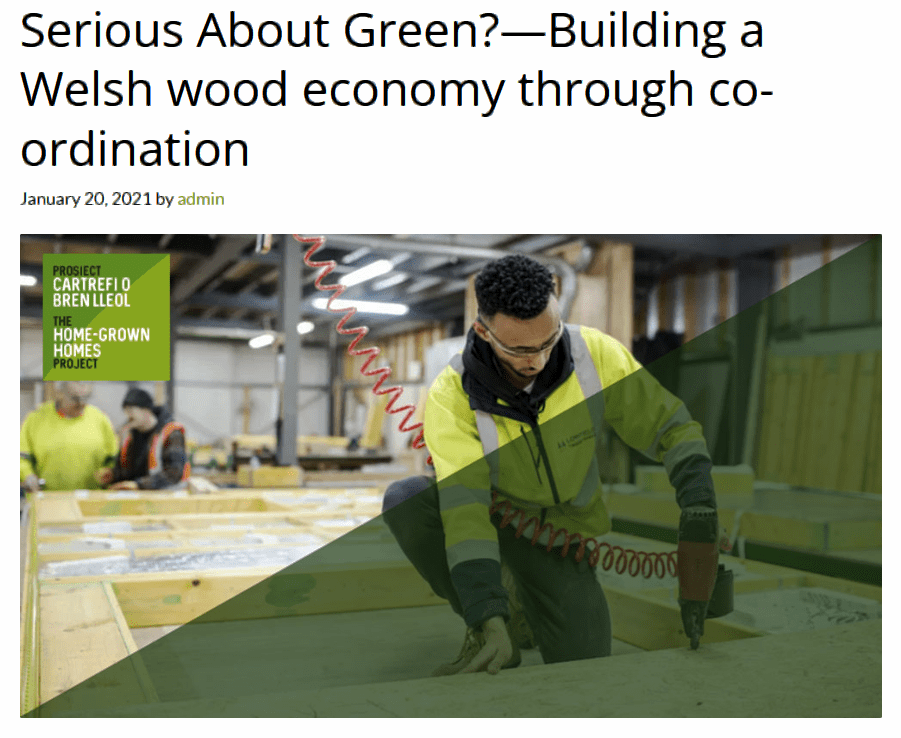
Let’s stick with Woodknowledge Wales (WKW) for just a minute. They’ve been pushing a report, ‘Serious About Green?—Building a Welsh wood economy through co-ordination‘.

Click to open enlarged in separate tab

This makes it clear – as I suggested earlier – that WKW is not simply concerned with us using more wood in buildings. The agenda is much bigger.

And while the report itself seems to be the work of WISERD, the quote below is from Woodknowledge Wales, and can be found here.

Wales is a sheep, beef and dairy nation and Wales is a steel nation. These activities are deeply ingrained in our cultural identity.  They may have been rational activities for the past century but are not well-aligned to the low carbon needs of 21st Century Welsh society.

We must give up good-pay steel jobs and the Welsh family farm. And we must do so because a bunch of zealots have decided that we who belong here, working in our own country, in spheres they disapprove of, must lose everything.

UNIVERSAL FRANCHISE . . . AND THEN SOME!

Now we’re going to consider the Elections and Elected Bodies (Wales) Bill. Here’s a shorter summary. And this is how WalesOnline reported it last week.

You’ll see that everyone is to be put on the electoral register whether they want to be on it or not. Speaking for the Electoral Reform Society, chief executive Darren Hughes had this to say:

Automatic voter registration is a win-win for voters as it takes one more thing off their to-do list while also . . . helping to enfranchise the hundreds of thousands of missing voters in Wales.

Which is, as we psephologists are wont to say, and at the risk of sounding technical, utter bollocks.

Takes one more thing off their to-do list“, says Kiwi Darren. But what if it was never on their to-do list? There are thousands of people in Wales who have chosen not to be on the electoral register.

Consequently, to put them on the register, without their permission, will be an infringement of their privacy and an assault on their freedoms.

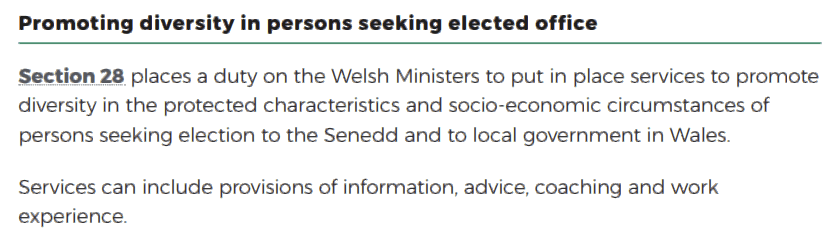
As well as bulking up the electoral rolls the Bill also references candidates, and inevitably, we find ‘diversity’ mentioned. Here’s what the summary says on page 5.

Click to open enlarged in separate tab

Specific characteristics” is code for trans, as the ‘Welsh Government’ now shies away from using the legally incorrect and deliberately misleading ‘protected’. But it also introduces a new term with “socio-economic circumstances“? Does that mean preference will be given to poor people?

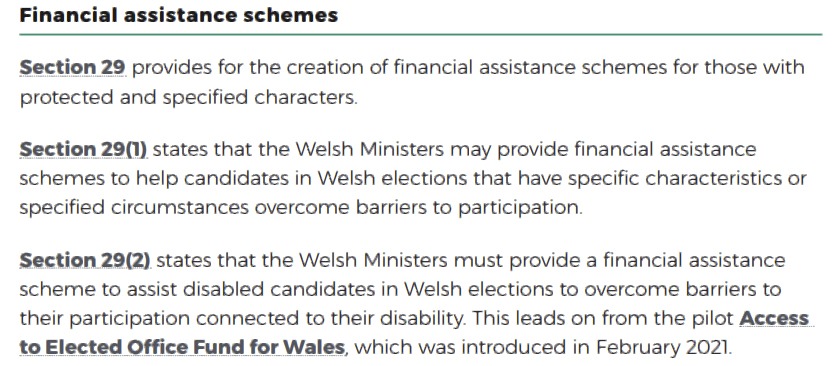
It’s worth asking, because the summary then takes a rather curious twist when it talks of “financial assistance“.

Click to open enlarged in separate tab

(Is Section 29 written correctly, or should it read, ‘specified characteristics’?)

For me, the mention of disability is a distraction, for most beneficiaries of this largesse will in fact come from other groups.

I expect race and a certain religion to figure, but there may be another clue here.

Welsh Ministers may provide financial assistance schemes to help candidates in Welsh elections that have specific characteristics or specified circumstances overcome barriers to participation.

I went to the full version of the Bill in the hope of finding “specified circumstances” explained. But there was nothing. Leaving me to think the Labour party will sponsor candidates from certain categories on whose loyalty it can count.

Putting everyone on the electoral register only makes sense if we have compulsory voting. But we don’t, and I’m not aware of any plans to introduce it. So why put everyone on the electoral register?

Here’s another concern. This legislation might be in place for the 2026 Senedd elections, which means it will complement the Senedd Cymru (Electoral Candidates Lists) Bill. Yes, that’s the one giving us huge constituencies and closed lists.

In the WalesOnline article you’ll see mentioned Mick Antoniw, the Counsel General. Now I have concerns about this man’s role in elections.

Counsel General, Mick Antoniw. Click to open enlarged in separate tab

Mainly because of his involvement in pushing through the closed lists system. I dealt with it in my piece Senedd Cymru (Electoral Candidate Lists) Bill. There I explained that Antoniw was even trying to get away with not naming candidates!

The electoral systems of Wales and the UK are screwed up enough without making things worse.

Consider, Labour has just won a landslide victory in the July 4 general election. But it was only a landslide in terms of seats, and entirely due to the peculiarities of the FPTP system. The turnout was well down on recent elections.

The problem – in addition to the Gething factor and the failure of devolution – is that too many people don’t feel engaged by politics, or feel that politicians don’t speak for them.

The priority should therefore be engaging with those who are already on the electoral registers but don’t vote. Because it makes no sense to register people who have no intention of voting.

One change we’ve already seen was the requirement on July 4 for those wanting to vote to produce photographic ID. Now as we know, from the USA and elsewhere, such a rule is racist, and so would never have been introduced by Labour.

For Labour is far more ‘flexible’ when it comes to rules relating to voting.

Which is why I predict that, in addition to putting everybody’s name on the electoral register, we shall also see moves to make postal and proxy voting easier.

In the 2026 Senedd elections we could see un-named Labour candidates, with “specified characteristics” and “specified circumstances“, benefit from “financial assistance” . . . and be elected in turnouts of 127%.

Try to argue then that democracy’s in trouble!

The truth is that once again we see Labour introducing dangerous divisions and dubious methods to serve its own narrow political interests.

LINKS TO THE OLD NORTH

Many of you must be aware of Bute Energy’s plans for a pylon run some 60 miles long from that company’s wind farms in Powys south through the Tywi valley to Llandyfaelog, south of Carmarthen.

There the line from Powys will connect with the line from Pembroke to England. For of course virtually all the power generated in Wales goes to England. (Thankfully, we get the thousands of excellent jobs provided by ‘renewables’.)

The project is being handled by Bute’s Green Gen Cymru. And it’s explained, sort of, here, and if you scroll down there’s even an interactive map.

As might be expected, there is considerable opposition along the route.

Click to open enlarged in separate tab

And the plan is severely testing the loyalties of some politicians. (Also, their mental dexterity.) For example, Ann Davies, the new Plaid Cymru MP for Caerfyrddin, has said she opposes the pylons . . . but not the wind turbines.

I don’t want to spend too much time on the Tywi valley project because it’s really just the intro to the other elements of this section.

As I say, roughly half of the electricity generated in Wales goes to England, and the amount will increase if all the planned wind farms get built. The situation is similar in Scotland, with electricity generated there having even further to travel to consumers in central and southern England. (With power being lost in transmission.)

And although it’s been reported once or twice, I’m not sure how many people are aware of the planned new Scottish connection. In a nutshell, it’s proposed that electricity generated off south west Scotland will be taken by undersea cable to Pentir, near Bangor, and then overland to Swansea North substation.

I’d like to be able to show you a map of the route, but there isn’t one, all I’ve seen is a vague line from Bangor to Swansea . . . through Eryri. Which obviously isn’t going to happen.

In this CPRW article Dr Jonathan Dean has this to say.

The route of this line is not yet known, despite me asking them numerous times.  As they will not get consent for pylons in Eryri national park they basically have two options:
  • along the north coast to Conwy, up the Conwy valley, past Bala then down to the Tywi valley to Swansea
  • across the top of Pen Llŷn to Porthmadog, subsea to near Aberystwyth then cross country to Swansea

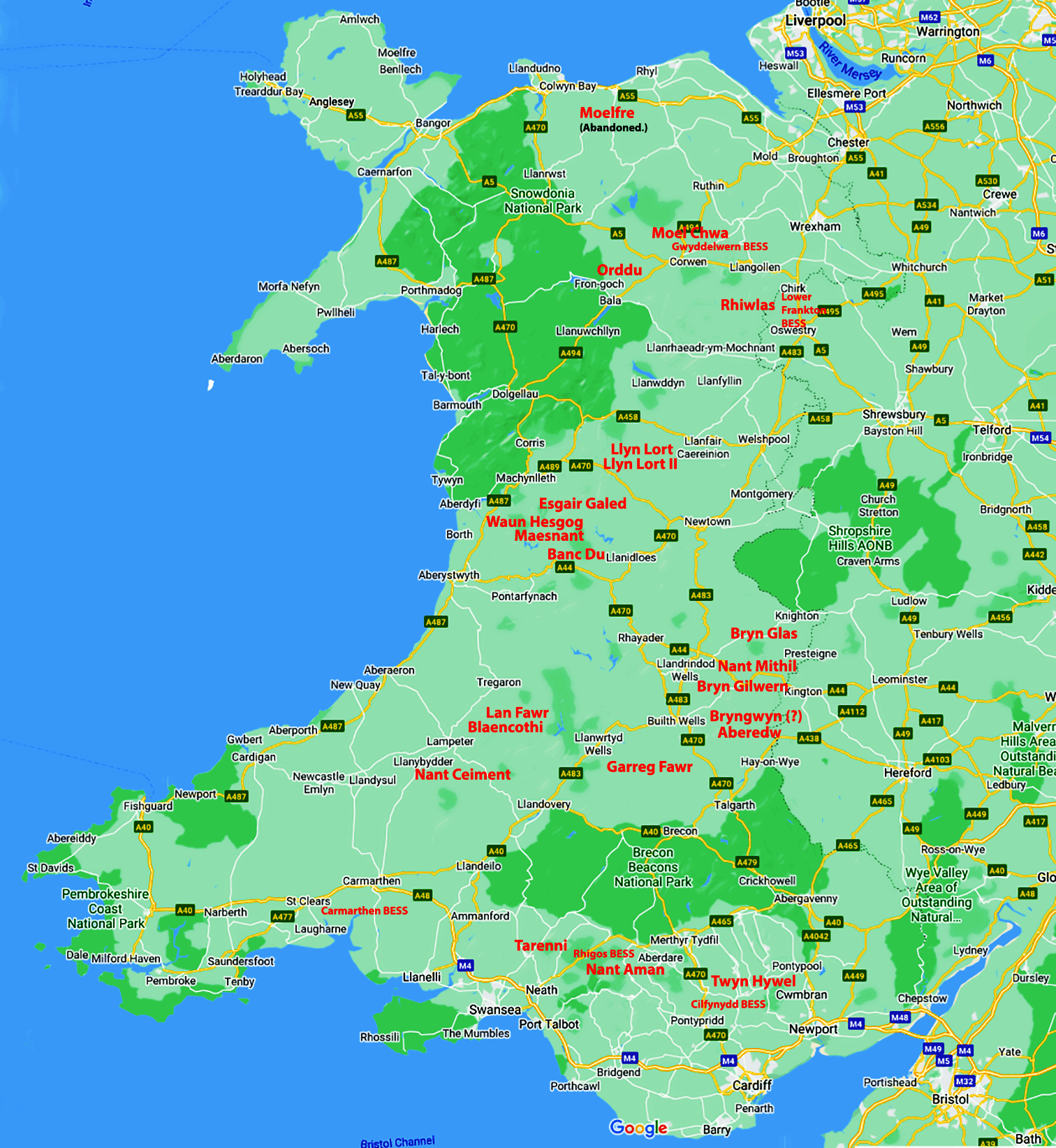
Which could mean the pylons coming down the Teifi valley, where there is already a campaign fighting Bute pylons. This Bute line will carry electricity from Lan Fawr, east of Llanddewi Brefi. I assume it will also serve Blaencothi and Nant Ceiment.

Bute Energy projects in Wales. Click to open enlarged in separate tab

Then the pylons will also run down to Llandyfaelog. But will they share the line coming from Powys, or will there be two pylon runs past Llandeilo? And will they interfere with the route of the planned bypass?

However you look at it, lovely Ystrad Tywi is in for a forest of steel pylons marching for mile after mile over hill and dale. Each one sunk in hundreds of tons of concrete. And all done to save the environment, innit?

The reason that Scotland and Wales have despoiled landscapes in order to generate electricity for England, is partly due to their politicians buying into the climate scam, and partly due to the difficulty of building onshore wind farms in England.

The latter due to different laws that allowed communities affected by such projects to object and, effectively, block them. But the law is changing.

Clearly, if onshore windfarms can in future be built in England, where the power is needed, there’ll be less need to erect windfarms in Wales. In fact, the need might be removed entirely.

It seems obvious to me that many of the mooted projects won’t now be needed. And that might include the pylon runs in the Teifi and Tywi valleys, even the big one from Bangor to Swansea.

And seeing as Bute Energy has yet to erect a single turbine, I think the ‘Welsh Government’ should call a halt to onshore wind projects in order to assess how the new legislation in England might impact on Wales.

We don’t want the ‘Welsh Government’ (via NRW) felling tens of thousands of trees, allowing hundreds of 800ft wind turbines, and hundreds of miles of pylons, if nobody wants to buy the electricity they erratically produce.

We’ll just have to live without the thousands of £70,000 pa jobs they’d have created.

♦ end ♦

© Royston Jones 2024

Labour And Plaid Cymru Plot To Destroy Welsh Democracy

In this post we’ll look at the proposed Senedd ‘reforms’, focusing on the closed list system, the method of counting the votes, the design of the ballot paper, and then I’ll try to explain it all.

There have been calls for many years for a bigger Senedd so that it can give better ‘scrutiny’. That may have been the original intention, but I believe other considerations came into play. And these account for the deviations from the original proposals made by the Expert Panel in 2017.

At present, we have 60 Senedd Members. One from each of our 40 Westminster constituencies, elected by first past the post; the other 20 from 5 regions, each returning four Members, these elected by the less than perfect d’Hondt system. Explained here by Labour MS Mike Hedges.

Wales’s representation at Westminster is being reduced to 32 MPs. Those controlling Senedd reform have decided to ‘pair’ these seats to give 16 huge and unwieldy constituencies each of which will elect 6 Members by the d’Hondt method.

1/ THE EXPERT PANEL

The process that brought us to this point seems to have begun with the appointment in February 2017 of an Expert Panel (EP) to look into expanding the (then) Assembly.

Click to open enlarged in separate tab

This group reported in November 2017. And among other things, suggested three possible electoral systems (p 129). These were:

Click to open enlarged in separate tab

The system favoured by the Panel was the Single Transferable Vote.

You’ll perhaps note, by it’s absence, any mention of the closed list system that has been decided upon, and is now being widely criticised.

Or rather, the closed list was mentioned, and rejected (p 128).

This EP report was studied by our esteemed tribunes, its recommendations initially accepted, before being cast aside. Not because it wasn’t a fine piece of academic work, but because, as time went on, it could not deliver changed priorities.

Making the whole EP exercise a waste of time. Unless the hope was that the public would think what politicians subsequently came up with had the imprimatur of those experts.

2/ COMMITTEE ON SENEDD ELECTORAL REFORM

The next step was the Committee on Senedd Electoral Reform, which first met in January 2020. The Committee was dissolved following a debate on its report on Wednesday 7 October 2020.

Click to open enlarged in separate tab

Here’s the Committee’s Report from September 2020, and here’s a summary of its recommendations. Note that it agrees with the Expert Panel in recommending the Single Transferable Vote.

Though it also makes a reference to “diversity quotas for protected characteristics other than gender”. I think we can guess where that’s heading.

3/ SPECIAL PURPOSE COMMITTEE ON SENEDD REFORM

Now we move on to October 2021, when a fresh Committee was established to take things forward, with Huw Irranca-Davies providing continuity.

Here are all the members. From what I can see, the only Conservative, Darren Millar, soon distanced himself. I guess he could see the direction of travel.

The remit and the committee. Click to open enlarged in separate tab

The Special Purpose Committee on Senedd Reform published its report ‘Reforming our Senedd: A stronger voice for the people of Wales’ on 30 May 2022. Here’s a link to that report. Let’s pick out a few choice bits.

In the ‘Recommendation’ (pages 9-12) two that caught my eye were . . .

Click to open enlarged in separate tab

In 14 we read that all political parties are to be ‘encouraged’ to publish “a diversity and inclusion strategy”. More ‘diversity’!

I found 17 remarkable in that it says those framing these proposals fear being referred to the Supreme Court. Suggesting that what they’re proposing may be unlawful.

Moving on to ‘Electoral System’, on page 26, where we read, solemnly inscribed: “Electoral systems are one of the fundamental building blocks of democracy”.

Too bloody right, Comrade! Let’s all remember that.

The Expert Panel’s favoured system of the Single Transferable Vote, endorsed by the Committee on Senedd Electoral Reform, was rejected by Huw Irranca-Davies and his new playmates because it, ” . . . was an unfamiliar system in Wales and that the method of translating votes into seats would be seen as complex and difficult to explain”.

In other words, electorates around the world may have got used to STV, but Welsh voters are uniquely stupid.

So why not elect three Members from each of the 32 new constituencies in the same way we elect councillors? It’s a system we twp Taffs are familiar with.

Jane Dodds (Liberal Democrat) favoured STV, so did Siân Gwenllian (Plaid Cymru), but, “in the spirit of achieving the supermajority required to deliver Senedd reform” Siân Gwenllian fell into line.

Not a whimper of dissent was heard from Elin Jones (Plaid Cymru).

So the Committee rejected the Single Transferable Vote, also the other two options  recommended by the Expert Panel. Instead, and for no obvious reason, went for what it calls, “the closed proportional list” system.

Certainly, the current method for electing our regional list MSs is a closed list, but does any country elect all its politicians by the closed list system?

When it comes to working out who gets to go to Corruption Bay the EP looked at two methods. The d’Hondt and Saint-Lagué divisor systems. The latter gives a more proportional outcome, and also gives more of a chance to smaller parties and independents.

Irranca-Davies and his friends of course plumped for the d’Hondt method.

Now we come to the most remarkable and worrying thing I encountered in all 92 pages. Scroll to page 38, and there you’ll see under ‘Ballot Papers’ . . .

Click to open enlarged in separate tab

We would anticipate . . . some of the names . . . of candidates will appear . . . “.

ALL candidates’ names on the ballot paper should be a ‘given’. That it’s even being discussed strengthens my suspicions of the true motives behind this exercise.

So, let’s recap . . .

This Committee not only rejected the voting system recommended by the Expert Panel and accepted by the Committee on Senedd Electoral Reform in favour of the closed list, it also opted for the less proportional system for allocating seats, and finally, it even suggested not naming candidates.

How the hell does this improve democracy in Wales?

Moving on . . .

4/ REFORM BILL COMMITTEE

A Reform Bill Committee was established 12 July 2023. In the panel below you can see the Committee’s remit and its members.

The role of this group was to go through the Bill that resulted from the report of The Special Purpose Committee on Electoral Reform. Making Recommendations where it felt the need.

Click to open enlarged in separate tab

The Reform Bill Committee’s report was published last month, and debated in the Senedd 30 January (No 8).

The motion: ‘To propose that Senedd Cymru in accordance with Standing Order 26.11: Agrees to the general principles of the Senedd Cymru (Members and Elections) Bill.’ was passed by 39 votes to 14. All Conservatives voted against.

It’s a weighty tome, 224 pages, and you can read it if you’re so minded. But I’ll focus on the issues I’ve already discussed, and see what, if anything, has changed.

In his Introduction, the chair, Labour’s David Rees MS, has this to say:

We have not reached consensus on all matters . . . But, we are unanimous in our concerns about the proposed closed list electoral system . . . We believe the link between voters and the Members who represent them is paramount.

We therefore urge all political parties in the Senedd to work together to ensure the electoral system in the Bill provides greater voter choice and improved accountability for future Members to their electorates.

He’s clearly not happy with the closed list. Neither is former Labour minister Lord David Blunkett. But as things stand, we’re stuck with it.

Next, I went to check on the design of the ballot paper, which Huw Irranca-Davies’s Committee had suggested need not carry the names of the candidates.

On page 105 I found what you see below. The ‘Member in charge’ is Mick Antoniw MS, Counsel General and Minister for the Constitution, who defends the recommendations of Huw Irranca-Davies’s group.

Click to open enlarged in separate tab

If the closed list is used in 2026 then it’s unlikely it will ever be changed, because those who’ve benefitted from it, and then control the Senedd, will not vote to change it.

On page 111 Antoniw is pressed as to why the Bill being presented to the Senedd does not state categorically that candidates’ names will appear on the ballot paper. He gives the mealy-mouthed reply that it didn’t need to be set out in the Bill, but the matter will be addressed in “secondary legislation“.

On page 129 David Rees makes it clear that he believes candidates’ names on ballot papers should be stipulated in the Bill itself, not left to secondary legislation . . . which may never happen:

Click to open enlarged in separate tab

In fact, a search of the published Bill for ‘ballot paper’ draws a blank.

I cannot believe that we have got this far in the passage of a ‘reform’ Bill that won’t promise candidates’ names on ballot papers.

But then, Antoniw is Zelensky’s man in Corruption Bay. And Zelensky’s not a big fan of democracy; he’s banned opposition parties and closed churches. But we’re still expected to believe that he’s fighting the Ivans in defence of democracy.

MAKING SENSE OF IT

When this process started, back in early 2017, with the appointment of the Expert Panel, there may have been a genuine intention to ‘improve democracy in Wales’.

Somewhere along the way the focus changed, it became more politicised, more partisan, and less democratic. I believe we can pinpoint when this happened. And also explain it.

It happened some time between the Committee on Senedd Electoral Reform reporting in September 2020 and the Special Purpose Committee on Senedd Reform publishing its report 30 May 2022. A year and a half in the time of Covid.

And here’s why it happened . . .

There’s a phenomenon I’ve reported on more than once and why, last June, I published, Wales: Ruled By Pressure Groups.

Pressure groups and organisations, some global, others organised on a UK-wide basis with a Welsh branch, but all pushing the Globalist holy trinity designed to destabilise and weaken the West:

  1. A climate-nature ‘crisis’ that demands a ruinous drive to net zero
  2. Constantly reminding White people how evil and privileged we are
  3. 101 genders that means men can have babies by ‘chicks with dicks’

This also explains calls to constantly lower the voting age. For children who’ve come through a school system influenced by Stonewall and other groups may be unable to read and write but they’re more likely to be suckered by a charlatan pushing the Globalist agenda.

The so-called ‘Welsh Government’ is now controlled by Agenda-loyal pressure groups. Having just mentioned Stonewall, you can see from this table that the ‘Welsh Government’, whether directly or through bodies it controls, is now that group’s largest single UK funder.

Another worrying feature that I’ve observed recently is the ‘Welsh Government’ taking over various organisations that should be independent. This is invariably achieved through funding, in the form of loans or grants, which is then used to justify ‘appointees’.

We’ve seen it across the board, from the Welsh Rugby Union and the Football Association of Wales to Bannau Brycheiniog National Park. I wrote about this dangerous trend, also last June, in ‘Taking Control, Of Everything‘.

What we see happening with the subverting of the Senedd reform process is a synthesis between the growing power of pressure groups and the increasing control freakery of a Labour party wholly committed to the Globalist agenda.

It will give Labour bosses control over the electoral system, and Senedd seats for pressure group parasitoids. Making the Senedd less representative because it will have more Members for whom the interests of Wales will be largely irrelevant.

It will also give the Senedd a near-permanent left / far left majority.

The only way to achieve a Senedd that works solely in the the interests of Labour and its rural variant (Plaid Cymru) is through a closed and anonymised list system.

Such a system also makes Plaid Cymru more of a hostage than a partner.

CONCLUSION & RECOMMENDATION

Until I started flicking through the various reports and other documentation I hadn’t fully appreciated how corrupted and dangerous the ‘reform’ plan had become.

Ask yourself – would anyone believe that in a European democracy in 2024 politicians could seriously propose closed list elections that are also anonymised?

Try not to laugh. Click to open enlarged in separate tab

Why recruit an Expert Panel and then reject all three of its proposals for organising elections? And then, after comparing the d’Hondt and Saint-Lagué divisor systems, why choose the one that’s less proportional?

The answer is obvious, and so I repeat – these ‘reforms’ are not to make Wales more democratic, or provide ‘greater scrutiny’. They’re intended to give the leftist political class total control through an electoral system that can almost ignore the wishes of the people.

It’s a very obvious power grab. 

Power to serve The Agenda, that will demand the end of farming; 10mph (or no traffic at all to allow for daily Pride parades); 15-minute ghettoes; butchering confused 12-year-olds on the NHS; re-writing history; more foreign-owned wind farms; ‘inclusivity’ that will exclude most Welsh people, etc., etc.

While away from the noise of articulated idiocies and the din of clashing egos, out ‘there’, in the real Wales, people die in ambulances outside hospitals, and kids go hungry.

What has been stitched up by Labour and Plaid Cymru is so obviously anti-democratic, bordering on the dangerous, that it must be fought all the way.

To the Supreme Court, if necessary.

♦ end ♦

© Royston Jones 2024

‘Welsh’ Labour – The “Joke” Party

Woe! Woe! and thrice woe! Tales come from all quarters telling, variously, of Labourites turning on each other like ferrets in a sack; of Il Duce chewing the carpet in impotent rage at the behaviour of a Californian councillor; of a callow yoof in Jamesonia accumulating more ‘jobs’ than a retired government minister; and a prince of Denmark willing to exchange the bracing Baltic air of Copenhagen for the, um, intriguing aromas of Port Talbot-sur-Mer. To begin, with the aforementioned ‘ferrets’ . . .

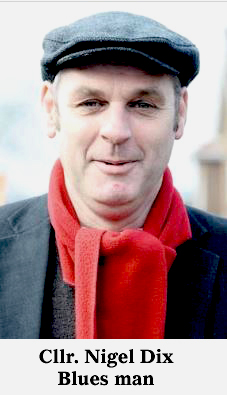
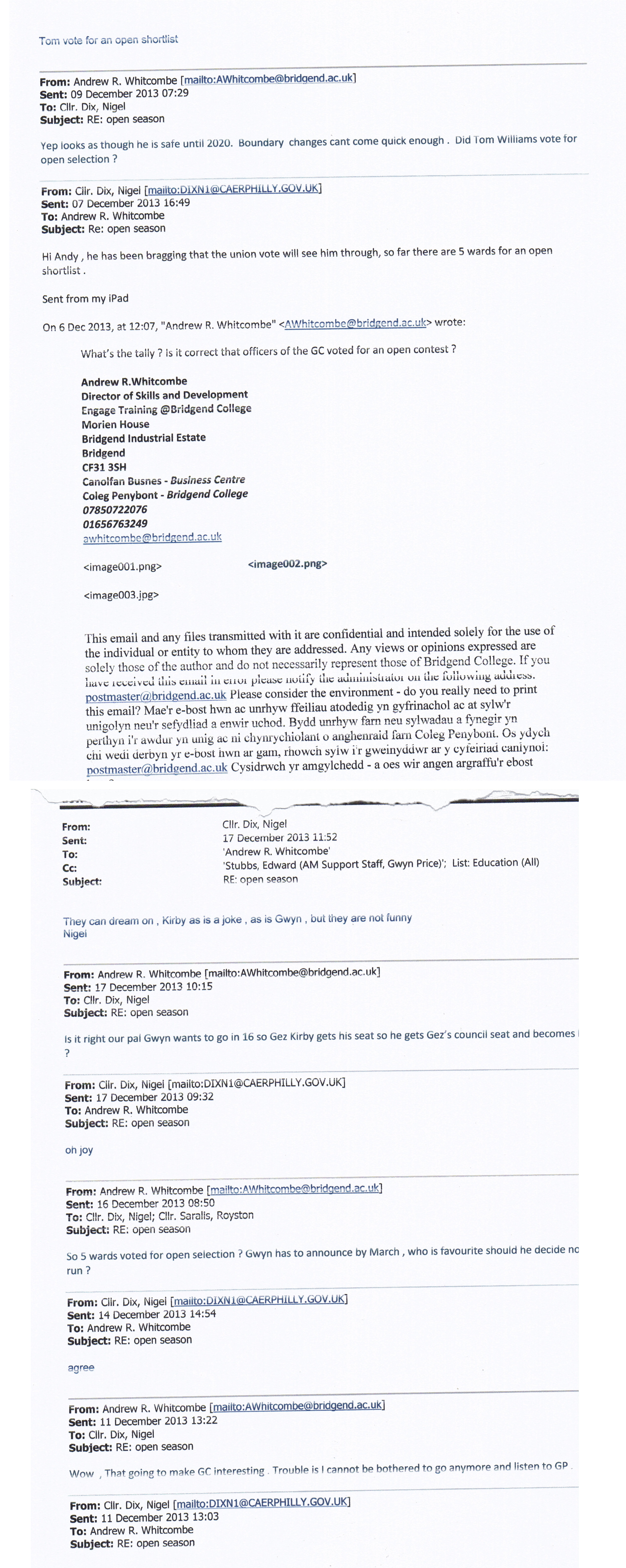
News broke today of one bruvver in Caerffili referring to other bruvvers as ‘a joke’. The accuser was Councillor Nigel Dix, of Welsh-hating True Wales, who, in one of those hilarious cc e-mail episodes, described local AM Gwyn Price as a joke. Not content with that, he then Nigel Dixextended the description to Comrade Councillor Gez Kirby, who has himself featured on this blog.

Dix is clearly a bit of a preener, who likes to be photographed in what he probably imagines are flat caps and mufflers suitable for twenty-first century socialists. He also plays in a blues band (Rhymni delta blues) and owns a Fender Stratocaster. But the real humour here is that all this name-calling is taking place in Caerffili, one of the most dysfunctional councils in Wales which, by happy chance, also made the news today.

One question must be, will Dix’ indiscretion result in him doing something drastic. Well, if blues man Dix wants to end it all with a midnight tryst at a crossroads, then I’m sure I can borrow a car and play Satan . . . though I ain’t interested in his soul.

UPDATE 27.08.2015: Yes, I know, it’s a bit late . . . but anyway, I am indebted to GE for sending me a copy of the e-mails referred in the above report. Read them here. One thing that struck me was that the guy with whom Dix is having such fun slagging off other bruvvers is Andrew R. Whitcombe, who clearly works at Bridgend College. I trust someone had a word with Comrade Whitcombe about using his Coleg Penybont e-mail account to discuss Labour Party business. But then, this is Wales . . .

Moving west, we come to the City of my Dreams. I have oft-times dealt with the local Labour Party (sometimes I’ve even managed to do so without frightening the cat by laughing out loud). Anyone wanting to read these previous observations should just type ‘Swansea Labour Party’, ‘John Bayliss’, ‘Mitchell Theaker’, ‘DPearleen Sanghaavid Phillips’ (Il Duce), or ‘Pearleen Sangha’ into the Search box at the top of the sidebar.

Now I learn that Pearleen, a councillor for the Santa Cruz Uplands ward, has moved to Cardiff to work full-time for the party machine. I am further led to believe that this will involve working with Mick Antoniw, AM for Pontypridd and self-confessed trustee of The Bevan Foundation, in targeting a couple of Lib Dem seats ahead of the next Assembly elections in 2016. Council leader David Phillips is livid that one of his gang has left without, apparently, telling him. There are a number of issues here.

The fragrant Ms Sangha is from California and was elected to the council – after three recounts – in 2012 straight from Swansea university. She has been home at least twice this year, and regularly swans off to various Labour yoof gatherings. So she knows sod all about Swansea and cares less, yet now she has been recruited to work for the party Mick Antoniwnationally – in a country she doesn’t understand!. Small wonder fellow Uplands councillor John Boy Bayliss – now, at last, gainfully employed – is complaining bitterly about having to do more work; tedious stuff like listening to constituents talking about drains, litter, and next-door’s dog. (This is serious, for Bayliss, Sangha, Theaker and many others belong to Labour’s hedonist wing. They only joined because they heard Labour was a ‘party’.)

By an amazing coincidence, Anglo-Ukrainian Antoniw also washed up in Wales as a student. After studying law he became, ahem, a ‘personal injuries’ lawyer. Antoniw, Sangha and all the other carpetbaggers illustrate the massive problem facing ‘Welsh’ Labour – it’s becoming less and less Welsh! With few Welsh people other than self-haters joining the party nowadays it desperately embraces and promotes anyone who’s under the age of 50, free of halitosis and flatulence and able to read joined-up writing. Of course, this also means that the party is exploited by political adventurers, entryists and dilettantes, who see ‘Welsh’ Labour, with its ‘donkey’ vote, as an easy route to an undemanding political career.

Now we move further west, into Jamesonia (formerly known as Carmarthenshire), and the cautionary tale of young Calum Higgins. Said to be a clever boy, our Calum, meeting the criteria given abovCalum Higginse, which has resulted in him being deluged with work. Though the more I think about it, the more I suspect Calum’s intelligence may be over-rated. I say that because Carmarthenshire council is a house of cards that will very soon topple. Anyone too close to the ruling Labour-Independent coalition will cop some rubble. Consequently, any aspiring politician with an ounce of political nous would not be hitching his wagon to the falling stars on Jail Hill. Of course, there is the possibility that Calum is sincere, and believes in the Labour Party . . . which would only confirm my assessment.

Finally, we reach out – unworthy though we may be – to the ‘Welsh’ Labour pantheon, wherein dwell Ma and Pa Kinnock, reclining on their EU millions. Their daughter-in-law, Helle Thorning-Schimdt, is the Prime Minister of Denmark . . . yes, she of the infamous ‘selfie’ with Obama and Cameron at the Mandela funeral. It may be of significance that even though she has a double-barrelled name Kinnock is not one of those ‘barrels’.

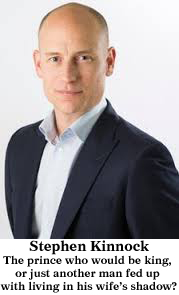
Anyway, the son / husband is Stephen Kinnock, and he has expressed an interest in standing for the Aberavon Westminster seat, when Hywel Francis, son of miners’ leader, Dai, steps down in 2015. Though his wife thinks the ambition “unusual”. Kinnock Junior seems currently to be the Managing Director of GLTE, which forms part of xynteo, but now rather fancies a change of direction. But why? Well, the news I’m getting from my sources in the Danish parliament is that Stephen Kinnock wakes up regularly from a nightmare, the narrative of which runs thus: Him and the missus are at a Buck House garden party. Beti comes over, they are introduced, and – as she does – says, ‘And what do you do, Mr Thorning-Schmidt?’ At which point he runs off, screaming, into the shrubbery, pursued by corgies and SAS ‘waiters’. Stephen Kinnock

I jest, of course. But if the Labour Party picks for Aberavon a man who works in Switzerland, has a family in Denmark, who’s had trouble with tax authorities, and who may be untruthful about his own sexuality, then it will be further confirmation of the contempt with which it regards its ‘donkey’ voters. It will also reaffirm that ‘Welsh’ Labour is as unfussed about the hereditary principle as the Hapsburgs or the rulers of North Korea.

To conclude. Some people think I’m cruel towards the bruvvers and the sissters. But think about it . . . yes, I put my own spin on things, but no one can accuse me of making anything up. It all comes on a platter, gift-wrapped. The issue isn’t that there are ‘jokes’ in Welsh Labour, more that the whole stinking structure is a joke.

P.S. I’ve just heard that at tonight’s City Carol Service in the Collegiate and Parish Church of St. Mary’s there were bishops present, and peers, AMs and MPs, mayors from neighbouring towns, and many other worthies – but not a single member of the ruling Labour group on Swansea city council. Just rows of empty seats.

Maybe this reluctance to be seen in public accounts for Labour spending some £2,000 on a two-page Christmas spread in the Evening Post, showing photographs of all 49 Labour councillors. Giving those who voted Labour the chance to see what their out-of-town councillors look like. I just hope it’s the Labour Party and not the council paying for this extravagance.