The Destruction Of The Elenydd

I suppose I’d better begin by explaining where we are when I talk of ‘the Elenydd’. It’s the wild, and largely unpopulated uplands shown on this Google Earth capture.
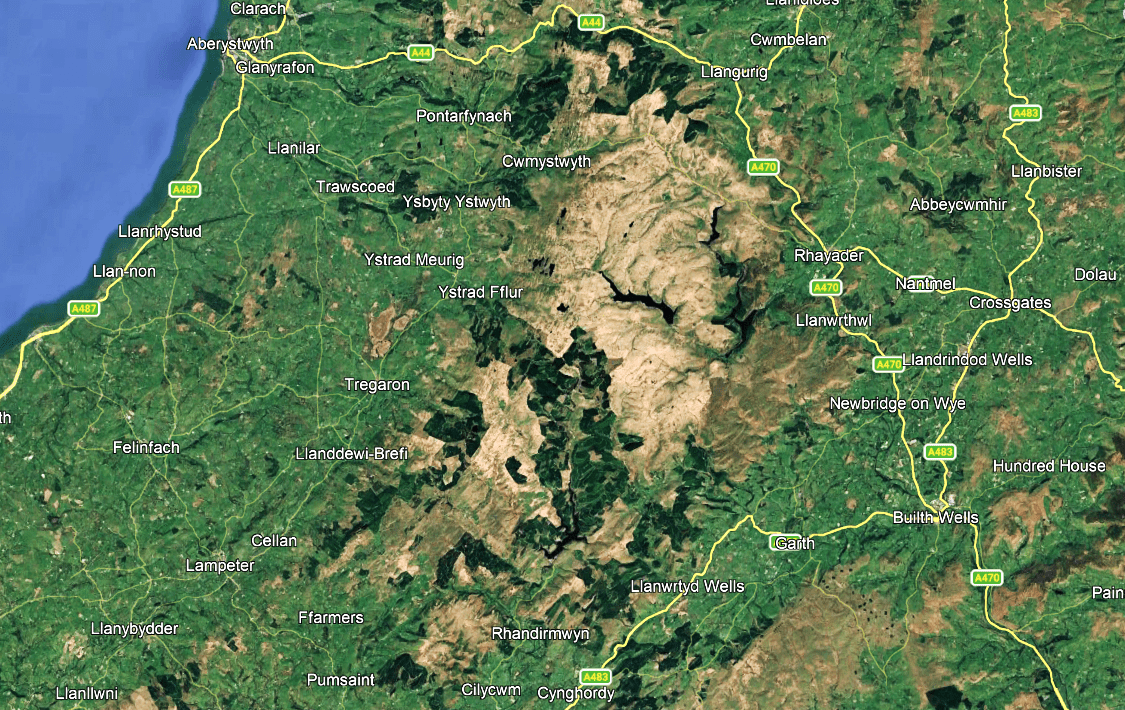
The last true wilderness in Wales. Now it’s being industrialised and destroyed by the ‘renewables’ industry, all foreign-owned companies.

With other parcels of land being bought by ‘environmental’ groups and other sheep in wolf’s clothing. (That is not an allusion to the Fabian Society.) One of these groups gives the appearance of being Welsh, the others are the usual suspects; National Trust (NT), Royal Society for the Protection of Birds (RSPB) . . .

Here’s how Google AI describes the Elenydd:

The least populated and wildest area in southern Britain . . .

The largest continuous tract of blanket mire in the Welsh uplands, designated as a Special Area of Conservation supporting rare birds like red kites, merlins, and diverse upland flora.

Clearly, we are dealing with a very special area – one that should be left to those who have cared for it for generations. But that would mean farmers and others, now viewed as the enemy by those who have elected themselves our saviours from evils as diverse as the climate crisis and the threat from the far-right.

For the two are invariably linked. Those dictating how we behave, even what we eat, in response to the ‘climate crisis’, are often the same people telling us what’s acceptable thinking in the political sphere.

Because it’s all about control. Controlling us.

◊

FURTHER BACKGROUND

I’m going to start with a document produced by the self-styled ‘Welsh Government’ back in 2019, called Future Wales The National Plan 2040. There, in amongst this melange of hopes, dreams, incoherent ramblings and utter bullshit, on page 94, we find a map showing the areas set aside for wind farms.

They’re numbered and bounded in black. Roughly speaking, the Elenydd is north east of the area 8 panhandle and east of area 6.
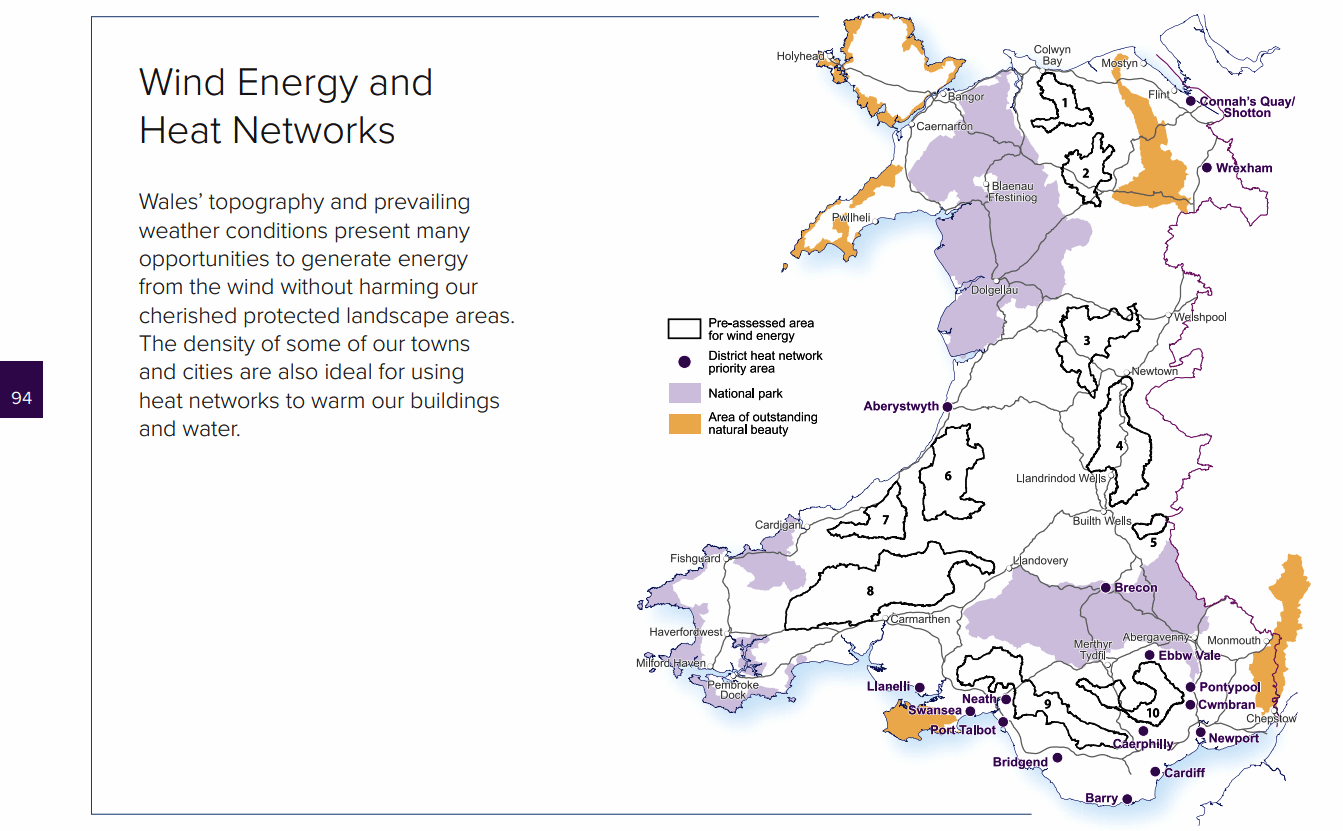
Whatever the original purpose of this map showing ‘pre-assessed’ areas, it soon proved worthless and misleading.

A fact illustrated by the map below, produced by Caru Teifi, a group protesting against the pylon runs needed to take the electricity intermittently generated by wind farms to the grid connection point south of Carmarthen.

In the south it appears that most of the turbines built (light blue), and planned (dark blue) are outside the ‘pre-assessed’ areas.
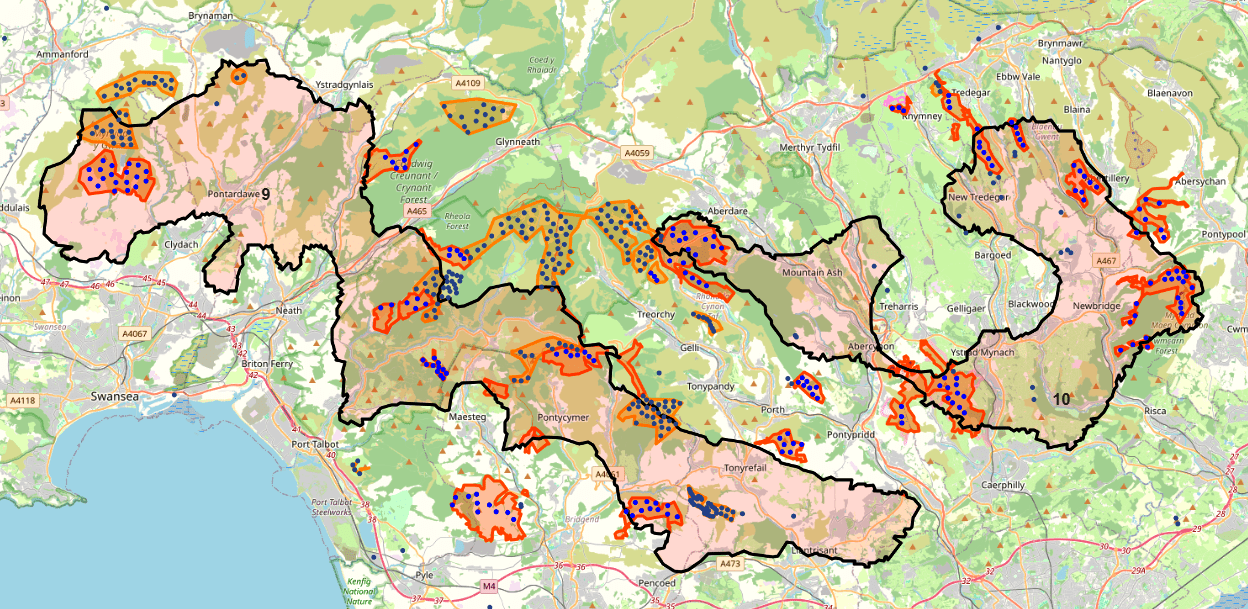
And as you’ll see in a minute. it’s the same – or worse – in the area we’re looking at.

So what was the point of the ‘pre-assessed’ areas in the 2019 National Plan if the ‘Welsh Government was simply going to allow a “near enough” approach that borders on a free-for-all?

Time now to look at the wind turbine projects on the Elenydd. The known knowns, the known unknowns, the unknown unknowns, and the unknown knowns.

◊

WHAT’S PLANNED

We can safely identify four projects. Three we’ve known about for a few years, with another announced this year.

The first involves Scottish company Bute Energy Ltd. Their project is Lan Fawr. There was another project nearby labelled Bryn Brawd, but it seems they’ve merged. Now it’s one sooper-dooper project with 55 turbines up to 800ft in height. Labelled 1 in the image below, and in two parts.
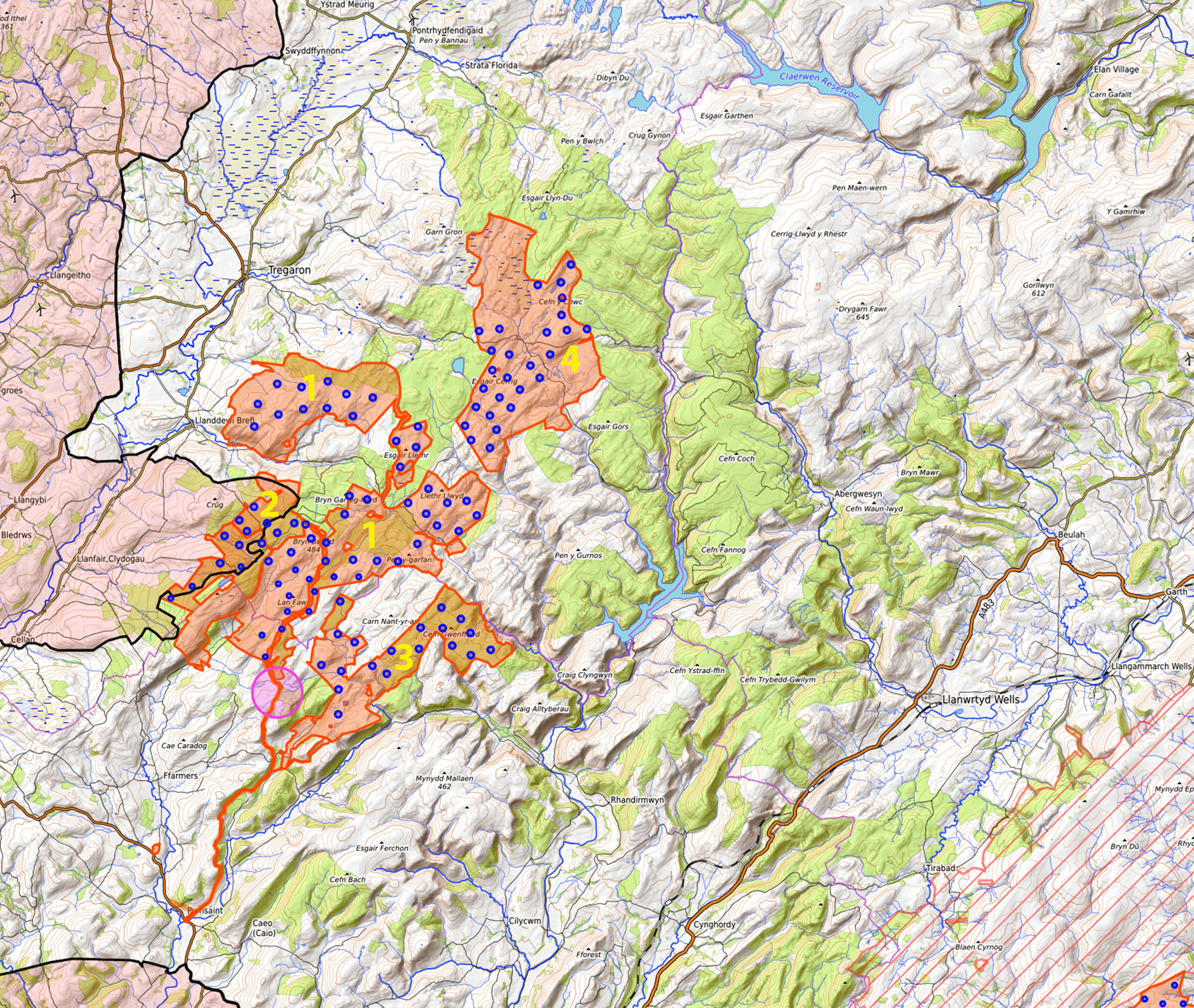
Next is Belltown Power’s Waun Maenllwyd project. Just 4 to 6 turbines. Labelled 2 in the map above. It’s suggested the Belltown project might be taken over by Bute. Alternatively – and I find this interesting – that the Foresight Group, which is behind Belltown, might take over Bute!

Number 3 is Galileo Empower UK’s Bryn Cadwgan project. Galileo has it’s UK office in Edinburgh (and an outpost in Cardiff), but is owned by investors and pension funds from just about everywhere, as far away as New Zealand.

Lastly, we take a brief look at the newest of them, EDF’s Nant y Maen. This straddles the Tregaron to Abergwesyn road. It’s definitely in the pipeline; confirmed by this ‘WG’ document. EDF is wholly owned the French Government.

Local sources insist there are other projects yet to be unveiled. Two, it’s believed.

Access to these projects is planned from the A482 at Pumsaint. Something I covered in The Road To Hell back in November 2023. Then it’s over the old Dolaucothi Estate, now owned, like far too much of Wales, by the National Trust.

After Pumsaint, it’s anyone’s guess, but I guarantee it will involve new roads, hundreds or thousands of trees felled, and massive disruption to the environment over an extended period of time.

But before reaching Pumsaint the turbine columns and blades will be transported on huge diesel smoke-belching trucks along country roads from Swansea docks.

Disruption and destruction all the way so that foreign investors can make money.

Unless, of course, you’re stupid enough to believe that this is all being done to save the planet, and Wales will somehow benefit. Are you that stupid?

◊

‘WILL SOMEONE THINK OF THE NEWTS!’

In the intro I referred to a couple of recent purchases in the Elenydd by rewilders and others. So let’s look at them.

First, is one I covered in Land Of Our Fathers, But Not Our Children, in February. This concerned the purchase of 1195 acres by an outfit called Tir Natur.

The area bought is shown in this map by Caru Cymru I linked to earlier. It’s the dull green area below EDF’s Nant y Maen project. (I urge you to consult the Caru Teifi website maps and use the layers available to see what’s what in the area.)
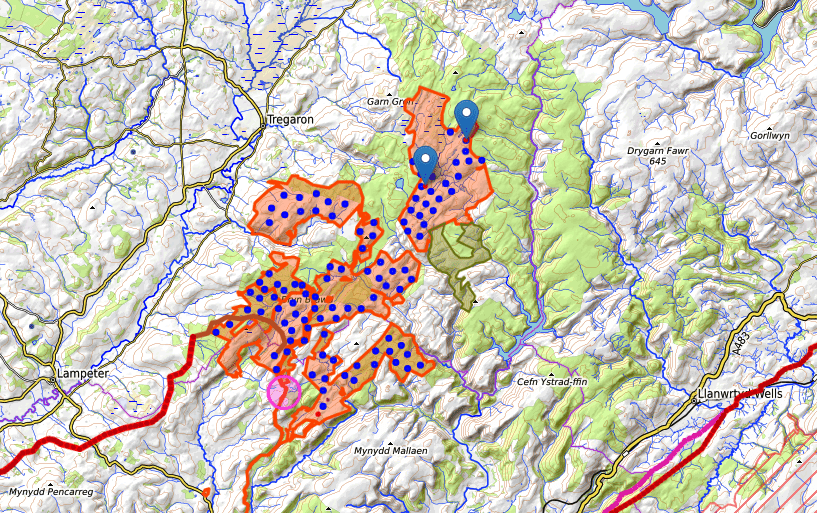
Quite a purchase, and achieved with, according to Farmers Weekly and other sources, a “philanthropic bridging loan“. Wasn’t that nice!

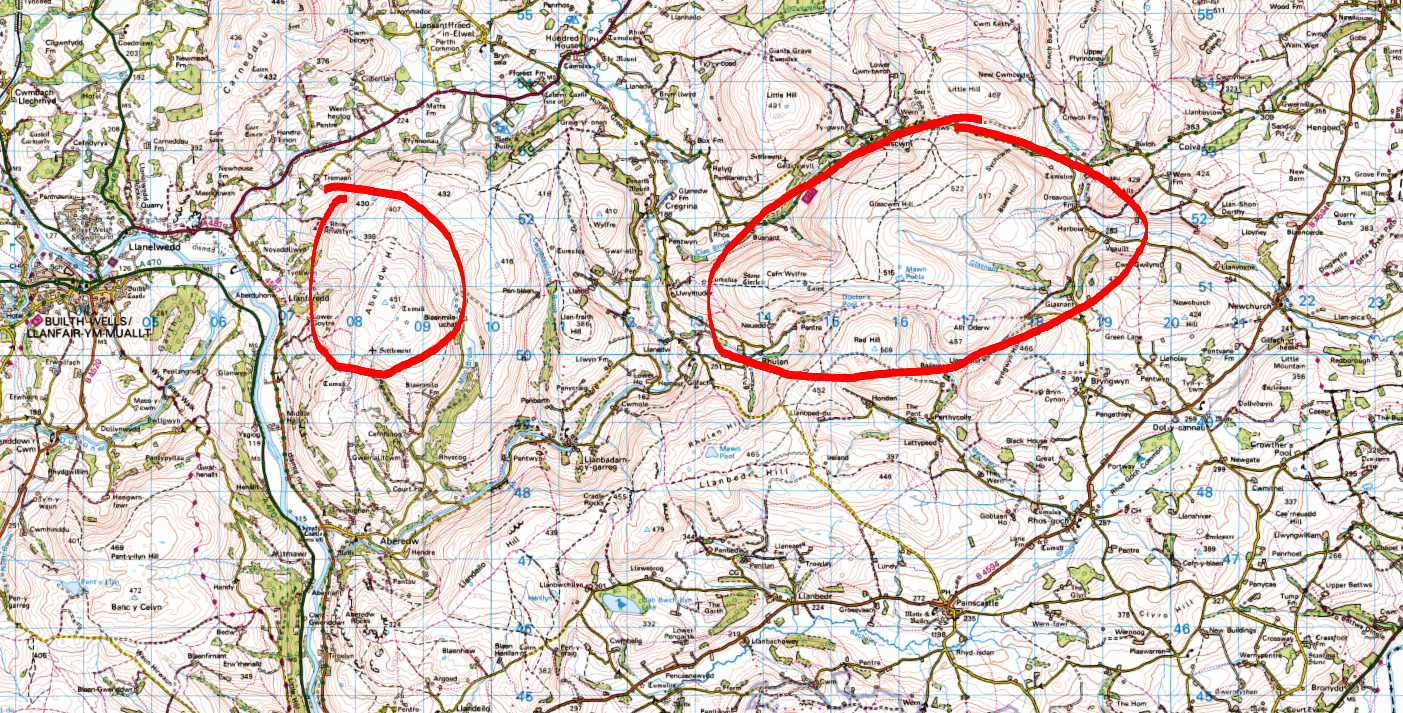
Earlier this month, we learnt that the RSPB had bought 96 hectares at ‘Galltybere’ or ‘Gallt-y-Bere’, which is shown on OS maps (see above) as Craig Alltyberau. This adjoins the planned Galileo Empower Bryn Cadwgan wind farm.

And whaddya know – this purchase also received a “philanthropic loan“.

I wonder where these ‘loans’ come from? Can I have one?

Now for a detour, but not really a digression. We’re going to Scotland, sticking with the RSPB – and there’s more magic money!

Down the Firth of Forth from Edinburgh, not far from North Berwick, rising from the North Sea is the volcanic plug of Bass Rock. A home to many birds, and the largest colony of Northern Gannets.

These are magnificent birds, with a wingspan of six feet or more. While searching for prey they soar or glide until folding back their wings to dive into the sea.

Not far away is the Isle of May. This is home to 50,000 puffins, plus guillemots, razorbills, and other birds.
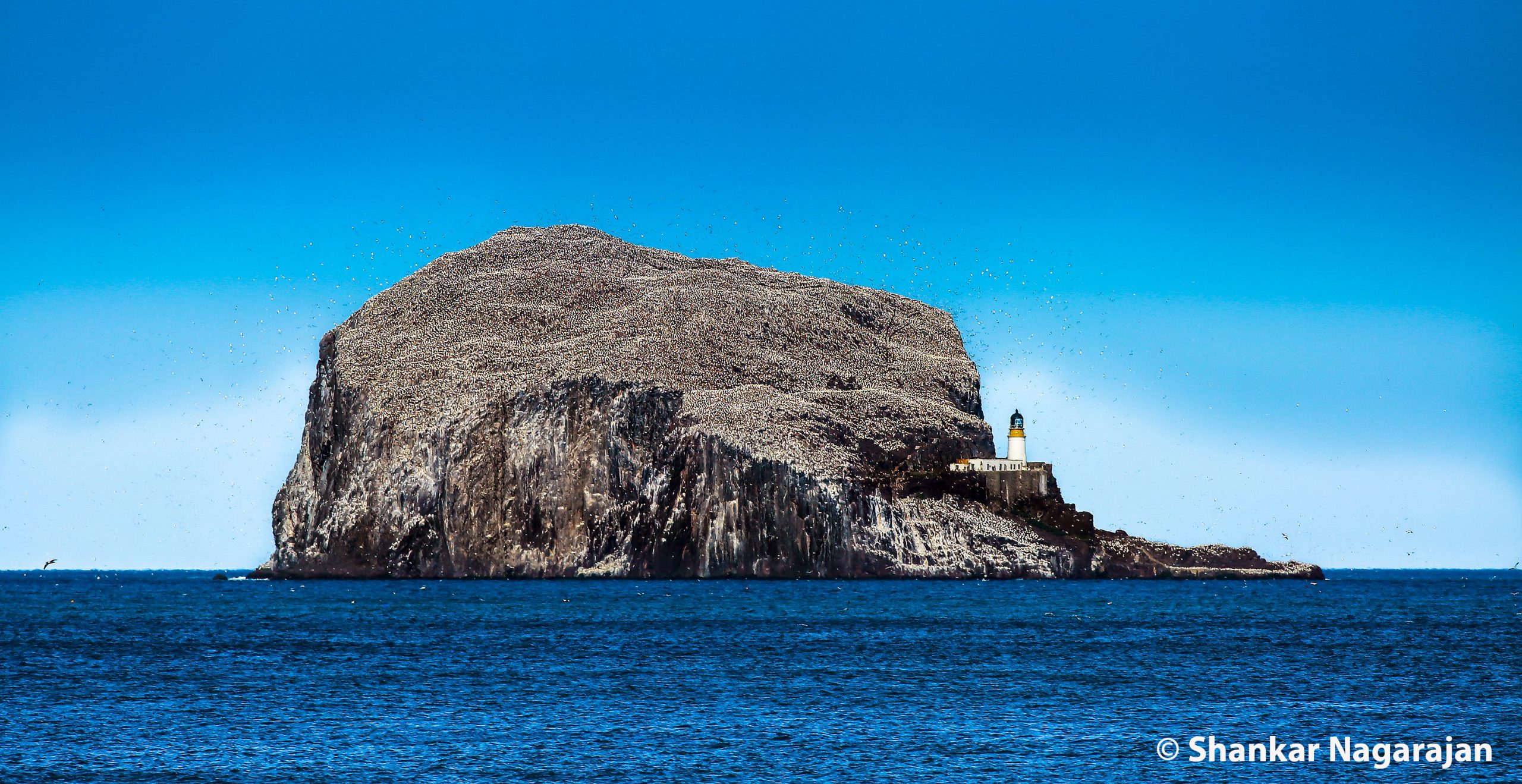
Hanging over this avian idyll is the threat of 307 wind turbines, in a project approved last year. As might be expected, RSPB Scotland objected. Stating:

Berwick Bank is a gigantic windfarm. To put it in perspective, it would take up an area four times the size of Edinburgh with more than 300 turbines – each the height of six Scott Monuments. 

But then something strange happened. Operating through the National Heritage Memorial Fund, the UK government made a grant of £586,000 to RSPB Scotland – to buy Bass Rock!

I can’t help thinking that what was really being bought was the RSPB’s silence.

◊

CONCLUSION

You don’t need to be cynical to believe that when there’s billions of pounds, dollars, euros or whatever in profits to be made, certain measures will be taken to guarantee those profits. Among those ‘measures’ will be neutralising the opposition.

Unless they’re powerful and well organised, local groups can be largely disregarded, developers can even play one off against another. The same principle applies to landowners and farmers. But when it comes to groups that are well-established, with a national or even international structure, and have the ear of politicians, then a different approach is needed.

And this might explain the magic money that appears regularly in the accounts of wildlife and environmental groups. Sometimes it’s out in the open.

Aviva, the institutional investor owned by Vanguard and others, has given just shy of £40m to the Wildlife Trusts to restore Celtic Rainforests along the western edge of Britain. Much of this money will be coming to Wales. Some already has, and it’s gone to the Elenydd.

I dealt with this February, in The Latest Enviro-scam – ‘Celtic Rainforests’.

In fact, it seems most 0f Wales is a rainforest. Who knew?
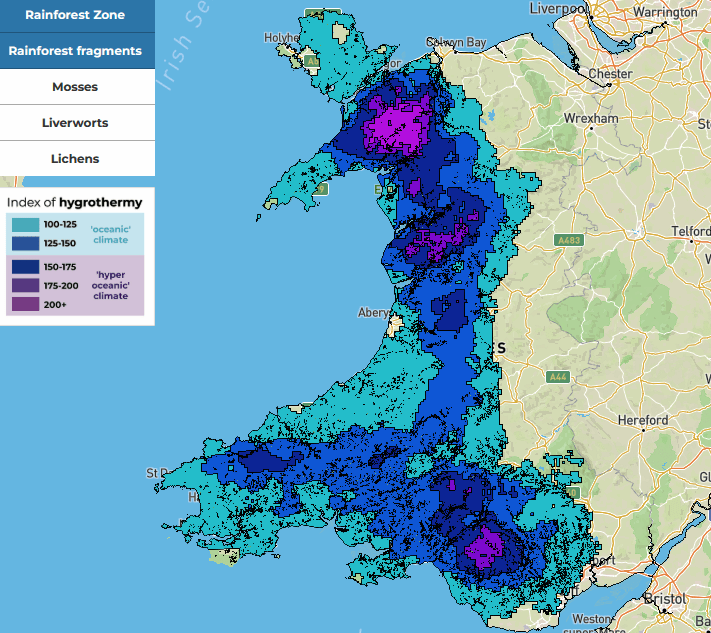
Though the Elenydd seems to be in the ‘Oceanic Climate’ zone rather than that described as ‘Hyper Oceanic Climate’.

At the risk of coming across as a cynical old bastard I’ll spell out what I think might be happening in the Elenydd. Shyster ‘developers’ want to destroy an almost pristine wilderness for profit, and have, by one route or another, given money to environmental groups to buy adjoining land.

The developers will then argue that wind turbines, and the work associated with them, pose no threat to wildlife or the environment. If they did – then surely their neighbours like Tir Natur and RSPB would be complaining. “Stands to reason, squire“.

For their part, the recipients of this largesse will tell themselves that sacrifices must be made for the greater good and the bigger picture.

For you must remember that those I’m describing have bought into the climate scam, making their position ambivalent. And rarely have I seen it more evident than in the RSPB Scotland statement I linked earlier.

We can unlock a future where Scotland’s already struggling seabirds are helped to recover, while producing the renewable energy needed to help fight climate change.  

So, for the greater good, sacrifices must be made. But that’s OK, as long as it’s the dicky birds making the sacrifice.

♦ end ♦

© Royston Jones 2026

Buy Me A Coffee

More From Ireland Moor

The piece I put out on the 10th was quite well received, it certainly encouraged some fresh information. Which tends to put what’s happening on Ireland Moor into a wider context, and factor in fresh considerations.

At 2,600 words this is a wee bit longer than recent offerings, and maybe a bit ‘denser’, but still worth sticking with.

◊

OWNERSHIP

In the previous piece I told of Scottish aristos the Duff Gordons, who inherited the Lewis estate at Harpton Court.

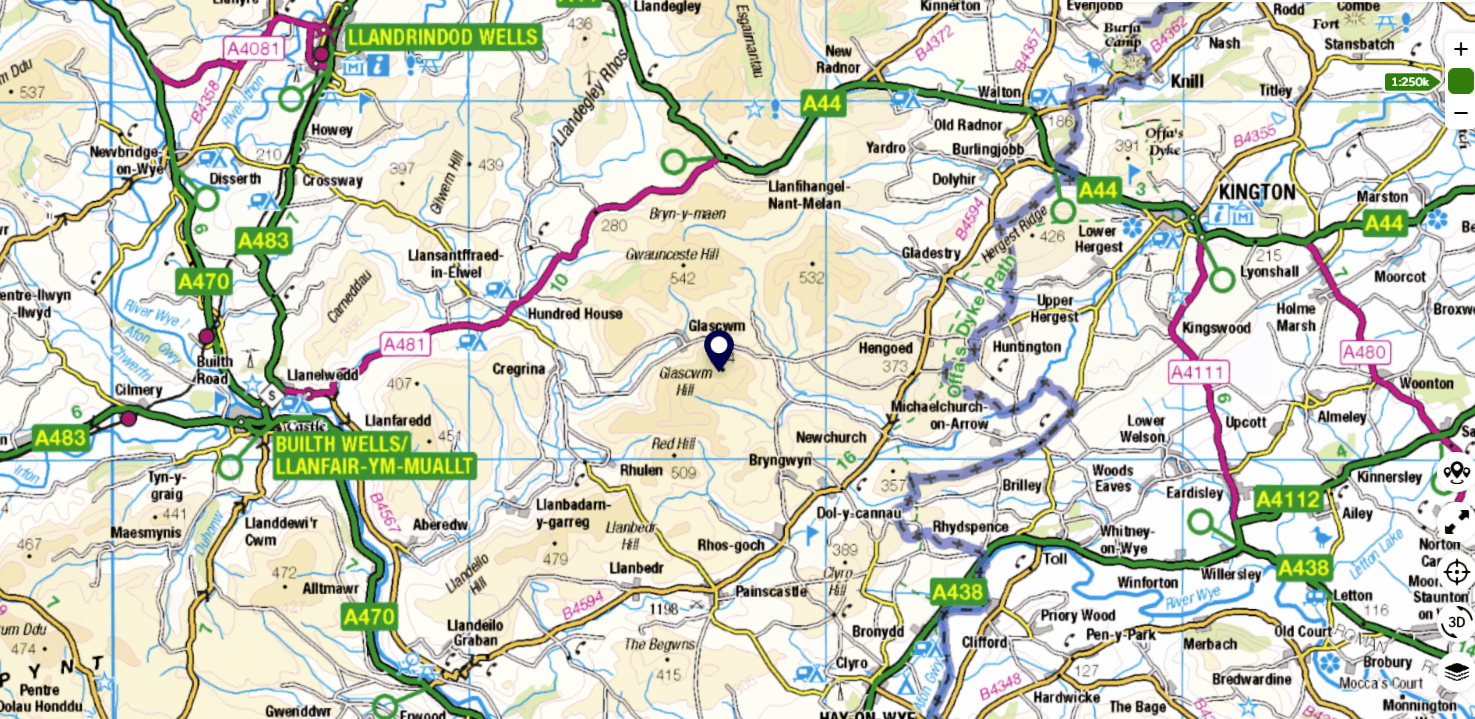
Ireland Moor is an upland grazing area to the east of Builth, around and perhaps above the pin in the map below. Bordered to the north by the A481 and the A44.

Click to open enlarged in separte tab

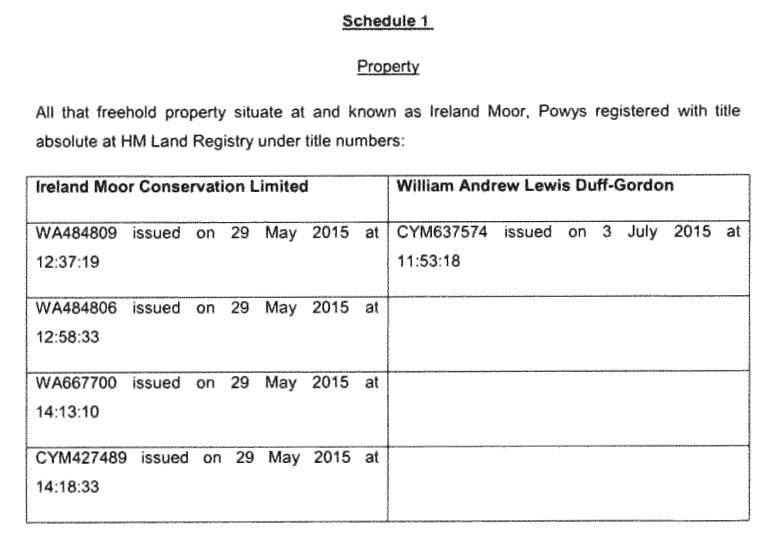
Let’s start in 1993, when Sir Andrew Cosmo Lewis Duff Gordon (scroll down) sold some land. Here’s a Land Registry document for title no CYM427489. There may be other titles involved. If so, they’ll likely be: WA484809, WA404806, and WA667700.

There were four buyers named in the 1993 transaction. Also, three “beneficial tenants“. More information on these can be found by clicking here.

Now we go to July 2008, and a piece from Country Life informing us regular readers that Ireland Moor was for sale. A Land Registry title document from November of that year for CYM427489 probably tells us who bought the land. (We can now assume the other titles just mentioned are involved.)

Two of the names mentioned in this sale we saw among the 1993 buyers: Edward John Francis Dashwood and Peter John Horsburgh. So in case you didn’t follow the earlier link . . .

Dashwood is descended from Hellfire Club Dashwood, who was a bit of a lad.

Dashwood was a notorious rake and prankster who had once impersonated King Charles XII of Sweden at the Russian court when Charles was Russia’s great enemy. He had also tried to seduce the Russian Tsarina Anne, and he had been banned from the Papal States, all while still in his late teens and early 20s.

On the surface, Horsburgh is a devout environmentalist and trustee of the Wye and Usk Foundation. But he’s also a director of companies under the ETF umbrella, companies that profit hugely from – net zero.

Which makes perfect sense.

Organisations set up to ‘protect’ our rivers – especially in Wales – blame farmers for any and all pollution in those rivers. Environmentalists see farting cows as an obstacle to the target of net zero. Which pressurises politicians to work against livestock farming.

Environmentalism is not really about Greta Thunberg and brainwashed kids throwing paint over old masters. That’s all a distraction. ‘Environmentalism’ is major corporations seeking investments. And near the top of their ‘Dear Santa‘ list is land to be exploited for ‘carbon capture’ greenwashing and ‘natural capital’.

This Land Registry document from June 5, 2009, confirms the November 2008 sale, but without naming the buyers. Though it does tell us the four titles were involved, reveals the sale price of £900,000, gives Ireland Moor Ltd as the owner, with a Jersey company number (103322), and an address in Bristol.

Does this suggest the November 2008 buyers are now the Jersey company?

Possibly, and the third buyer might provide the clue.

◊

CONNECTIONS APPEAR

For this is James Warren Kent, one of the ‘beneficial tenants’ in the 1993 deal. Naturally, I got to wondering who Mr Kent is, and what he gets up to.

I found he’s the sole director of Q Branch Investments Ltd. A company in the business of “letting and operating of own or leased real estate“. Though the company is owned by Benjamin Mark Peter Whitfield. Possibly living in Switzerland.

Looking more closely at Q Branch Investments I saw three outstanding charges.

One of them with the Conon Group, up in Auld Reekie, a city we visit regularly on this blog. I would guess the two directors of this financially healthy undertaking are the elderly parents of Benjamin Whitfield.

The other two charges are held by Roger Charles Adams. And this is where it gets rather interesting. For Adams is a director of RSK Environment Ltd, operating out of an address south of the river in Glasgow. Part of the RSK Group.

A bell rang when I saw ‘RSK’, “a global leader in the delivery of sustainable solutions“.

Let’s go back to this piece I put out a week before Christmas last, and scroll down to the section ‘Globalist Land Grab?’ about the ‘Welsh Government’s Sustainable Farming Scheme. Where you can read:

Tracing the ownership of RSK ADAS eventually gets us to Los Angeles and “global alternative investment manager” the Ares Management Corporation. You may not be surprised to learn that among the largest of Ares’ shareholders we find both BlackRock and Vanguard.

Someone who got a mention was Canadian Dr Liz Lewis-Reddy. She’s worked for RSK for 7 years, and before that spent 11 years at Montgomeryshire Wildlife Trust.

Dr Lewis-Reddy was a co-author of the ‘Welsh Government’s Potential economic effects of the Sustainable Farming Scheme.

Her career seems to be another example of getting farmers off the land so that ‘alternative investment’ corporations can make fortunes from saving the planet.

So let’s recap. James Warren Kent, who is or was one of the owners of Ireland Moor, gets loans for his company from Roger Charles Adams, a man who works for a company that does contracts for both the ‘Welsh Government’ and Bute Energy. (Yes, Bute Energy.)

What’s the likelihood of that happening by chance?

But now it gets a little more complicated.

◊

MORE ON OWNERSHIP

I’ve mentioned Ireland Moor Ltd, the company said to own the land in the LR title document of June 5, 2009.

That checks out with the Jersey filings.

Click to open enlarged in separate tab

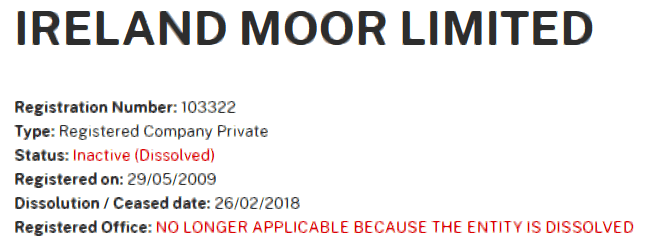
Here’s the Jersey Document of Incorporation for Ireland Moor Ltd, May 2009. It mentions two companies holding 45 shares each.

This ‘Persons Holding Shares’ filing for January 1, 2018, informs us that Edward Warren Filmer of Venezuela is now the sole shareholder.

Finally, here’s the winding up document for Ireland Moor Ltd dated February 23, 2018.

(Let me express my gratitude to the person who dug out, paid for, and then forwarded these and other documents to me.)

There was a problem identifying Edward Warren Filmer. But he does exist. Here he is mentioned in his father’s Will as ‘Edward Warren Filmer Cabrera’.

Which suggests his mother is from a Spanish-speaking country and her maiden name was Cabrera. Which ties in with him living in Venezuela.

This Jersey company seems to have been succeeded by Ireland Moor Conservation Ltd, run by the four sons of Sir Andrew Cosmo Lewis Duff Gordon who, you’ll recall, sold the land in 1993. (And died in April 2023.)

It seems the land was sold to the Duff Gordons in December 2015. The relevant LR titles are: WA484809 (no plan available), WA404806 (no plan available), WA667700 (with plan), and CYM427489 (with plan).

Edward Warren Filmer Cabrera remains something of a mystery man. How did he get involved? I couldn’t help notice that he shares a middle name, ‘Warren’, with the guy named in the Ireland Moor purchase in November 2008, James Warren Kent.

Could they be brothers? Cousins?

We must assume that Ireland Moor Ltd of Jersey owned the land of that name because the Duff Gordon boys bought Ireland Moor from that company.

Though I’m convinced things may not be quite as they appear when it comes to Ireland Moor. I say that because there is something on the Companies House filings that’s a real puzzle.

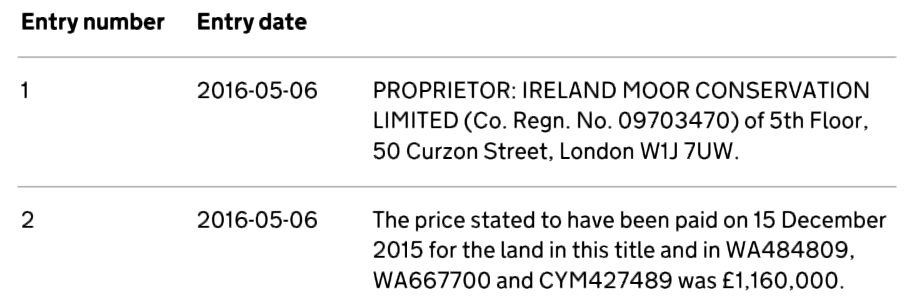
Go to the Land Registry title documents for which I’ve given links, above, and you’ll see a panel similar to the one below. It says the sale was concluded December 15, 2015.

Click to open enlarged in separate tab

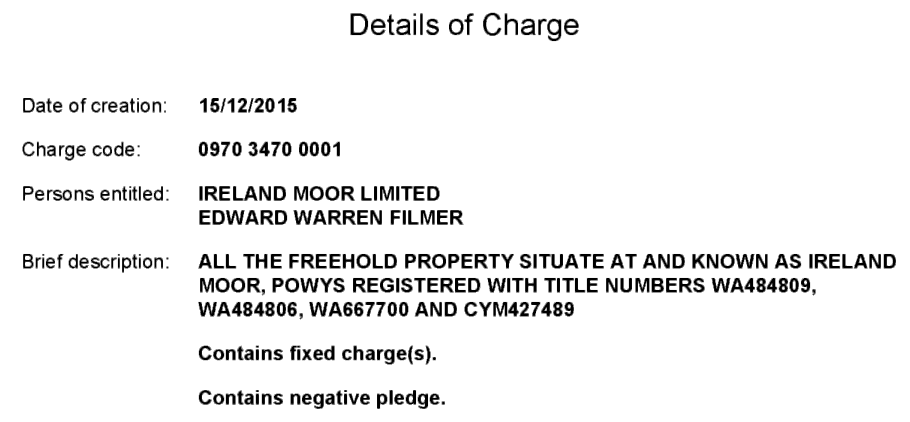
Which tallies with the December 2015 date given on the company’s outstanding debt with Edward Warren Filmer and Ireland Moor Ltd.

Click to open enlarged in separate tab

Yet if we scroll down that charge document, to page 16, we see the panel below. Which says the titles were transferred to Ireland Moor Conservation Ltd in May 2015!

That’s two months before Ireland Moor Conservation Ltd was formed!

Click to open enlarged in separate tab

I’m open to suggestions for this curiosity. But I will not accept ‘time travel’.

Whatever the answer, with Ireland Moor Ltd dissolved, then (on paper at least) the Duff Gordons owe the outstanding debt for the land to Señor Edward Warren Filmer Cabrera of Venezuela.

Whoever he might be.

◊

THE ROOT OF ALL EVIL

The LR documents say the Duff Gordons bought Ireland Moor in December 2015, the purchase part-financed with a loan from Filmer-Ireland Moor Ltd.

This is something I’ve come across before, but usually when assets are moved between partners, or within a group of companies.

The charge dated that same month says:

Click to open enlarged in separate tab

Which suggests the Duff Gordons handed over £560,000 as a down payment.

Then they took out two further loans, in December 2016 with Lloyds Bank. Normally when I see this (and almost always when the Development Bank of Wales is involved) the newer loans are used to pay off older debts. But not, it seems, in this case.

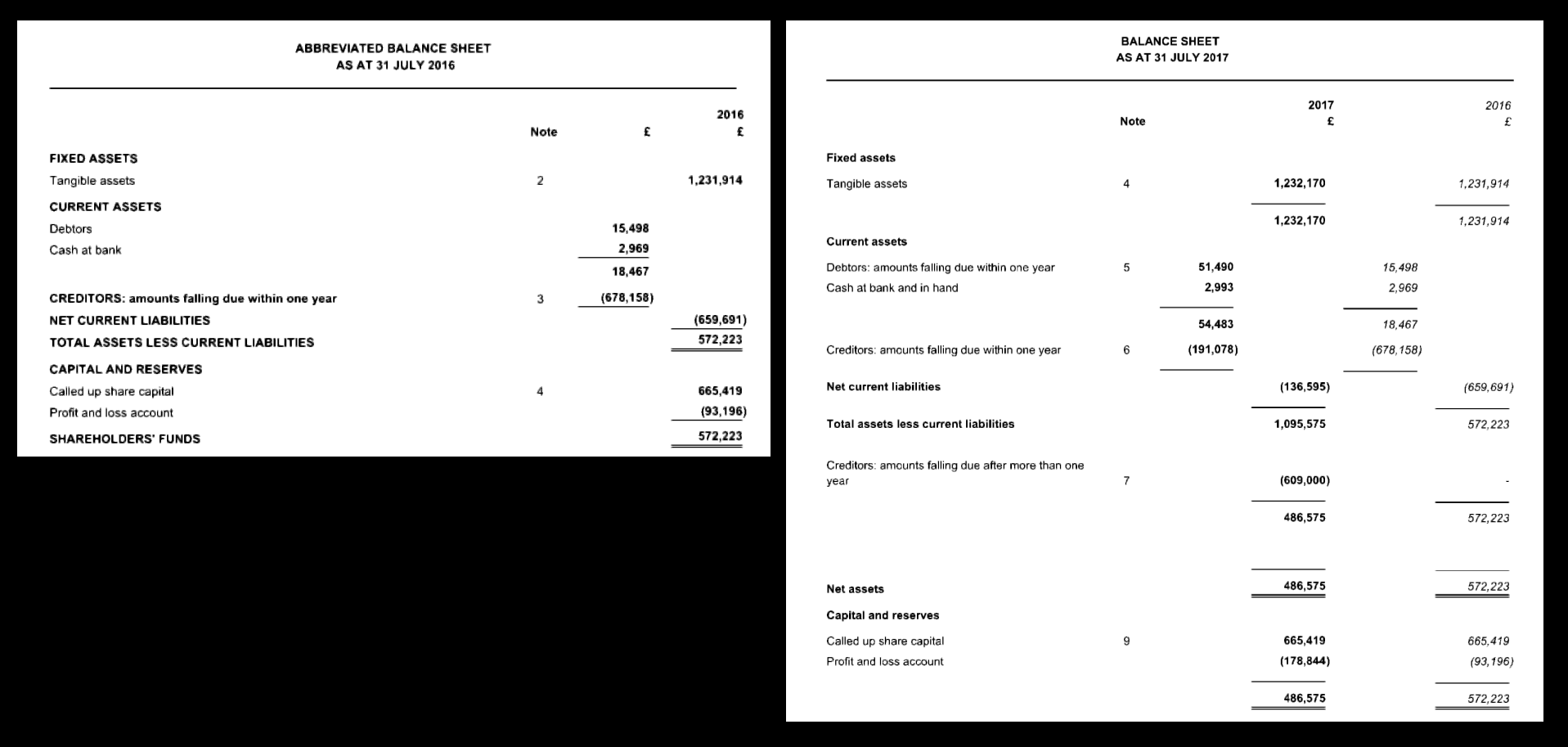
The accounts don’t help much. Below I’ve taken the ‘headlines’ from the first accounts filed by Ireland Moor Conservation Ltd.  (Actually, ‘unaudited financial statements’.)

The first ‘accounts’, to July 31, 2016, make sense. ‘Fixed assets’, £1,231,914, is obviously Ireland Moor. ‘Creditors’, at £678,158, is the debt owed to Filmer and Ireland Moor Ltd plus a few odds and ends.

But a year later, and after the loans from Lloyds Bank, the ‘accounts’ show the amount owed to ‘creditors’ down from £678,158 to £191,078.

Click to open enlarged in separate tab

This could be explained by taking on the new debt and then paying off what was owed to Filmer and Ireland Moor Ltd. But that didn’t happen. For Companies House shows the Filmer-Ireland Moor charge is still ‘outstanding’.

The most recent accounts, to July 31, 2023, are equally confusing. Despite no new charge registered, the amount owed to creditors shot up from £693,676 in 2022 to £1,287,026. Almost the whole increase explained (page 7) as “other creditors“.

With the amount in the kitty going down, down, down every year. To the point where, in the 2023 accounts, Ireland Moor Conservation Ltd is in the red.

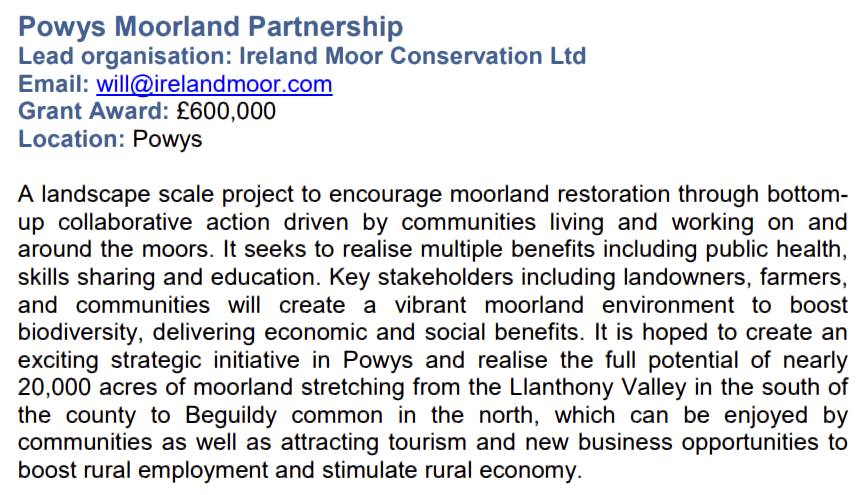
And where’s the £600,000 grant from the Powys Moorland Partnership? I can’t see that showing in the accounts.

Click to open enlarged in separate tab

Seeing as, “This project is funded from the Sustainable Management Scheme under the Welsh Government’s Rural Communities Rural Development Programme”, ‘Welsh Government’ should be insisting on ‘fuller’ accounts.

Is Ireland Moor Conservation Ltd being used for purposes other than the conservation of Ireland Moor?

◊

SEEING AS THIS IS POWYS . . .

. . . you just know wind turbines might be involved. And that means another trip to Edinburgh, where we find those behind Bute Energy. But don’t be fooled by that – for Bute is definitely a Welsh company!

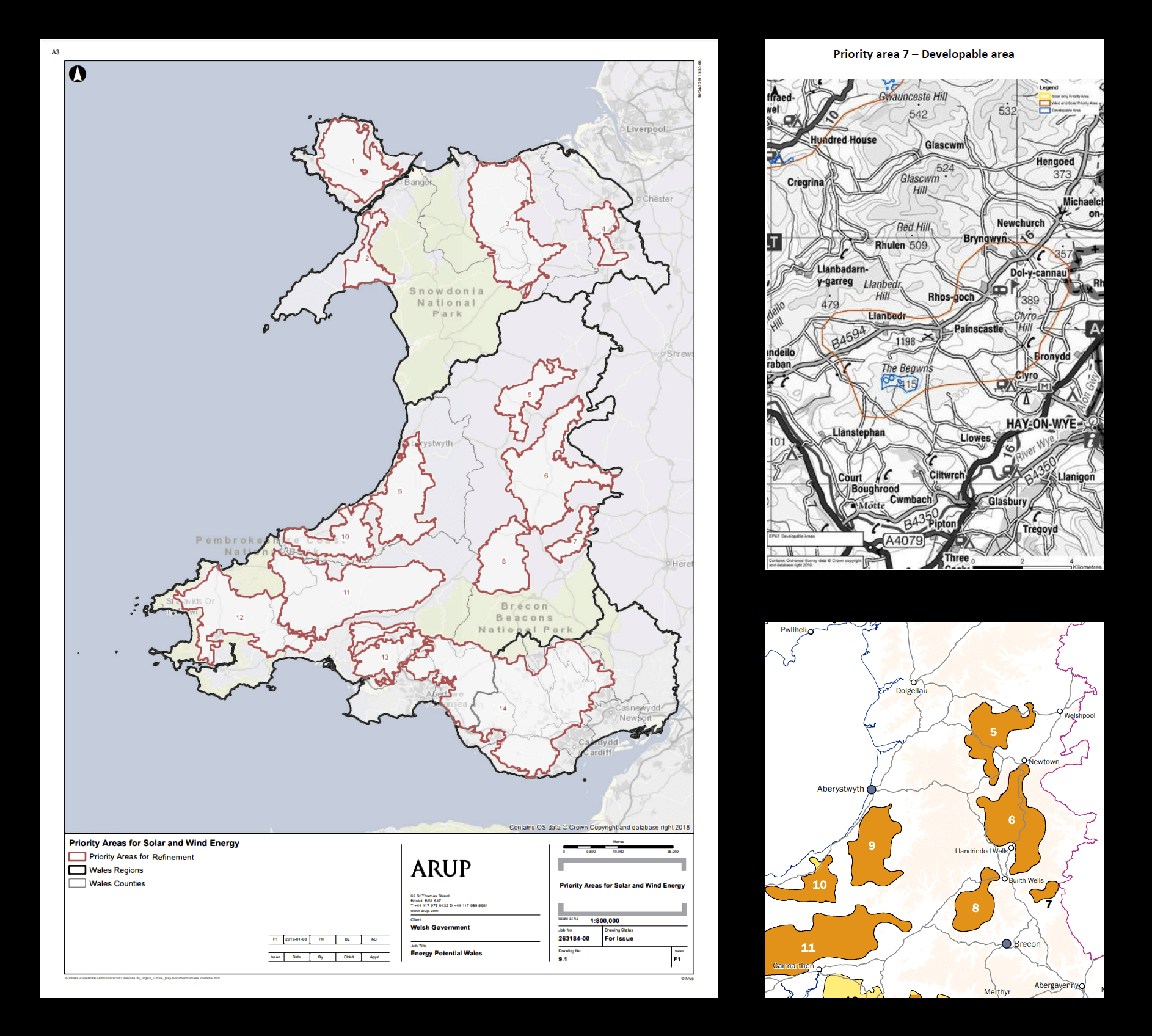
Back in 2018 or 2019 our wonderful ‘Welsh Government’ commissioned Arup’s Bristol office to identify areas that would be suitable for solar and wind energy.

The approach seems to have been, ‘Anywhere outside national parks and Areas of Outstanding Natural Beauty will be OK’. Which was a disaster, and betrayed Arup’s ignorance of Wales.

For example, Arup declared almost the whole of Ynys Môn to be perfect for wind turbines . . . until the RAF reminded them there are jets, helicopters and other craft taking off and landing every day.

Click to open enlarged in separate tab

The mess was eventually sorted by RenewableUK, whose suggestion for the area we’re interested in (top right) was used in the final version (bottom right) of ‘Future Wales The National Plan 2040‘.

That said, the ‘Welsh Government’ and corporate investors are very ‘flexible’ when it comes to the selected areas. To put it bluntly, other than NPs and AONBs (and of course, Ynys Môn), you can put up wind and solar farms anywhere.

Which is why, despite Ireland Moor being outside designated area 7, I wouldn’t rule out wind turbines appearing.

Because not far away, on Aberedw Hill (circled on the left), which is also outside the designated area, Bute Energy is planning an ‘energy park’, and has an agreement with landowner Harry Legge-Bourke.

Click to open enlarged in separate tab

Reminding us that when it comes to ‘renewables’, Wales is open range; so we can definitely add wind turbines to the mix of possibilities for Ireland Moor.

The threats afflicting our countryside are very similar no matter where we look. Though more pronounced near the central border, partly due to the machinations of the wildlife trusts in Radnorshire and Montgomeryshire.

◊

THE PERFECT STORM

Welsh livestock farming, and with it the Welsh family farm, a supporting pillar of Welsh language and culture, is under threat as never before. That threat comes in a number of guises, but all can be traced back to the Globalist ambition to control what we eat and where it comes from.

Additionally, a whole political class has been won over to the lunacy of a ‘climate crisis’, not because it’s true, but because it gives them a ’cause’, and it gives them some kind of moral authority.

A natural-born asshole gets a kick out of bossing people around. But when saving the planet, or fighting racism, is introduced, then a natural-born asshole becomes a morally superior being . . . and a bigger asshole!

Western thought has been corrupted by these caped crusaders, and all done by stealth. We elect politicians on vague, ‘something for everybody’ manifestos . . . and then the pressure groups we did not elect get to work on them.

If it’s not the pressure groups then – and certainly here in Wales – it’s the civil servants ‘advising’ our politicians. Men like Andrew Slade, who’s been a malign influence in Corruption Bay for too long.

It doesn’t matter whether Ireland Moor sees grouse shooting, wind turbines (to supply England), rewilding, greenwashing (or a combination of the four), it’s clear they will all have political backing – because they undermine farming.

And the farmers understand the threats. This is what one wrote to me:

I can’t tell how important that grazing is to hill farmers like us, we can’t afford down country grass keep, it will reduce our flocks down to a fraction, we are running on fumes as it is. And the sheep, they are old bloodlines it’s taken generations to get them hefted and thriving, I despair, and goodness knows what horrors await us in the budget, another local boy hung himself the other day, I fear there is going to be a lot more, and all the old farmers I go and visit are about in tears thinking all they have worked for and sacrificed for will be take from them and their grand-children won’t get the chance to have roots in the area where they belong, I could bloody cry.

What we see on Ireland Moor and elsewhere is plutocrats orchestrating those they fund and control against livestock farming so as to release land for corporate gain.

Their motto is, I’m told: ‘The countryside needs hedge funds not hedges.’

The ‘Welsh Government’ agrees. Politicians who’ve spent 25 years serving agendas that sound noble in the abstract but, in practice – from Port Talbot to the Powys uplands – always work against the interests of local people.

Ireland Moor is modern Wales in microcosm. Among all those you’ve read about, the ones losing out will be the ones born and raised there, who went to school in the area, who graze their animals on the moor.

For me, the lesson from Ireland Moor – and it can be applied across Wales – is this: Socialists in Corruption Bay are driving small farmers off the land so that land can be taken over by foreign corporations, landed families, and enviroshysters.

Reminding us that socialism always was a lie. The betrayal of the urban working class, and now the war on small farmers, exposes that lie to the world.

♦ end ♦

© Royston Jones 2024