Circuit of Wales Revisited

When I first heard of the Circuit of Wales project back in the early part of 2013 I was somewhat sceptical of its chances of success, and the reasons for my scepticism were set out in Vroom, Vroom – The Next Gravy Train? 

Despite being doubtful that the project would ever materialise I was (in the even-handed manner for which I am rightly acclaimed) also critical of some of those raising objections to the CoW, not least the environmentalists who seem to oppose anything that might benefit those who live permanently in Wales.

For various reasons that I don’t have the space to analyse here, the project has ‘drifted’ somewhat since my original post, and in recent weeks we have witnessed attacks on the Heads of the Valleys Development Company (HOTVDC) and its Circuit of Wales from what might, at first sight, appear to be unconnected sources. So let’s look at these attacks and see if we can make sense of them.
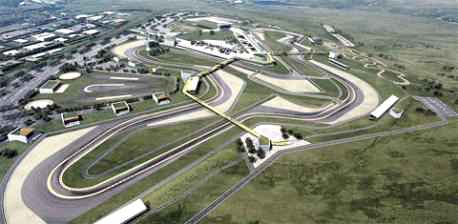
ebbw-vale

A long-time critic of what could be the economic salvation of the region is Conservative MP David Davies, who represents the neighbouring constituency (to Ebbw Vale) of Monmouthshire, perhaps the most affluent area in the country. It’s reasonable to assume that those who vote for Davies don’t want anything noisy on their doorstep, attracting people who will drive through their area to get to the circuit. So while not wishing to be unfair – for there may indeed be more to it – I suspect that nimbyism with a dash of snobbery lies behind the attacks from that direction.

But as I say, Davies, chair of the Welsh Affairs Committee at Westminster, has been a consistent critic, and no doubt he’d argue that he’s just doing his job. And his job has been made easier for him by some strange spending of the millions already invested by the ‘Welsh’ Government.

But the criticism of this project comes from beyond leafy Monmouthshire and its well-heeled inhabitants, from those who cannot be dismissed as nimbys or snobs.

On November 1, after regular sniping from its news broadcasts, BBC Wales made a frontal assault using its Week In Week Out series with A Safe Bet? (Video available here for a while.) There was little pretence at impartiality. Anyone watching this programme with no knowledge of Wales, and how it works, would have concluded that the Circuit of Wales is a complete waste of money and should be ditched immediately.

I admit that Michael Carrick, the man behind HOTVDC, doesn’t always instill confidence, and he has certainly made mistakes. Even so, it appears to me that critics have too often been playing the man rather than the ball. By which I mean, the project needs to be considered on its merits; after all, Einstein being a philanderer didn’t undermine his Theory of Relativity.

The attacks have continued, culminating today in a front page lead continued on page 2 plus an editorial in the Wasting Mule. All written by my old mucker, Martin Shipton.

The justification for today’s attack seems to be that the HOTVDC used the Silverstone circuit in England in 2015 and 2016 to host MotoGP races that it had contracted to host at the Circuit of Wales, and had lost money. Now with the best will in the world, I detect an element of having your cake and eating it in this criticism.

Because those attacking the HOTVDC for making a loss at Silverstone – due to the Circuit of Wales not being completed – are the very same people who have been doing their very best to derail the CoW project altogether!

circuit-of-wales-wm-editorial
click to enlarge

As for losing money by going to Silverstone, even before reading the response from the HOTVDC I knew the answer. The owners of the Silverstone circuit creamed off the profits, from the hot dog stands to the champagne hospitality suites and from the Ducati baseball caps to the sales of £300 leather biker boots.

A child could work that out, and a younger sibling could add that those profits would have accrued to Ebbw Vale if the Circuit of Wales had been operational, as would other benefits to the area from those visiting for a few days.

God Almighty! Break somebody’s leg and then criticise him for limping.

So how do we account for this recent onslaught from BBC Wales and the Wasting Mule? I suspect there are two, linked, answers.

First, just last month, it became clear that the project had a good chance of proceeding without needing to be underwritten by the ‘Welsh’ Government. Even so, this report from WalesOnline still manages to put a negative spin on the news with, “However, without approval on underwriting from the Welsh Government, the project will effectively be dead as there is little private sector appetite to take a 100% risk exposure position.”

Though I’m a little nonplussed by the phrase “approval on underwriting”. If the writer means underwriting, why not just say that rather than employ such a convoluted phrase? Though with heavyweight backing from Aviva and Kleinwort Benson underwriting from the ‘Welsh’ Government may no longer be needed . . . and it may be this realisation that has triggered the recent attacks.

The article in question was written by Siôn Barry, of whom I shall have more to say in a moment.

Second, if the Circuit of Wales goes ahead then it will challenge the thinking behind the Cardiff Capital Region project. Which, in its simplest terms, is as follows: As many jobs as the Region’s architects can get away with are to be concentrated in Cardiff, as are the Region’s sporting, recreational, cultural and other facilities. So that people from the Valleys will come into Cardiff to earn their crust, and they will come back into Cardiff to be regularly relieved of a great part of that crust.

Which makes it anathema to those behind the City Region that places like Ebbw Vale should be allowed anything as grand as a race circuit, ‘Bloody hell, people will go there spending their money rather than going into Cardiff. Where will it end? They’ll all want something!’

Now the Wasting Mule, despite its hyperbolic claim to be ‘The National Newspaper of Wales’, is, as we all know, a Cardiff newspaper, and the mouthpiece of those seeking to enrich the city at the expense of the rest of Wales. This explains today’s editorial.

The Wasting Mule does not want the Circuit of Wales to progress even if it has 100% private funding, for fear it might limit Cardiff’s ability to enjoy the full benefits of the City Region scam.

Consequently, the final paragraph of Shippo’s editorial is a direct appeal to his friends in the ‘Welsh’ Labour Government to put obstacles in the way of HOTVDC, perhaps to use environmental or other planning ruses. We can be sure that representations are also being made through more ‘private’ channels.

Fundamental to the Cardiff Capital Region project is the Metro system – for how else are people from Merthyr, Ebbw Vale, Maesteg and other outposts of the empire to reach the City of Milk and Honey? Since 2010 the job of promoting the Metro has fallen to a Mark Barry, some might go so far as to say that the Metro is his idea.
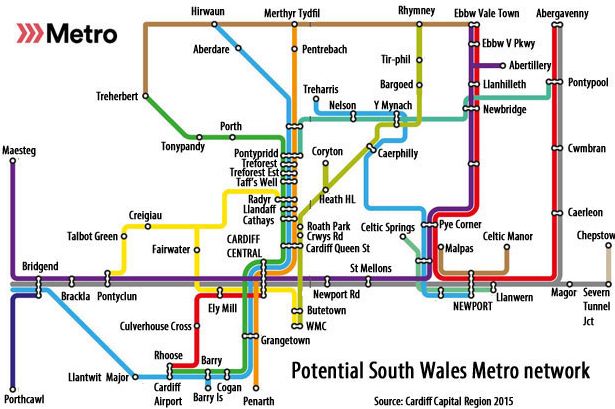
metro-network

After working for the Welsh Development Agency (2002 – 2003) he has maintained good connections with the ‘Welsh’ Government. Though some might suggest a conflict of interests in the following roles:

  • Owner of M&G Barry Consulting (Sept 2009 – Present) His Linkedin profile tells us that M&G Barry Consulting was set up to promote the Metro project.
  • Board Advisor for Transport and the Economy for the Cardiff Business Partnership (Oct 2010 – Oct 2013)
  • Founder of the private sector Metro Consortium (Aug 2011 – Nov 2013)
  • Metro Development Director and Advisor to the ‘Welsh’ Government (Nov 2013 – Jan 2016).

(Though seeing as M&G Barry has been going since September 2009 I would have expected the website to be up and running by now. But then, I suppose it’s not looking for business, it’s a one-trick pony.)

I’m telling you this because of course Mark Dafydd Barry is the brother of Siôn Barry, Business Editor of Media Wales, and this explains Siôn Barry’s regular plugging of his brother’s Cardiff Metro scheme, and of course his hostility to the Circuit of Wales.

Yet another example of the incestuous relationship between politics, business, media and academe in Cardiff is provided by the fact that since April this year Mark Barry has been Professor of Practice in Connectivity at Cardiff University, “Exploring the wider economic and regional benefits of the South Wales Metro”.

Though some might think that’s an odd post – created specially? – for a man who did his degree at Manchester in Physics and The Analysis of Science & Technology and who, for many years after leaving university, worked in software design. In fact, Barry seems to have neither qualifications nor experience in the fields of transport and communications before he was granted his vision of the Cardiff Metro . . . and sold it to his former employers at the ‘Welsh’ Government. 

This defence of Cardiff’s interests tells us why the Wasting Mule is hostile to the Circuit of Wales, while BBC Wales’ attitude can be explained by the fact that it has as much claim to being our national broadcaster as the Mule has to being our national newspaper.

The Circuit of Wales is a real test for the ‘Welsh’ Government, in a number of ways.

First, and most obviously, it is a massive project, promising thousands of jobs, in an area that badly needs those jobs and the economic boost they’ll bring to the wider economy.

Second, it is becoming clear that for those who believe Cardiff must be the hub for all investment in the south east the Circuit of Wales poses a challenge, partly of itself, and partly because it might encourage other distant towns to question their allotted status of dormitory settlements.

The issue can’t be funding alone. Certainly not for the ‘Welsh’ Government which, it is rumoured, will give more than £100m so that near-bankrupt Aston Martin can relocate in the Vale of Glamorgan, very near to Cardiff. And then there are the hundreds of millions of pounds squandered on the Third Sector for what often seems to be no other reason than providing jobs for Labour cronies and hangers-on. Communities First, which has spent over £300m would be a good example.

aston-martin

Then there are the hundreds, maybe thousands, of smaller projects that have cumulatively swallowed up more money over the years than Aston Martin, Communities First and all the others we know of. Read this puff from 2013, and then read this from just a few days ago. This project was a non-starter, doomed from the outset – but what the hell, it’s only public money!

What’s worse, is that one of the women involved in this doomed venture, Gill Wright, featured in Ancestral Turf, a post I wrote in September 2014. She belongs to a network of people in the Tywi valley – all of whom seem to be English – who appear to be in competition to dream up ever more ludicrous ‘schemes’ for milking the Welsh public purse. And it works – for they get grant after grant that benefits no one but themselves!

The other woman involved with setting up the Level Crossing Bunkhouse in Llandovery, Jane Ryall, is a ‘social enterprise advisor’. So not only do our funding bodies attract all manner of grant-grabbers to take advantage of the easy money, they also pull in those who are now living off those who are living off the Welsh public purse. And it’s all dressed up as economic activity. What a system!

And how can we forget the land deals that were so beneficial to Sir Gilbert Stanley ‘Stan the Pies’ Thomas yet so damaging to the public purse? For those who need to be reminded, read my posts Pies, Planes & Property Development and the sequel – with the same stars! – Pies, Planes & Property Development 2.

So any reticence on the part of the ‘Welsh’ Government to supporting the Circuit of Wales can’t be due to a fear of wasting public money, or a worry that some malcontents might suggest a lack of financial rectitude. For ‘Welsh’ Labour is inured to such criticism.

The Circuit of Wales offers tangible benefits for thousands of our people and a whole region of our country. Which is why the ‘Welsh’ Government needs to put aside its Cardiff bias, ignore the fact that there may be few sinecures in it for Labour Party cronies, and for once – just once – suppress its suspicion of business and entrepreneurship.

Help it happen!

~ ~ ~ ♦ end ♦ ~ ~ ~ 

UPDATE 17.11.2016: Would you Adam and Eve it! Shippo has returned to the attack on the Circuit of Wales, and what’s more, now he seems to be having a go at my old mate Neil! Bloody hell! where will this end? (Though I note there was no mention of the Brothers Barry.)

circuit-of-wales-wm-nov-17-2016

I can’t provide a link because the article doesn’t appear to have been uploaded yet to WalesOnline’s appalling and almost unnavigable website.

UPDATE 24.11.2016: Shippo mounts another attack, this time using a spokesman for the Silverstone circuit.
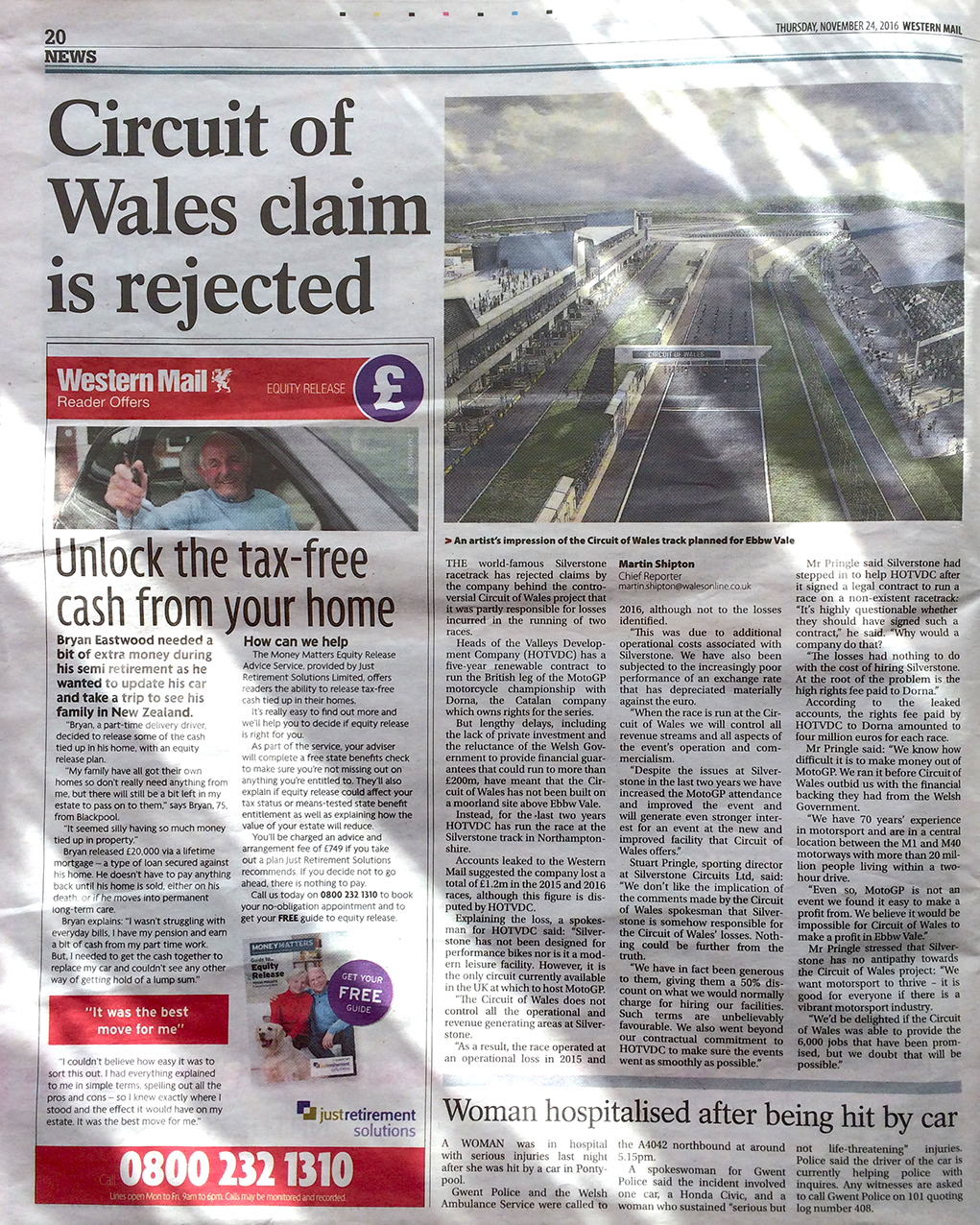
circuit-of-wales-wm-nov-24
click to enlarge

Llamau, Yet More Devocolonialism

IN THE BEGINNING . . . 

Once upon a time there was an obscure little charity in Barry called the John Rowley Trust, formed in 1986, which ran a hostel for homeless young people.

But then, in May 1999, came the first elections to the National Assembly for Wales. Someone said, ‘Ah, a new source of funding – time to get organised!’ What’s more, because Plaid Cymru did so well in those first elections, they thought they saw the future, and said, ‘Let’s give our revamped organisation a Welsh name’.

And so, at an Extra-ordinary meeting of the John Rowley Trust on July 12, 1999, Llamau Ltd was born, and a few new directors appointed. (Though there was obviously some confusion about the name chosen because the document submitted to Companies House says that the new name is ‘Llaman’.)

Though Llamau’s commitment to the Welsh language is questionable, seeing as there is no Welsh version of the website, nor indeed any Welsh at all to be found on it. Clearly the ‘commitment’ extends no further than the name.

ENTER FRANCES BEECHER

In October 2000 Frances Beecher was appointed CEO, and boy! did things then take off. Ms Beecher is also a Fellow and a Trustee of the Labour-supporting Institute for Welsh Affairs, where her bio (scroll down) tells us that, “Frances steered the organisation (Llamau) through an extensive development programme from 28 staff to approx. 350 staff.”

Ms Beecher was next appointed to the board of Llamau Ltd, as secretary, on February 10, 2005. There is also the charity Llamau. As is normal practice the directors of the company also serve as trustees of the charity, with two exceptions. Frances Beecher, as an employee and a director, is not a trustee. And even though Stuart Duffin is listed on the Llamau website as Vice Chair (under Trustees) he does not appear on the Charity Commission page as a trustee, nor on the Companies House website as a director. Which I find odd.

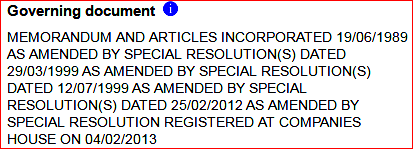
The ‘Governing document’ is the Memorandum and Articles of Association which sets out what the company is allowed to do and how it operates, a copy must be filed with Companies House. You can see that a number of changes are mentioned, but we only need to concern ourselves with the most recent.

llamau-governing-document

Let’s start with the last but one amendment. This is dated St David’s Day 2012 and was agreed at a General Meeting of the company held on February 25. It says, “3 The Company’s objects are – To promote the welfare and well being of people in need in the South Wales area, etc., etc.” Which is what we should expect.

But if we go to the amendment of roughly a year later, following another General Meeting, this one held on January 26, 2013, we read, “That the Memorandum of Association of the Company be altered by deleting paragraph 3 in its entirety and inserting the following – 3 The Company’s objects are to promote the welfare and well being of people in need in the United Kingdom, etc., etc”. 

So in the space of less than a year this hitherto insignificant outfit, once an unknown charity in Barry, has taken on a UK-wide role. Given what it does, and that Llamau operates only in Wales, the fact that it benefits people from across the United Kingdom suggests only one thing – that people from outside of Wales benefit from Llamau’s services by moving to Wales.

But even “across the United Kingdom” is misleading because Scotland and Northern Ireland have their own judicial systems, so it should read ‘England and Wales’.

ALSO INVOLVED . . . 

The Chair of the Trustees at Llamau the charity, and of course a director of the company Llamau Ltd, is Angela Mary Gascoigne; a busy woman with an interesting background.

From 24.09.1998 until 27.09.2001 she was a director at Community Housing Cymru. There then seems to be a gap – or at least I’ve found nothing – until some time in 2008 when she turns up as managing director of the Somer Housing Group in Somerset, which has since changed its name to the Curo Group (Albion) Ltd.

llamau-angela-gascoigne

The name change may have come about in response to a less than favourable report on Ms Gascoigne’s running of the Somer Housing Group.

Obviously cue to exit stage left, so in November 2011 we find Ms Gascoigne joining the ‘Wales’ Probation Service, which has since split, in 2014, into the Wales Community Rehabilitation Company and the National Probation Service which, as the Justice website tells us, ” . . . is a statutory criminal justice service that supervises high-risk offenders released into the community in England and Wales”. So it’s an Englandandwales body.

UPDATE 12.11.2016: Here’s an example of the kind ‘high-risk offender released into the community’ . . . to kill an innocent teenager. The family of the murdered youth is now planning legal action against the Wales Community Rehabilitation Company.

llamau-national-probation-service

It would appear that Angela Mary Gascoigne was still connected with the National Probation Service for Englandandwales when she joined Clean Slate Training & Employment Ltd of Bath as a non-executive director on July 1, 2013. Its website tells us, “Clean Slate Training & Employment was set up in 2006 as a social enterprise creating and supporting paid work opportunities for people facing barriers to the labour market”. Ms Gascoigne left Clean Slate on July 4, 2016.

While a director with Clean Slate Angela Gascoigne also took up a directorship, on November 11, 2013, with Sedgemoor Housing Management Services Ltd, of Bridgewater, Somerset. She was appointed secretary on January 2, 2014. This company might be the trading arm – it’s certainly a subsidiary – of SHAL Housing, an Industrial and Provident Society. She is still director and secretary of SHMS Ltd.

From reading both websites and picking up information from elsewhere it’s clear that SHMS Ltd and SHAL Housing have links with London and help relocate people from the Great Wen to the west of England.

Finally, Ms Gascoigne joined Victim Support Cymru on January 14, 2014, and is still there. Though what she does is a mystery, seeing as Victim Support Cymru is listed as a dormant company by Companies House. In fact, the last accounts filed for Victim Support Wales (as it then was) were for year ended 31.03.2006.

From this website it’s clear that Victim Support is yet another Englandandwales body. The Javed Khan referred to was chief executive of Victim Support before moving on to Barnardo’s. Prior to the change shown in the panel, dated October 30, 2013, the Trustees of Victim Support Cymru were, with the approval of “the National Charity”, free to appoint “a Chairman, Treasurer and other honorary officers from among their number”.

llamau-victim-support-memorandum

Can we conclude that this change in October 2013 to the way Victim Support is run explains Angela Mary Gascoigne’s appointment in January 2014, was it made by ‘The National Charity’ in London? But why bother? The company has been dormant for 10 years, there is no charity called Victim Support Cymru, and it doesn’t seem to exist in any other form either. Victim Support Cymru seems to be as imaginary as the ‘Wales Probation Service’.

NUMBER CRUNCHING

Time to lift the lid on Llamau’s finances. Here are the most recent accounts available on the Companies House website, for year ending 31.03.2015. The accounts for 2016 should be available soon.

Before going to the figures, let’s look at some other information found in the accounts. Turning to page 6 (numbered at top of page), the use of ‘principal’ in the first paragraph may be significant.

Page 9 is interesting with its reference to the “Young Persons Resettlement Broker Project for North and Southern Wales”. (Why not just say ‘Wales’?) More information can be found on the website under Llamau’s Resettlement Project.

The ‘Brokers’ are, for the north, Dr Kathy Hampson, and the south, Tracey Kinsey. Dr Hampson’s Linkedin profile tells us that the project is really run by the Youth Justice Board, yet another Englandandwales outfit. I can find little information on Tracey Kinsey beyond the fact that at some time previously she was Family Mediation Manager for Llamau. Though her real claim to fame may be as the Chair of the Chepstow-Corneilles Twinning Committee.

The first paragraph on page 10, particularly the bracketed section referring to “company law”, again calls into question the status of the ethereal Irishman, Stuart Duffin.

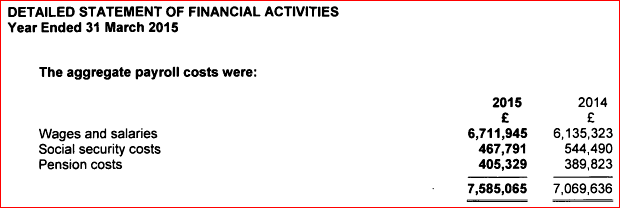
Turning to the figures, Ms Gascoigne is forced to admit that Llamau is living a hand-to-mouth existence, with no reserves whatsoever. Hardly surprising with total resources expended in 2015 of £10,997,104 (an increase of £1,217,973 on 2014) against income of £10,837,897 (an increase of just £886,155 on 2014).

llamau-salaries

The largest component of the expenditure, is staff salaries. Staff costs (wages, pensions and social security payments) total £7,585,065. And that doesn’t take into account staff training (£111,703), travel and subsistence (£178,418), etc., etc. But then, we must remember that CEO Frances Beecher “steered the organisation through an extensive development programme from 28 staff to approx. 350 staff”. That don’t come cheap.

UPDATE 06.11.206: When writing this I neglected to consult the Transparent Wales website. Having now done so I find in the funding for Llamau a number of payments of the type ‘Current grants to private sector’, and these total £1,116,420. Private sector!

THE TROJAN HORSE THAT IS THE THIRD SECTOR

To recap, with the advent of devolution someone saw the opportunity to turn a small Barry charity into a major player in the Third Sector, and this is what happened.

But then, just short of four years ago, Llamau spread its wings to become a ‘UK’ – in reality, Englandandwales – organisation. This seems to have happened soon after lead player Angela Mary Gascoigne, a woman with feet on both sides of the Severn, got involved with the Probation Service and other elements of the judicial system.

Giving us an organisation based in Wales, largely funded from within Wales, but run in the main by people from outside Wales and serving England’s interests by rehousing young tearaways and those released from the ‘secure estate’. Making Llamau little more than an agency of the Englandandwales judicial system.

To achieve this position, agencies that previously had a modicum of Welshness and independence, such as the Probation Service and Women’s Aid have been absorbed into an Englandandwales framework.

Another example is of course Victim Support, where successive amendments to the Memorandum have exposed the increasing hold of the ‘national body’ over its Welsh outpost. As I’ve pointed out, Victim Support Cymru is registered with Companies House as a dormant company. It still has a skeletal presence with the Charities Commission that tells us it operates ‘Throughout Wales’, though when it comes to the ‘Area of benefit’ box it says:

llamau-victim-support-cymru

Don’t be surprised, for it’s how the Third Sector operates. The era of devolution and easy money has attracted all manner of shysters across the border with no commitment to Wales, they’ve come either to take over existing Welsh organisations or else to set up new ones in order to tackle ‘ishoos’ of which we were blissfully unaware ere the arrival of said shysters.

What were once separate Welsh bodies, serving Wales, are now locked into Englandandwales frameworks. This explains how undesirables and all manner of criminals appear out of the blue to occupy – and very often wreck – Welsh social housing.

I could set up an outfit tomorrow claiming to help distressed caber tossers and start milking the system. And if anyone said, ‘But, Jac, there are no distressed caber tossers in Wales’ I’d just pop up to Scotland and find some. Because that’s how the Third Sector in Wales operates – demand money to tackle fictitious ‘problems’ or else import problems that aren’t ours.

DEVOCOLONIALISM

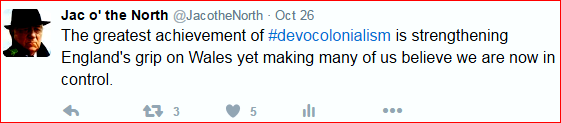
Last month I coined the term devocolonialism to explain this system we now live under. This post gives me an opportunity to expand on what I said in that tweet.

devocolonialism-tweet

We have an Assembly down in Cardiff docks, and within it a group of Labour Party deadbeats desperately hoping to be mistaken for a government. They are a joke, they and the whole apparatus of devolution is a sham, proven by the fact that no one outside of Wales – and certainly not ‘Welsh’ Labour MPs – takes devolution seriously, so why should you?

The Assembly’s powers have been restricted by Government of Wales Acts ensuring that the Assembly can never operate in the best interests of the Welsh people. All we get is ‘Welsh’ Laws that are English legislation with ‘(Wales)’ added, and civil servants answering to London acting as ‘advisers’ to this self-deluding ‘government’.

Yet all the time, while it’s hoped we are focused on those slobbering grotesques in Cardiff, behind our backs, in a hundred and one ways that our thoroughly useless media will never report, Welsh identity is being crushed, and we become strangers in our own country as Wales merges into England.

Devolution is nothing but a comfort blanket against the encroaching darkness of assimilation. And if devolution is the comfort blanket then the comforter itself, designed to make you forget your fears and nod off, is the belief that a few more Plaid Cymru AMs can improve things.

Take my word for it, there is no political solution to the problems confronting the Welsh nation.

~ ♦ ~ end ~ ♦ ~
Playground Wales 2, Remedies

INTRODUCTION

In addition to the previous post on tourism I also put out a message on Twitter and Facebook last week reminding people that Gwynedd Council was consulting over whether, or by how much, to raise council tax on holiday homes. The ability to raise council tax on second homes and empty homes being just one of a number of changes we can look forward to in the housing market.

gwynedd-council-tax

Holiday homes also face the possibility of higher Stamp Duty Land Tax when this is devolved in April 2018. (As do Buy-to-Let properties.) Or rather, from that date, we shall see Stamp Duty replaced with a new Land Transaction Tax, to bring Wales into line with the Scottish and UK governments. There was a consultation process, but few responded, seeing as it was not well advertised and ran from July 13 to the end of August.

High summer is an odd time to hold a public consultation process, but while the rest of us were sipping mint juleps and humming Summertime, you can be sure that the organisations representing holiday home owners and private landlords were beavering away ensuring that those they represent had their concerns noted.

Another change is that the ‘Welsh’ Government is now empowered to introduce a tourist tax of the kind found across Europe in cities and regions experiencing large numbers of tourists, with the money raised then used to fund those local services that tourists use but otherwise would not pay for.

Taken together, and implemented imaginatively, as an integrated system, these changes could have wide-ranging and far-reaching implications, all of which would be beneficial to the national interest. Let’s look at these measures in a little more detail.

COUNCIL TAX ON SECOND HOMES

This is an issue that provokes a great deal of debate and passion, and tends to divide people along rather predictable lines. For example, how many second home owners will support increasing council tax on their properties? And how many of those attending one of the regular Meibion Glyndŵr Reunion Dinners (black tie affairs) will argue for anything less than a 500% increase?

A great deal of nonsense is talked in defence of second homes. Here are some of the arguments we’ve heard ad nauseum over the years.

‘To raise council tax on holiday homes in Wales would be racist’. Which is one way of confirming that they are overwhelmingly English owned.

‘Holiday homes put a lot of money into the local economy’. Which wants us to believe that a property lived in for two or three months a year puts more into the local economy than that same property would if lived in permanently by a local family.

‘Nobody else wanted to buy it’. Of course not, you conducted a comprehensive local survey, didn’t you?

‘People would stop coming here’. Why? And as I say, holiday homes often put little into the local economy. Something brought home to me a few weeks ago as I was a-sauntering through Aberdyfi.

A builder crossed the road and asked, ‘Are you Royston Jones?’ Despite not knowing him, and being unsure of his position, I nevertheless answered in the affirmative. After which he introduced himself and we discussed this and that. He’d been in school with my kids and he seemed an easy-going sort of bloke until, while discussing holiday homes, he made it clear that one thing that really pissed him off was holiday home owners bringing in tradesmen from their home area, rather than giving work to locals.

I knew exactly what he was talking about. My wife looks after a holiday home in our village for a family from the East Midlands (she has done for a few decades). Earlier this year there was a builder from the same area working on the property for months, and living in it while he worked. So here we had an example of local tradesmen denied work and local B&Bs denied business.

There is no doubt that raising council tax on holiday homes would encourage some owners to sell and deter others from buying. And the greater the increase then the greater the encouragement/deterrent. More importantly, increasing council tax on holiday homes would bring more properties into full-time use, and this would lead to more vibrant towns and villages, because shops, pubs and other facilities struggle to survive in communities with too many properties empty for most of the year. And this is not just a Welsh problem.

Consequently, there is no sensible or rational argument against raising council tax on holiday homes across Wales, which is why opponents of such moves are forced to employ absurd arguments. Here are a couple of examples that the Cambrian News (where else?) carried some three years ago, when the subject of council tax on holiday homes was being discussed. (Click to enlarge.)

cambrian-news-letters-1

According to Eric Richards of Aberdyfi, second homes are essential to the local economy. He seems to believe that a property ceasing to be a holiday home would remain empty and fall derelict. Another blind spot is failing to understand that Aberdyfi is not representative of Gwynedd. The economy of Bangor – the largest settlement – is based on higher education, administration, the retail sector, etc. The economy of north Gwynedd as a whole would hardly notice a doubling of the council tax paid on holiday homes.

While ‘Pat Beaumont’ believes that increasing council tax “borders on racism”, and might result in “property burning starting again”. Quite how tackling the problem of holiday homes would lead to “property burning” is not explained. Does the writer envision an arson campaign being waged by those feeling aggrieved because they’ve sold their holiday homes to locals?

LAND TRANSACTION TAX (FORMERLY STAMP DUTY)

The new Land Transaction Tax (from April 2018) offers another tool with which to reduce the numbers of holiday homes, or certainly to tax sales of holiday homes and invest the funding gained in the wider community. Of course there are issues to be resolved, fine tuning needed here and there, but a feel for the issues involved can be found in the Summary of Responses (to the consultation process).

As I suggested in the Introduction, those in the know, the property professionals and the business associations, made sure their views were known. The Summary tells us there were six, formal written responses, and these came from:

1/ Chartered Institute of Taxation and Stamp Taxes Practitioners Group

2/ Residential Landlords Association

3/ National Association of Estate Agents

4/ KPMG

5/ Central Association of Agricultural Valuers

6/ Wales Association of Self-Catering Operators

I bet you didn’t even know there was a Chartered Institute of Taxation and Stamp Taxes Practitioners Group (and it is ‘Chartered’, not ‘Charted’, as it says in the Summary).

Many of these organisations of course operate within an Englandandwales framework, which explains their wish that there “should be ‘only one rate throughout the UK’.” Though I suggest that the ‘Welsh’ Government be guided by what’s best for Wales, not what’s convenient for the National Association of Estate Agents.

The current Stamp Duty does not apply to the following categories: property purchases of £40,000 or less; caravans, mobile homes and houseboats; non-residential transactions; employer provided accommodation; and certain purchases of leasehold interests subject to specified conditions.

Seeing as those responding to the survey were asked if they agreed with these exceptions it’s reasonable to assume that these are not set in stone. Which would mean that it’s within the powers of the ‘Welsh’ Government to reduce the threshold to £10,000 or less and apply the new Land Transaction Tax to the sale of static caravans.

Another imaginative use of the new Tax would be to reduce the numbers retiring to Wales, or certainly make retirees contribute more to the country in which they plan to spend their declining years. There is nothing heartless or racist about this, it’s pure economics.

Everyone – and here I really do mean everyone – agrees that the ‘advanced world’ is facing a demographic time-bomb with its ageing population. With a decreasing percentage of the population in work, paying the taxes needed, it becomes more and more of a burden on the national purse to support the growing numbers of elderly people.

Therefore, any country or territory attracting elderly people from outside of its borders has problems. Any country actively encouraging another country’s older people to move in is behaving irresponsibly.

Yet in Wales, this is exactly what we do, by allowing, even encouraging, the building of tens of thousands of new properties in rural and coastal areas that planners – and here I include the Planning Inspectorate – know will not be bought by local people, some of them will even be marketed over the border as ‘retirement properties’. And yet politicians and civil servants refuse to publicly admit what they all know – attracting large numbers of elderly migrants inevitably results in an overburdened health service and other issues.

I know I’ve used this example before, but it explains perfectly what I’m talking about. In the area where I live, south west Gwynedd between Barmouth and Aberdyfi, the 2011 census told us that the 65+ age group makes up 30.1% of the population. And within that age group 65% was born in England.

The figure for the percentage of the population in the 65+ age group is 20.7% for Gwynedd as a whole. For Flintshire it’s 17.6%. For Cardiff 13.2%.

Gwynedd SW Wards merged

This is not natural. This is not sustainable. This is a recipe for disaster for our health service and our wider economy. Unless of course you believe that retirement homes and the like, paying the minimum wage or less, can be the foundation for a healthy economy.

A partial remedy lies in applying a higher level of the new Land Transaction Tax – why not double? – to persons over the age of 50 moving to Wales who have never previously lived here. The extra funding could go straight into the Welsh NHS.

TOURIST TAX

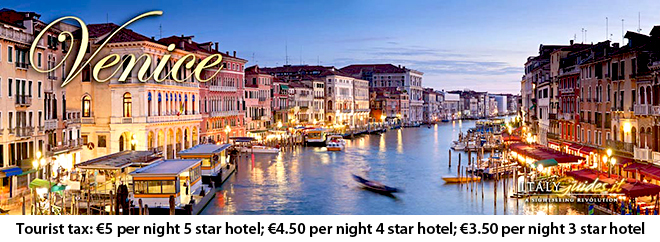
As I’ve said above, tourist taxes of various kinds can be found around the world and, increasingly, across Europe. This article from lovemoney.com explains the tourist taxes you can expect to pay in a variety of countries. If we look at the figures for Italy we see that – as in other countries – different cities and regions charge different rates. Rome charges €6 a night to stay in a four-star hotel whereas Palermo, on Sicily, charges just €2. Florence charges €2.50 a night for self-catering, Milan charges nothing.

venice

There is no reason why Gwynedd couldn’t charge £2 a head per night for self-catering, including static caravans, but Merthyr, or some other area wanting to attract more visitors, could decide against any charge at all. The system across Europe seems to be left to local authorities to decide and it could be the same in Wales.

The Bevan Foundation discussed the issue in February and said, “We suggest that a tourism tax should operate in Wales as a per night charge on hotel room and holiday park stays, capped at seven nights. The tax would be collected and managed by local authorities, and the money raised would be allocated to fund local authority and police services.”

For once I find myself agreeing with the Bevan Foundation (God!), the money raised by a tourist tax must stay within the area where it has been collected and used for the benefit of the local people, the majority of whom derive no benefit from tourism. The money raised must not, as the tourism operators will demand, be spent on encouraging more tourists.

And as for something else we’ll hear –‘This will drive people away!’ The continental experience is that it doesn’t. It’s just a small surcharge that ensures tourism puts something back into the communities it affects. The greater that effect, then the more that should be put back. (And with the post-Brexit pound plummeting and hard times ahead, now is the ideal time for Wales to introduce a tourist tax, ready for the 2017 season.)

CONCLUSION

With a co-ordinated strategy using legislation already in place or soon to be enacted we could achieve a number of what I consider to be desirable objectives:

  • By increasing council tax on second homes, and also using the new Land Transaction Tax, we could greatly reduce the numbers of holiday homes and make the dwellings released available to the wider community.
  • By applying the Land Transaction Tax and a tourist tax to static caravans, but exempting serviced accommodation, we could take the first step on the long road to removing the hideous caravan sites that mar our coastlines and replacing them with hotels and other establishments that will provide more jobs and put more money into local economies.
  • By applying the Land Transaction Tax (and perhaps Council Tax) selectively to retirees we could reduce the pressures on the NHS and various services in many parts of the country. Again, this could be done by district. For example, increase the LTT for those wanting to retire to Pembrokeshire and Conwy, but not to Wrexham and Neath Port Talbot.

There will of course be obstacles to making any of this happen.

To begin with, there will be those who’ll argue, ‘Oh, but caravans and care homes are the basis of our local economy’. If anyone really believes that then what they consider to be ‘the local economy’ is no better than living in the shadow of a big house, surviving off scraps and cast-offs, and constantly being lied to about ‘generosity’.

Yet the defenders of caravan sites and care homes will not all be beaten and brainwashed, for some people make a lot of money from them. These will not give up easily. There will also be well-connected interests opposing Wales using the Land Transaction Tax, council tax and tourist tax in her own interests.

Finally we can guarantee opposition from the ‘Welsh’ politicians in London, who see their role as opposing anything that might benefit Wales . . . if there’s the remotest possibility it might harm England’s interests. Also the civil servants in Wales, advising our Assembly and ‘Welsh’ Government, but answerable to London. And with so many senior officers in local government having no loyalty to Wales we can expect hostility from that quarter too.

It will be an uphill struggle to change a system that has been in place for centuries in order to start running Wales in the interests of the Welsh. The tools are available; it’s now a question of having the will, the courage, to use those tools.

But it must be done, because living in the shadow of the big house has never served our interests. And nowadays, the big house is not what it was; cracks are appearing and they’re struggling to pay the bills. They’ve also started drinking, shouting at the neighbours and anybody else who comes too close.

It’s time to put up a little fence, nothing too intimidating, just enough to make them understand that this side of the fence belongs to us. They’re still welcome to come . . . but on our terms.

END 

Welsh Social Housing, A Broken System

My previous post dealt with offshore property company Link Holdings (Gibraltar) Ltd and housing associations leasing properties from it, though I made passing reference – just a paragraph – to another publicly funded housing association, Pembrokeshire Housing, and Mill Bay Homes, the latter a subsidiary of the former that builds houses to sell to anyone.

This brief mention was enough to send someone scampering to Hugh James, the ‘Welsh’ Government’s favourite legal firm. (Indeed, to judge by the amount of business Carwyn’s civil servants put the way of Hugh James you’d think there were no other lawyers in Wales.) And so on Friday evening I received another threatening letter from Ms Tracey Singlehurst-Ward.

It says: “You are required to remove the statement from the website and any other location (either in hard or soft copy) in which you have published it by no later than 9am on Monday 23 October 2016. (Monday is actually the 24th.) You are also required to confirm in writing by way of undertaking that the allegation will not be repeated.” Read it for yourself.

Hugh James logo

You will see that the period of grace I am allowed in which to recant left me no opportunity to seek advice from other members of Ms Singlehurst-Ward’s profession. So I have had to rely on my own counsel, which directed me to refuse capitulation but to amend the offending paragraph. If it still offends, anyone, hard luck, because that’s all you’re getting.

In many ways, Mill Bay Homes is a curious beast. To begin with, it is a Registered Social Landlord (No L124) and yet (as far as I can tell), it receives no funding from the ‘Welsh’ Government. But then, this is as it should be, for Mill Bay Homes does not build or rent social housing . . . so why is it a Registered Social Landlord?

The answer is that Mill Bay Homes ‘inherited’ its RSL number when Pembrokeshire Housing 2000 – a craft that never launched – changed its name to Mill Bay Homes in February 2012. After which Mill Bay Homes took off to become one of the leading house builders in the county, using money transferred from Pembrokeshire Housing – which of course does receive public funding.

This paragraph is directed to the ‘Welsh’ Government, more specifically, the Housing Directorate.

If Mill Bay Homes applied to become a Registered Social Landlord tomorrow you would, quite correctly, turn down the application for the obvious reason that MBH neither builds nor rents social housing. (This explains why it does not receive Social Housing Grant or other funding.) That being so, why do you allow MBH to retain the RSL number of its predecessor?’

Anomalies abound when we consider the relationship between Pembrokeshire Housing and Mill Bay Homes. We can even add Pembrokeshire County Council to the mix, for both have a close relationship with the local authority. Take, for example, this S106 agreement drawn up just before Christmas last year between MBH and the council.

The agreement deals with “four Social Rented Housing Units” and “two Intermediate Housing Units” in the Newton Heights development totalling some 55 properties at Kilgetty. Later in that document, in Schedule 4, we encounter the paragraph below.

mbh-s106

“The RSL” has to be Pembrokeshire Housing, if only because Mill Bay Homes does not receive grant funding (and wouldn’t be buying from itself). Which means that, having transferred millions of pounds to Mill Bay Homes for it to build homes for sale, Pembrokeshire Housing will then use grant funding to buy one (or more?) of those properties.

I can’t help thinking that something ‘clever’ is going on here. Maybe too clever for old Jac. Another one for the Housing Directorate? So let me frame it as a question.

‘Publicly funded Pembrokeshire Housing shuffles money to its subsidiary, Mill Bay Homes. Mill Bay Homes builds private dwellings. Now it appears that Pembrokeshire Housing buys properties from Mill Bay Homes with grant funding.

Why doesn’t Pembrokeshire Housing just build its own social housing with the money it receives from the ‘Welsh’ Government for that express purpose?’

Come to that, how many social housing units could Pembrokeshire Housing have built with the millions it’s passed to Mill Bay Homes? Is there no demand in Pembrokeshire for more social housing? If not, why is Pembrokeshire Housing still receiving grant funding?

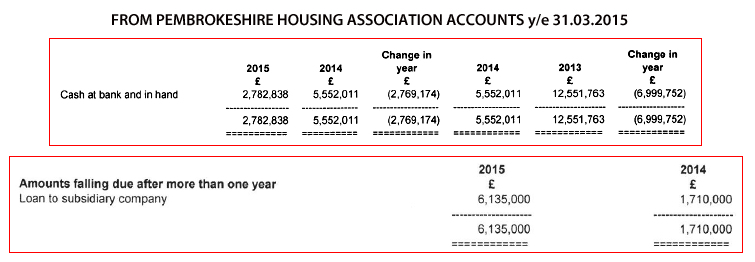
Something is not right down west. Money goes into Pembrokeshire Housing from various sources, gets mixed up, and comes out the other end, with over £6m going to MBH (by the end of the financial year 31.03.2015).

Yet we are asked to believe that none of this money comes from grants received from the ‘Welsh’ Government. In other words, it is not public funding. Maybe the source is rents received from PH’s tenants, or money from sales of social housing. But who paid for that housing in the first place?

All of Pembrokeshire Housing’s assets and income ultimately derive from the public purse. That being so, should any of it be used to build open market housing?

As I say above, my mention of Pembrokeshire Housing and Mill Bay Homes was little more than a passing reference in a piece about Link Holdings (Gibraltar) Ltd, a company that owns a few thousand properties across southern Wales, from Llanelli eastwards, so let us return to the main dish.

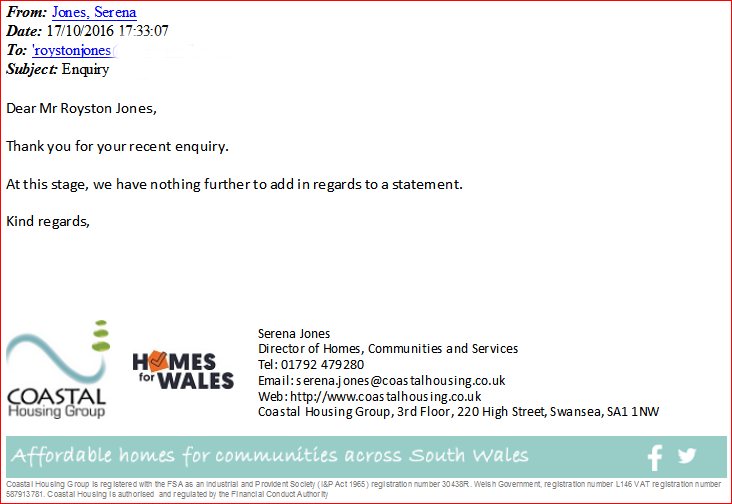
I contacted the Coastal Housing Group in Swansea, one of the housing associations leasing properties from Link Holdings, but the exchange ended with the message below. Clearly, the shutters have gone up.

coastal-housing

In the hope of getting more information on the relationship between housing associations and offshore companies I tried another angle by writing to the First minister, Carwyn Jones. Within a couple of days I received this response from the Housing Directorate.

We can do naught but wait, and hope . . .

Looking at this latest threat from Hugh James I can’t help wondering who exactly triggered it. Was it really Pembrokeshire Housing and Mill Bay Homes? If so, then they were a bit slow off the mark, because the post had been up for a week before Ms Singlehurst-Ward swung into action.

Picture it, gentle reader; there I am, blogging merrily away, exposing the scandal that housing associations are dealing with property companies registered in tax havens, and that money is passing from a publicly-funded RSL to its subsidiary, for that subsidiary to build private housing, and wham! – out of a clear blue sky comes another threatening letter from Hugh James, a company that itself has grown fat off the public purse.

An unkind soul might say they’re all in it together, civil servants, RSLs, lawyers, etc, all sucking on the teat of the public purse, so why not watch each other’s backs, hang together lest they hang separately?

Which raises the possibility that certain persons know about the arrangement in Pembrokeshire, and are quite happy to fund it. And perhaps these same people also know that housing associations are dealing with companies hiding in tax havens that could be run by gangsters, and they also support this arrangement.

Because imagine the embarrassment in certain quarters if it became known that homes were being built in Pembrokeshire by a company funded by a housing association that has received tens of millions in grants from the ‘Welsh’ Government, and that some of these properties are sold to English retirees or used as holiday homes. Or that housing associations are officially encouraged to deal with faceless companies in tax havens!

This would explain why such people, instead of responding with, ‘Thank you, Jac, for drawing this to our attention, your OBE is in the pipeline, regularly set the dogs on me!

I have argued for some time that the system of publicly-funded Registered Social Landlords is unsustainable in the long run. We are, effectively, giving public money to what are in many cases unaccountable private companies. As I see it, there are three options:

1/ Cut RSLs adrift and let them support themselves by raising private funding. (After all, they are asset rich.)

2/ Return the role of social housing provision, together with the current stock, to local authorities. 

3/ Let the ‘Welsh’ Government take over the social housing stock and set up a national body along the lines of the Northern Ireland Housing Executive.

The more I learn of RSLs the more convinced I become that the existing system of social housing provision in Wales is broken. For anyone to pretend otherwise is to be wilfully blind or else defend known practises that would shock and outrage most people if they gained wider publicity than they get from my blog.

Which might be the answer to everything.

END 

Link Holdings (Gibraltar) Ltd: An Open Letter to Carwyn Jones

October 17th 2016

First Minister,

You may have read my previous post, ”. If not, then I suggest you read it, if only to help you understand what follows.

Your government gives a great deal of public money to housing associations. These bodies are largely unregulated and, as a consequence, a law unto themselves. (One reason so many of them run into ‘difficulties’.) For example, Pembrokeshire Housing – a body that receives a great deal of money from the public purse – funds its subsidiary Mill Bay Homes in the building of private houses for sale.  

The emergence of this particular scandal is due entirely to dedicated individuals rather than to the media, politicians, or those answerable to you who claim to be overseeing the Registered Social Landlords you so lavishly fund.

Now it emerges that housing associations funded by your government are leasing – perhaps also renting – property from Link Holdings (Gibraltar) Ltd, a company that is registered in a tax haven to hide the identity of those behind it, also to escape UK regulations and of course to avoid paying UK tax.

On Sunday, the Guardian told us that Arron Banks, funder of Ukip, friend of Nigel Farage and financial backer of his recent Leave.EU campaign, also makes use of Gibraltar. (Read it here.) When I read the story bells rang because details of Banks’ Gibraltar connection seemed familiar to me.

That’s because both Link Holdings and Arron Banks use Parliament Lane Nominees as directors, and both also use STM Fidecs Management Ltd as secretaries. (Check Link Holdings’ company profile from Companies House in Gibraltar to confirm this.)

Coincidence? Probably, but the Guardian article raises the possibility that Welsh housing associations, funded and supposedly regulated by the Welsh Government, could be leasing properties from Arron Banks.

Despite the blog post I refer you to focusing on Swansea this problem is not confined to that city, or to Link Holdings. To begin with, Link Holdings owns property across southern Wales, so it’s reasonable to assume that RSLs in other areas have an arrangement with Link. Then, knowing that Link is one of many offshore companies owning property in Wales makes it equally reasonable to assume that housing associations have dealings with companies other than Link. (Read this.)

It doesn’t matter which possibility we consider, neither does your government or the housing associations involved any favours. Link Holdings (Gibraltar) Ltd could be owned by Arron Banks, or it could be owned by the Mafia, the Moonies, or money-launderers, we just don’t know.

Successive Labour administrations in the Assembly have told us they believe in ‘openness’, they’ve also reminded us how responsible they are in their handling of the public purse. You now have an opportunity to prove that these claims are more than empty rhetoric.

Unless, that is, you see nothing wrong with housing associations passing on public funding to property companies registered in tax havens. But I find that difficult to believe.

I also believe that no right-thinking Welsh politician would sanction what I have explained here, so we are entitled to know who is behind Link Holdings (Gibraltar) Ltd. We are also entitled to know if you and the housing associations involved are unable to identify who is behind this company.

Someone also needs to explain why the Welsh Government allowed publicly-funded bodies to do business with companies registered in tax havens. Before, finally, promising that such behaviour will be brought to an end.

It’s clear from the Link Holdings case, from what’s happening in Pembrokeshire, and from other evidence, that the social housing sector is in one hell of a mess. A well-funded but almost completely unregulated mess.

The answer to this problem lies in genuine reform, not in encouraging housing associations run by Labour Party members to take over faltering RSLs in order to increase Labour’s stranglehold on Welsh public life. (I am of course referring here to the recent .)

Let me conclude by suggesting that you, First Minister, practise what your party preaches about openness and concern for the public purse by making sure that no more of our money reaches secretive companies registered in Gibraltar or any other tax haven.

END

UPDATE 18.10.2016: I have now decided to write directly to the First Minister. Here’s my letter.

Grant-grabbers, How They Are Related

‘BESPOKE ACTIVITY SESSIONS’

I am indebted to Brychan, a regular visitor to this blog, for drawing my attention to another example of misguided do-gooding, this time linking with enviroshysters and the ‘heritage’ racket – yea! even unto the Strata Florida Trust! (You couldn’t make this up!)

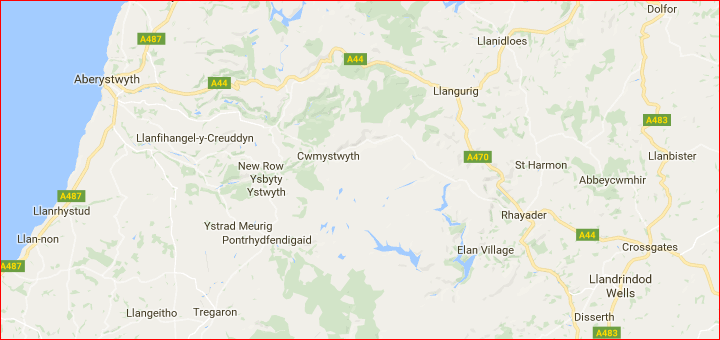
We start in the Elan Valley, the collective name for a number of reservoirs vaguely south east of Aberystwyth that supply fresh water to Birmingham. Built in the late nineteenth century and early twentieth century these reservoirs occupy land much of which was compulsorily purchased.

But let’s not be negative, for as the Elan valley website tells us, “The choice of the Elan Valley as the source of Birmingham’s future water supplies was to lead to the creation of a spectacular new landscape in mid-Wales.” (Who writes this patronising crap!)

elan-lakes

“The Elan Estate is owned by Dŵr Cymru Welsh Water although a greater part of it is vested in the Elan Valley Trust on a 999 year lease.” Does Dŵr Cymru own the reservoirs and dams or just the land surrounding them? Either way, the water goes to Brum for free.

From what I can see, the Elan Valley Estate is a tourist playground doubling up as a nature reserve. But the estate also runs ‘courses’ for superannuated hippies and others who have washed up in Wales. Now it’s branching out.

Some of these courses are run by an outfit called Tir Coed, which describes itself as ” . . . a charity and social enterprise that engages people with woodlands through volunteering, training and bespoke activities that develop skills and improve woodlands for the benefit of everyone”. The kind of gibberish I encounter all the time, dreamt up to justify the existence of a group and, more importantly, its funding.

Here’s a screen capture from the Tir Coed Charity Commission page. We shall refer to this later.

tir-coed-charity-commission

The project to which I want to draw your attention is something called Elan Gives Back, the premise of which is so unutterably colonialist that you’ll have trouble believing it, but just bear with me.

Last month, representatives of Tir Coed, acting for the Elan Valley Estate, visited Birmingham ” . . . explaining how the project would like to reconnect the people of Birmingham with their water source . . . before explaining about the weekend retreats and bespoke activity sessions in the Elan Valley available through Elan Gives Back.” Read it for yourself.

(‘Bespoke activity sessions! Bloody hell! I know people who’ve been done for offering that sort of thing.)

If this venture is a ‘success’, then we can expect to see Brummie drug addicts, petty criminals and others having a jolly old time on the Elan Valley Estate. And at our expense, because of course Tir Coed, being a charity and a social enterprise, relies almost exclusively on grant funding.

The biggest single funder for year ending March 31 2015 was the Big Lottery Fund, which coughed up £82,783; but in there with other grants we see the Countryside Council for Wales, £35,000; Natural Resources Wales, £20,000; Llanidloes Town Council, £3,000; and Jobs Growth Wales, £11,276.

The only way I can interpret Elan Gives Back is that someone, somewhere, believes the area owes Birmingham something. But, surely, Birmingham, responsible for the enforced eviction of the area’s population, and the subsequent exploitation of Welsh resources, owes us. If Liverpool can apologise for Tryweryn then why can’t Birmingham apologise for Elan?

And if that is the thinking behind it, then what twisted colonialist mind could have dreamed up Elan Gives Back?

Finally, we need to consider what it says on the Charity Commission website, shown in the screen capture I referred you to earlier. Tir Coed’s stipulated ‘Area of Benefit’ is Wales. Birmingham is not in Wales, and I object strongly to public funding, much of it Welsh, being used to give bespoke weekends in the Welsh countryside to Brummie ne’er-do-wells. I further object to this being done as some kind of ‘apology’ for them having to drink our water!

Someone, maybe the Charity Commission, or the funders, needs to investigate this bollocks.

LINKS AND COINCIDENCES

Take yourself back to the Charity Commission website for Tir Coed and click on the box ‘Contact & trustees’ (on the left), you’ll bring up a list of trustees. Top of that list is a ‘Mr J Wildig’.

Wildig is also a trustee of the Plynlimon Heritage Trust (note the corrupted spelling of Pumlumon) and also Ymddiriedolaeth Yr Hafod Hafod Trust.

In fairness, the first of those seems to have raked in very little money and is now almost defunct, but give it its due, it used the tried and tested method, even the descriptive template, “The Trust enables work on heritage projects within the Ceredigion uplands”.

The second of Wildig’s trusts is connected with the Hafod Estate near Cwmystwyth. He is also a director of Pentir Pumlumon Cyf, which markets the area to tourists, while of course giving plugs to various trusts, such as Strata Florida, which is ‘flagged’ on its interactive ‘attractions’ map.

The Hafod Estate is managed by Natural Resources Wales “in partnership with the Hafod Trust”. It’s noticeable how many of the ‘trusts’ and individuals this blog has looked at recently work with NRW.

hawthorn-cottage
Hawthorn Cottage, available for rent on the Hafod Estate

When talking of 19th century mining operations the Pentir Pumlumon website is keen to remind us that “Miners migrated to the area from Cornwall, Yorkshire, and elsewhere: their names can be found on gravestones in country churchyards and some of their descendants are here still”. Stressing a long-standing English (and Cornish) presence in the area seems to have been important for whoever wrote that.

Sites like this, written by English people trying to describe a country of which they have no real understanding beyond its perceived potential to benefit them; and for which they have little appreciation beyond the visual, the scenic, remind me of those 19th century posters encouraging English settlement in some benighted corner of the empire where the natives had recently been quelled.

Also involved with the Plynlimon Heritage Trust is Jennifer Jill Macve, whose name crops up a number of times in connection with Wildig. Macve is also a trustee of the Welsh Historic Gardens Trust where, again, you’ll struggle to find any Welsh involvement.

Before bidding the omnipresent J Wildig adieu it should surprise no one to learn that he is also a trustee of the Strata Florida Trust, the body you’ve read about on this blog over recent weeks. (If you haven’t, then read Ystrad Fflur – The Heritage Industry Moves On and Conserving Heritage, Maintaining Colonialism.)

To make sense of the plethora of ‘heritage’ and ‘preservation’ trusts that have sprung up in Wales during the past couple of decades it might help if you visit the website for the United Kingdom Association of Preservation Trusts (APT). Here’s the APT’s Wales page.

The screen capture below explains it all. There was a development officer in Wales 2004 – 2008, and “over a third of Trusts in Wales were formed in the past seven years”. And to cheer you up even more, “There are also examples of Trusts still being formed, such as the Welsh Georgian Building Trust, and the Llanelli Goods Trust.” (I suspect there might be Welsh involvement in the latter, but not the former.)

apt-wales

HEADING SOUTH

If we go back for a sec to the Tir Coed website, and look at the ‘Contact’ page, then we see that it offers three addresses. One is presumably its HQ in Aberystwyth. Another is its Elan operation, where it ‘Gives Back’ bespoke weekends, and the third is Denmark Farm, Betws Bledrws, near Lampeter.

So now you’re wondering what denizens of that parallel universe sustained by grants await at Denmark Farm. You will not be disappointed. (Oh, yes, before any of you narrow-minded nationalists think the name has been changed, it was always Denmark Farm. Explained here.)

As is the way with these things, Denmark Farm is not just any old farm, run by primitive Welshies who keep animals and grow crops. No, sir, this is a conservation centre, offering eco-friendly holidays, nature trails and, yes – courses!

Confusingly – but not for old Jac! – this lot are registered with the Charity Commission as the Shared Earth Trust. Though the CC website tells us that income is falling, down from £135,000 in 2012 to a mere £45,000 in 2015.

A correspondingly sombre picture is to be found on the Companies House website, with the most recent accounts available (y/e 31.03.2015) informing us that this venture has tangible assets (almost certainly the farm buildings and land) of £310,666 (£324,991 in 2014). Yet ‘total assets less current liabilities’ brings that figure down to £258,346 (£277,418 in 2014). Denmark Farm is in trouble, perhaps it will soon be recycled.

Companies House also tells us there are charges against Denmark Farm. First there’s the mortgage of £170,000 with the Ecology Building Society of West Yorkshire. Then, on the same date, 25.07.2012, there was a loan of £25,000 made by the trustees of the Shared Earth Trust to the Denmark Farm Conservation Centre.

So who’s running things? Well, the three individuals who are both trustees of the Shared Earth Trust and directors of Denmark Farm Conservation Centre are Guy Alistair Hopwood, who lives at Denmark Farm, David Andrew Bradford Smith of Llandrindod, and Glenn Edward Strachan of Penuwch.

denmark-farm-activities

The staff at Denmark Farm – apart from one who seems to be married to a real farmer, living on a real farm – are the usual crew of ecocharlatans. Reading their potted bios reminds us how many silly little projects there are out there.

Take Gary Thorogood, who “moved to this part of Wales with his family 9 years ago after retiring from the Fire Service in London.” His bio mentions his involvement with the Lampeter Permaculture Group and Transition Lambed. (Don’t say you haven’t heard of them!)

Then there’s Mara Morris who lives with chickens, which I suppose is one way of guaranteeing fresh eggs. Next up is James Kendall, ” . . . responsible for procuring external funding so that we can maintain and increase our staffing resource, deliver engaging projects and develop the Shared Earth Trust membership”. The Accounts I’ve quoted would suggest that Kendall is not doing very well as a fund-raiser.

But in fairness, maybe he’s too busy with the Long Wood Community Woodland, where he serves as project manager. “He also works as a Forest School leader(?), woodland skills tutor and runs an outdoor after-school club, Young Rangers.”

Companies House also tells us there is a charge against Long Wood Community Farm. The mortgagee is the Big Lottery Fund and the property is described as “all that freehold property known as land at Long Wood, Llangybi, Lampeter registered at H M Land Registry under title numbers CYM271065, CYM271131, CYM270610”.

What becomes clear when we look into these projects, whether they are heritage and conservation, environment, or even social enterprises and community benefit companies, is that they are not businesses a bank would lend money to for the very simple reason that they are just not viable businesses. So they have to rely on grant funding.

Because they are not financially viable they invariably fail, which results in funding that could be better used being wasted. Those involved in such failures often re-form, take on a new name, and wait for the grant-giving agencies to come up with new funding streams and priorities. It’s a merry-go-round.

Those involved are simply indulging a private passion at public expense, there is no public benefit whatsoever . . . unless of course, you include the ‘courses’ and the ‘bespoke activity sessions’, which are not intended for the likes of us.

What I found interesting in writing this post is that, in J Wildig, we have unearthed a link between the environmental, the social enterprise, and the heritage sectors. Looking beyond this individual there are other linkages and overlaps to be found.

What is also clear is that many of these grant-grabbing groups are located in Ceredigion and Carmarthenshire, spilling over into neighbouring local authority areas. Suggesting that these two councils offer encouragement; but the major funders remain the ‘Welsh’ Government, in its various guises, and assorted Lottery funding streams.

Everywhere I look in the environmental lobby I see hypocrisy and contradictions. Perhaps the most glaring is the commitment to ‘Nature’ . . . discredited by the belief that Nature would be lost without them managing it.

George Monbiot and others talk of wanting to ‘re-wild’ large tracts of Wales, yet if they were allowed their way they’d produce little more than a manicured woodland where everything down to the last fungus would have its allotted place. They want to play God.

george-monbiot

This sylvan idyll of overbearingly managed ‘wilderness’ would of course provide many jobs and businesses for the kind of people we’ve met in recent posts. Almost all funded from the public purse.

They’d offer courses in yurt construction and other ‘traditional’ crafts. James Kendall could bring his Young Rangers from the Long Wood. With weekend retreats and bespoke activity sessions so that we could fulsomely apologise to Brummies, Scousers, and all the others we’ve wronged. And of course there’d be the tourists. Combining to give us wildlife-free woods constantly ringing to the sound of human voices . . . none of them Welsh.

My idea of re-wilding would be to set aside an area of land and take human beings out of the picture entirely (especially those I’ve been writing about). Let Nature reclaim the land, naturally, as it did when the last ice retreated. Anything else is just a veiled attack on Welsh farming and a scam to milk the public purse.

Fortunately, the figures tell us the funding is drying up, and now, with Brexit, things can only get better. Let’s hope that the ‘Welsh’ Government, the Big Lottery Fund and others come to their senses and free us from heritage racket con men (and women), enviroshysters and all the rest.

UPDATE: I am informed that Monbiot has departed whence he came. That probably accounts for the sounds of raucous celebration that has been reported emanating from local farmhouses.

END

Early on the morrow, Mrs J and I are off to the Old North. I shall be back next weekend. But keep sending in your comments, for Big Gee is in charge as moderator.

Conserving Heritage, Maintaining Colonialism

BY A GUEST WRITER

Keeping tabs on the incestuous, grant-fuelled world of the Welsh heritage industry could be a full-time job in itself. It seems there is no end to the number of charitable trusts set up to take advantage of the funding available ostensibly to rescue this or that old ruin or building, with some familiar names cropping up here, there and everywhere, often with tenuous links to our country and its people.

A linguistic digression

Anyone who lives and works in more than one language and has given the matter some thought will tell you that, depending on which language they use, the world can sometimes look rather different. This is often true of conceptual words, for example.

Watching debates in county councils sometimes brings this into sharp focus. One side or the other will table a motion (cynnig = offer, proposal in Welsh). Opponents may then try to change or wreck it by tabling an amendment. In Welsh, that’s a gwelliant (=improvement).

By no means all amendments are a gwelliant.

In English the vast majority of conceptual words are derived from Latin or Greek. Heritage, perhaps appropriately in this context, comes down to us from Norman French and means something you have inherited.

You could inherit a property in Australia or downtown Manhattan without ever having set foot in either place, and your good fortune would be down to luck of the draw and the legal system.

In Welsh the word is treftadaeth, and if we break that word down, as children are encouraged to do at school, we get tref (place/homestead) + tad (father) + aeth, a suffix which very roughly means ‘something to do with’. In other words, places linked to your forebears, an idea not a million miles removed from hen wlad fy nhadau.

The difference between the legalistic connotations of the Norman French and the Welsh word, rooted in real people and places, goes to the heart of the debate which has been raging on the pages of this blog.

Ystrad Fflur

To its credit, the Ceredigion Herald picked up on the recent piece on this blog about plans to ‘enhance the visitor experience’ at Ystrad Fflur and help locals to ‘enhance senses of their own identity and wellbeing’, whatever that means, and it contacted Professor David Austin.

In response to questions, the professor huffed and puffed at some length about the wonderful nature of the site and was clearly reluctant to go into mundane details about what precisely was being planned and where the money was coming from.

When pressed, he gave answers which left a lot of wriggle room.

The Strata Florida Trust has acquired the farmhouse, he said, not mentioning the buildings which cluster around it (although the trust’s website says it has acquired those too).

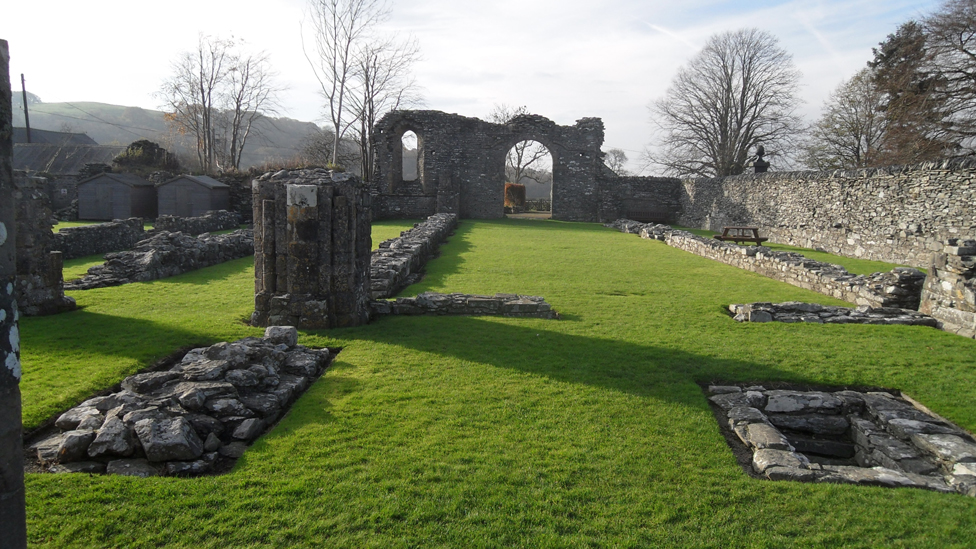
strataflorida

The money had come from a private donation, and he was not prepared to say more on that subject.

The Acanthus Holden plan (the exclusive hotel with attached visitor centre) was to have been financed privately, but had now been ditched.

The only link to Cambrian Heritage Regeneration Trust (CHRT, the Llanelly House body) was CHRT’s chief executive Claire Deacon, he claimed.

What happened to the £200,000 donation CHRT received to buy the buildings at Mynachlog Fawr therefore remains a mystery.

Plans, also shrouded in mystery, to develop the old farm, would be financed by a variety of means, he explained:

“There is other funding available to us, which is not Heritage Lottery Fund money, and we are in the process of finalising the arrangements for the allocation of that money to the Strata Florida Trust.”

That does not quite rule out HLF funding, and raises more questions than it answers.

Who is funding this, and why the secrecy? Is cash-strapped Ceredigion County Council involved, for example?

One of the contributors to comments on the original article about Ystrad Fflur suggested that there might be some form of local consultation. In his interview with the Herald, Professor Austin makes no mention of a consultation, and his website is also silent on the subject.

What we are about to get, it seems, is a fully fledged project for the commercial exploitation of Ystrad Fflur with no public consultation and  zero transparency about the details of the development.

Adfer Ban a Chwm

Adfer Ban a Chwm (ABC), or to give it its more prosaic English name, “Revitalise Hill and Valley”, is  another trust, this time registered to an address in trendy Islington, London where Tony and Gordon made their infamous Granita Pact.

Its annual report for the year to 31 March 2015 says that the charity’s objectives “are to preserve for the benefit of the people of Carmarthenshire, Powys, Wales and the Nation” what it terms “constructional heritage”, and in particular the pretty bits.

Presumably “the Nation” is not the same as Wales.

The website expands on this a little, saying that the trust aims to “address the issues of vernacular buildings in rural Wales and the need for affordable housing in the area”.

Adfer Ban a Chwm’s leading light is an architect, Roger Mears, pictured here at what would appear to be the Henley Regatta, old boy:

roger-mears

ABC (it should really be ABCh) was set up eight years ago and appears to have spent most of the period since applying for and receiving grants from, among others, the Brecon Beacon National Park Authority, the Heritage Lottery Fund, the Brecon Beacons Trust, the Community Foundation in Wales and the Quaker Housing Trust. More trusts and foundations than you can shake a stick at, in fact.

It is not at all clear what ABC has actually achieved in those eight years apart from a year of planning, researching and writing a report in 2014-15 and raking in grants.

More grant money came in in May 2016 enabling it to proceed with its Grass Roots Heritage Programme, “a one-year project (the first year of a three-year programme) which we hope will identify buildings that we can turn into affordable homes.”

So after all that time, all that report writing and all those (successful) grant applications, it would seem that not a single building has been restored and not a single affordable home created, although the trust hopes to be able to identify potential candidates by this time next year.

Over the next 12 months, therefore, they will carry out “mapping and community work” in and around Myddfai, Carmarthenshire:

“This information will be used to underpin the next stage of the ABC project, and be broadcast widely in a series of interactive community workshops, where the social history of the buildings will be elaborated by gathering local memories and stories, and where community and student volunteers will learn about how to record old buildings, what to look for and what these buildings have to tell us, how they might be repaired and conserved and turned into affordable homes.”

Helping ABC along the way by working with the trust’s executive director on partnerships has been our old friend, Claire Deacon, CEO of Cambrian Heritage Regeneration Trust, saviour of Llanelly House and the Merthyr YMCA, project director at Mynachlog Fawr, lecturer and consultant, and former conservation officer with the Pembrokeshire Coast National Park Authority.

All in all, then, one of the most successful “Welsh” buildings preservation trusts: loads of grants harvested and no sign of any actual buildings. Perhaps Griff Rhys Jones will turn it into a documentary series.

Golden Grant

Staying in Carmarthenshire for a moment, let’s take a trip to Gelli Aur (or Golden Grove as some would have it), the former home of the Cawdors near Llandeilo.

The huge late Regency pile has been knocked about a bit and badly neglected since the last of the Cawdors moved out in the 1930s. Carmarthenshire County Council, which had a lease on the place, can take credit for the worst of the damage.

At one time the council and the ever-enthusiastic Meryl Gravell hoped to turn the place into a kind of business incubator for media start-ups. Their chosen partner disappeared with a lot of public money which was never seen again. Ever more exotic investors came and went, until finally the house and 100 acres were sold to a London art dealer, Richard Christopher Salmon.

Salmon has renovated a part of the house and made the roof of the main building weatherproof, but one of his first acts after taking over was to set up a trust.

The Golden Grove Trust, which has no known sources of income, was gifted with a debt of £1.45 million by Mr Salmon, a sum which apparently represents the purchase price of the near derelict house and dilapidated grounds. If that was what he actually paid for this massive liability, someone saw him coming.

The debt is due to be repaid – somehow – to Mr Salmon in just over a year from now.

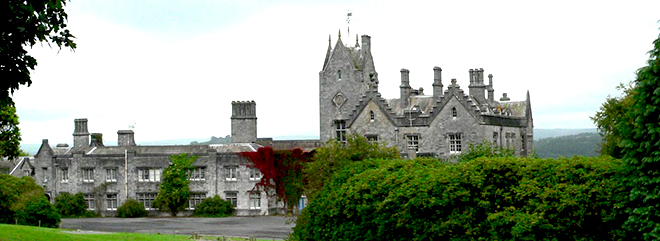
gelli-aur

Filing accounts is clearly not one of Mr Salmon’s favourite activities. The Charity Commission website shows that the 2012-13 accounts were received 583 days late, while the report for 2013-14 was 218 days late. The annual report for 2014-15 is currently 78 days late.

Despite this and the fact that the trust was close to being struck off by the Charity Commission, the charity was last year awarded a grant of just under £1 million by Edwina Hart, Meryl’s old buddy, for the restoration of the park which occupies around 60 of the 100 acres of land and includes, or included (it is difficult to know which tense to use) a public park with a playground, lake, café and arboretum.

The Carmarthenshire Herald reported a couple of weeks ago that there were a growing number of complaints from the public that the park was closing on more and more days, and that public access signs had been removed.

With some difficulty the newspaper managed to track down Mr Salmon who thought, but did not seem very sure, that the closure might have something to do with adverse weather conditions, and concerns of the insurers on health and safety grounds.

Readers in Carmarthenshire may struggle to recall unusually bad weather in recent months, but there you are.

Mr Salmon was clearly not best pleased with critical blog posts and press reports published in 2015, and told the Herald that he could have shut the whole place up and kept it private.

But then Edwina wouldn’t have given him £1 million, would she?

Another one to watch.

This is a local fund run by local people

keep-it-local
“I used to work for Neil Kinnock, you know”

As we have seen, grants are available from all sorts of different bodies, but what the Americans would call the 800 lb gorilla in this jungle is without doubt the Heritage Lottery Fund (HLF).

The fund’s website lists 2,785 projects which have received funding in Wales. Amounts vary from a couple of hundred pounds, to mammoths such as Cardigan Castle (£6.5 million) and Llanelly House (£3.6 million).

The HLF divides the UK into regions and nations, and each of these has its own committee and permanent head. The head of HLF Wales is someone called Richard Bellamy, whose previous roles include working on the Channel Tunnel, the National Trust, English Nature and Cornwall Council. If he has a connection with Wales, he is keeping quiet about it.

The committee, which decides on applications in Wales, currently has eight members, and according to HLF’s website:

“The committees are made up of local people recruited through open advertisement. Committees are supported by grant-assessment teams based in the relevant region or country.”

In theory, then, anyone can apply. Who selects the successful candidates is not clear, but it clearly helps if you have worked for English Heritage or the National Trust and, ideally, come from somewhere in or near Cardiff.

Chairing the committee is the august personage of Baroness Kay Andrews of Southover OBE. Andrews, who grew up at Ystrad Mynach, was parliamentary clerk in the House of Commons before becoming policy adviser to Neil Kinnock, from where she went on to found and run her own charity, Education Extra.

On elevation to the peerage, Andrews clearly felt so strongly about her Welsh roots that she chose Southover in Sussex for her title, and it is from Sussex that she claims travel expenses when going to the House of Lords.

The HLF’s rule on appointing ‘local people’ to the Welsh Committee does not seem to be taken that seriously, but no doubt there was nobody ‘locally’ up to the job, just as there were no suitable Welsh candidates for the post of Head of HLF Wales.

But we should all be grateful, shouldn’t we?

 ~ ~ ~ ~ ~ ~ ~ ~ ~ ~ ~ End ~ ~ ~ ~ ~ ~ ~ ~ ~ ~ ~

Jac says . . . In these recent posts – and, indeed, in the one I’m working on now – we encounter groups and individuals who have hit on a method of subsidising their move to Wales and/or maintaining themselves once they’re here. Human nature being what it is, this is understandable; what is less easy to understand is why these people are being funded.

To explain how this scam system operates . . . let’s say you want to buy and renovate a somewhat dilapidated old house. And let’s say you pay £100,000 for that property knowing that it will cost another £100,000 to restore. That house will therefore cost you £200,000. But that’s a mug’s way of doing things. What those we’re discussing do is buy a property and get someone else to pay for the renovation. Sticking with the same figures, this means that for an outlay of just £100,000 they get a property worth £200,000.

To which you respond, ‘Ah, but Jac, you’ve been on the Malbec again, and it’s making you forget that these are important buildings, of great historical or cultural significance’. I suppress my usual riposte of ‘bollocks!’ to offer the following argument.

If these buildings are indeed of great historic or cultural significance then they should be in public ownership – WELSH public ownership. If they are not of great historic or cultural significance then no public money should be expended, whether directly or in grants to self-appointed ‘heritage trusts’. The worst of all possible options is to have a building or site of genuine national importance privately owned but maintained by public funds.

This is nothing less than submitting to a form of blackmail – ‘This place I own is very important (take my word for it), but if you don’t give me lots of money I’ll let it decay/fall down/ be turned into a burger joint’.

As I and others have argued, Wales needs a new body, answerable to us, the Welsh people, that protects what is important to us and our past with sympathy and respect. A new body to replace the English National Trust, Cadw, and all the strangers in our midst with their grant-grabbing ‘trusts’.

It so happens that the ‘Welsh’ Government is currently inviting observations on ‘Proposals for secondary legislation to support the Historic Environment (Wales) Act 2016 and draft guidance’. The same shower also claims to want ‘your views on this technical advice note which provides detailed planning advice on the historic environment in Wales’.

So tell them what you think they should do, the deadline is October 3rd.

Custodians of our Nation’s Heritage: Propagandists of Conquest and Empire

BY A GUEST WRITER

Having followed a series of excellent reports published by Jac related to the custodianship of our nation’s heritage, I should like to return to that telling mission statement of the National Trust for Scotland:-

“Scotland’s rich cultural heritage is not only an invaluable economic and social resource, it is what gives Scotland’s people a sense of belonging and identity; as such it is one of our nation’s most precious assets.”  Read it for yourself.

A sense of belonging and identity …

So what are the priorities of the official custodians of our nation’s heritage? And what does that reveal about how they see the Welsh people and their identity?

Just to recap, the most prominent custodians of our nation’s heritage are:-

Cadw sets out its own three-fold mission statement with admirable clarity:-

  • “We conserve Wales’s heritage.”
  • “We help people understand and care about their history.”
  • “We help sustain the distinctive character of Wales.”

Worthy goals but, as we all know, there are mission statements and mission statements.  Some provide organizations with clarity of purpose, motivation and a tool for making better decisions and focusing resources.  Others are sidestepped and forgotten with the same ease with which they were adopted – in short, a complete waste of time and effort.

Let’s take a look at what Cadw does in practice.  Their resourcing priorities, exhibitions and events, educational activities, and interpretation of historical sites, is overwhelmingly skewed towards the Edwardian Conquest castles – Caernarfon, Conwy, Beaumaris, Harlech, Rhuddlan, Criccieth and Flint.  These are, after all, the great draws for visiting English tourists, and for UK Lottery grants.

cadw-year-of-adventure

Furthermore, in its interpretation of historical sites, Cadw presents a very one-sided view of Welsh history.  The significance of the conquest castles was encapsulated by Thomas Pennant in 1772 when he described Caernarfon Castle as “the most magnificent badge of our subjection”.  It is for this reason that some have questioned whether CADW’s name was in fact an acronym for “Celebrate All Defeats of the Welsh”.

Cadw fails utterly, for example, to link the construction of the conquest castles with the corresponding systematic looting and destruction of all of the sites, structures and artefacts associated with sovereign and independent Welsh power and authority – Aberconwy Abbey (the mausoleum of the Princes of Gwynedd), the royal “llys” at Aberffraw, the Welsh regalia including the “Talaith” (coronet) and “Y Groes Naid” (the sacred relic believed to be a fragment of the True Cross).

harlech_badge-of-subjection
Harlech Castle

So what is the aspect of the Welsh identity that Cadw seeks to present, in order to foster our nation’s understanding of our history and distinctive character?  Subjection.  English overlordship.  The futility of aspiring to our own national destiny.

The secondary areas of focus for Cadw appear to be the castles of the Marches, those bastions of alien encroachment.  Chepstow, Monmouth, Skenfrith, Grosmont, Tretower, Montgomery, Oxwich, Weobley, Kidwelly, Llansteffan, Cilgerran.  Again, these are presented in a sanitized manner that utterly disregards the centuries of racial segregation of Englishries and Welshries, of penal laws excluding the Welsh from holding offices, or living, trading or owning property in the boroughs developed for English colonists under the protection of those castles.

Meanwhile, the recent article highlighting the “Powis” Castle experience showed how uninterested and ill-equipped the National Trust is to foster an understanding in our nation of our own history and distinctive character.  The National Trust perpetuates the 19th century taxonomic convention: “For Wales, see England”.

For the National Trust, any historical interpretation of its sites beyond the superficial Downton Abbey upstairs-downstairs world of Anglo-gentry of the 18th and 19th centuries and their anonymous native servants falls well outside their comfort zone.  This is the context in which their sites at Newton House (Dinefwr), Penrhyn Castle, Llanerchaeron and Tredegar are presented.

To illustrate further the stupendous bias of the custodians of our nation’s heritage in presenting our history, I have started to gather a list of the most neglected (or misrepresented) sites of primary importance in the history of Wales, focusing on sites that pre-date the Acts of Union (or Penal Assimilation Acts) of the 1530s.


Here is the list that I have gathered to date:-

Sycharth (“Llys Owain Glyndŵr“).  This was the birthplace and home of Owain Glyndŵr, our last Welsh Prince of Wales, and the subject of Iolo Goch’s famous poem.  The buildings were destroyed by Harry of Monmouth (later Henry V, King of England) in 1403.  For a description of the shameful neglect of this site today, I commend this article.

sycharth

Church of SS. Mael and Sulien, Corwen.  The dedication to two Welsh saints of the 6th century indicates that this lovely 14th century building is located on the site of a church foundation of great antiquity.  This is believed to have been the location where Owain Glyndŵr was acclaimed as the true and rightful Prince of Wales on 16 September 1400 in the presence of Ieuan Trefor, Bishop of St. Asaph.  It is this event that elevates this site to one of primary importance in the history of our nation, and the proper focal point for annual celebrations of Owain Glyndŵr Day (Sept 16).

acclamation-of-owain-prince-of-wales_corwen-1400
Acclamation of Glyndŵr

Church of St Peter ad Vincula, Pennal (Gwynedd).  The church was founded in the 6th century, but was so re-named and dedicated by Owain Glyndŵr, Prince of Wales, in competition with the chapel of St Peter ad Vincula in the Tower of London, one of the chapels royal of his rival, Henry IV, King of England. Pennal was regarded with honour because of its status as one of the 21 llysoedd, the courts of the true Welsh Princes of Gwynedd.  The real significance of this site stems from it being the location of the parliament at which Owain Glyndŵr set out his policy programme for the independent state of Wales, recorded in the famous “Pennal Letter” addressed to Charles VI, King of France.  The enlightened policies which he expounded included establishing two universities in Wales, one in the North and one in the South, ending the subjection of the metropolitan church of St. David (St. David’s Cathedral) to Canterbury, re-establishing the independence of the Welsh Church, and ending oppression “by the fury of the barbarous Saxons”.

Bryn Glas (Pilleth) battlefield.  The battle, which was fought on 22 June 1402, near the towns of Knighton and Presteigne (Powys), was one of the greatest Welsh victories against an English army in the open field.  It paved the way for a truly national rising in Wales, the establishment of an independent state ruled by Owain Glyndŵr, our last Welsh Prince of Wales, and the alliance with France.  The battle also provoked punitive expeditions by Henry IV (King of England) that were marked by many acts of brutality and rape.

Aberffraw “Llys/Maerdref”.  This is the site of the “llys” (royal court) of the Kingdom of Gwynedd, from the 9th to 12th century, and symbolic throne of the Kings of Gwynedd until the 13th century Wars of Independence.  The Llys was dismantled in 1315 to provide building materials for nearby Beaumaris Castle.

aberffraw-llys
Aberffraw

Abergwyngregyn.  This site, surrounded by the most majestic scenery, was the seat of Llywelyn ap Gruffudd, Prince of Wales, and location of his brother Dafydd’s capture by the English invaders in 1283.  Abergwyngregyn is also the setting for “Siwan”, Saunders Lewis’s masterpiece of Welsh language drama based on the marriage of Siwan/Joan (daughter of the King of England) and Llywelyn the Great, Prince of Wales.

Aberconwy Abbey (pre-conquest site).  On this site a Cistercian house was developed under the patronage of Llywelyn the Great and his successors.  This was the burial place of Llywelyn the Great, his sons Dafydd and Gruffudd.  It was also seat of “Y Groes Naid” kept by the kings of Gwynedd, the sacred relic believed to be a fragment of the True Cross, expropriated by the English (with the “Talaith” and other Welsh regalia) in 1283 and removed to London.  In an act of deliberate symbolism, Edward I (King of England) destroyed this mausoleum of the princes of Gwynedd following the Wars of Independence in order to build his own castle on the site where the abbey had stood.

coffin-of-llywelyn-the-great
Coffin of Llywelyn Fawr (now in St Grwst’s, Llanrwst)

When will our nation have worthy custodians of our own historical, architectural and cultural heritage?  When will the official custodians accept and apply the guiding principle in of the National Trust for Scotland that the nation’s heritage is so much more than an economic resource: it gives our people “a sense of belonging and identity”?  When will they truly embrace the goals of helping our nation to “understand and care about their history” and sustaining “the distinctive character of Wales”?

~ ~ ~ ~ ~ ~ ~ ~ ~ ~ End ~ ~ ~ ~ ~ ~ ~ ~ ~ ~

Jac adds . . . Anyone who is still in any doubt about Cadw’s purpose should know that in a few weeks time Caernarfon Castle will host an orgy of Britishness that will seek to engender loyalty to the most unequal and undemocy-groes-naid-black-backgroundratic state in Europe by cynically exploiting the butchery of the First World War. Yes, folks, the poppies are coming to town!

So get great-uncle Arthur’s medals out of the cupboard, bone up on the Somme, explain to the kids that Britain was defending democracy and freedom, and start whistling Tipperary.

Our guest writer mentioned Y Groes Naid, and while no one knows what it looked like, a few years back someone knocked up an imagined Groes Naid. I can’t be sure, but I’m reasonably certain it was somehow connected with Cambria magazine. Maybe someone reading this will know, so get in touch and I’ll be happy to attribute it. (Click to enlarge.)

Our guest writer also mentioned the coffin of Llywelyn Fawr; well I visited St Grwst’s earlier this year and I would recommend that all patriots do the same.

UPDATE 09.09.2016: Someone has made me aware of a consultation process being undertaken by the ‘Welsh Government on proposals for secondary legislation to support the Historic Environment (Wales) Act 2016. Here’s a link. Also available is Technical Advice Note (TAN) 24 asking for “your views on . . . detailed planning advice on the historic environment in Wales”.

Was anyone aware of this legislation, this ‘consultation’ process? Or was it restricted to interested parties guaranteed not to challenge the status quo? Anyway, the deadline is October 3, so tell them what you think.

Ystrad Fflur – The Heritage Industry Moves On

BY A GUEST WRITER

Ystrad Fflur, or to give it its ‘English’ name, Strata Florida, is a quiet, remote and beautiful place. The Cistercians chose it as a site to build a great abbey and monastery precisely because it was off the beaten track, with huge expanses of grazing for their sheep and cattle and plentiful water from Afon Fflur, a tributary of the Teifi.

There are ruined monastic sites with more to see, but Ystrad Fflur has enough to fire up the imagination, and you can spend an hour or two wandering around with the place pretty much to yourself, except for a couple of times a year when Cadw puts on events to bring in the crowds. The highlight this year is a “Spooky Halloween Day” when you can follow a secret trail to discover ingredients for a witch’s spell.

Quite what Rhys ap Gruffudd, the abbots and monks would have felt about this combination of commercialised Anglo-American popular culture and the occult is not difficult to imagine because the whole point of Ystrad Fflur was to be a beacon of Welsh Christianity and culture, and a counterweight to the increasingly intrusive Anglo-Normans with their policies of military control and colonial assimilation.

What keeps the hordes away is in part the almost complete lack of facilities (no gifte shoppes or tea rooms here), partly the remoteness of the place, and partly because to make sense of Ystrad Fflur and why these fairly modest piles of stone are so special, you need to know something about Welsh history and culture. There is a sense of deep and abiding Cymreictod about Ystrad Fflur, and to understand the place is to understand the dreams and hopes of this nation.

Enhancing the visitor experience

All of this may be about to change thanks to some heritage industry “charities” which want to ‘enhance the visitor experience’ with government grants and huge dollops of money from the Heritage Lottery Fund in a scheme which would keep their bosses in clover for decades to come.

Brace yourselves for the Abbot’s Bar & Bistro serving heritage monks’ brew, herbal liqueurs made to ancient and “long-lost” secret recipes, sustainable medieval burgers and Brother Anselm’s Amusement Park for the kiddies.

The site is owned by the Church in Wales and managed by Cadw which sensibly closes the place for 5 months a year, but  visitors who want to save themselves a few quid and don’t mind the winter weather can nip over the fence and wander round for free.

strataflorida

The threat to Ystrad Fflur as we know it comes not from Cadw directly, although Cadw executives are almost certainly cheering it on, but from two charities called the Strata Florida Trust and the Cambrian Heritage Regeneration Trust, formerly known as Ymddiriedolaeth Atgyfnerthu Treftadaeth Sir Gâr.

High Tea in the Trenches

For those of you reaching for your dictionaries, that splendid name translates as the Carmarthenshire Heritage Regeneration Trust, and it was under the Welsh name that the trust carried out the restoration of the Georgian patrician residence known as Llanelly House.

There was always something a little odd about the use of that Welsh name to cover all the sensitive financial and legal stuff, while steadfastly refusing to drop that Anglicising ‘y’ from Llanelly.

If Ystrad Fflur was built to be a beacon of Welsh culture against the rising tide of Anglo-Norman influence, the ‘y’ in Llanelly signifies that here is a genteel oasis of English culture in a sea of rough Welsh working class awfulness. More Gilbert and Sullivan than Sosban Fach.

Running the show in Llanelli is CEO and Company Secretary Claire Deacon, originally from Southampton, who says that she is passionate about restoring old buildings. The £7 million restoration of the Georgian mansion in Llanelli was indeed a fine piece of work, funded by the National Heritage Memorial Fund, the Heritage Lottery Fund, the Welsh European Funding Office and ‘Welsh’ Government, with enthusiastic backing from Carmarthenshire County Council and the veteran Cllr Meryl Gravell.

Cllr Gravell, never a shrinking violet, likes to use Llanelly House as a backdrop for some of her many media appearances as evidence of how, in her own mind at least, she has transformed the town’s fortunes.

Other visitors come to enjoy a Palm Court High Tea, tapas evenings, murder mystery events, ‘Afternoon Tea with the Harmony Wellbeing Charity’, displays of military medals and Dad’s Army costumes, a Somme exhibition – and a special treat – a special showing of one (yes, 1) of those ceramic poppies previously displayed at the Tower of London.

What could be more patriotically British than a nice scone, a cup of Darjeeling and a lot of sanitised, misty-eyed reminiscence about British military achievements, minus any references to awkward characters such as Hedd Wyn or the criminal incompetence of the top brass?

Village People

Fresh from the triumph in Llanelli, Ymddiriedolaeth Atgyfnerthu Treftadaeth Sir Gâr cast around for more Carmarthenshire buildings to save, and discovered the old YMCA building in Merthyr Tydfil.

A quick glance at the map showed the trustees that there was just one small problem here – Merthyr is not in Carmarthenshire. So the name and the ‘operational footprint’ of the charity were eventually changed to the more English-friendly Cambrian Heritage Regeneration Trust.

Once again, the trust managed to trouser phone-number size grants from the Welsh Government and local council as well as £2.6million from the Lottery. The plan was to bring ‘café society’ and 877 sq. m of new offices and work space for “the modern creative industries and the traditional professions” (a description that covers all eventualities from software development to massage parlours) to the good people of Pontmorlais, but so far it appears to have just been used for ‘reminiscing days’ and free tours of an empty shell for school kids.

Just how little progress has been made in the years since the trust acquired the YMCA building can be see from this family snapshot:

Merthyr YMCA Facebook

In the red

The Llanelly House project overran significantly in terms of time and money, but is now finally up and running. In the trust’s accounts for 2014-15 the chairman notes, “It is essential that we develop the skills and vicissitude necessary to ensure that Llanelly House becomes a sustainable business so that it act (sic) as a model and example to our future projects”.

The latest annual report which, incidentally, would fail an English GCSE examination badly, goes on to note that visitor numbers, average spend and the commercial operations at Llanelly House did not meet expectations, something which “has lead (sic) to the shortfall”.

The extent of the shortfall becomes apparent when we read the independent auditors’ report which notes that the trust had a deficit of unrestricted funds of £59,910 at 31 March 2015, “ indicating the existence of a material uncertainty which may cast significant doubt about the Charity’s ability to continue as a going concern.”

Needless to say, the charity’s director trustees took a different view, saying that they should still be considered a ‘going concern’ because (a) they have reached an agreement with Llanelli Town Council to defer indefinitely the repayment of a working capital loan, although it is doubtful if Llanelli Council tax payers have been consulted, and (b) put in place a ‘turnaround strategy’ for the activities of their commercial operating subsidiary running Llanelly House, which is running at a loss.

In addition to Llanelli Town Council, another major creditor is Finance Wales, and the accounts show a total of £437,527 outstanding in working capital loans. The trust is also pinning its hopes on renegotiating terms with Finance Wales, and a growing stream of consultancy revenue provided by CHRT Ventures Ltd.

This last hope remains something of a mystery, but consultancy is clearly something the CHRT trustees are very keen on. Claire Deacon (CEO and Company Secretary, remember) was paid £56,787 in consultancy fees, and the charity also spent £2,000 on undefined (consultancy?) services from CHRT Ventures Ltd, as well as borrowing £14,720 from the same source. Not to mention other services and loans provided by another company in the same group, Plas Llanelly House Cyf. (There was even Llanelly House Trading Ltd., which bit the dust in December 2014. Jac.)

All very odd.

In common with so many other modern, forward-looking charities, Cambrian Heritage Regeneration Trust (CHRT) is almost completely dependent on grants. Income for 2014-15 was £724,460, of which donations accounted for just £1,325.

Another change of operational footprint

Material uncertainty, targets not met, hope that the creditors will be forgiving, hopes of future consultancy income, lots of peculiar inter-company magic and rather less than bugger all in the bank. Combine that with the Chairman’s barely coded warnings that the charity has got to up its game, and you might think that the trustees would be wondering where their CEO (appointed back in 2011) is leading them.

With Llanelly House now finally up and tottering towards an uncertain future, and the prospect of another large project in Merthyr looming, you would think that the trustees’ enthusiasm for yet another ambitious scheme might have been exhausted, but in that same annual report for 2014-15 we read that the trust was ploughing ahead with the acquisition of Mynachlog Fawr (or Great Abbey Farm) at Ystrad Fflur.

A single donation of £200,000 was received in May 2014, and the trust took out an option to buy. The annual report notes that the lawyers were dealing with this while Ms Deacon “concentrates of (sic) further fundraising with our project partner, Professor David Austin”, about whom more in a moment.

Strangely, since the report was published, the farm was acquired not by CHRT but the Strata Florida Trust, chaired by Professor Austin, in July of this year.

Claire Deacon has come on board as Project Director for the Strata Florida Centre Project, reporting to the Strata Florida Trust, while Professor Austin will run a separate “Strata Florida Research Project” in parallel.

How CHRT fits in with all this is not at all clear, even though in its 2015 report CHRT was manifestly confident that it would be running the show and had received a £200,000 donation towards it.

The board of the Strata Florida Trust is made up of various academics, the great and good and a retired British Army Lieutenant-General, Jonathon Riley, whose interests include the history and “maintaining the military efficiency” of the Royal Welch Fusiliers.

Perhaps future visitors to Ystrad Fflur can look forward to floodlit military tattoos and, who knows, we may even get an assault course. (Continues after ‘The Life of Riley’.)


THE LIFE OF RILEY

At first sight it may look odd that a retired Lieutenant General from England whose interests are military history and warfare should become a trustee of a charity set up to determine the fate of a ruined abbey in Ceredigion founded to champion the cause of Welsh independence and Welsh culture, but it’s who rather than what you know that matters.

Jonathon Riley, who is among other things a Companion of the Order of the Bath, grew up in Yorkshire, Sussex and the Channel Islands. A product of English public schools and Sandhurst, he began his military career with the Queen’s Regiment before transferring to the Royal Welch Fusiliers as an experienced hand who could be trusted to keep the native recruits in their place.

Hobnobbing with the Windsors and the legion of upper middle class camp followers who surround them eventually resulted in marriage to upwardly mobile BBC Wales news reader, Sara Edwards.

Edwards’ extra curricular activities include being Vice Lord Lieutenant of Dyfed, Ambassador for the Prince’s Trust and Duke of Edinburgh Awards and member of the council of University of Wales, Lampeter.

Having retired from the British Army, Riley was appointed to the plum establishment job of Director General and Master of the Royal Armouries. His rather sanitised Wikipedia entry says that he resigned from this job to undergo treatment for prostate cancer, but here is a snippet from The Independent from 2013:

“Lieutenant-General Jonathon Riley, a retired infantry officer, former NATO commander and distinguished military historian, was suspended as Master of the Armouries over an auditing inquiry in May, only to resign from the post six months later. It can now be revealed that he was suspended after senior staff were given irregularly large pay increases at a time when the museum’s budget was being slashed.”

Jonathon Riley
click to enlarge

Honourable retirement on health grounds after this unfortunate revelation of rampant cronyism was clearly enough to salvage Riley’s reputation, and he went on to be appointed to two committees in Cardiff Bay where he now advises the ‘Welsh’ Government on how to commemorate World War One.

The departed souls of Welsh cannon fodder must be looking down and wondering what their deaths achieved, because 100 years on here is an English military toff, the successor of all those other public school generals who rounded up the Welsh and sent them off to walk slowly towards German machine guns, making sure that the Somme and other slaughters are remembered as the necessary sacrifice of brave British patriots who laid down their lives for the King.

Riley and Edwards, who have a holiday home in Carmarthenshire not far from Big Ears’ retreat at Llwynwormwood, together illustrate nicely how in 21st century democratic Wales, you can get yourselves appointed to numerous influential jobs and committees without ever having to face the voters or even spending much time here.

Any civil servants or grant dispensers tapped by Professor Austin’s charity for dosh are unlikely to put up any resistance knowing that there is a hot line to old Big Ears.


Bearing in mind that under Ms Deacon CHRT expanded its “operational footprint” to cover the whole of Wales, she has chosen to live about as far as she can get from most of the country by basing herself in Marloes. While Llanelly House is a mere 57 miles distant, Ystrad Fflur is 83 miles away along narrow country lanes, and Merthyr is a cool 95 miles.

If she is concentrating on Mynachlog Fawr, Llanelly House and Merthyr are hardly likely to get much of a look-in.

Mynachlog Fawr comprises a Grade II* listed farmhouse, some listed mid-nineteenth century stone barns and various other more recent structures.

The farm itself came into existence after the dissolution of the abbey, and certainly was never a part of the Cistercians’ landscape. It was the childhood home of Charles Arch, a well known personality on the Welsh farming scene, and appears to have been acquired at some point in more recent years by Lampeter University.

Although the house and some of the outbuildings are listed and attractive to look at, they are in relatively good condition and hardly of national importance. There are plenty more farmhouses and barns like them all over Wales.

How the farm came to be acquired by Lampeter University, presumably with public money, and whether it was the university which sold the place to Professor Austin’s trust are questions readers may be able to help with.

So why was CHRT, whose purpose is to “regenerate the physical and other heritage of Wales”, so keen to acquire a not particularly special group of farm buildings not in need of rescue?

The answer would seem to be that heritage industry Eldorado: millions and millions of lovely grant money to fund pet projects for years if not decades to come.

This grand scheme has been Professor Austin’s pipe dream since 1999, and he envisages turning the farm into a centre with all sorts of activities. “At the moment these fall under five broad headings, although these will undoubtedly expand as we develop our plans and talk to potential partners”, writes the professor on the Strata Florida project website, where just about everything is copyrighted to the great man personally.

It will be sustainable; enhance the visitor experience; there will be summer schools and workshops; ecological tourism; it will foster the arts and traditional skills; it will help locals to “advance senses of their own identity and wellbeing”; it will create events and activities to enhance human well-being in recognition of the abbey’s great infirmary and holy wells; and much, much more besides.

If that all sounds a bit, well, woolly, we can get a glimpse of a rather more tangible project design here on the website of architects Acanthus Holden who were commissioned to come up with a plan that includes a visitor centre and “a small exclusive hotel”.

One of the benefits of all this, of course, is the carrot of new jobs in Pontrhydfendigaid and the surrounding area. Whether the owners and employees of existing hotels, such as the nearby Black Lion, cafés and other local businesses would be quite so enthusiastic about having to compete with an entirely grant funded and heavily subsidised newcomer is another matter, and locals may find that the professor’s vision will entail the demise of established local businesses.

In another review carried out by The Prince’s Trust, the recommendation was for self- catering accommodation as opposed to the Acanthus hotel.

Mynachlog Fawr architects

No doubt Ms Deacon, Professor Austin and their friends have already come up with a business plan to explain how all these aims can be achieved and become commercially viable in a remote rural location, far from the coast and next to a ruined abbey which is closed for five months of the year. In a climate which is not exactly Chiantishire.

Even more confusingly, Professor Austin’s vision for Mynachlog Fawr and the wider Ystrad Fflur site appears to vary depending on his audience. Is it to be a New Age hangout for city types wanting to commune with nature in a sustainable and ecological sort of way, or is it to be a “small, exclusive hotel” with a visitor centre attached? Or is it to be the front end of what sounds in this video like the ultimate archaeological wet dream: a vast and endless dig extending across a swathe of countryside to uncover whatever is left of what the prof claims may be the largest Cistercian monastery in Britain, “if not Europe”. Or even the universe.

Where this forest of trusts and companies leaves Llanelly House and the Merthyr YMCA is an interesting question. Is Claire Deacon still CEO and Company Secretary in Llanelli? It would seem so. How did Mynachlog Fawr come into the ownership of Lampeter University, as it then was, and why did it end up being acquired by the Strata Florida Trust rather than CHRT with its expanded operational footprint, and on what terms?

Answers on a postcard please.

In the meantime, it may be a good idea to head up to Ystrad Fflur and enjoy it while you can before Professor Austin and Ms Deacon set about improving our experience and indulging their hobbies.

 ~ ~ ~ ~ ~ ~ ~ ~ End  ~ ~ ~ ~ ~ ~ ~ ~

Jac says: While this piece was being written I though I’d try to help by doing some background work.

The first and obvious question was – ‘Who owns Ystrad Fflur / Strata Florida? The answer (as you’ve read) is that the Abbey ruins are owned by the Church in Wales. In 2008 the Secretary of State for Wales, Paul Murphy, was appointed ‘Guardian’. Here are the relevant documents from the Land Registry.

That role of ‘Guardian’ may have been subsequently transferred to the ‘Welsh’ Government, because in June 2010 “The Welsh Ministers” bought an adjoining parcel of land. No price is given, but unless Rhodri Morgan and his gang had a whip-round this land was purchased with public funding, and we are therefore entitled to know how much of our money was spent.

Ystrad Fflur for Cadw

What of the farm buildings, destined to become the Abbot’s Bar & Bistro – Get In The Habit!! On its website the Strata Florida Trust says, ” . . . the Trust has purchased the historic buildings which until recently formed the working core of Mynachlog Fawr or Great Abbey farm”. So naturally, I wondered how much had been paid.

I went to the Land Registry website, but found nothing under Mynachlog Fawr or Great Abbey Farm. Which I thought was a bit naughty, because if the Trust has bought the buildings then not filing the details with the Land Registry is simply a way of withholding information, and again, we are dealing here with the public purse.

(Though, confusingly, the website also says, ” . . . the Strata Florida Trust has acquired the buildings and some adjacent land”. So which is it – ‘purchased the historic buildings’ or ‘acquired the buildings and some adjacent land’?)

UPDATE 03.09.2016: I just unearthed this piece from the Cambrian News dated August 13 which can only be interpreted as announcing the purchase of Mynachlog Fawr. Which strengthens my belief that we are not being told the truth about who owns what, when it was bought, who paid for it, and how much was paid.

Poking around on the Land Registry website unearthed more recent land sales in the area. One involved land quite close to the Abbey and the farm, bought last year by David Thomas Arch and Eleri Arch. Here are the details. Mr and Mrs Arch were the owners of Mynachlog Fawr, so did they sell only the farm buildings, retain the land, and are they now adding to their land holdings?

We must know who owns what at Ystrad Fflur and how much it has cost the Welsh public purse

Over the years I have recounted many stories about the plundering of the Welsh public purse, this is another such tale. Yet another story of strangers to our land finding an old building or site, and instead of respecting a part of our history, appropriating it in order to promote themselves and boost their bank balances.

Claire Deacon of the Cambrian Heritage Regeneration Trust already has two very expensive disasters to her name. Llanelly House may be impressive, but it’s now an economic millstone around the necks of the town and the county. Merthyr YMCA was never viable from the outset, yet the money keeps flowing. And now this woman – who managed, while running the Carmarthenshire Heritage Regeneration Trust, to employ herself as a ‘consultant’! – wants more millions from the Welsh public purse to despoil and commercialise Ystrad Fflur.

Her partner in this lurid venture is Professor David Austin, an academic at Lampeter University, who has one eye on a very lucrative retirement and the other on an ‘Honour’. According to Austin Ystrad Fflur may be the biggest Cistercian monastery in the universe . . . in which case it’s too big a job for him and the Lampeter outpost of Trinity St Davids. I would prefer to see a team of French archaeologists with experience of Cistercian sites employed.

Then we have Lieutenant-General Jonathon Riley. First, we have to ask what he brings to the party, for Ystrad Fflur is the site of a monastery not a castle? Whatever anyone may think Riley can contribute his profligacy with public funding whilst at the Royal Armouries should disqualify him from any other publicly-funded project, no matter who he knows or who he’s married to.

This squalid project being hatched in Ceredigion is only possible because Wales is a colony of England, with all that that implies. A primitive people unable to do anything for ourselves we must shower with money any shyster who turns up with a half-baked, self-serving bit of nonsense. Our chiefs like it that way because it saves them having to think of better ways of using the money.

There is one lesson to be drawn from the Ystrad Fflur project and one obvious recommendation.

The lesson – articulated on this blog more than once – is that Wales needs a genuinely national conservation body to replace the English National Trust, CADW, Landmark Trust, and all the Claire Deacons infesting our homeland.

The beauty of Ystrad Fflur lies in its remoteness and tranquility. To attract those who wouldn’t bother going had there not been a burger bar and a bouncy castle is to attract the wrong people for the wrong reasons. And the motivation for doing this is obvious.

So here’s the recommendation, for the ‘Welsh’ Government and all other funders:

Pull the plug on this lunatic scheme and leave Ystrad Fflur at peace.

*

Labour: The End is Nigh

The past few weeks have been perhaps the most turbulent period I can recall in over fifty years of following politics on this island. This goes some way to explaining why the most recent posts have avoided contemporary politics – things have been changing daily. But now that things have settled down a bit, with Mrs May in No 10, BoJo set to charm Johnnie Foreigner, and the battle-lines drawn in the Labour Party leadership election, it should be safe to resume commenting.

I wish to focus on the Labour Party, partly because many commentators are suggesting Labour might not be with us for much longer, or certainly not in the form we have come to know and love. (There! I’ve said it.) Another reason is that Labour remains the largest party in Wales plus the fact that one of the contenders for the leadership of the Labour Party represents a Welsh constituency.

For as I’ve mentioned, there is currently a struggle going on inside Labour for control of the party that will determine its future direction. A struggle between present leader Jeremy Corbyn and his allies on the one hand, and most of the MPs (and indeed AMs) on the other, represented by the two challengers, Angela Eagle and our very own Owen Smith.

The divide seems to be between what might be described as the Blairite rump of the party pitted against assorted varieties of the Hard Left that joined to elect Corbyn and will, if they are allowed, deselect most of the Labour MPs opposing the leader, plus remnants of Old Labour. Or to put it another way, unprincipled careerists versus unrealistic ideologues and those who’ve been left behind.

OWEN SMITH

Now Owen Smith is a man with quite an interesting background and past. He is the son of Dr Dai Smith, self-appointed chronicler of the Welsh working class. One of those Labour historians who believes Welsh history begins with the Industrial Revolution. Prior to this, Wales was a rural wasteland of Welsh-speaking peasants preyed upon by equally Welsh-speaking warlords and bandit chiefs. In fact, it was a Welsh-speaking hell from which we were saved by industrialisation and then the creation of the Labour Party.

Dr Dai was an academic but also served a stint as “Editor BBC Radio Wales and Head of Programmes (English language) at BBC Wales from 1992 to 2001”, and while at the Beeb he recruited young Owen. Though Owen left in 2002 to become a spad for Paul Murphy, then Secretary of State for Wales.

smith carp1

After failing to win the Blaenau Gwent by-election in 2006, against Independent Dai Davies, he continued with his job as a well-paid lobbyist for Pfizer, before moving on to Amgen, another pharmaceutical company, in 2008.

(By one of those quirks that are almost inescapable when looking into the backgrounds of Labour politicians, Owen Smith, while still at the BBC, recruited a young Lee Waters, who is now the Assembly Member for Llanelli. But Waters has assured me that they were unknown to each other when Smith recruited him. And I believe him. Oh yes.)

Around the time of the by-election Owen Smith gave an interview to WalesOnline in which he appeared to support the Iraq war and favour privatisation in the NHS. Read the interview here. He has since distanced himself from these remarks.

From what I’ve read in the past couple of days it would seem that many people who know him consider Owen Smith to be a bit . . . well, slippery, and perhaps he’s not what he wants us to believe he is. This piece by former ambassador Craig Murray says it all in the title – The Entirely Fake Owen Smith.

Owen Smith is one of New Labour’s chameleon-like smoothies who can change his position on anything at the blink of an eye. What you see is unlikely to be what you get because there are no principles to maintain, no constants . . . other than looking out for Number One. Exemplified by something I found on Twitter.

Owen Smith expenses

THE KINNOCK FAMILY AND FRIENDS

Friday saw the funeral of Jo Cox, the MP murdered a week before the EU referendum. As she was apparently killed by a right wing extremist expressing anti-immigration views many thought her death might swing the referendum in favour of Remain. That it did not tells us that the margin of victory for the Leave vote could have been even greater without this tragedy.

After the killing we heard both Neil Kinnock, former Labour leader, and his son Stephen, now MP for Aberavon (Port Talbot), tell us how well they knew Jo Cox and what a wonderful woman she was. Kinnock senior even likened the sad episode to “a death in the family”. But how did the Kinnocks know her so well?

(Another who spoke warmly of his friendship with Jo Cox, and having worked with her at Oxfam, was Stephen Doughty, the Labour MP for Cardiff South and Penarth. Many believe that Doughty owes his safe seat to family links with his powerful predecessor Alun Michael, now Police and Crime Commissioner for South Wales Police.

Michael recruited as his deputy PCC Labour councillor [and daughter of Labour councillor] Sophie Howe, who’d served as a spad to first ministers Rhodri Morgan and Carwyn Jones. When Ms Howe failed to secure a safe seat for the 2015 UK general election the spurious post of Future Generations Commissioner was created for her as a consolation prize.)

It seems that the connection between the Kinnocks and Jo Cox began in the late 1990s when Glenys Kinnock was an MEP (1994 – 2009) and Cox served as her adviser for two years before moving on to Oxfam and Oxfam International. Later she was also involved with the Save the Children Fund, and immediately before becoming an MP was with the Bill and Melinda Gates Foundation. After becoming an MP she shared an office with Stephen Kinnock.

Her husband Brendan also worked for the Save the Children Fund, but had to leave in rather unpleasant circumstances. His boss at the Fund, who also left under something of a cloud, was Justin Forsyth. Both Cox and Forsyth had been advisers to prime minister Gordon Brown, and both arrived at the charity in 2010, soon after Brown lost the general election. Forsyth had also been an adviser to Brown’s predecessor Tony Blair.

Many argue that Forsyth and Cox subverted the charity into ‘Save the Labour Party’ through regular attacks on the coalition and then the Conservative governments. In 2014 the charity – or rather, Forsyth – engineered a Global Legacy Award for Tony Blair, a decision opposed by many, even within the Save the Children Fund.

When Forsyth became a father, it was no surprise to see him congratulated by Baroness Kinnock.

Glenys Kinnock tweet

Her title is quite interesting. Perhaps in a show of socialist or feminist sentimentality Glenys Kinnock refused to call herself Lady Kinnock when hubby Neil was ennobled in January 2005 . . . holding out for her own peerage, which duly arrived in 2009. The Kinnocks are one of the few couples to both be peers.

Forsyth is now Deputy Executive Director of UNICEF.

To conclude this section it only remains to tell you who is now running the Save the Children Fund on an annual salary of $344,887. It’s Helle Thorning-Schmidt, former Prime Minister of Denmark and taker of the infamous selfie with David Cameron and Barack Obama at Nelson Mandela’s funeral. She is also known as Mrs Stephen Kinnock, but apparently there’s no room to mention that fact on her Save the Children bio.

Mrs Kinnock StCF bio

LABOUR AND THE ‘WELSH’ MEDIA

As I’ve mentioned, and as most of you reading this already knew anyway, Stephen Kinnock is now the MP for Aberavon, the Port Talbot constituency. He was selected as the Labour candidate in early March 2014 by, I believe, a single vote, perhaps 106 – 105. Around the time of his selection questions were asked about his children’s education – were they receiving private education?

In this Llais y Sais article by Martin Shipton, from February 2014, Kinnock explains the situation by telling us that his elder daughter, Johanna, 16, had attended a local school in Copenhagen which is mainly state funded but where parents are expected to contribute, in the Kinnocks’ case, it’s around £80 a month. (In a subsequent article, on St David’s Day, and just days before the Aberavon selection committee met, Kinnock confessed he had “unintentionally misled the Western Mail”, in fact, the fees were closer to £160 a month.)

From that local school with its modest fees, Shippo tells us, “Johanna went on to the equivalent of a sixth-form college in Denmark which is wholly state-funded”. We are being told this, remember, in February 2014 . . . yet Johanna Kinnock became a student at Atlantic College in September 2013!

Johanna Kinnock Atlantic College

How do we explain this? Here we have the son of Wales’ most famous political dynasty coming home to rescue us from the wicked Tories, to save Port Talbot steelworks, so surely we’d have loved to hear that the grand-daughter of Lord Kinnock and Baroness Kinnock was also here among us, at the famous Atlantic College.

Why then are we lied to and told she’s at a sixth-forth college in Copenhagen? Could the reluctance to tell us the truth have anything to do with the fact that fees at Atlantic College are £28,600 a year?

Obviously, in February and March 2014 Stephen Kinnock knew that his daughter was in her second term at Atlantic College, and he lied, knowing that to admit she was at an expensive school might cost him the nomination for Aberavon, as it almost certainly would have, given the closeness of the vote.

But what of the Fat Man, and other ‘journalists’ in Wales? Were they genuinely unaware that Johanna Kinnock was at Atlantic College, or did they choose to keep it from us – and perhaps worse, give her father a platform to mislead us – in order to help Stephen Kinnock gain the Aberavon nomination?

People in Denmark certainly knew, as this article from December 2013 confirms. Google Translate charmingly renders it: “Thus, father and daughter be united in the British country where also Michael Laudrup competes as coach in Swansea. Helle Thorning-Schmidt in an interview with Billed-Bladet reported on his farewell with his daughter at the airport: – ‘It was terrible to say goodbye to her. We stood and tudbrølede’, the Prime Minister explained in a double interview with her and her husband”.

Johanna Kinnock Graduation

Johanna Kinnock graduated from prestigious, and expensive, Atlantic College in May 2015 . . . with few of us in Wales ever knowing she was there! No doubt the ‘Welsh’ media will insist it kept quiet to guarantee her privacy . . . but we know the truth.

UPDATE 23.07.2016: Stephen Kinnock has ‘responded’ on his blog to what I’ve written. Read it here. I think ‘evasive’ is the word I’m looking for.

My questions centred on Atlantic College, yet Stephen Kinnock claims that he was only asked about his daughter’s past education in Copenhagen, and this is why he made no mention of Atlantic College. Very convenient. And we must accept that no questioner wondered where the girl was at the time?

The questions were being asked to establish whether Kinnock’s children were at fee-paying schools, an issue that would have embarrassed him, and possibly cost him the Aberavon nomination. The response he gives on his blog is clever, but it’s no answer.

After telling us about the bursaries and scholarships on offer at Atlantic College he has this to say of his daughter, “Johanna’s time at AC was partly funded by a standard Danish state scholarship for students studying abroad.” “Partly funded”, so where did the rest of her £28,600 a year fees (plus other expenses) come from?

There is no doubt in my mind that Johanna Kinnock’s presence at Atlantic College was kept from us – by both her father and the ‘Welsh’ media – in order to help him secure the Labour nomination for Aberavon.

UPDATE 26.07.2016: Here’s a report that just appeared on the BBC Wales website. Maybe this story has legs.

THE DOWN HOME ANALOGY

The great advantage Tory grandees have over Labour politicians is that they don’t have to act, they have no problem saying, ‘Grandfather was a banker and I’m a banker’. But so many in the Labour Party feel the need to play a part in the hope of connecting with those they want to vote for them. Whenever I consider this it brings to mind a somewhat bizarre analogy.

I’m a great fan of Country music, the more authentic the better; I can listen to Hank Williams all night (and often do). The songs he wrote and sang were influenced by his marital difficulties, his drinking, the pain he suffered with his back and the drugs that helped, and all delivered in that haunting, penetrating voice. He’s not singing about anybody else, this is a young man baring his soul, and poor Southern whites in the late 1940s and early 1950s knew it.

We are now up to Hank Williams III, and talented though the grandson may be, he’s too far from his grand-pappy’s upbringing in Alabama. The authenticity of the rural South that gave birth to Country music is, inevitably, missing. It’s gone forever, and to pretend that it can be recreated in a studio or by a PR agency is just self-delusion.

Hank Williams

“My grandfather was a miner” insists Stephen Kinnock. Fine, so was mine, for a while, after coming back from the War (the one to end all wars). But you aren’t asking people to vote for your grandfather, you’re asking them to vote for you, so tell us, Kinnock, who and what are you? And while you’re at it, tell us where your daughter went to school.

This generational disconnect is inevitable, in politics as in other spheres, but it affects the Labour Party worse than other parties because Labour was founded to represent a single class, and now it’s arrived at a situation where the likes of Stephen Kinnock and Owen Smith, the children of peers and academics, have to dig up grandparents in the hope of connecting with that class they don’t really understand. Trying to be what you’re not rarely works.

And worse, the ‘Welsh’ media, knowing who’s in charge, and who pays, with adverts and official notices, to keep Shippo’s ‘paper afloat, play along, doing Labour’s bidding, and failing us.

BANANA REPUBLIC SANS BANANAS

A century of Labour enjoying almost unchallenged power has given us a system of favouritism, nepotism and blatant corruption that is unknown elsewhere in Europe. To all intents and purposes, Wales is a one-party state. Combine the corruption with our relative poverty and Wales deserves to be considered a third world country.

Yet there are those in Wales who do very well for themselves, that’s the whole point of ‘Welsh’ Labour’. Keep Wales poor, blame somebody else, reap the electoral benefits, then divvy up the seats, the sinecures and the funding.

This corruption is known to those at UK level who should intervene but is tolerated because a) there’s little chance of the Tories overtaking Labour and b) those that might overtake Labour are unacceptable. So London turns a blind eye to institutionalised corruption, and allows Labour politicians and thousands of hangers-on to fill their boots.

Those I’m discussing here make up what is often called ‘the liberal elite’, flitting between Public Relations, charity / third sector work, and political office, while preaching at the rest of us and condemning right of centre politicians for securing good jobs in the worlds of finance and business.

But many of those they condemn create jobs and wealth, but the liberal elite is almost entirely decorative, and superfluous, almost a price we’re prepared to pay to make us feel better about ourselves. All sustained by the public purse, either in direct, governmental funding or else donations to charities and foundations. They’re parasitical hypocrites.

It is these, and their control – until recently – of the Labour Party that has led to voters deserting the party, and explains why the post-industrial areas of Englandandwales voted as they did in the EU referendum. Brexit was the disenfranchised of the post-industrial wastelands saying to the liberal elite, ‘Fuck off, you selfish, lying bastards!’

Labour’s control of its traditional followers is now, as I said at the start, greatly weakened. With Labour in real danger of falling apart. Either Corbyn stays at the helm, which probably makes Labour unelectable (because the media and ‘others’ will destroy him), or else Labour will have as leader the uninspiring Eagle or ‘Slippery’ Smith. Corbyn, Eagle, Smith, none will connect with the areas that voted Brexit.

text box

Here in Wales Labour seems marginally more united, but if Labour in England splits, or maybe disintegrates, then there is no way that ‘Welsh’ Labour can escape the consequences. (How many Welsh will vote Labour if there’s no party in England to form the UK government, or even vote Labour in Assembly elections?) As some Russian tsar said of the Ottoman empire in the nineteenth century, ‘We have a sick man on our hands’. Keeping him alive artificially would be unkind.

We are a nation badly served in almost every conceivable way, and it’s our fault – nobody else’s – because we’ve accepted it for so long, and elected vermin more concerned with self-advancement than with serving Wales. Nothing will change until we make it clear that we aren’t taking it any more. It’s time to start getting ‘awkward’, and any attempt to limit this awkwardness to the narrow sphere of electoral politics would be the height of folly.

Because from now on all ideologies should be made irrelevant, all that matters is the national interest, because this is the only way to serve the Welsh people. For example, control over our natural resources is obviously in the national interest, so let’s demand that we have that control. And if politicians say, ‘Oh, it can’t be done’ or, ‘But what about England?’ the answer must be –

‘You and your parties do not represent the Welsh national interest, you have never represented the Welsh national interest; so step aside, for we are throwing off you parasites to decide our future for ourselves’.

~ ~ ~ ~ ~ ~ ~ ~ ~ ~ END ~ ~ ~ ~ ~ ~ ~ ~ ~ ~

Mill Bay Homes and Pembrokeshire Housing 2

This is just a brief update to my previous post. I have to be careful what I write because I’m being watched. No, honestly, this is not paranoia, certain people will be reading this very carefully.

Therefore I hope you will understand that I have to be cautious, avoiding the injudicious phrase, the unintended calumny, otherwise certain persons down west will again be scuttling to £260-an-hour Ms Tracey Singlehurst-Ward of Hugh James Legal.

A BIG FAT I.O.U.

To recap . . . Mill Bay Homes is a ‘subsidiary’ of Pembrokeshire Housing, it’s raison d’être is to build and sell houses, then hand the profits from the sale of those properties back to the parent company so that it can build more social units for rent.

It may be worth mentioning – by way of background information – that before a name change in the first quarter of 2012 Mill Bay Homes was known as Pembrokeshire Housing Two Thousand Ltd, a company set up in 1998 that never traded.

MBH Why Buy With Us
FROM THE MILL BAY HOMES WEBSITE (click to enlarge)

So that’s the theory, the justification for Mill Bay Homes. But how’s it working out in practice? Let’s look at what information is available, add a few things that have been said, and then let us draw some conclusions, which we are fully entitled to do, as members of the generous Welsh public that has poured tens of millions of pounds into Pembrokeshire Housing.

When it comes to available information, we encounter a major obstacle in that it’s probably easier to get hold of Vladimir Putin’s personal e-mails than it is to see accounts for Mill Bay Homes. The problem being that because it’s not a regular company there’s nothing filed with Companies House. Because it’s not a charity it’s ditto with the Charity Commission. And while MBH claims to have filed accounts with the Financial Conduct Authority, the FCA says it has received nothing since the report for y/e 31.03.2013.

Though when my collaborator Wynne Jones wrote to the ‘Welsh’ Government, using an FoI request to ask for those accounts he was told, by Ceri Breeze, Head of Housing Policy, that the accounts were already in the public domain – with the Financial Conduct Authority! Sometimes it’s difficult to avoid the suspicion that information is being deliberately withheld on Mill Bay Homes, and that fibs are being told in order to throw people off the scent.

Anyway, let’s see what we can glean from the Pembrokeshire Housing accounts. In particular, the extracts below taken from the figures for the year ending on March 31st 2015. Figures that I suspect are connected.

PH Combined figures 2015

You will see that between 31.03.2013 and 31.03.2015 Pembrokeshire Housing’s cash reserves fell dramatically, from £12,551,763 to £2,782,838. A reduction of £9,768,926, or 78%.

During the years ending 31.03.2014 and 31.03.2015 £6,135,000 was ‘loaned’ to Mill Bay Homes. The most recent figures available for Mill Bay Homes, those for y/e 31.03.2013, show a ‘loan’ of £245,000, which we can be fairly sure came from the parent company. If we add them it gives us a total of £6,360,000.

MBH Loans received 2013

Without wishing to over-egg it I suggest we must also add other costs not stipulated. For example, Pembrokeshire Housing staff must have been working on the Mill Bay Homes ‘project’, and they must have used Pembrokeshire Housing offices and equipment, plus consumables, before Mill Bay Homes was up and running.

So I think we can reasonably assume that Mill Bay Homes owes Pembrokeshire Housing closer to seven million pounds than six. How is this to be repaid? Fortunately, last week’s Pembrokeshire Herald ran an article on my recent, ahem, difficulties and in this article group supremo Peter Maggs was quoted as saying, “The target is (for MBH) to deliver £1m of surplus for each of the next five years”. Which will – if achieved – return just five of the six million plus that’s owed.

(Note that the Pembrokeshire Herald couldn’t get my name right – “Roytston”, they called me, bloody “Roytston”!!! Is that defamation? Maybe I need a good solicitor – I wonder if Ms Singlehurst-Ward would take the case?)

‘A MILLION A YEAR FOR FIVE YEARS’, SAYS YER MAN

I have no opportunity to buy the otherwise excellent Pembrokeshire Herald except when I’m visiting the county, so I haven’t seen the ‘paper myself. But someone was kind enough to send me a photograph of the article, here, and another kind act saw the piece sent as text.

Seeing as we are talking of Mill Bay Homes repaying Pembrokeshire Housing a cool million a year it might be instructive to know if any of the outstanding six million plus has yet been repaid. The figures for y/e 31.03.2016 are obviously not yet available, but the previous year’s figures tell us that the princely sum of £36,070 was received. Which leaves . . . roughly the same figure we started with. And that’s without taking interest into account.

Another way of looking at it would be that at the rate of £36,070 a year it would take Mill Bay Homes 176 years to repay what it owes.

PH Income from subsidiary 2015

This might make some of you think that Peter Maggs’ claim is a little overblown, but it could be worse than that. Here are a number of things to consider:

  • I’m told that Mill Bay Homes is working to a 17% profit margin while the building industry usually works to a 25% margin on new builds.
  • Before anything can be returned to Pembrokeshire Housing Mill Bay Homes will have to deduct its costs. In addition, it will need to buy the next development site and go through the planning process and other procedures, then pay to build that next development.
  • So how much from each house sale will Pembrokeshire Housing actually see? Let’s assume that the average sale price of a Mill Bay property is £130,000. At 17% and deducting the costs just mentioned Pembrokeshire Housing might see a return of £50,000 per property.
  • Of course, these calculations are necessarily speculative due to the absence of any publicly available accounts or other information for Mill Bay Homes.
  • If the purpose of lending money to Mill Bay Homes is to generate income to build social housing why didn’t Pembrokeshire Housing instead of lending the money to get part of it returned use all of it to build social housing?

INTERPRETATIONS

One worry I have is that achieving Peter Maggs’ target will result in unfair competition for local building firms without the benefit of Mill Bay Homes’ inexhaustible source of funding, a source that relieves it of the need to return a profit. Is this the plan?

‘Welsh’ Labour we know is anti-business, also a ‘statist’ party that wants to control everything. So is this its way of surreptitiously making house building a state-controlled industry? If not, how else do we explain a publicly-funded housing association being allowed to set up a subsidiary that is, effectively, a no-risk private house builder?

One possibility is that we are discussing a trailblazer for a new type of business entirely. This is not idle speculation on my part, the idea has been knocking around for a while. I’m talking now of fully privatised housing associations. And it’s already started, as this article from the Guardian last August tells us.

The advantages are obvious. Housing associations have solid assets in the form of bricks and mortar, so they’ll have little trouble finding investors and securing loans. As long as the right legal safeguards are in place for all types of tenants, and the right incentives for investors, why not relieve the public purse of a massive burden by privatising social housing in Wales? These could be lucrative, profit-making businesses.

Proven by Pembrokeshire Housing itself. In 2013 it had cash reserves of £12,551,763, yet it’s one of the smaller housing associations, this is partly due to the fact that Pembrokeshire County Council retains its own council housing stock. If such a small outfit can build up such cash reserves then what is the picture with the big boys?

Though that said, some people – more cynical than I, you understand – might suggest that Mill Bay Homes was set up for the express purpose of soaking up this embarrassment of cash. For the nest-egg might otherwise have had to be returned, or might have resulted in reduced funding. Because I’m sure most people would believe that a relatively small, rural housing association with over £12m stashed under the mattress should not be receiving a penny from the public purse.

One thing’s for sure, housing associations as we know them in Wales are discredited. For a start, there are just too many of them, receiving inordinate amounts of funding, with too much of that money going on inflated salaries and administrative costs, and with very little effective oversight by the ‘Welsh’ Government. Housing associations are out of control, like some over-indulged adolescent forever finding new ways to get money out of his parents.

RCT Homes salary

In addition, and perhaps especially in rural areas, housing associations waste money on new properties for which there is no local demand, then they import tenants, many of whom have ‘issues’, because of course they can charge more for housing problem families, petty criminals, drug addicts and other undesirables than they could ever charge hard-working, law-abiding locals.

Unless I receive important new information on Pembrokeshire Housing and Mill Bay Homes this may be my final post on the subject. I think I’ve said everything I need to say at present.

If those who claim to be managing Wales still see nothing wrong with the parent – subsidiary arrangement I’ve described, and if they believe that the current plethora of publicly-funded and competing housing associations is the cheapest and most effective way of delivering rented accommodation, then Wales is in a bigger mess than I had ever imagined.

UPDATE 17.06.2016: Surprise! Surprise! After all the attention Mill Bay Homes has been getting of late the Annual Return and Accounts for y/e 31.03.2014 and y/e 31.03.2015 are finally available on the Financial Conduct Authority website. They were added just a few days ago.

As I’m tied up for the next few days I won’t have time to give these accounts the attention they deserve, but perhaps my analytical readers would like to peruse them and give us their interpretations. Here are the accounts for 2014 and here for 2015.

Quickly skimming through them I was struck by the fact that in the 2015 report, in answer to question 1.19, Mill Bay Homes claims to be a Community Benefit Society because it benefits, “People seeking housing accommodation” (as opposed to any other form of accommodation). If Mill Bay Homes is accepted as a Community Benefit Society then I suggest the FCA gets ready for a rush of applications to join the club – from Wimpey, Persimmon, Redrow and all the rest.

But of course MBH would defend its claim to be a Community Benefit Society by the answer it gives to 1.21, which asks how surpluses or profits are used. The answer reads, “Surplus was transferred to the parent Registered Social Landlord to invest in affordable housing”. Why not just say ‘the parent company’, why stress that it’s a RSL? And why “affordable housing” not ‘social housing’? MBH claims to build and sell ‘affordable housing’.

Though these considerations bring us back to the underlying idiocy of this model. Pembrokeshire Housing, a provider of social housing, has £10m in spare cash. Rather than use that money for the purpose it was given the money is loaned to Mill Bay Homes to build and sell houses. Then perhaps £1m of profit is returned to PH for social housing. Why not use the original £10m for its intended purpose of social housing?

Could it be that Pembrokeshire Housing had more money than it needed, or knew how to use, and rather than admit to that embarrassment, it came up with the absurdity that is Mill Bay Homes?

UPDATE 21.07.2016: In an e-mail of July 18th Simon Fowler of the ‘Welsh’ Government’s Housing Directorate, had this to say: “We have had sight of a confirmation from the FCA that Pembrokeshire Housing and Mill Bay Homes submitted all their regulatory returns by the given deadline. It went on to confirm that due to an error at the FCA, the returns were not published. We are satisfied that PHA and MBH have not acted inappropriately – either deliberately or mistakenly – when submitting the returns required by law.”

Today, my co-investigator, Wynne Jones, received an e-mail from Nazmul Ahmed at the FCA, he had this to say of the Mill Bay Homes returns: “I have spoken to my colleague and we can provide the dates we received the annual return and accounts – 2013/14- 2 June 2016, 2014/15- 2 June 2016′. 

The timing is significant. I published posts on Mill Bay Homes on the following dates, April 25th, May 20th and May 23rd. These were taken down under threat of legal action conveyed in a letter from Ms Tracey Singlehurst-Ward of Hugh James Solicitors of May 31st. I can imagine Ms S-W saying to MBH, ‘OK, I’ll try and put the frighteners on him, but you’ve got to get your house in order, don’t give him ammunition’.

But where does this leave Simon Fowler? I think the kindest thing I can say of Mr Fowler and his colleagues is that they make it up as they go along. What I and others have learnt in recent months suggests there is no oversight of housing associations by the ‘Welsh’ Government, little regulation, and that they are free to do as they like – with hundreds of millions of pounds of our money.

       ~~~~~~~~~~~~~~~~~~~~~~~~~ END ~~~~~~~~~~~~~~~~~~~~~~~~~

NEXT: The promised article in which I explain why I’m voting Leave in the EU referendum


Freedom of Speech

After assorted threats from various sources – possibly a single source – to me and others associated with this blog, I plan to publish my definitive post on Pembrokeshire Housing and Mill Bay Homes within the next few days.

If certain persons in the south west, or elsewhere, don’t like what I write, then they can run – again – to a £260-an-hour Cardiff lawyer, and pay her out of the public purse, or they can just go fuck themselves. Don’t bother me one way or the other.

I’ve been reasonable, I have taken down everything that it was claimed offended these sensitive souls, but henceforth I shall stand by what I write. NOTHING will be taken down. I am calling your bluff, boys and girls.