The Latest Enviro-scam – ‘Celtic Rainforests’

I ended last week’s piece on the purchase by Tir Natur of land in the Elenydd, the beautiful ‘wilderness’ between Lampeter and Llanwrtyd, by saying that I was waiting for further information on what was planned to have been the second part of that offering.

Well, I’ve since had a response from the self-styled ‘Welsh Government’, but it’s not entirely satisfactory. More on that in part two. But first . . .

TIR NATUR AND ‘CELTIC RAINFORESTS’

I pointed out last week that the land bought by Tir Natur, is in the Cwm Doethïe-Mynydd Mallaen Site of Special Scientific Interest (SSSI). Which means it is already protected, and in the care of Natural Resources Wales (NRW).

That being so, why does it need ‘rewilding’? Well, I have since learnt that this SSSI is one of four sites in Wales already appearing on the Celtic Rainforests (Wales) website. (Maybe someone should tell them that ‘Snowdonia’ is now Eryri.)

So why isn’t the rainforest aspect mentioned on the Tir Natur website?
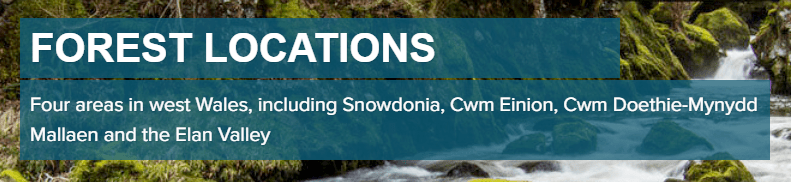
Of the others, Eryri is of course a National Park; Elan Valley is owned or managed by Dŵr Cymru; and Cwm Einion (aka ‘Artists Valley’) is another SSSI that runs up behind Ffwrnais in north Ceredigion.

Which means that all four sites so far chosen for restoration to their imagined pristine state of ‘Celtic Rainforest’ are under some form of public agency control. So why can’t the bodies involved do the work themselves?

Perhaps I’ve given the game away in the title to this week’s piece. The Celtic Rainforest baloney is just another way for ‘environmentalists’ to grab land, and for big business to make money.

Checking the background of Celtic Rainforests I ran across this advertisement put up by Wildlife Trusts Wales (WTW). This is the name of a body that abolished itself on 31 March 2021. So it has no official registered or regulated standing
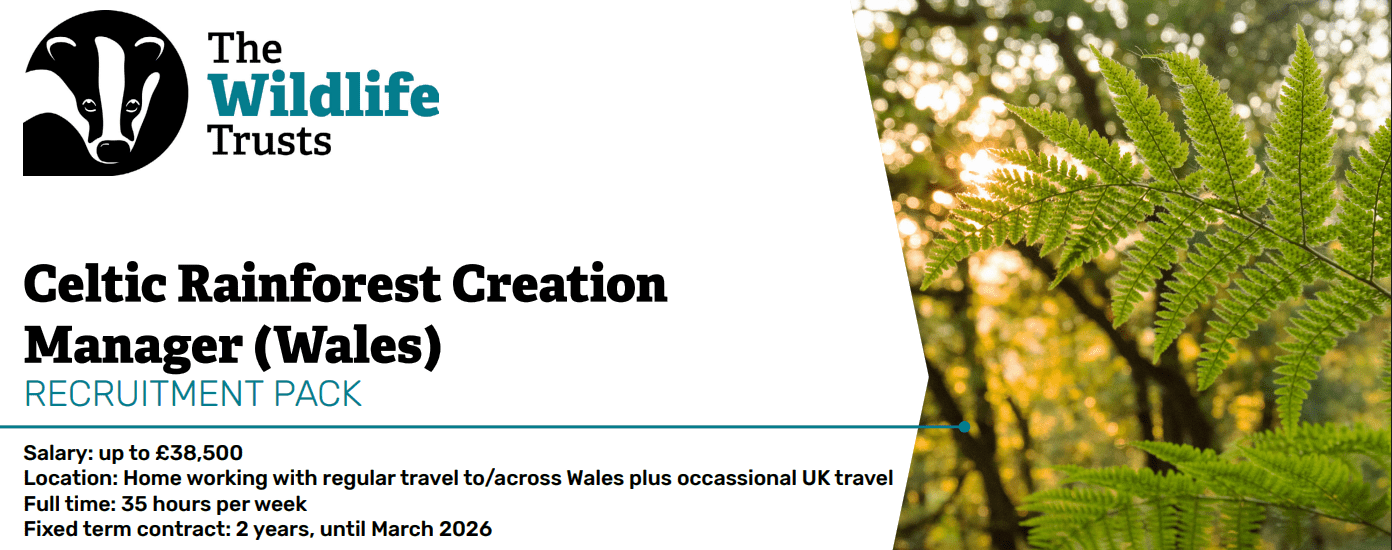
Before that date the individual Welsh Trusts had been represented by WTW in dealings with the Englandandwales Wildlife Trusts (WT). Now they belong directly to WT, just like English county Trusts.

Attributable to the almost complete absence of Welsh involvement in ‘Welsh’ wildlife trusts.

Getting back to the Celtic Rainforests, The manager vacancy was filled by Gethin Davies, who also works for Parc Eryri. Which, if nothing else, explains why the project is based at the Park’s HQ in Penrhyndeudraeth.

Anyway, seeing as this land bought by Tir Natur is already a SSSI, and is to be planted with native trees, how much rewilding will actually happen? Or does planting trees count as rewilding?

To finish this section let me introduce one of Celtic Rainforests volunteers, who believes, ” . . . systemic racism is built into the way we view and use land; how it’s parcelled up and managed.”

For someone I can confidently locate on the political left she’s strangely blind to the class dimension to land ownership. Instead, she prefers a more simplistic, black and white interpretation. Literally! White people bad, everybody else good.

This Rainforests volunteer condemns colonialism but seems blind to a ruling group’s middle class, aligned with corporate capital and serving Globalist aims, working against an indigenous ethno-cultural minority.

Are there any depths of idiocy this anti-white bullshit can’t plumb? Perhaps not; for to believe a US academic this week, drinking cows milk makes you a Nazi.

Arthur Caplan, a bioethics professor at NYU, criticized The Whole Milk for Healthy Kids Act, which President Donald Trump signed into law on January 14. In a blog post, Caplan claimed that whole milk has been used as a symbol by white supremacists.

As you can guess, I’ve had a gutsful of this nonsense. Despite being difficult to take it seriously at times it’s still racism. It must be called out and defeated.

But of course, in this context, it’s another weapon in the anti-farming arsenal.

RHOS-FARCH, PENNAL

If the name sounds familiar it’s because I wrote about this farm in July last year, in the piece, ‘Farming’ – The Globalist Way!’. So this is by way of an update.

Last July I told you it was suspected that Montgomeryshire Wildlife Trust had bought Rhos-farch, a farm of 625 acres overlooking the historic village of Pennal. Here’s how Savills describes the holding.

And here’s a map to help you further. Rhos-farch is coloured in pink.

I can now confirm that Montgomeryshire Wildlife Trust (MWT) received £3,000,000 to buy Rhos-farch. Certainly, that’s what’s suggested in the accounts. The clip below says the money came from Aviva via the Royal Society of Wildlife Trusts.

Note “restore it to Celtic Rainforest“. This is the reason for the funding.

But that clip above also says that Rhos-farch will be “open to visitors as a MWT nature reserve“. We can almost guarantee that some visitors will get lost, or think the nature reserve extends over neighbouring farms.

Seeing as Savills had priced the property at £3,500,000 I wondered if MWT had received money from anywhere else. So I wrote to the self-styled ‘Welsh Government’, asking if any money had come from that quarter.

The answer was no. But I was sent copies of email correspondence, from last summer, between interested parties. Despite redactions we can assume the ‘Welsh Government’ was a participant, if only because it was holding the copies.

Other participants that can be clearly identified from the emails are Wildlife Trusts Wales (conduit for the Aviva money), and the Celtic Rainforest Creation Manager (Wales). Confirming that even though Rhos-farch is not mentioned on the Rainforests website it is obviously lined up.

The wildlife trust’s purchase is not welcomed by locals. Certainly not by local farmers.

One reason for that is the farms in the area, including Rhos-farch, benefit from a local shoot, a useful addition to their income. Of course, Montgomeryshire Wildlife Trust will not allow shooting, and this will impact negatively on other farms.

The issue even got an airing in Nation.Cymru last year, which reported retirees and good-lifers trying to impose their views on locals. The giveaway was the paragraph beginning, “I was upset when moving here that there seemed to be an us and them atmosphere in the village.”

(Of course it never occurs to these buggers to ask how this division arose.)

Thankfully, the answer came later in the piece:

I and all my family are Pennal born and bred, and it winds me up terribly that incomers want to change our way of life and also tell us what we can and can’t do. If all the anti shooting brigades in the village don’t like what we do in the countryside, maybe they should move back to where they came from.

I find it interesting that Nation.Cymru should run this article around the same time as the emails I’ve mentioned were being exchanged. And perhaps as the Rhos-farch sale was being finalised. But N.C is extremely well connected in Corruption Bay.

Though seeing as Rhos-farch is not mentioned on the Celtic Rainforests website, how many other farms, other sites, are being lined up?

One final thought. Rhos-farch was never in Montgomeryshire, or Powys. It was in the old county of Merioneth, now in Gwynedd. So why was it bought by the Montgomeryshire Wildlife Trust?

Is it because the vendors, one of them a senior ‘Welsh Government’ civil servant, live in the old county of Montgomeryshire?

CONCLUSION

If it was simply about preserving and perhaps enhancing rainforests, then I’d be fine with that. We could ban felling, clear the rhododendrons and other invasive species, plant more trees – and then leave it to Nature.

Given that the rainforests I know locally are typically dark, dank places, steep slopes and narrow valleys, no good land would be lost and no one would be inconvenienced.

And the website agrees with me.

You are never far from the sound of cascading water, and with the huge boulders and ravines galore, these forests are an ideal place for adventures.

Adventures“?

That description also tells us these sites are unsuitable for the grazing that is constantly advocated! Though bear in mind that what these areas might have known in the past was not the right kind of grazing.

For that’s how it works when ‘environmental’ arguments are used against Welsh farming. It starts with dreaming up ways to make money, grab land – and then comes the excuse.

Step 1: Think of imaginative ways to achieve the objective.

Step 2: Dream up a ‘problem’ to justify what you’ve decided on.

Deception is the essence of the ‘climate crisis’; responsible for Net Zero impoverishing the West through ruinous electricity bills that drive industry away and make life more difficult for ordinary people.

Feeding off this prime lunacy are associated disorders such as the ‘threat’ from CO2! All too predictably, this is one of the justifications used for the Celtic Rainforests scheme.

It should go without saying that the World Economic Forum (WEF) is to the fore in connecting trees with corporate money-making.

Pushing the same message on the UK level is the Climate Change Committee. Here’s an extract from a CCC report on Wales published less than a year ago.
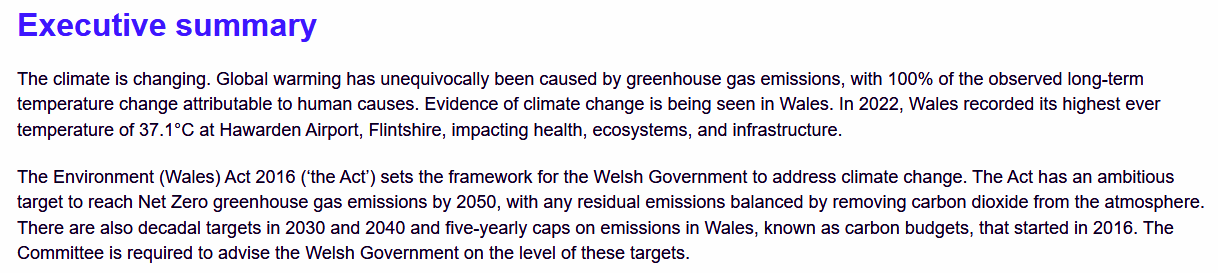
Removing carbon dioxide from the atmosphere“! Life on Earth depends on carbon dioxide. Remove it, and everything – including we humans – dies.

Seeing as we’re talking of rainforests it’s worth remembering that this all started decades ago, in attempts to save the Amazon rainforest, and the rainforests of south east Asia. But more recently, someone realised it could be brought nearer home and used in the Globalist-environmentalist war on farming.

And remember! “Just 4.3% of the entire rainforest landscape is ancient woodland“, says the State of Wales Rainforest Report (page 8). So plenty of room to expand. Plenty more farms to buy.

And who’ll decide what must be ‘restored’? A fair question – because most of Wales qualifies as “Rainforest Zone”.
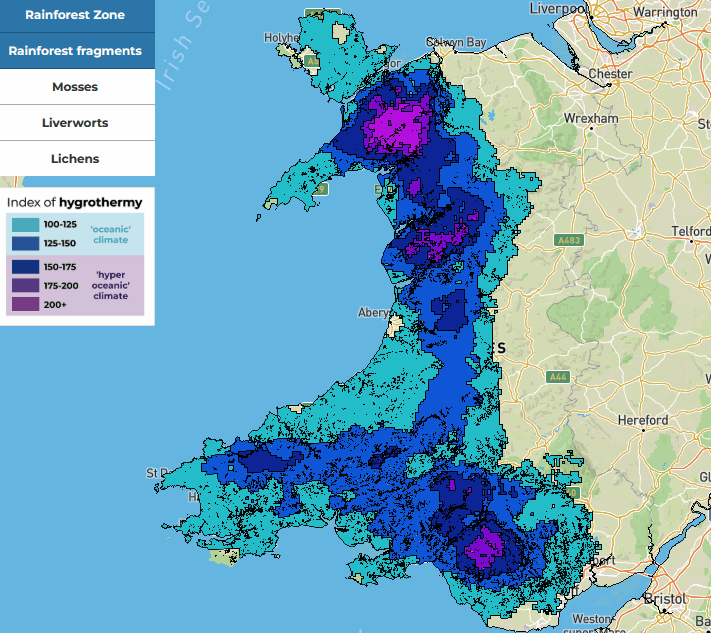
The map comes from an article in Nation.Cymru in October 2022. It seems to be attributed to Guy Shrubsole, whose name crops up a lot in such discussions. The article even names the Elenydd.

Shrubsole is said to have founded Right to Roam, a gang of self-entitled narcissists who feel they have the right to traipse wherever they damn well please. Among their number we find the ‘racist countryside’ woman we encountered earlier.

In conclusion . . . I often watch Neil Oliver’s monologues on YouTube. Neil’s persona non grata with the Beeb for challenging Covid, climate change, and all the other lies. He rambles a bit, and he’s not always right, but he’s a sincere guy.

Anyway, and as Neil Oliver always says: “It’s never about what they say it’s about“.

How true that is. Bear it in mind.

♦ end ♦

© Royston Jones 2026

Buy Me A Coffee

Commoners, Toffs, Envirogrifters

This week’s tale comes from Powys. It’s an old story with a modern twist. Local farmers and others up against those with more money and political clout, with the twist being the environmental angle.

The Crown Estate is involved, and we also encounter that ultimate expression of the environmental scam – ‘natural capital’, which puts a price tag (in the form of grants and subsidies expected) on every blade of grass.

ON THE BLACK HILL

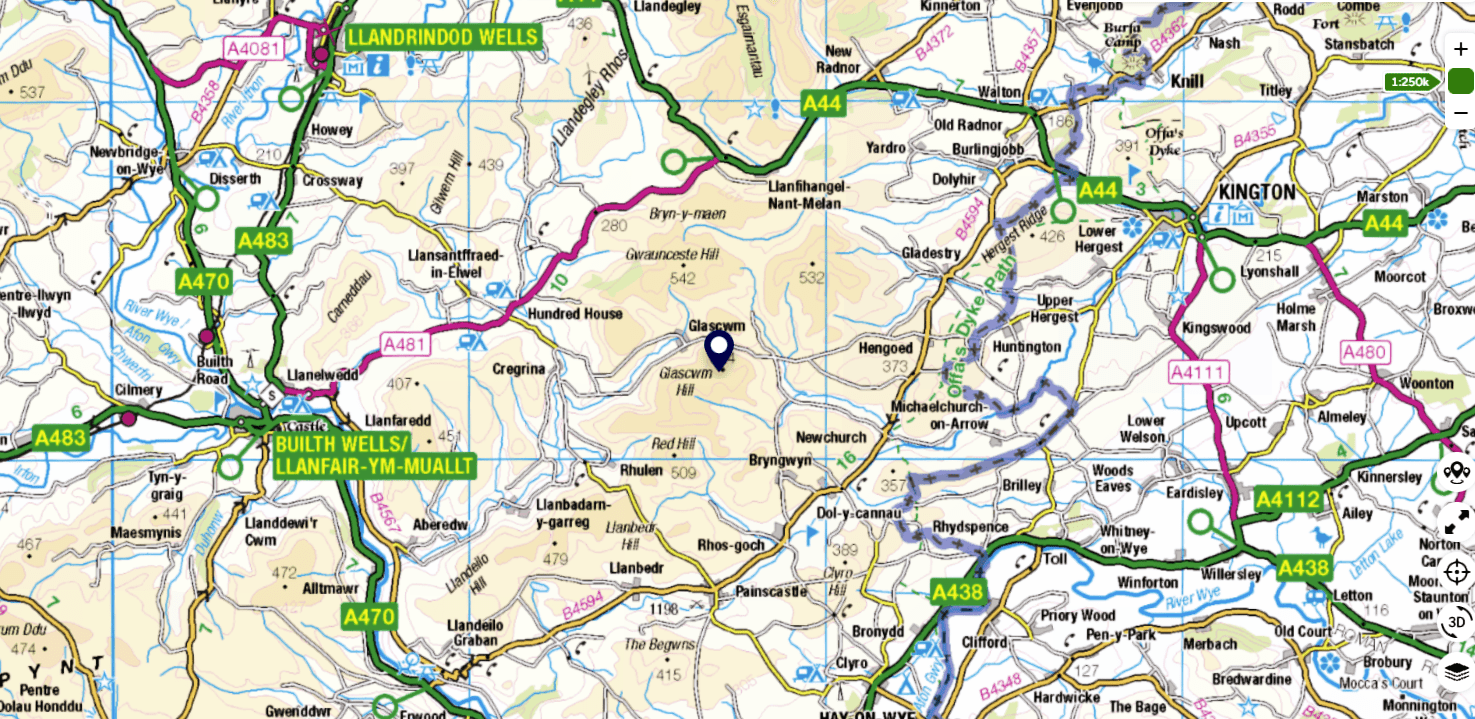
The area we’re going to focus on is roughly halfway between Builth and the border, an area containing Glascwm Hill (pinned) and the Black Hill. There are quite a few grouse butts in the vicinity.

Click to open enlarged in separate tab

For reasons I didn’t query, the area is known as Ireland Moor. This contribution from the Ramblers confirms that and gives a little more information.

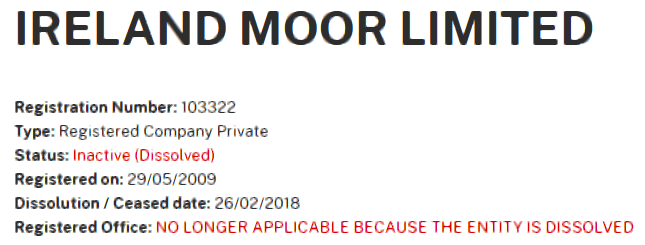
We’ll begin with establishing ownership of the land. And we start with a company called Ireland Moor Ltd (IM), registered in Jersey. Below is a clip from the Jersey companies registry.

Click to open enlarged in separate tab

This company was wound up early in 2018, perhaps because it had been superseded by Ireland Moor Conservation Ltd (IMC), formed in July 2015. For more information, let’s turn to the new company.

The founding director was William Andrew Lewis Duff Gordon, and he was joined on June 6, 2016, by his three brothers. But Tom, the banker, left after just one day. He is with crypto outfit Coinbase.

Let’s turn to the charges for IMC, see who’s owed money.

I assume the first charge is for the purchase of Ireland Moor. The two creditors named are the Jersey-registered Ireland Moor Ltd, and Edward Warren Filmer. But if the land was owned by the Jersey company, does that mean the old company loaned the new company the money to buy the land?

UPDATE 16.10.2024: A comment to the blog tells me Filmer’s full name is Edward Warren Filmer Cabrera, and he’s linked with companies registered in Venezuela.

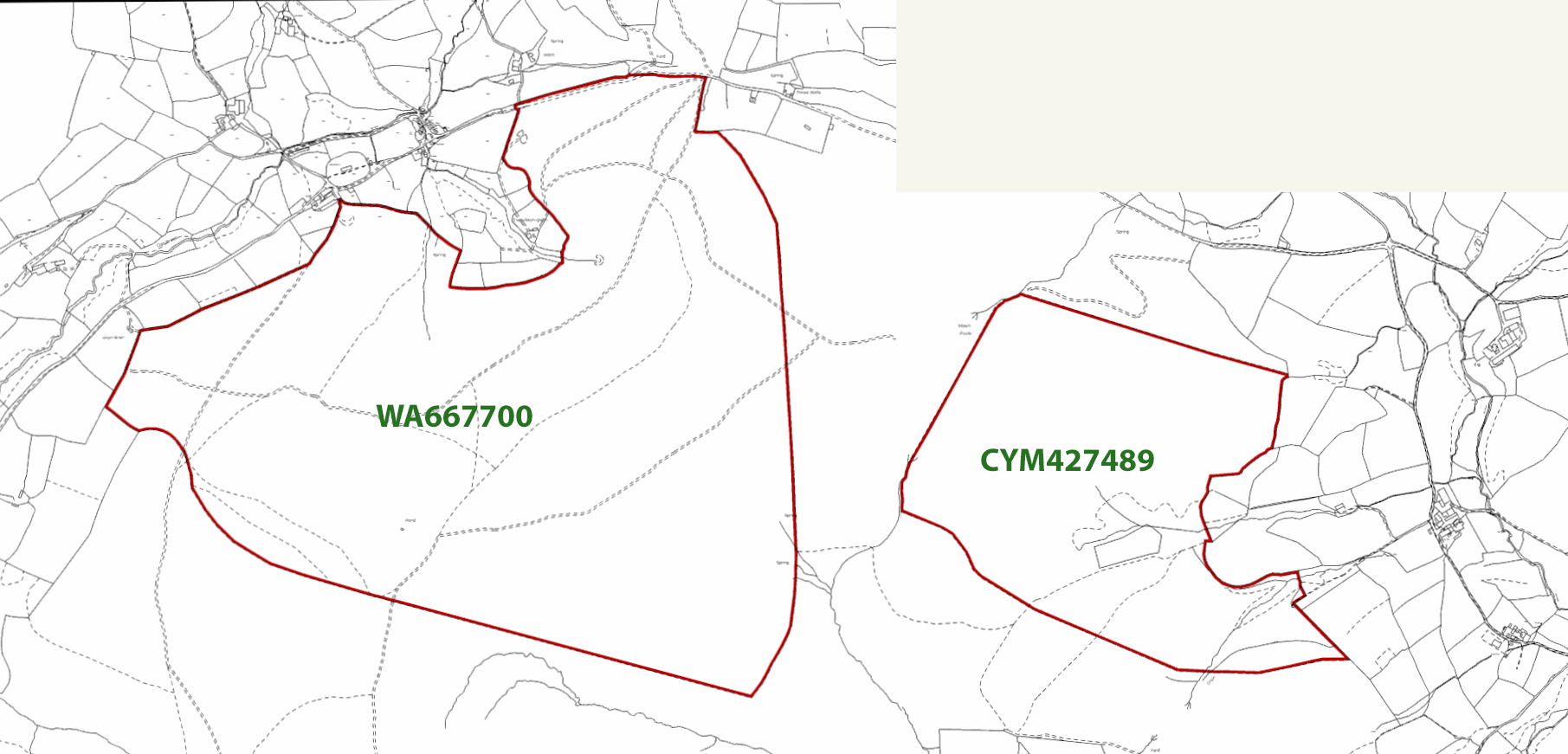
You’ll see four Land Registry title documents shown there, and here they are, in the order listed: WA484809 (no plan available), WA404806 (no plan available), WA667700 (with plan), and CYM427489 (with plan).

I’ve combined the two plans, but it leaves us with a problem.

Click to open enlarged in separate tab

What we know is that the total price said to have been paid for the four titles was £1,160,000. (With £600,000 being mentioned as the buyer’s contribution in the legal charge.) But do these two plans cover the four titles, or are there plans missing?

Seeing as the Jersey registry tells us Ireland Moor Ltd is dissolved, then who now holds the debt against Ireland Moor Conservation Ltd? Has it all passed to the other name on the charge, Edward Warren Filmer?

The only company I can find with which Filmer’s involved is CGM Farming Ltd, formed in March 2015, just a few months before IMC.

Though ‘Farming’ is rather misleading, for this company’s in the business of, “Hunting, trapping and related service activities“. So I got to wondering about the name. Might the ‘GM’ stand for grouse moor(s)? And if so, what could the ‘C’ mean?

The Companies House filings give the address of an accountancy firm in Weybridge, Surry for CGM, but tell us Filmer lives in Wales.

There is another title mentioned on that first charge, under ‘Schedule 1’, page 16. This is against William Andrew Lewis Duff Gordon rather than the company.

Though the dates given in Schedule 1 do not tally with those given elsewhere. In fact, the dates given are before Ireland Moor Conservation Ltd was even formed! Something’s not right here.

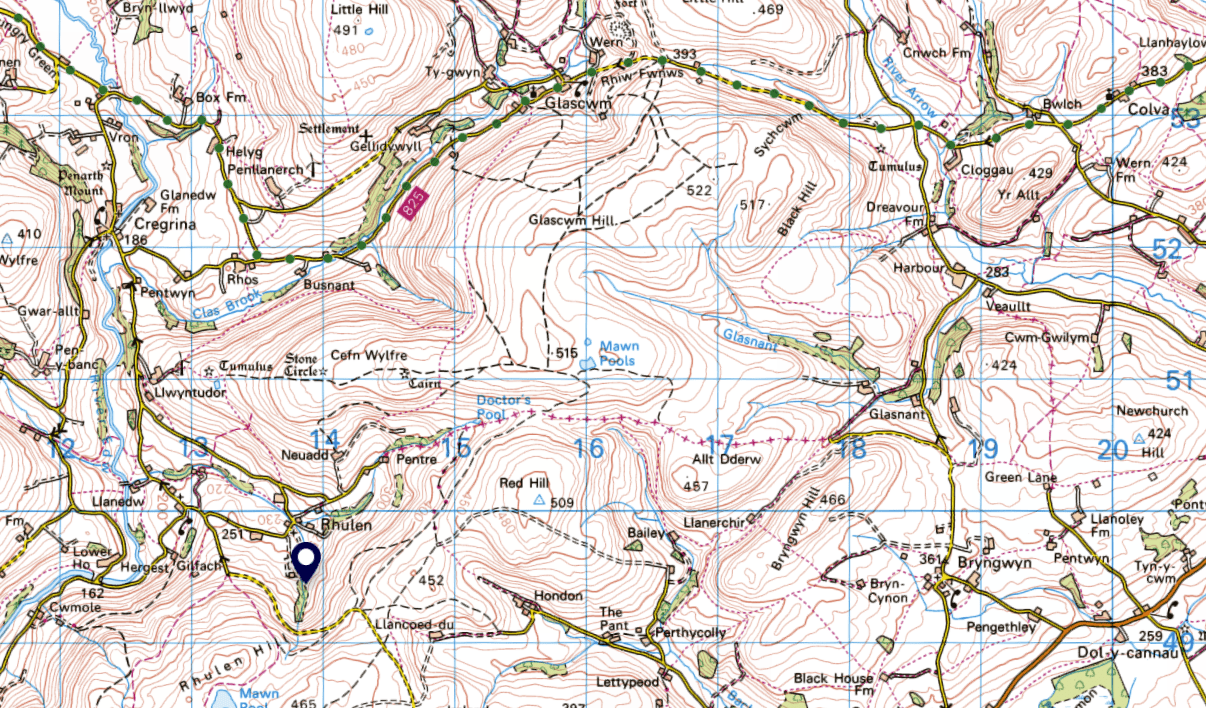
It relates to “land lying to the south of Cwmpiben barn“. (Though I think that should read ‘Cwm-piban’.) It’s for a trifling £40,000. Here’s the title document and plan. And here it is pinned on the OS map. Not a million miles from Ireland Moor.

Click to open enlarged in separate tab

The other outstanding charges against Ireland Moor Conservation Ltd are, first, with Lloyds Bank (December 2016). Another with Lloyds (January 2017), secured against the 7000 acres at Ireland Moor. With a further charge with Lloyds against ‘Gwaithla bungalow’, at Gladestry.

POWYS MOORLAND PARTNERSHIP

The problem relayed to me is that local farmer-graziers fear there are plans afoot that will adversely affect them, and this explains them being kept out of the loop.

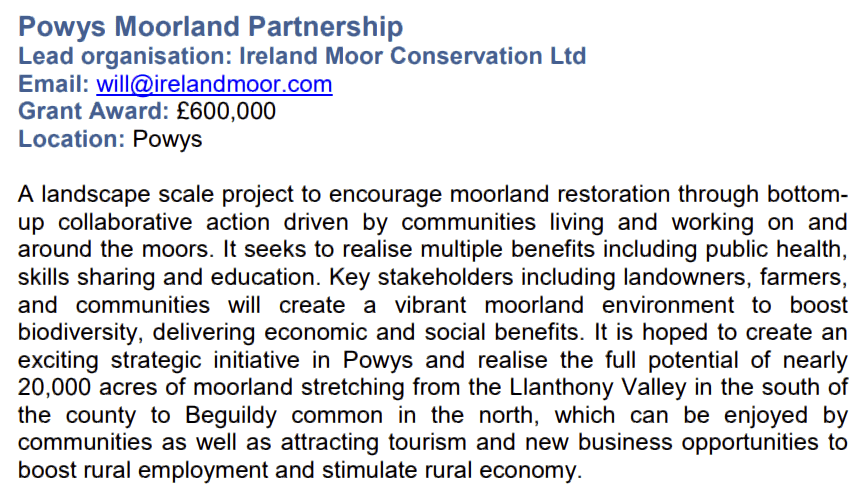
Let’s start with the Powys Moorland Partnership (PMP). I was unable to establish when this outfit began life, but it visited Ireland Moor in September 2017. It’s funded by the ‘Welsh Government’ through the Sustainable Management Scheme.

Where we read . . .

Click to open enlarged in separate tab

I’m sure you’ve clocked the £600,000. Is this the same sum we saw earlier, and which I assumed was the contribution made by Ireland Moor Environmental Ltd to the £1,160,000 purchase price of the four titles?

If so, then what I didn’t know then of course was the source of that money.

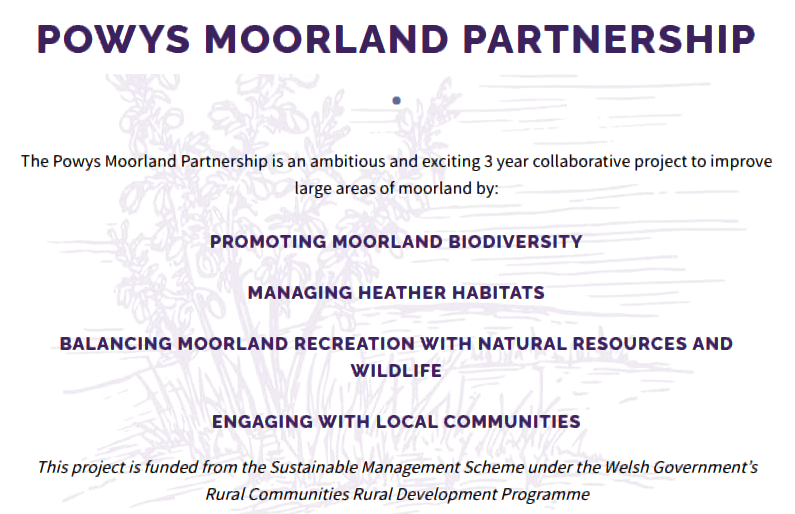
Though there’s also something odd about PMP. On it’s homepage it describes itself as a “3 year collaborative project“, but we know it’s been running for at least seven years. And in that mission statement there is no mention of the farmers who graze the land.

Click to open enlarged in separate tab

So who exactly are the partners in this ‘partnership’?

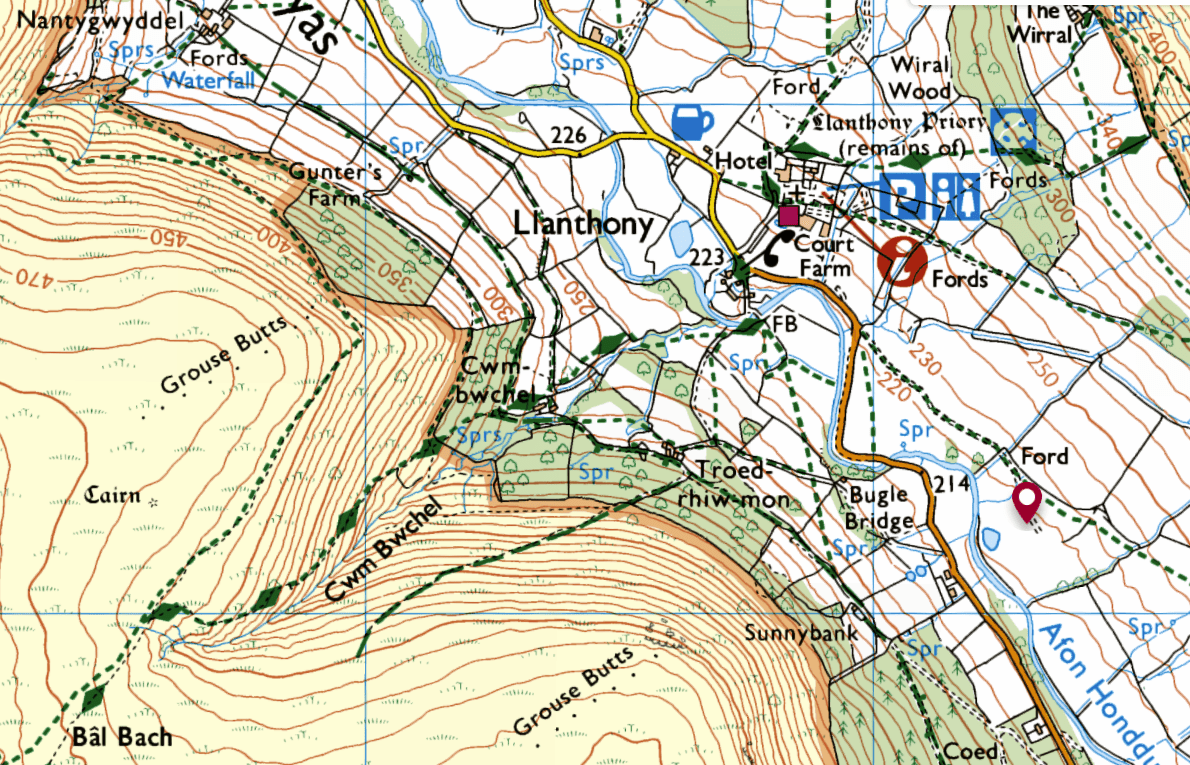
Also note that the capture above, from the Powys Moorland Partnership website, talks of: “. . . nearly 20,000 acres of moorland stretching from the Llanthony Valley in the south of the county to Beguildy common in the north . . . ”

Which is 43 miles by road, and not a lot less for a fit and adventurous crow. What’s more, Llanthony is not in “the south of the county“, it’s in Sir Fynwy (Monmouthshire).

If we’re talking about just 20,000 acres, over that distance, and we know that 7,000 are accounted for on the Black Hill and Glascwm Hill, then the other 13,000 must be scattered about in disparate parcels.

Though something I noticed about Llanthony on the OS map was the proximity of grouse butts. Is that what the Powys Moorland Partnership is all about?

Click to open enlarged in separate tab

Maybe the ‘Welsh Government’, through the Sustainable Management Scheme, and more locally, the Powys Moorland Partnership, has accepted, even encouraged, some kind of alliance between local sporting interests and the environmental lobby.

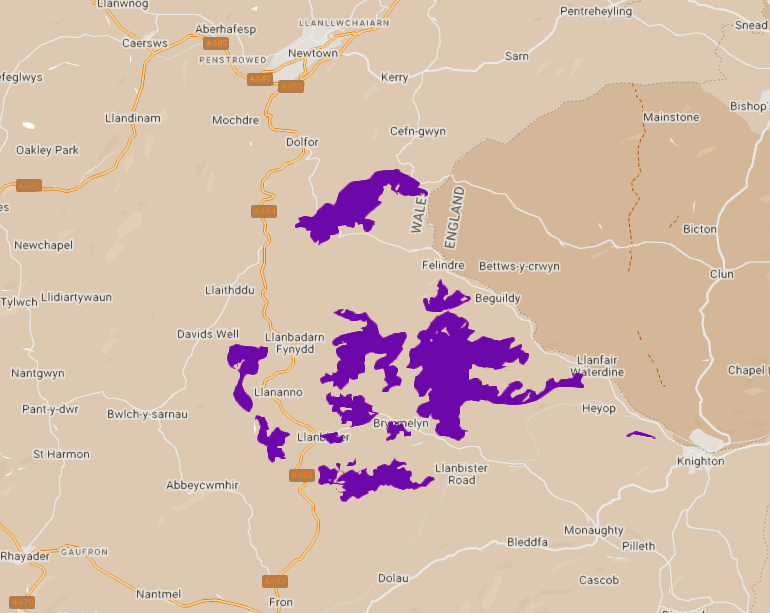
The Crown Estate may also be involved. The map below, by Guy Shrubsole, was available through WalesOnline. It shows considerable Crown Estate holdings in the area.

Click to open enlarged in separate tab

Quite a concentration in a small area. But it all makes sense.

Because it seems the PMP is little more than a vehicle for the Duff Gordons and their circle. Men like Peter Hood who rents the shooting rights on 5000-acre Beacon Hill from the Crown Estate.

Hood of course is one of those listed in the Powys Moorland Partnership’s ‘Who’s Who’, along with his gamekeeper David Thomas. Also there is Will Duff Gordon.

I believe the owners of the uplands we’ve looked at, including the Crown Estate and the Duff Gordons, have reached an understanding with the environmental lobby. The planet savers will turn a blind eye to the killing of grouse and the critters that prey on them to view the whole shebang through green-tinted glasses.

And of course, seeing as some farms might became unviable without their upland grazing the acquisitive interlopers of the local Radnorshire Wildlife Trust (RWT) look forward to more land becoming available.

The RWT has received £1,161,740 from the ‘Welsh Government’ in grants over the past 4 years. And it rises every year! Corruption Bay has no money for farmers, but plenty for those who put farmers out of business, and the scavengers who benefit.

NATURAL CAPITAL

If we go back to the PMP website, we see a tab ‘Natural Capital’, so click on it. The opening paragraph reads:

The term ‘Natural Capital’ refers to the “stock of renewable and non-renewable natural resources (e.g. plants, animals, air, water, soils, minerals) that combine to yield a flow of benefits to people.” (Source: Natural Capital Protocol (2016).

Note the year, 2016. Which ties in perfectly with this document, prepared for the Fifth Assembly (2016 – 2021). Within it we find a contribution by Nia Seaton, asking. ‘Are we neglecting our natural capital?

I think it’s reasonable to assume the ‘Natural Capital’ bandwagon started rolling in Wales in or before 2015. Those ‘in the know’, those with contacts, would have had advance warning.

The natural capital report we’re looking at was prepared for PMP by environmental economist Phil Cryle, Duncan Royle, and Ian Dickie of Economics for the Environment Consultancy Ltd (eftec).

With the efforts of their labour reviewed by Dr Rob Tinch, also of eftec. Cosy!

Those involved clearly envision money being made available in the years ahead from exploiting ‘natural capital’. Yes, I know they want us to see it as conservation, but that’s no longer the motive.

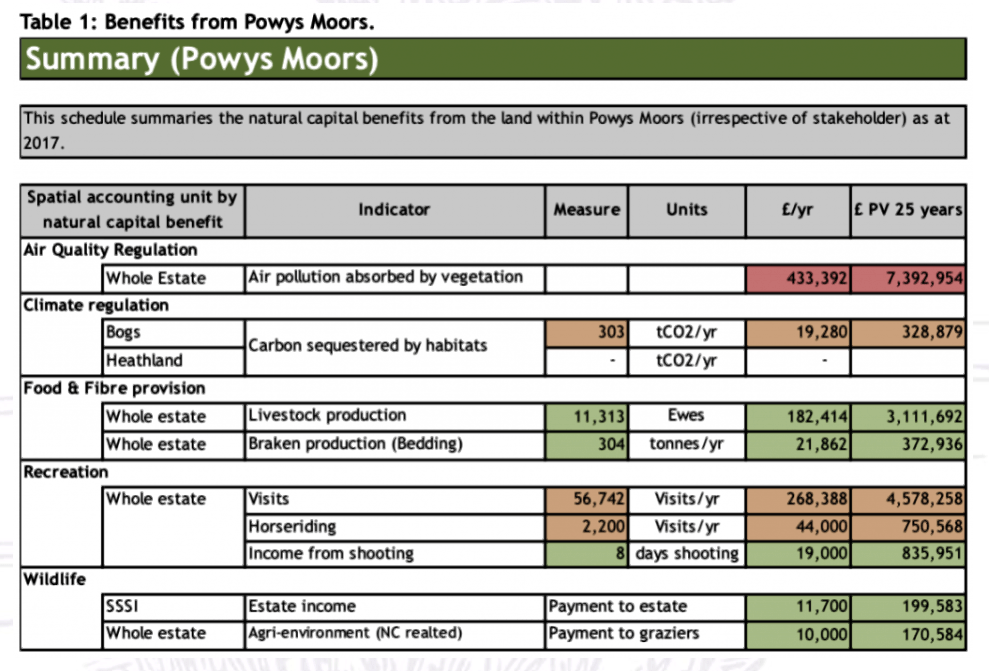
The motive now is to put a price on, and thereby capitalise on, just about every square foot of heather, every cubic metre of soil. Even the air we breathe! And the payment won’t be a warm glow, it’ll be hard cash.

Click to open enlarged in separate tab

And I’m serious about the air we breathe. For as you can see, it’s projected to be a nice little earner in the years ahead.

CONCLUSION

Yet again, we see politicians and others in Corruption Bay throwing money at anybody who can work the magic words ‘environment’, or ‘habitat’, or ‘conservation’, into their pitch for funding. Or into any other way of making money.

Which explains tax haven company Ireland Moor Ltd rebranding itself to Ireland Moor Conservation Ltd. For public money going to a Jersey-registered company would not look good.

The relationship between those two companies, and more especially the ownership of the original company, needs to be established. As does the identity and the role of Edward Filmer.

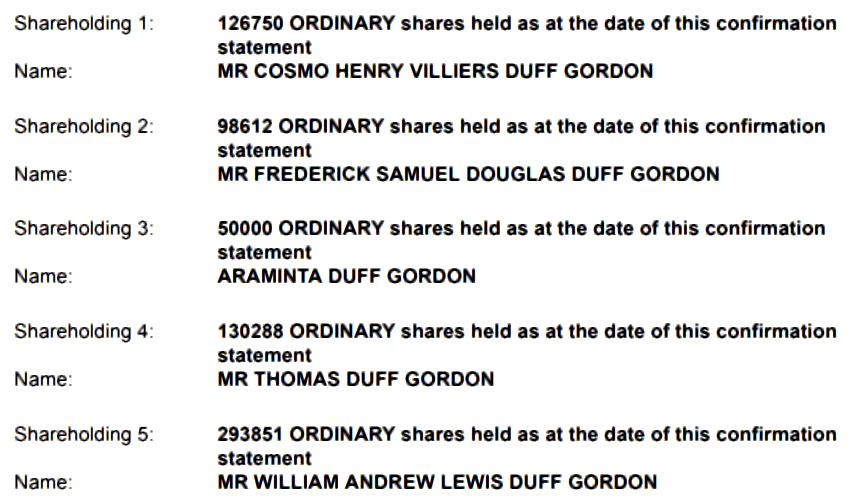
Because I couldn’t help but notice that the other projects funded by the Sustainable Management Scheme have as their ‘lead organisation’ a county council, a national park, a wildlife trust, or a Community Interest Company, but with Ireland Moor Conservation Ltd public funding was given to a private limited company with shares.

And those shares are divvied up within a very wealthy family.

Click to open enlarged in separate tab

Discussions and planning by the Powys Moorland Partners (aka Ireland Moor Conservation Ltd), and certain other parties, seem to exclude the graziers.

You don’t need a crystal ball to see what’s happening here. And where it’s headed. Grouse shooting can be very profitable. And as we read earlier, the ‘Welsh Government’ is already funding gamekeeper jobs via the PMP.

Finally, let’s not forget natural capital, which can be greatly enhanced by activities such as planting trees. Or, to put it crudely, greenwashing. I’m told Aviva, partner to WWF, has been spoken of favourably, and more than once, by the Duff Gordons.

The graziers are being sold out; they and their sheep are in the way . . . and getting rid of them dovetails perfectly with the ‘Welsh Government’s desire to end livestock farming.

♦ end ♦

© Royston Jones 2024