Who Ya Gonna Vote For?

Well, we’re almost there. Thank God! Because this has been the most uninspiring and negative election in the history of devolution.

Never have so many deadbeats, activists posing as ‘journalists’, party hacks, and nut-jobs, wasted their time trying to rouse a people who’ve just lost interest.

RUNNERS AND RIDERS IN HEAVY GOING

This election was doomed to be uninspiring and confusing once Labour rigged the voting system. (Almost certainly with the connivance of Plaid Cymru.) It’s a party list system that no one understands, contested in 16 vast and insane constituencies.

An affront to democracy.

I detailed the various stages of the process just over two years ago in Senedd Cymru (Electoral Candidate Lists) Bill, explaining how better and fairer voting systems were rejected in order to arrive at today’s abomination.

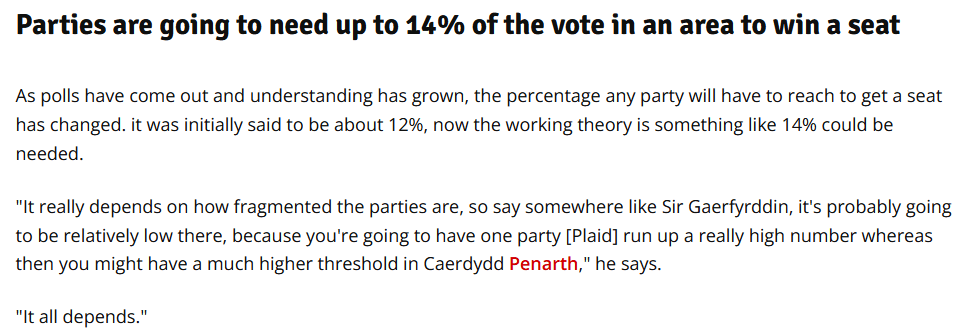
For one thing, it’s designed to make life as difficult as possible for smaller parties and independent candidates. Jac Larner of Cardiff University calculates the system imposes a threshold of 14% before a party can hope to win a seat.
Given the quality of the debate, and the paucity of credible candidates, the election has been uninspiring. But this is to be expected. If a Senedd of just 60 Members attracts only people who’d struggle to run a stall at a village fete, what hope is there of improving the quality when the numbers are increased by over 50%?

And this couples with the negativity I also referred to in the intro. The Globalist Uniparty, the self-styled ‘progressives’, Labour, Plaid Cymru, Greens, Lib Dems, have had little to say beyond – Stop Reform!

There has been nothing positive on offer. Certainly no inspiring vision for the future. But this is only to be expected. Because with the exception of the Greens these are the parties that have failed Wales for 27 years of devolution.

Adding the Greens to the mix – and a potential coalition with Plaid – only offers something worse. While the other components of the Uniparty promise more of the same, the Greens want to double down on the mistakes of the past 27 years, and force on us new ones.

It’s also been a very ‘British’ campaign in that Welsh issues have been crowded out. For the London media has tended to lump the Senedd elections in with the Scottish Parliament and English local authority elections.

Their focus has been London-centric in debating whether Starmer will survive bad results “across the UK“. Treating May 7 almost as a general election, or a vote of confidence in the Labour party in Westminster.

And yet, this neglect of Welsh issues serves the interests of some parties. Plaid Cymru, for example, can blame Labour for the mess Wales is in, while claiming a vote for them is also a vote against the most unpopular PM ever.

Ironically, this is Labour’s old election tactic of urging punters to, “Send a message to London“. Which is what many will be doing, but now it’s working against Labour.

Reform can neglect Wales to focus on the issues that figure with the mainstream media and social media; small boat migrants, net zero, anti-Semitism, high taxes, benefit payments, knife crime, etc. Giving out mixed messages about their attitude towards devolution doesn’t do them any harm either.

The Greens have the advantage of being an unknown quantity, something different. But the Greens are universally and correctly described as ‘the Watermelon Party’. Green on the outside, red on the inside. And now attracting Islamist support.

Plaid Cymru has also been dipping its toe in that toxic oasis pool for some years. Though I’m not sure Mrs Evans in Pencader will take kindly to being told she has to wear a hijab to Capel Sion or else be branded Islamophobic.

As for the Lib Dems, does anybody know what they offer? In Wales it’s that strange Jane Dodds, with the party led at UK level by Ed Davey, who backed the Post Office in persecuting postmasters when UK Postal Affairs Minister from 2010 to 2012.

In short, and Reform excepted, various forms of that curious beast, 21st century Western left-liberalism divorced from any thoughts for the once-idolised working class.

Offering socialism that can only run an economy for as long as other people’s money lasts or – as we’re now learning from Minnesota and elsewhere in the USA – if it can tap in to official funding which taxpayers thought was being properly used.

Few issues lay bare the deceit and duplicity more clearly than race. Here are a couple more things I picked up over the past week on X.
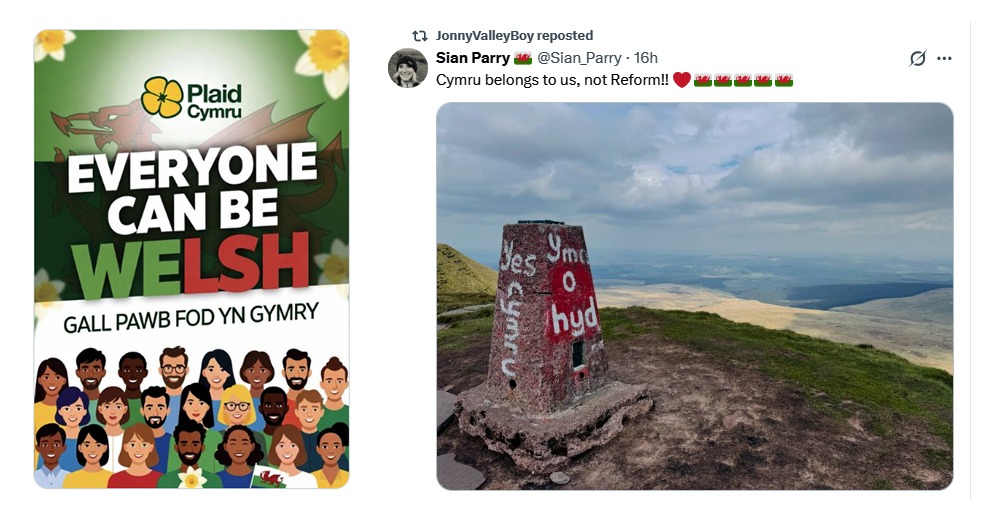
On the left we have Plaid Cymru dreaming of a multicultural Wales in which it seems white people are a minority. On the right, someone claiming that “Cymru belongs to us, not Reform“.

Now I don’t know Siân Parry, so I can’t say for sure that she’s a Plaid supporter, but she’s certainly on the political left. But what is she trying to say? Come to that, what is Plaid Cymru trying to say? Let’s attempt a synthesis.

An illegal immigrant can be Welsh; but someone who is Welsh to their core, speaks the language fluently, ceases to be Welsh – if they support Reform?

How insane, and offensive, that is. And all in the service of some transient Woke nonsense. But too many put socialist dogma and childish obsessions above the interests of Wales.

To continue down this path Plaid risks becoming a full-blown anti-Welsh party.

For that’s the course it seems to have charted, with a Gwynedd councillor suspended for not appreciating that the false god of inclusivity is more important than the Welsh language and the community he was elected to represent.

So sod the Uniparty. And with Reform increasingly looking like controlled opposition, I’d avoid them too.

STUDENT POLITICS AND DYING BIRDS

Twenty-seven years of virtue-signalling, ineptitude, and failure have taken their inevitable toll.

It’s an uphill task for those who’ve run devolution for 27 years to persuade people to forget about bills and hospital appointments, and instead take pride in Wales being the first country to declare a climate emergency, the first to have a Future Generations Commissioner, and to remember that Wales is working to be Anti-racist by 2030.

It’s student politics. And it’s explained very well by a young man named Owain Williams, whose one-minute video I stumbled upon last week.
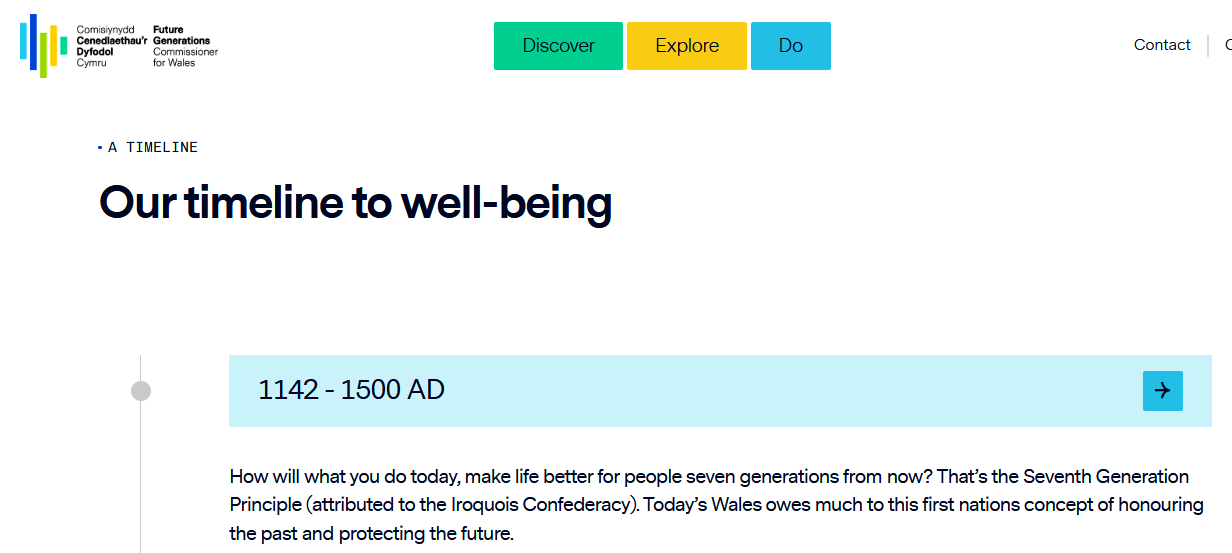
When I saw “Confederacy” my heart soared!

Now student politics is all very well in its place, but the real world is not that place.

Digression alert!

There’s a little quote from Thomas Paine’s Rights of Man that was popular with the left in my younger days. Paine was responding to Edmund Burke’s Reflections on the Revolution in France, in which Burke floridly defended the Ancien Régime. (But still a great read!)

Paine condemned Burke for being more concerned with the pomp of Versailles than with the wretchedness of most French people. It was a radical responding to a conservative, telling him to ignore the ephemeral and focus on the realities.

Paine wrote: “We pity the plumage, but forget the dying bird“.

We can turn this on its head in 21st century Wales; for here it’s the radicals, the progressives, who obsess over the plumage, the ephemeral. But who ignore the dying bird, Wales.

And things won’t get better if we let Plaid Cymru take over. For Plaid, either alone or in alliance with their new wobble-headed pals in the Greens, will only push us harder and faster down Disaster Road.

But on the plus side . . . breast enlargement will be available on the NHS from fully-trained tit whisperers, all accredited by the Zack Polanski School of Woo-Woo.

Let’s be honest, devolution has been a disaster for Wales, and so replacing one bunch of bullshitters with another won’t make a bit of difference. And people know it. This piece from last week’s Western Mail says it all.
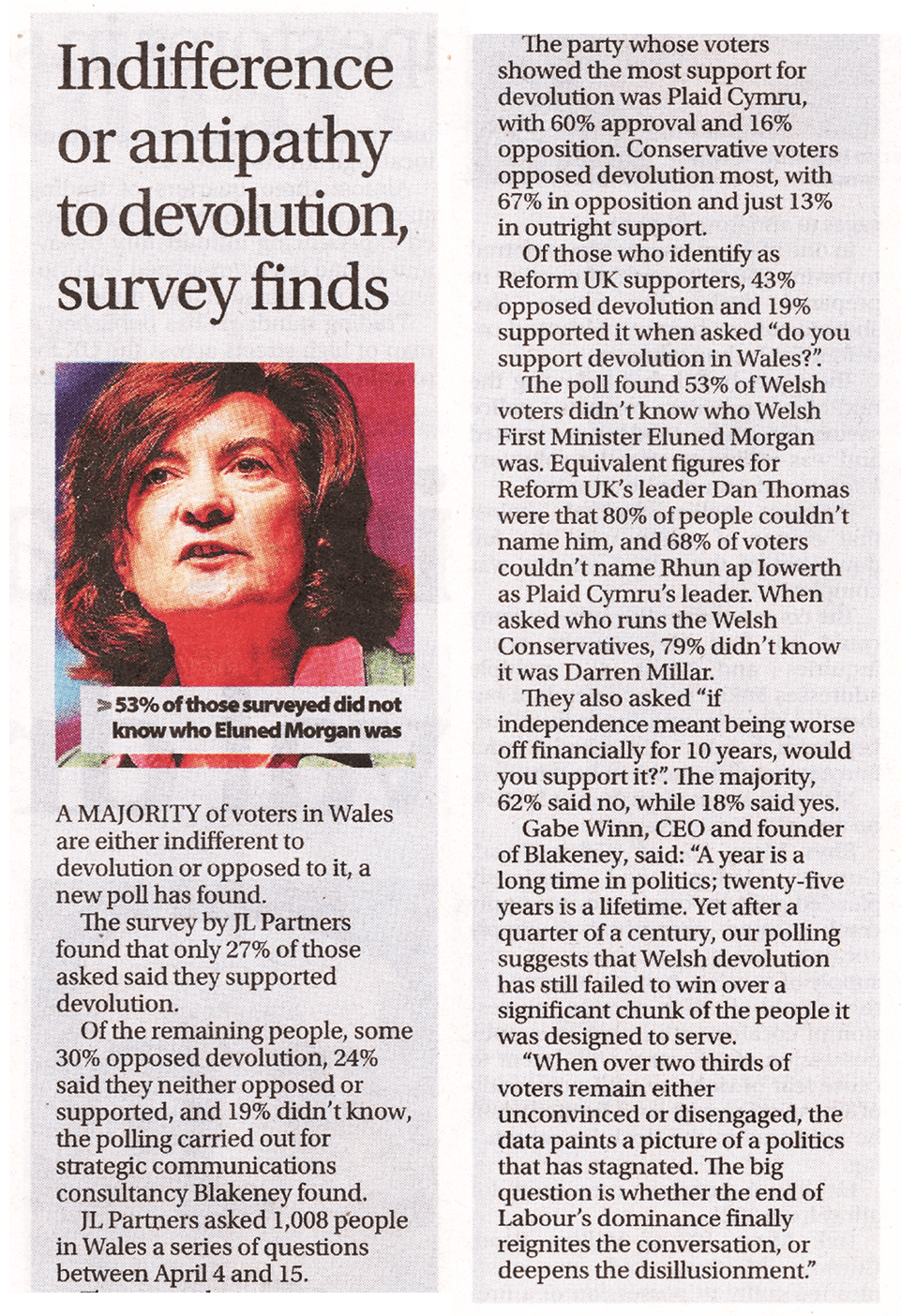
A majority of voters in Wales are either indifferent to devolution or opposed to it . . . only 27 per cent of those asked said they supported devolution“. A majority of those polled couldn’t name the first minister.

But what do you expect after 27 years of failure that has alienated people from the whole idea of devolution, and they see no hope of improvement?

IS DEVOLUTION EVEN DEMOCRATIC?

A fundamental problem of devolution, and the main reason for being subjected to policies for which there is little public support is the hangers-on, the influencers, the pressure groups, the lobbyists, that attach themselves to the politicians, to by-pass and subvert the democratic process.

You vote for a party that promised this that and t’other but you end up suffering legislation that was never in the manifesto and on which you were never consulted.

That’s because most of the Uniparty members in the Senedd went into politics to promote their pet ishoos rather than represent the constituency for which they were elected. Many came from charities, pressure groups, and lobbying organisations.

The aptly-named ‘Swamp’.

Take Lee Waters. Ostensibly the Labour Senedd Member for Llanelli (though he actually lives in Penarth). Waters had worked for cycling charity Sustrans (renamed Walk Wheel Cycle Trust), and was instrumental in bringing in the 20mph legislation.

There was a petition opposing 20mph that raised almost 470,000 signatures – but the self-styled ‘Welsh Government’ ignored it.

While other petitions, with little support, result in legislation – because the issue promoted lines up with the Uniparty agenda. You even get your photo took with some gurning politico in a presentation ceremony!

On the left in the image below is Mike Hedges, Labour SM for Swansea East; on the right, Natalie Buttriss, who’s represented a number of bodies trying to grab Welsh land under various ‘save the planet’/’biodiversity’ guises.
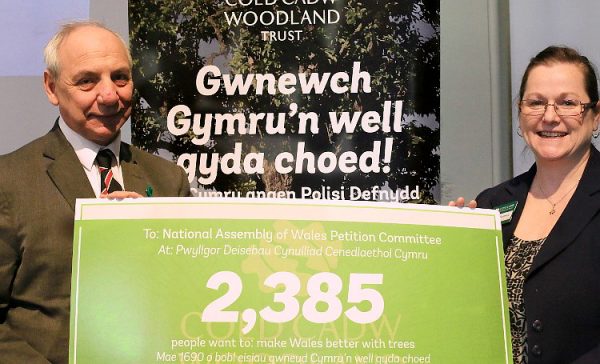
Red carpet treatment – and a chance to meet Mike Hedges! – for just 2,385 signatures!

That’s democracy, folks; the Voice of the People . . . being ignored.

Saying loud and clear that devolution is a sham. But we’re expected to believe it’s going to get better because – just like socialism – it hasn’t been properly tried yet.

Worse, there are those believing Wales could survive as an independent country with the same calibre of politicians pursuing the same policies.

This goes beyond the definition of insanity attributed to Einstein.

At present, all the lunacies we endure from Corruption Bay are funded by the block grant from Westminster. Take that away with independence, and give full powers to politicians who understand nothing about economics, but who will be determined to pursue the same Globalist-Woke agenda, and Wales will go broke within 5 years.

Then it’s into the clutches of the EU and the World Bank; allowing land and other assets to be bought up by BlackRock and the like to give the impression of economic activity, or inward investment.

Socialism has never worked as an economic model. Which explains why the only ones pushing it are either still wet behind the ears or have jobs for life on the public payroll.

CONCLUSION

Plaid Cymru believes that a few years of the party running the Senedd will win people over to the idea of independence. Thinking of Scotland. They’re wrong.

After the SNP took control in 2008 (as a minority government) it increased its popularity under the leadership of Alex Salmond. To the point where it almost won the 2014 referendum on independence.

But Salmond, in addition to being a very astute politician and a great debater, was an economist. You know, the real world economy. He persuaded many Scots, and many economists, that Scotland could be better off as an independent country.

And it almost worked. I was in Scotland for the referendum, and I know that the polls just before the vote were showing a majority for Yes. The London parties panicked and came out with ‘The Vow’, promising Scotland just about everything short of independence.
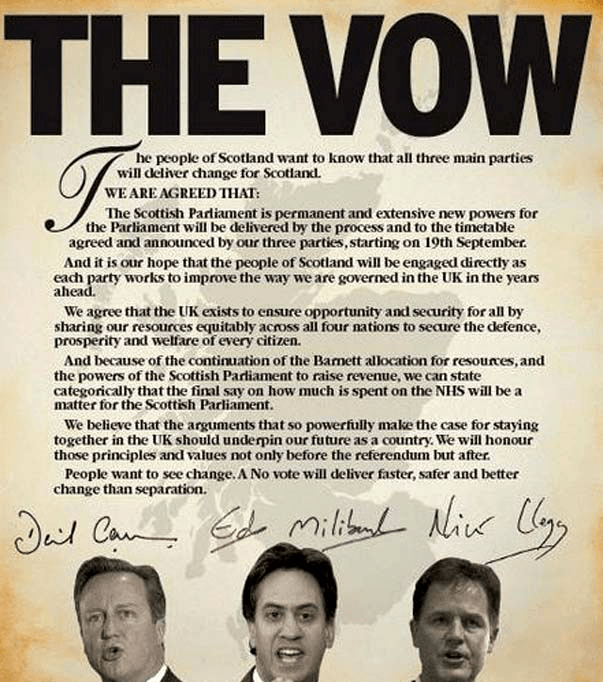
That swung it and the vote was 55 – 45 against independence.

Worth noting that the Labour leader at the time was Ed Miliband. Who – like Cameron and Clegg – understood that a great part of the appeal of independence was the promise of oil and gas revenues staying in Scotland. So maybe him closing down North Sea oil and gas fields isn’t just about saving the planet.

Whatever, and to get back to Wales, Plaid Cymru knows nothing about economics; I think the last genuine economist in their ranks was Dr Phil Williams, a good old stick despite everything, but he died in 2003.

Wales has no oil and gas fields to speak of. And there’s been no attempt to develop an indigenous economy over the 27 years of devolution. Funding cronies and charities to run make-believe ‘businesses’, and allowing carpetbagger companies to exploit Wales, is a third world economy.

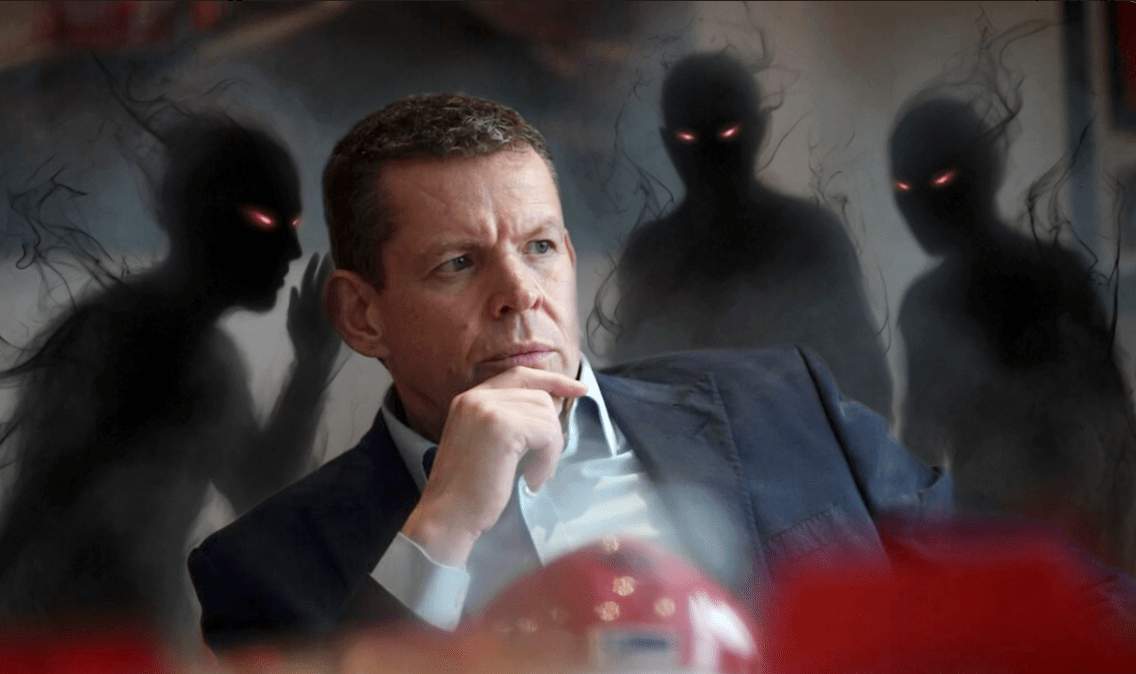
All Plaid Cymru offers is more of the same, with a different spin. Because while Rhun ap Iorwerth may come across as an affable sort of guy, behind the scenes, still running the show, are dark forces from Plaid’s recent past.

And if Plaid gets power, especially in a link-up of some description with the Greens, then even nastier specimens will start popping up.
Wales needs radical change, in the form of a return to the eternal verities and facing up to economic realities. The Uniparty will never be allowed to provide this. Reform gives no thought to Wales beyond getting votes to pursue a different agenda.

Here’s Owain Williams again. I don’t know his politics, but I suspect they’re not a million miles from my own.

The only sensible option is a party that puts Wales first and foremost. One that prioritises the economy we all need. That understands Wales needs real jobs not more gesture politics. That teaches our children to think for themselves rather than brainwashing them. That won’t wage war on the family farm. Or the family unit.

The only party that fits the bill is Gwlad. Of course, Gwlad can’t win this time round, they don’t have the strength yet. But they’ll grow and, with fair media coverage, be back stronger next time. In the meantime, I’m sure Gwlad will be fighting for Wales in council elections and other ways.

The only Welsh party willing to address people’s real world concerns is Gwlad.

♦ end ♦

© Royston Jones 2026

Buy Me A Coffee

Port Talbot

Yes, I know, Port Talbot isn’t the only Tata plant affected by the company’s decision to put its UK operation up for sale, but it is the biggest, and serves as useful shorthand.

Rather than giving instant remedies or exposing my ignorance by trying to discuss EU regulations on state aid, or the impact of carbon tax and business rates, let alone the statistics on Chinese steel production and exports, I shall stick to my comfort zone by considering political responses and impacts, winners and losers, and also the possible outcomes.

But first, let me indulge in a little reminiscing.

*

I grew up just around the Bay from Port Talbot steelworks and I can remember the plant in the mid-’60s when it employed 20,000 men and the wages paid earned it the soubriquet ‘Treasure Island’. Much of its steel went on to the tinplate works at Trostre in Llanelli and Velindre on the north side of Swansea (where I worked for a short while). Velindre is long gone, but Trostre has struggled on and is now in the same position as Port Talbot.

And if you’ve driven past and think the smells and the smoke of Port Talbot are bad nowadays, then you should have seen it in the ’60s and ’70s. It wasn’t just that the steelworks produced more smoke and smells back then, there were other plants nearby making their contribution.

Just up the road, on the Swansea side of the steel plant, in Baglan Bay, we had one of the largest petrochemical sites in Europe, employing another 2,500 men. A couple of miles inland there was the Llandarcy oil refinery with the same number of employees. Then there was the Tir John power station taking us up to the eastern outskirts of Swansea, where the East Side made its contribution to the shit and the smell with the never-to-be-forgotten Carbon Black plant.

Llandarcy

This spewed out such filth that it resulted in regular protests by local housewives, who couldn’t put washing on the line to dry without it being covered in a dust that also got indoors and clung to everything.

My first-hand experience of Carbon Black came through a summer job I took when at Coleg Harlech. I was employed to sweep the floors inside the plant, where the filth lay inches thick. I was provided with a brush and a rudimentary face mask . . . and that was it. I handed in my brush after a few hours and went to a nearby pub to ease my throat.

The whole area from the east side of Swansea over to Neath and down to Port Talbot was a complex of heavy industry, a nightmare for any proto-Green. And yet, if we add in Swansea docks, the ancillary jobs in transport and other fields, this triangle of smoke and smells provided tens of thousands of well paid jobs for semi-skilled and unskilled men. Most of these jobs have gone, and will never be replaced.

I had many friends and family members working at these various plants, and of course at the steelworks, and not just for the then owner, the Steel Company of Wales. For example, there was a boy I met in Penlan school with whom I became good friends (after the introductory fight); his family had come down from Kilmarnock and his father worked for British Rail in the steelworks’ marshalling yards, said to be the biggest in the world after those at the Chicago stock yards.

Then there was a friend of ours in the post-school era working in the steel works. One night he went over to Port Talbot to hear a promising young singer named Tom Jones. On the way back into Swansea, driving along the Jersey Marine in his Wolseley 1500, he was somehow thrown from his car, which then rolled over onto him. I think Keith was the first close friend I lost.

*

THE POLITICAL DIMENSION

The Conservatives

I suppose the Tories’ attitude was summed up accurately and succinctly by Paul Mason when he wrote, ‘Steel Crisis; they do not give a shit’. There are a number of reasons for this being true beyond the Tories being wedded to a blind and unthinking neoliberalism.

The future the Tories envision for the UK is of smart people doing clever things and making lots of money in clean environments with the economy topped up by sheikhs and oligarchs investing hundreds of billions in property and other deals that can be accomplished with a signature. Fundamentally, it’s a fantasy world in which people make lots of money doing very little, certainly not from producing anything other than hi tech gadgetry or financial packages that no one can understand.

There is no place in this vision for steel works and towns like Port Talbot. Such places are alien to Old Etonian politicians. Not only are they distant in terms of miles, and in considerations of social class, they are also distant in time, because they belong to the past, they have no place the glittering future I bewitched you with in the previous paragraph.

Gold cars

Of course, one of the major problems with this vision is that it’s very London-centric, extending only as far as the Home Counties in which many of the new elite will be living. Because you can bet that Sheikh Mohammed bin Slaveholder al Head-chopper is unlikely to be looking for a £30m mansion in Llanelli or Scunthorpe any time soon. Which explains attempts to placate the increasingly resentful natives north of Watford with ‘beads’ like HS2 and talk of a ‘northern powerhouse’.

On a more pragmatic, electoral level, the Tories have nothing to lose in towns like Port Talbot or any similar community in Wales, Scotland or England. You can’t lose support or seats if you haven’t got any to start with. So the truth is, as Paul Mason says, the Tories don’t give a shit.

Unconvincing expressions of concern will be heard, money will be doled out – there might even be a short-term nationalisation – but this hiccup will not be allowed to interfere with the march towards the post-industrial Bright Tomorrow, in which the sons and daughters of today’s Port Talbot steelworkers will be City traders or internet tycoons . . . or, more likely, working just up the road at the vast Amazon warehouse, on the minimum wage, with one toilet break a week.

Though it will be interesting to see how the local Tories deal with the steel crisis in the Assembly election campaign. Who will they blame?

*

The Labour Party

For Labour the steel crisis is much more complex and worrying. Not least because it was the equally laissez-faire New Labour governments that helped get us into this mess by nodding through British Steel’s merger with Koninklijke Hoogovens of the Netherlands in 1999 to form Corus, and then twiddling their thumbs when Corus was bought by Tata Steel of India in 2007.

The New Model Labour Party of Citizen Corbyn seems rather more concerned than the party led by Blair and Broon, but there’s little they can do out of power. Though in fairness to young Owen ap Dai ap Smith he didn’t wait for the fat lady to sing before putting the boot in, here he is at the start of February accusing Cameron and Osborne of kissing China’s arse!

Another scion of an anti-Welsh Labour family, the Boy Kinnock, actually took himself off to Mumbai, where the Tata board was deliberating. Quite what he hoped to achieve beyond a little self-promotion is a bit of a mystery. But then, showboating was always part of his father’s political repertoire, though I advise the young ‘un to avoid beaches with incoming tides.

Labour logo

Closer to home, our self-styled ‘Welsh Government’ can only be compared to rabbits caught in the headlights. There are a number of reasons for this. One, they have no experience of business, let alone business on this scale. Two, they simply aren’t aren’t up to the challenge intellectually. Three – and for this they are probably thankful – they don’t have the power to do anything.

That said, this announcement comes at a good time in the electoral cycle for ‘Welsh’ Labour, with Assembly elections just over a month away they can blame the ‘heartless’ Tories for everything and hope that voters don’t remember their party’s role in this tragedy.

And as usual there will be a cynical appeal to the ignorance and confusion of many Welsh voters as Labour – despite being impotent in Cardiff and in opposition in London – urges people to vote for Carwyn and the gang so that Labour can ‘save Port Talbot’.

*

Plaid Cymru

The steel crisis should be Plaid Cymru’s Christmas, Easter and St David’s Day all rolled into one. It gives them the chance to attack both major parties, English rule, and foreign ownership of Welsh assets. Thus far, I can only assume that Plaid is waiting its chance, holding its cards close to its chest . . . or maybe it doesn’t realise it has these cards.

I would suggest that rather than asking for anything absurd or impossible – such as demanding that the ‘Welsh’ Government nationalises the steel industry – Plaid Cymru should gather the evidence on the merger and the take-over that Labour allowed to go through when in power, and the Tories’ opposition to the EU raising tariffs on Chinese steel, the refusal by both parties to reduce energy costs for plants like Port Talbot, and compare those betrayals of the Welsh people with what Plaid Cymru would do if it was in power down Cardiff docks.

And stressing a betrayal of the Welsh people should be Plaid Cymru’s approach, rather than going all socialist and linking arms with Labour and the trade unions. Because unless Plaid Cymru’s voice is distinctive, and distinctively Welsh, then there’s really no point to Plaid Cymru, in this debate, or any other situation.

*

Liberal Democrats

I know I’m normally harsh on the Lib Dems, but over the years it’s been difficult not to be harsh, and at times almost impossible to take them seriously. And then, in my more mellow moments (not always induced by alcohol!) I think, ‘Weeel, maybe they’re not too bad’. ‘What brings this on?’ you ask.

To start with, there’s Kirsty Williams, the LD leader in Wales. Things have been tough in recent years for her party but she’s stuck with it and deserves a break. She’s a gutsy woman who I’m warming to.

Another LD AM who’s impressed me is William Powell. For one thing, he turns up at Cilmeri in December, where we rarely see Plaid politicians and never Labour or Conservative. (Nor UKIP, come to that!) And then there was the petition I submitted to the Assembly asking that it do something to stop chief executives taking over councils.

Petitions Committee

It was clear that Powell recognised the importance of this issue but the two committee members who ‘discussed’ my petition, Labour’s Joyce Watson and Plaid’s Elin Jones, couldn’t dump it quickly enough. Powell might get my second vote on May 5th.

But I digress.

On the specific issue of the sale of Tata’s UK operations, the Lib Dems – in the shy, retiring form of Peter Black – have called for the Notional Assembly to be recalled. Which might sound like a good idea until we remember that the Assembly is impotent, and what calls itself the ‘Welsh Government’ is nothing but a collection of buffoons. A recall would be nothing more than a pointless gesture and a platform for narcissistic buggers like Black.

In many ways the Lib Dems’ position should not be a lot different to that of Plaid Cymru – ‘A pox on both your houses!’ So I would suggest that Kirsty leads her troops forward with all guns blazing . . . hoping few will remember that her party kept the Tories in power between 2010 and 2015, during which period the problems that have brought us to this crisis were allowed to build and build.

*

The Wales Branch of the Green Party of Englandandwales

They won’t like me for saying this, but I know that the Greenies were secretly jumping for joy when they heard that all those smelly, polluting steel plants are to close. But of course they can’t admit that.

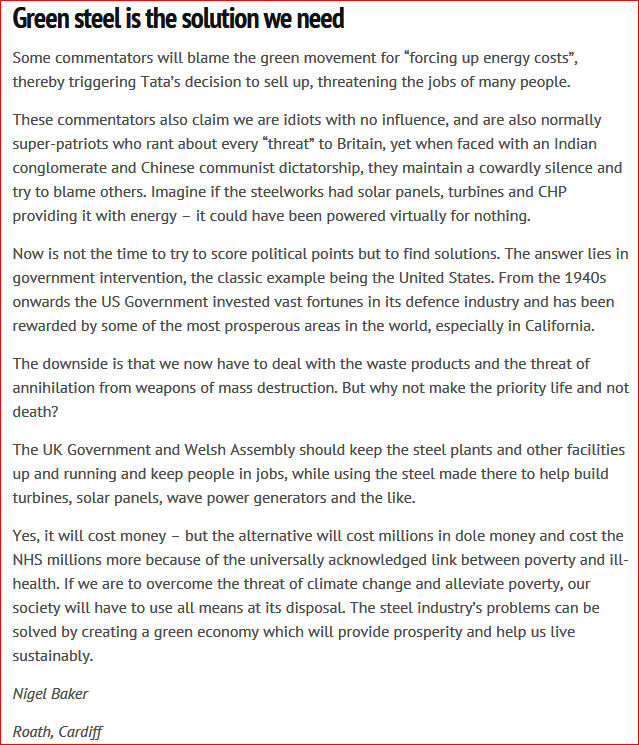
What they can do, apparently, is write stupid letters to the press, such as the one below that appeared in Friday’s Wasting Mule. The writer seems to believe that the Port Talbot steel works can be powered by wind turbines, solar panels and fairy dust.

Then again, it could have been a piss-take, for Friday was April 1st.

Green steel

I issue these rebukes with a heavy heart, fearing that I might lose some of the many friends I’ve made in the Green Party over recent years. Oh yes.

*

UKIP

If any political party is crass and insensitive enough to make cheap political capital out of tens of thousands of people losing their jobs, then of course that party is UKIP.

Not only does the steel crisis give M. Farage et Co the chance to go nuclear on ‘Europe’, it also provides the opportunity to put the boot into Conservatives and Labour, with the cherry on top being the chance to have a go at the Chinese, the Indians, and just about anybody else they can think of.

UKIP will I’m sure argue that this steel crisis thingy would never have happened if everything was still managed by those splendid chaps down the clubhouse. Better decisions are made after six or seven drinks and a few cigars – everyone knows that! Don’t laugh, a lot of people will believe them.

A few months ago UKIP was predicted to win anything up to nine seats in May’s Assembly elections then, more recently, I’ve seen polls suggesting that support is slipping. The steel crisis could put them back to where they were earlier in the year, and the Tory-supporting media transferring the blame onto the EU might even take the UKIP vote in Wales to new heights.

However you cut it, UKIP is the party with most chance of gaining in May’s elections from the steel crisis.

*

SNP

Yes, I know what you’re thinking, but bear with me.

There were a couple of steel plants in Scotland, admittedly much smaller than Port Talbot, that were saved from closure in the past few weeks thanks to decisive action by the Scottish National Party government. Here’s a report from the Guardian.

But this action didn’t please everybody. Here’s a more recent report from the Labour-supporting Daily Record (the Scottish version of the Daily Mirror) telling us that the Labour-controlled Community union is ‘questioning’ the deal.

To explain . . . there are elections in Scotland on May 5th also, and the SNP is almost guaranteed to win by a landslide. So one interpretation of this bizarre intervention by Community is that embittered Labour supporters are prepared to sabotage the Scottish steel deal for short-term political advantage.

Surely Labour wouldn’t do that?

Oh, yes, and remember, the Boy Kinnock was chaperoned on his trip to India by representatives of the same trade union. Whose interests were they looking out for – the steelworkers or the Labour Party?

*

EU Referendum

Speaking of the EU reminds us that on June 23rd we have the referendum on whether to stay in or to leave. The fate of the steel industry is bound to influence the way many people vote, especially in Wales. And seeing as Wales gives us the paradox of many Labour voters reading English Tory newspapers then prolonging the crisis can only help the Brexit cause.

Thinking more obliquely, this realisation that the steel crisis could decide a currently too-close-to-call referendum might prompt the EU into action; and if Cameron is serious about staying in the EU, then he might have to discreetly explain to his Chinese chums that – until the referendum is won – he might need to sound a little ‘hostile’, even agreeing to raise tariffs on Chinese steel imports.

When you consider all the possible ramifications you realise that, serious as the crisis in the steel industry is for those directly – or even indirectly – involved, the closure of Port Talbot and the other plants could have long-term and far-reaching implications that overshadow the loss of jobs.

In many ways Prime Minister Cameron is the one to watch, because with the EU referendum complicating things, him not wanting to be seen as a callous toff, yet having to protect the interests of his mates in the City by not offending the Chinese, the next few weeks could be interesting for those who like to watch nifty footwork.

As the Chinese themselves are reported to say, ‘May you live in interesting times’. (Though some say it’s delivered as a curse, not a blessing.)