How Many Wind Farms Are Really Planned?

This is another ‘quickie’, which I’m putting out partly so people can be aware of what might be in the pipeline, and also to see if anyone out there can add a little meat to the bones.

WHERE WE AT?

As is my wont, I’ll start by showing you the area in question. It’s some two or three miles south or south west of Caban-coch reservoir. Or six or seven miles north of Llanwrtyd.

To give you a better idea of the area I’m talking about, Bryn Rhudd is pinned on both maps reproduced below.
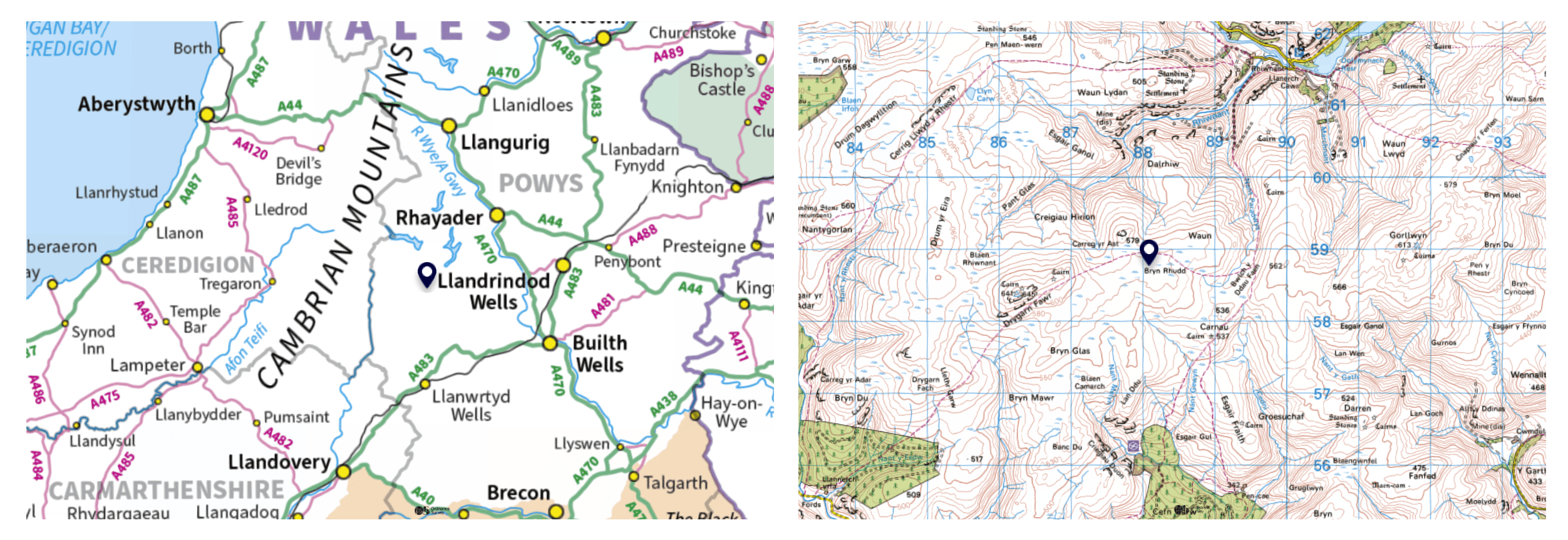
Click to open enlarged in separate tab

Bute Energy, the ‘renewables’ arm of property company Parabola, has an ‘Energy Park’ planned here. For which the registered company was known as Bryn Glas Energy Park Ltd, until Wednesday, when it changed to Bryn Rhudd Energy Park Ltd.

Which doesn’t move the project very far in terms of distance, Bryn Glas and Bryn Rhudd being adjacent hills, but I find the change significant because it suggests things might now be moving with this previously quiescent entity.

Confirmation for the project comes from the Campaign for the Protection of Rural Wales. This map produced last year shows Bryn Glas as a proposal.
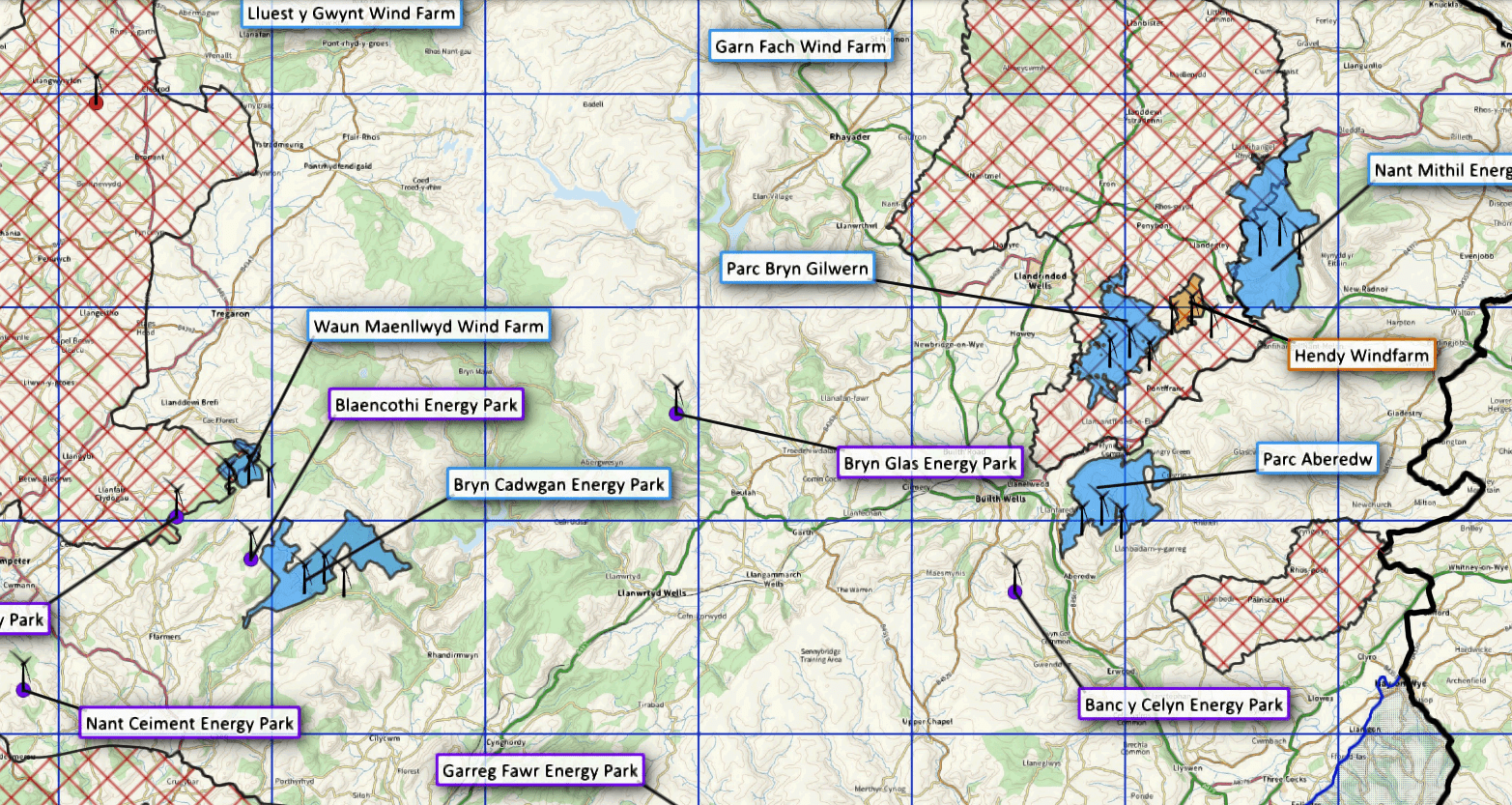
Click to open enlarged in separate tab

That said, the project does not appear on the Bute Energy website. But there are a number of Bute projects – companies formed and registered with Companies House – that don’t appear on the Bute website.

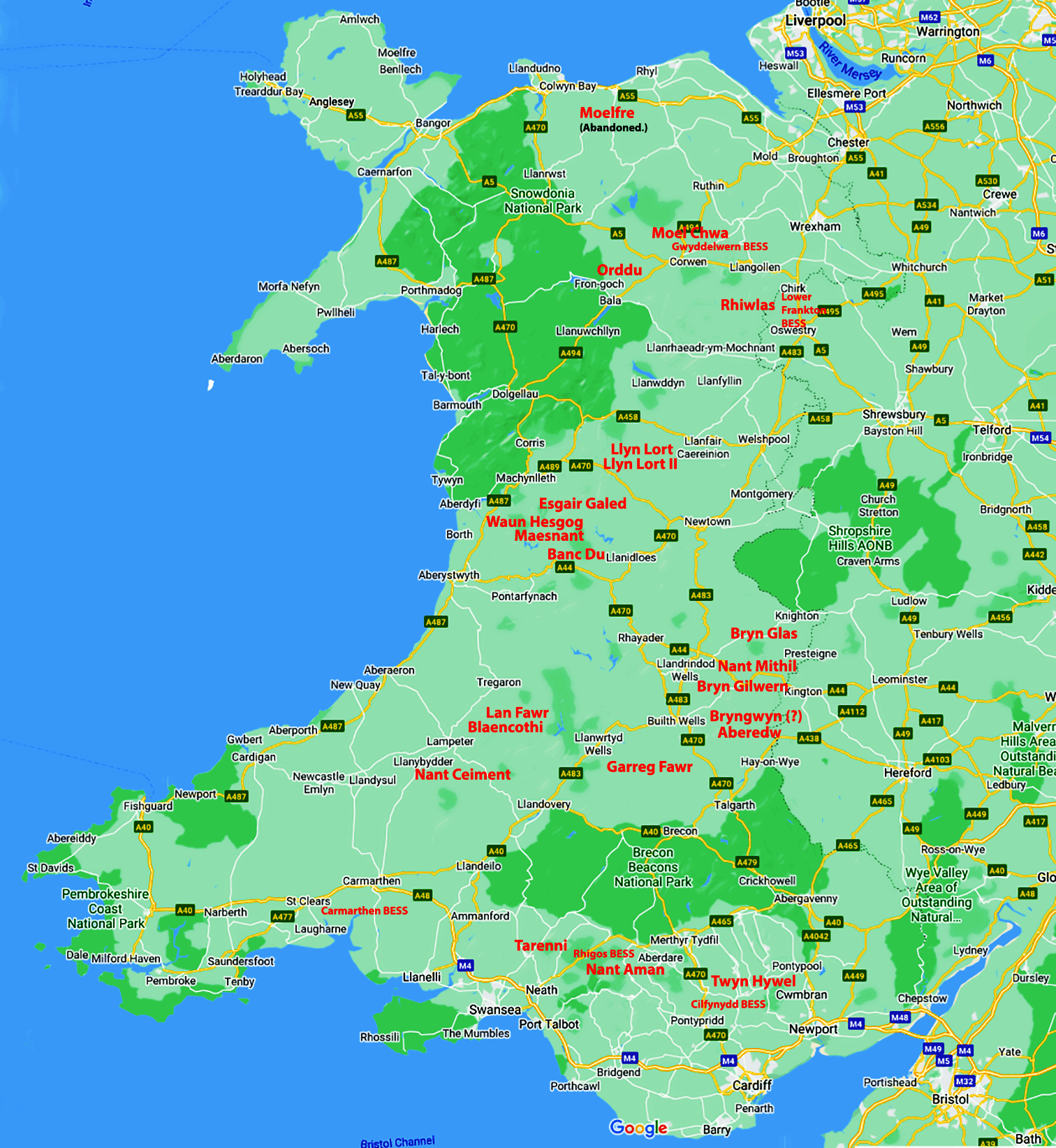
Others are: Garreg Fawr, Waun Hesgog, Nant Ceiment, Nant Aman, Tarenni, Maesnant, Bryngwyn, Blaencothi, Llyn Lort II, Orddu. That’s 10 projects for which companies have been formed, but are not mentioned on the Bute website.

Maybe no progress has been made on these ten projects beyond general scoping and informal chats with landowners.

In addition, there are a number of Battery Energy Storage Systems (BESS) for which companies have been formed. Six by my count.

And let’s not forget the pylons and the power lines. Mile after mile of them, to carry the electricity generated (when the wind is just right!) from remote Welsh locations to the consumers of that electricity in England.

As many of you know, I try to keep up with Bute’s activities, and here’s my updated factsheet. If anyone can add to, or correct it, don’t be shy about contributing.

WHAT MORE CAN I TELL YOU?

A big question in all these projects, and indeed, other projects, is – who owns the land, who stands to gain? A question that’s not easy to answer.

In the case of Bryn Rhudd, my first port of call was the Land Registry, but seeing as I had no title number I had to rely on finding it on the LR map. Which I think worked.

Here’s the title document for the land I located on the LR map. It’s known as Abergwesyn Commons. You’ll see it’s owned by the National Trust (NT); which seems to be confirmed by this map I found on the NT website. (Best of luck with the filters!)
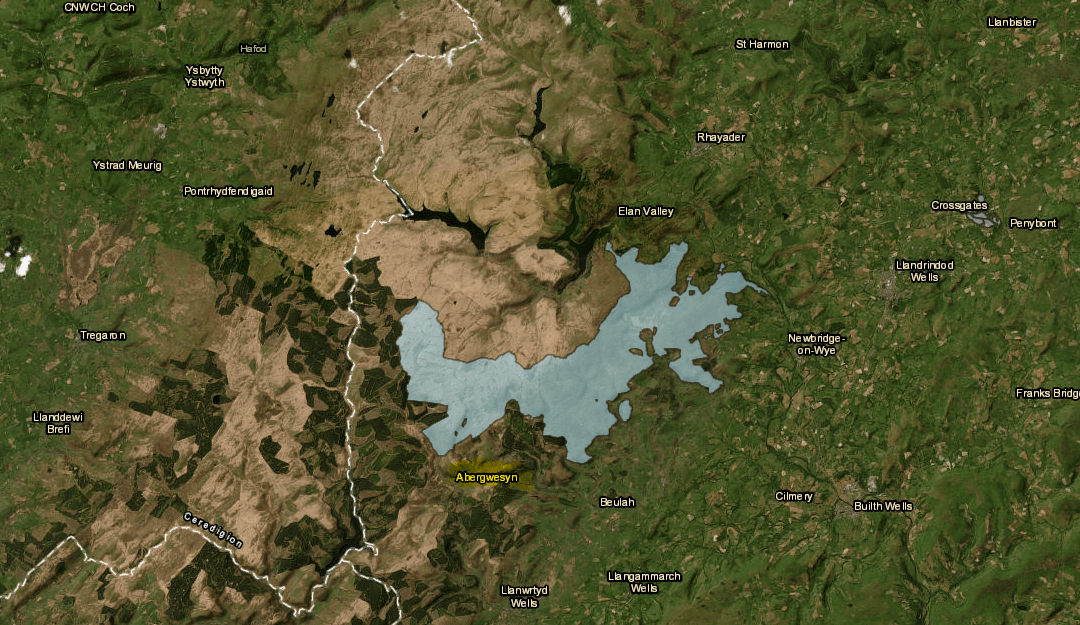
Click to open enlarged in separate tab

The NT land is the area in blue. I’ve highlighted Abergwesyn, to the south of the area that takes its name. To get your bearings relative to the maps you saw earlier use the reservoirs shown above the area in blue.

Unfortunately, there wasn’t a title plan available to download, as it was too large, and I didn’t have time to get it delivered by post.

Anyway, there’s another NT website, which has this to say . . .

Abergwesyn Commons stretch for 12 miles between the Nant Irfon valley in the west and Llanwrthwl in the east. Drygarn Fawr is the highest point on the commons, lying above the Nant Irfon valley.

Which appears to confirm this is the area we’re concerned with, and that Bute’s planned Bryn Rhudd Energy Park is on National Trust land.

Land Registry title documents can be intriguing when they provide a bit of history, which is the case with the one we’re looking at. In the recent history of the area we see names we’ve encountered before. And of course, they’re double-barrelled names.

First, there’s Legge-Bourke. I believe the land we’re looking at was sold to the National Trust by the Legge-Bourke family.

Whereas the Right Honourable James David Lord Gibson-Watt of the Wye M.C., P.C., and son, Julian Gibson Watt, were granted “sporting rights” over part of the land for 99 years from September 1984.

Other names mentioned were those you see below.
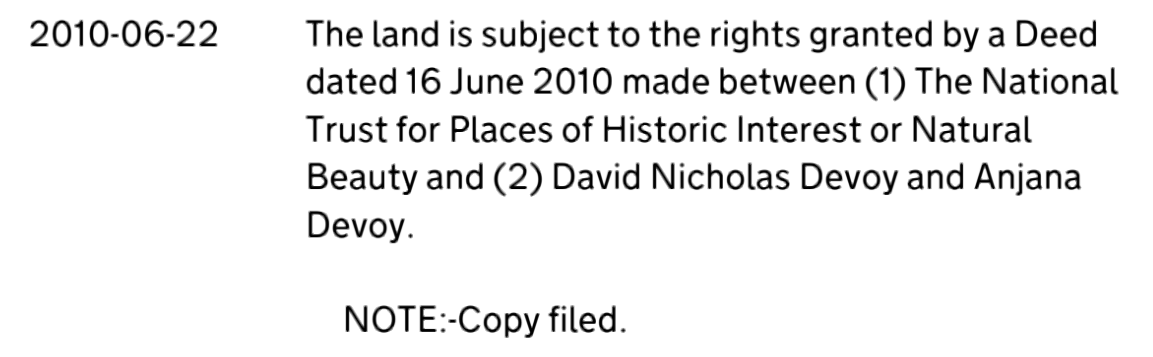
Click to open enlarged in separate tab

Though it seems that somewhere along the way Devoy became Devoy-Williams. (An attempt to go native?) And Dai is a man of the law, as this report tells us.

I’m not sure whether he and Anjana are still an item, and maybe she runs the company Chillderness herself, or whether they’ve split. Either way, the Chillderness website explains the entry on the title document. (Chill in the wilderness – geddit!)

You’ll see from the website the company has a number of properties in Wales.

Hidden away in remote corners of the Chillderness Red Kite Estate in the Cambrian Mountains, Mid Wales, are four super-cool, off-grid glamping pods. The two Conkers (Earth Conker and Moon Conker) are insulated, all year round glamping pods. The forest by the river enfolds the two Tree Tents (Dragon’s Egg and Ynys Affalon), suspended in the canopy with treetop kitchens and outdoor bathing.

If you think ‘Affalon’ and the others are toe-curlers, wait until you see the properties in Sir Benfro. We have a nod to the Rimbaud of Cwmdonkin Drive with ‘Llareggub’ in Saundersfoot, then there’s ‘Mor (sic) and More’ in Amroth.

This is the kind of tourism that too often passes for Welsh: Buy out the natives then make money from trivialising their identity and culture.

But perhaps of more relevance to this inquiry might be what we see under the heading Property Register, which deals with parts of the original title that have been detached over the years.

For there, at No 7, we see that land was detached in September 2019 from the NT Abergwesyn Commons land, which might link to the planned wind farm. But this reference gives no new title number to check, which is frustrating.

Given what we know, I’ll conclude this section by saying it’s reasonable to assume that Bute Energy has some agreement in place with the National Trust for the area around Bryn Rhudd.

Otherwise, why launch the company, and keep it alive?

FINAL THOUGHTS

I always opposed the National Trust in Wales because it struck me as an ineffably English organisation, run by Home Counties hearties who would never understand or empathise with our history and identity.

Maybe devolution could have brought a change, if only arguing that the NT in Wales distanced itself from the parent body. But Corruption Bay was too busy anguishing over whether Picton should be disinterred and hung for what he might have done in the West Indies in the 18th century to worry about Wales in the 21st century.

More recently at the National Trust, tweeds and brogues gave way to green hair and anti-white racism. Predictably, this Wokist takeover brought in blind belief in the climate scam. Now we read of ‘Renewable energy in Wales‘, and just about every form of ‘renewables’ is mentioned . . . other than wind.

So I suggest we need a little honesty. A commodity rare in modern Wales. First from the National Trust.

On the assumption you own this land, do you have an agreement or an understanding with Bute Energy for a wind farm, or ‘Energy Park’, at Bryn Rhudd?

If so, have those who graze the land been informed or consulted?

To Bute Energy: What are your plans for Bryn Rhudd (formerly Bryn Glas)?

Also, what are your plans for the other 10 projects, each of which has a named company, but are not mentioned on your website? What stage have these projects reached?

These uplands of Elenydd are unspoilt and beautiful, among the wildest parts of Wales. That’s because they’re remote, which of course means no decent road access. Look again at the map for Bryn Rhudd to see what I mean.
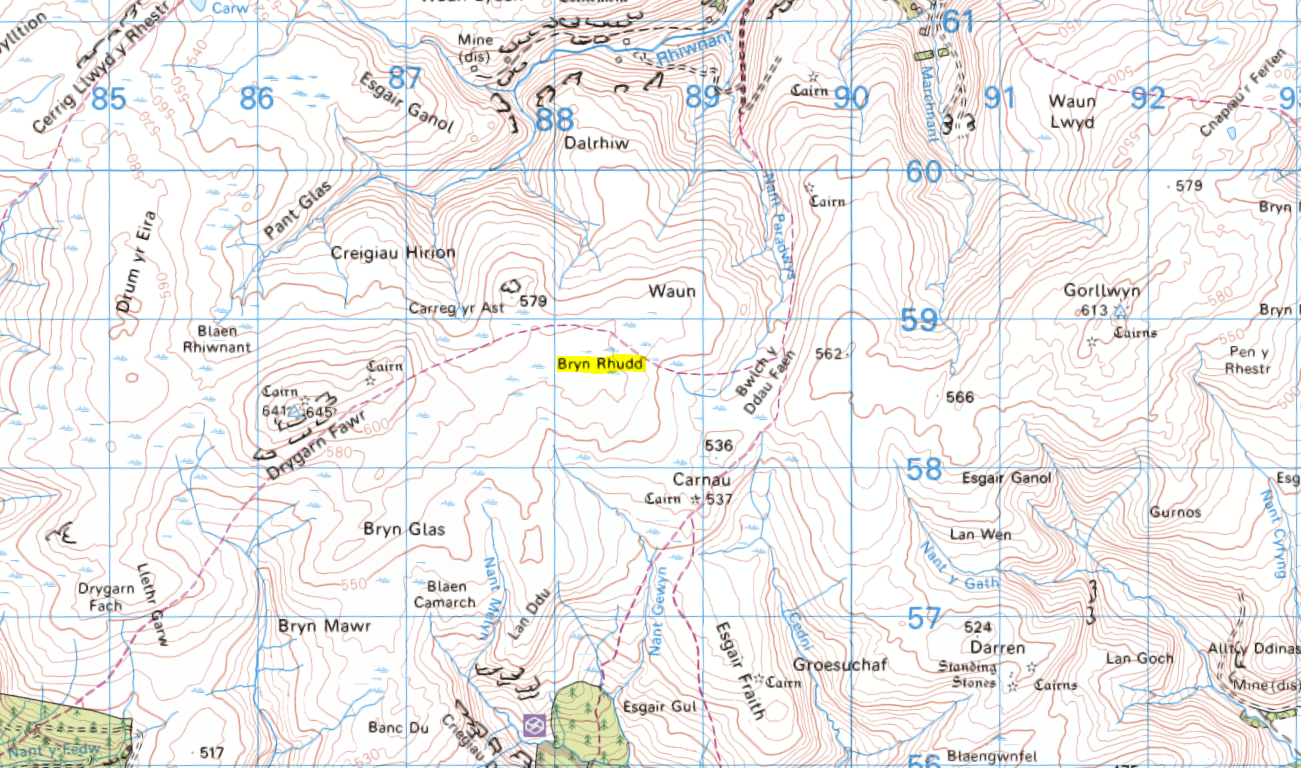
Click to open enlarged in separate tab

Most of the area is only traversable on foot, by horse, or by quad bike. Which means that the environmental damage caused in transporting and erecting huge wind turbines would outweigh any possible gain from a decade or two of expensive, intermittent, and unreliable wind power.

Consequently, any plan for ‘renewables’ at Bryn Rhudd is a reminder that wind turbines, fields of solar panels, are all about making money. Nothing to do with the environment whatsoever.

♦ end ♦

© Royston Jones 2025

Miscellany 18.07.2024

I suppose I could have done a piece on Vaughan Gething’s belated resignation; but I’ve said almost all I want to say on that nice Mr Musk’s platform. He’s moving to Texas, you know. (Musk, not Gething.)

I will just add that Gething’s resignation speech was a classic of ‘Welsh’ Labour. He took no responsibility whatsoever for his fate; the mistakes, the errors of judgement, the lies, being an arrogant prick, no – it was all somebody else’s fault!

And of course, he was the victim of racism. Ideas of victimhood, and exploiting it, are now so embedded in the Labour party in Wales that they direct policy and legislation. As you’ll read in the third section of this offering.

Which is a Miscellany! A section on Woodknowledge Wales, yet another gang of enviro-shysters. Part three is on yet more tinkering by the ‘Welsh Government’ with the democratic process. And finally, some thoughts on wind turbines, and pylons.

WOOD YOU BELIEVE IT!

An outfit that’s been in the news lately is Woodknowledge Wales (WKW). It encourages greater use of wood. I quote: “We champion the development of wood-based industries for increased prosperity and well-being in Wales“.

Well-being‘! That meaningless term used to justify anything and everything.

I have no issue with timber-framed buildings, or even buildings made entirely of wood. The issue is the politics, the funding, the peripheral messages and hidden agendas that always attach to outfits like WKW.

So who runs this show, and where might we find them?

Looking through the early directors of what was originally the Welsh Timber Forum I saw a few names I recognised, in fact, people I know personally. But there seems to have been a kind of takeover in 2016.

Of the six directors at the start of 2017, two have since left. The four remaining directors – of what converted to a Community Benefit Society (CBS) on St Patrick’s Day 2022 – all joined in 2016.

The two departures may even have been connected with the change to a CBS. Strangely, perhaps, of the 36 directors who’ve come and gone since 2001 those two were the only ones to describe themselves on the Companies House listings as ‘Welsh’.

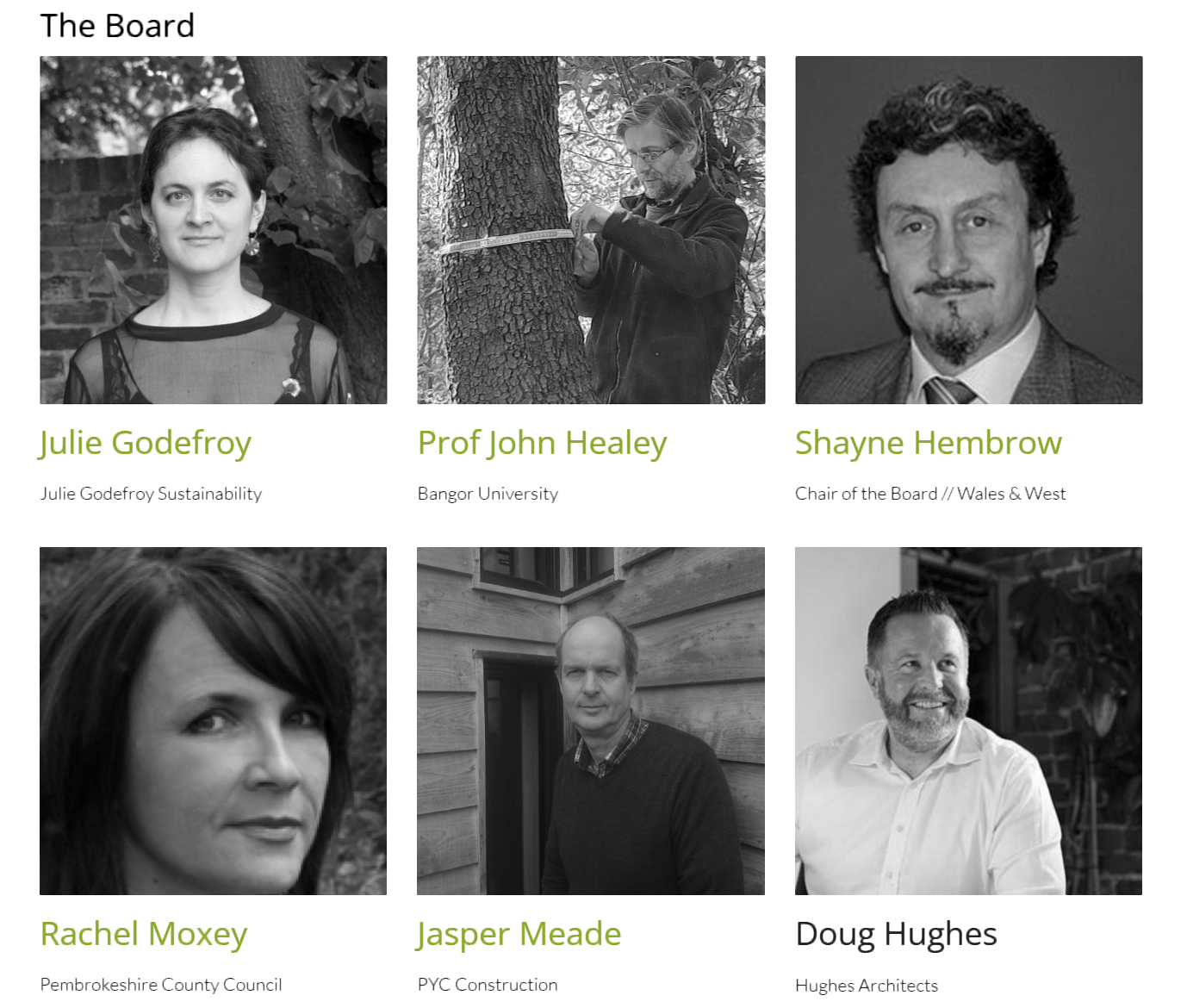
Below you see the current WKW directors from the latest accounts (to 31.03.2023) filed with the Financial Conduct Authority. Also the companies they run or, in the case of Rachel Moxie, the day job. This filing still uses the address of one of the departed.

Click to open enlarged in separate tab

Though I’m unclear on the status of Gary Newman. He was a director when WKW was a company, yet he’s signed the most recent accounts from the FCA as secretary.

But if Newman is now WKW secretary, rather than a director, this would explain why he isn’t listed as being a director of The Foundational Economy Alliance Wales Ltd.

This lot moved in November 2022 from the United Welsh housing association offices in Caerffili to an address in Porthaethwy (Menai Bridge), which is quite a move.

However, the new address for WKW, the one given on the website, is 22 Cathedral Road in Cardiff. (Possibly out back.) Also known as Pentan House, for at this address we also find, Pentan, Rant Media, Moxie PeopleLRM Planning, The Green Business Centre, and who knows who else?

With Woodknowledge Wales we have another outfit serving the ‘Welsh Government’s self-destructive obeisance to the Net Zero cult. With councils and housing associations made to use more wood in their new builds.

Much of which will be from timber grown by foreign corporations on what used to be Welsh family farms. Or wood from monoculture plantations poisoning land and water.

Click to open enlarged in separate tab

The role I suggest for WKW would explain the presence on The Board of Shayne Hembrow of Corruption Bay’s favourite housing association.

Deputy Chief Executive / Commercial Director of Wales and West Housing Association . . .  In addition Shayne is chair of Shelter Cymru and Chair of Woodknowledge Wales.

Hembrow is yet another third sector grifter who came to Wales to help third-rate politicians wreck our country. But I can’t see him listed on the W&W website. Has he gone undercover?

In the FCA filings we see only Hughes, Meade and Moxey named as directors. So does this mean that Godefroy, Healy and Hembrow joined more recently? And why is Godefroy described in her bio as a “trustee“, for WKW isn’t a registered charity?

Finally, and in what seems to be a recurring theme, we have with Woodknowledge Wales a group close to if not controlled by Corruption Bay . . . with one of those involved getting loans from the Development Bank of Wales.

In the case of director Jasper Meade, in January 2020, he landed two loans from DBW Investments (14). One specific to a factory in Buttington, near Welshpool; the other, a more general charge over a number of his companies.

As I say, a recurring theme. Which is why I suggest the Development Bank of Wales needs to be investigated, and then taken away from the control of politicians.

All that said, I could still support this push to use more wood if I thought it would result in a forestry industry employing thousands of people in rural areas, sustaining Welsh communities, complementing farming rather than being used to destroy it.

But that won’t happen. It’ll be like renewable energy, environmentalism, 20mph, and all the other results of politicians buying into the climate cult and the control agenda.

BYE-BYE, PORT TALBOT

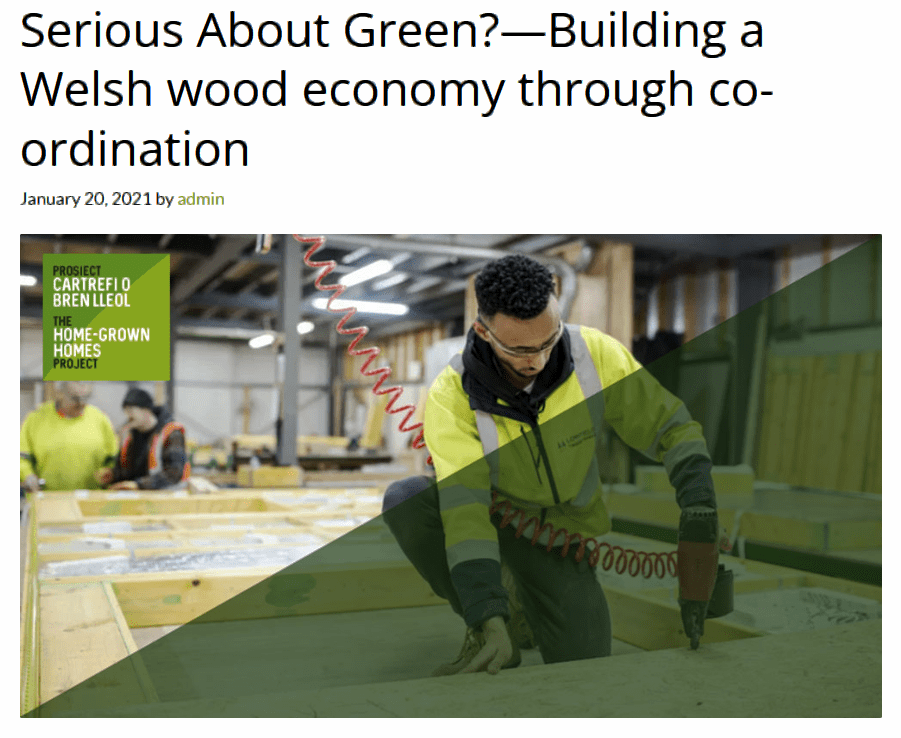
Let’s stick with Woodknowledge Wales (WKW) for just a minute. They’ve been pushing a report, ‘Serious About Green?—Building a Welsh wood economy through co-ordination‘.

Click to open enlarged in separate tab

This makes it clear – as I suggested earlier – that WKW is not simply concerned with us using more wood in buildings. The agenda is much bigger.

And while the report itself seems to be the work of WISERD, the quote below is from Woodknowledge Wales, and can be found here.

Wales is a sheep, beef and dairy nation and Wales is a steel nation. These activities are deeply ingrained in our cultural identity.  They may have been rational activities for the past century but are not well-aligned to the low carbon needs of 21st Century Welsh society.

We must give up good-pay steel jobs and the Welsh family farm. And we must do so because a bunch of zealots have decided that we who belong here, working in our own country, in spheres they disapprove of, must lose everything.

UNIVERSAL FRANCHISE . . . AND THEN SOME!

Now we’re going to consider the Elections and Elected Bodies (Wales) Bill. Here’s a shorter summary. And this is how WalesOnline reported it last week.

You’ll see that everyone is to be put on the electoral register whether they want to be on it or not. Speaking for the Electoral Reform Society, chief executive Darren Hughes had this to say:

Automatic voter registration is a win-win for voters as it takes one more thing off their to-do list while also . . . helping to enfranchise the hundreds of thousands of missing voters in Wales.

Which is, as we psephologists are wont to say, and at the risk of sounding technical, utter bollocks.

Takes one more thing off their to-do list“, says Kiwi Darren. But what if it was never on their to-do list? There are thousands of people in Wales who have chosen not to be on the electoral register.

Consequently, to put them on the register, without their permission, will be an infringement of their privacy and an assault on their freedoms.

As well as bulking up the electoral rolls the Bill also references candidates, and inevitably, we find ‘diversity’ mentioned. Here’s what the summary says on page 5.

Click to open enlarged in separate tab

Specific characteristics” is code for trans, as the ‘Welsh Government’ now shies away from using the legally incorrect and deliberately misleading ‘protected’. But it also introduces a new term with “socio-economic circumstances“? Does that mean preference will be given to poor people?

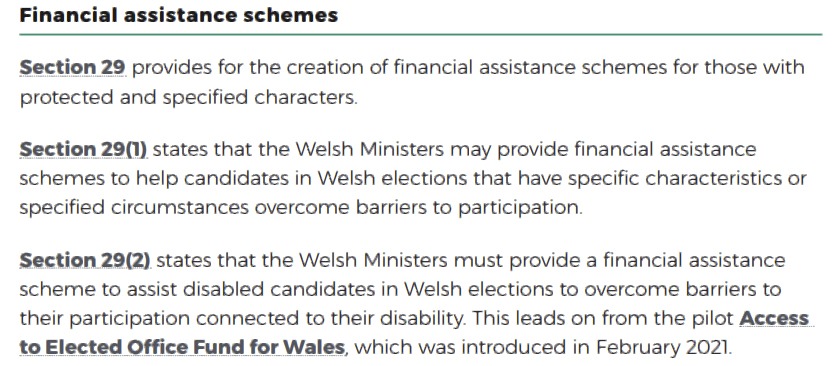
It’s worth asking, because the summary then takes a rather curious twist when it talks of “financial assistance“.

Click to open enlarged in separate tab

(Is Section 29 written correctly, or should it read, ‘specified characteristics’?)

For me, the mention of disability is a distraction, for most beneficiaries of this largesse will in fact come from other groups.

I expect race and a certain religion to figure, but there may be another clue here.

Welsh Ministers may provide financial assistance schemes to help candidates in Welsh elections that have specific characteristics or specified circumstances overcome barriers to participation.

I went to the full version of the Bill in the hope of finding “specified circumstances” explained. But there was nothing. Leaving me to think the Labour party will sponsor candidates from certain categories on whose loyalty it can count.

Putting everyone on the electoral register only makes sense if we have compulsory voting. But we don’t, and I’m not aware of any plans to introduce it. So why put everyone on the electoral register?

Here’s another concern. This legislation might be in place for the 2026 Senedd elections, which means it will complement the Senedd Cymru (Electoral Candidates Lists) Bill. Yes, that’s the one giving us huge constituencies and closed lists.

In the WalesOnline article you’ll see mentioned Mick Antoniw, the Counsel General. Now I have concerns about this man’s role in elections.

Counsel General, Mick Antoniw. Click to open enlarged in separate tab

Mainly because of his involvement in pushing through the closed lists system. I dealt with it in my piece Senedd Cymru (Electoral Candidate Lists) Bill. There I explained that Antoniw was even trying to get away with not naming candidates!

The electoral systems of Wales and the UK are screwed up enough without making things worse.

Consider, Labour has just won a landslide victory in the July 4 general election. But it was only a landslide in terms of seats, and entirely due to the peculiarities of the FPTP system. The turnout was well down on recent elections.

The problem – in addition to the Gething factor and the failure of devolution – is that too many people don’t feel engaged by politics, or feel that politicians don’t speak for them.

The priority should therefore be engaging with those who are already on the electoral registers but don’t vote. Because it makes no sense to register people who have no intention of voting.

One change we’ve already seen was the requirement on July 4 for those wanting to vote to produce photographic ID. Now as we know, from the USA and elsewhere, such a rule is racist, and so would never have been introduced by Labour.

For Labour is far more ‘flexible’ when it comes to rules relating to voting.

Which is why I predict that, in addition to putting everybody’s name on the electoral register, we shall also see moves to make postal and proxy voting easier.

In the 2026 Senedd elections we could see un-named Labour candidates, with “specified characteristics” and “specified circumstances“, benefit from “financial assistance” . . . and be elected in turnouts of 127%.

Try to argue then that democracy’s in trouble!

The truth is that once again we see Labour introducing dangerous divisions and dubious methods to serve its own narrow political interests.

LINKS TO THE OLD NORTH

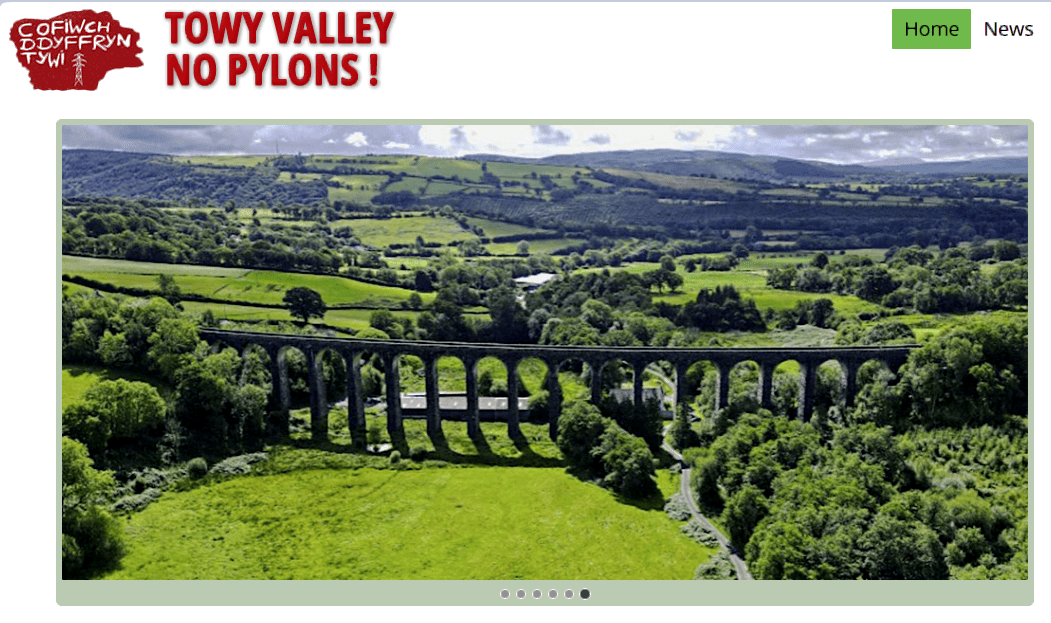
Many of you must be aware of Bute Energy’s plans for a pylon run some 60 miles long from that company’s wind farms in Powys south through the Tywi valley to Llandyfaelog, south of Carmarthen.

There the line from Powys will connect with the line from Pembroke to England. For of course virtually all the power generated in Wales goes to England. (Thankfully, we get the thousands of excellent jobs provided by ‘renewables’.)

The project is being handled by Bute’s Green Gen Cymru. And it’s explained, sort of, here, and if you scroll down there’s even an interactive map.

As might be expected, there is considerable opposition along the route.

Click to open enlarged in separate tab

And the plan is severely testing the loyalties of some politicians. (Also, their mental dexterity.) For example, Ann Davies, the new Plaid Cymru MP for Caerfyrddin, has said she opposes the pylons . . . but not the wind turbines.

I don’t want to spend too much time on the Tywi valley project because it’s really just the intro to the other elements of this section.

As I say, roughly half of the electricity generated in Wales goes to England, and the amount will increase if all the planned wind farms get built. The situation is similar in Scotland, with electricity generated there having even further to travel to consumers in central and southern England. (With power being lost in transmission.)

And although it’s been reported once or twice, I’m not sure how many people are aware of the planned new Scottish connection. In a nutshell, it’s proposed that electricity generated off south west Scotland will be taken by undersea cable to Pentir, near Bangor, and then overland to Swansea North substation.

I’d like to be able to show you a map of the route, but there isn’t one, all I’ve seen is a vague line from Bangor to Swansea . . . through Eryri. Which obviously isn’t going to happen.

In this CPRW article Dr Jonathan Dean has this to say.

The route of this line is not yet known, despite me asking them numerous times.  As they will not get consent for pylons in Eryri national park they basically have two options:
  • along the north coast to Conwy, up the Conwy valley, past Bala then down to the Tywi valley to Swansea
  • across the top of Pen Llŷn to Porthmadog, subsea to near Aberystwyth then cross country to Swansea

Which could mean the pylons coming down the Teifi valley, where there is already a campaign fighting Bute pylons. This Bute line will carry electricity from Lan Fawr, east of Llanddewi Brefi. I assume it will also serve Blaencothi and Nant Ceiment.

Bute Energy projects in Wales. Click to open enlarged in separate tab

Then the pylons will also run down to Llandyfaelog. But will they share the line coming from Powys, or will there be two pylon runs past Llandeilo? And will they interfere with the route of the planned bypass?

However you look at it, lovely Ystrad Tywi is in for a forest of steel pylons marching for mile after mile over hill and dale. Each one sunk in hundreds of tons of concrete. And all done to save the environment, innit?

The reason that Scotland and Wales have despoiled landscapes in order to generate electricity for England, is partly due to their politicians buying into the climate scam, and partly due to the difficulty of building onshore wind farms in England.

The latter due to different laws that allowed communities affected by such projects to object and, effectively, block them. But the law is changing.

Clearly, if onshore windfarms can in future be built in England, where the power is needed, there’ll be less need to erect windfarms in Wales. In fact, the need might be removed entirely.

It seems obvious to me that many of the mooted projects won’t now be needed. And that might include the pylon runs in the Teifi and Tywi valleys, even the big one from Bangor to Swansea.

And seeing as Bute Energy has yet to erect a single turbine, I think the ‘Welsh Government’ should call a halt to onshore wind projects in order to assess how the new legislation in England might impact on Wales.

We don’t want the ‘Welsh Government’ (via NRW) felling tens of thousands of trees, allowing hundreds of 800ft wind turbines, and hundreds of miles of pylons, if nobody wants to buy the electricity they erratically produce.

We’ll just have to live without the thousands of £70,000 pa jobs they’d have created.

♦ end ♦

© Royston Jones 2024

Bute Energy: Who’s Really Behind It?

I’m returning to the ‘Bute’ stable of companies, a subject I’ve ignored for a while. More especially, some aspects of Bute’s operations that may have been overlooked.

1/ How did investment company and property developers the Parabola group, from which Bute emerged, learn about the opportunities offered by wind turbines in Wales?

2/ We’ve been told the funding for Bute’s projects will come from Copenhagen Infrastructure Partners and the Wales Pension Partnership. But is that true?

I’m starting with some background, which I think sets the scene. So please indulge me there before we move on later to the ‘meat’ of the piece.

THE TRAILBLAZER GETTING A LITTLE HELP FROM THE COMRADES

Before the boys from Parabola ever heard of Nant Mithil, Waun Hesgog, or Blaencothi, other nobly-intentioned businessmen, alarmed by the impending climate crisis, were trying their damnedest to cover central Wales in wind turbines.

I’m going to focus on one of those wind farms; Hendy, to the east of Llandrindod.

Planning permission was refused by Powys County Council in April 2017, and that decision was upheld by a planning inspector a year later. But then, Lesley Griffiths, Energy, Planning and Rural Affairs Secretary for the self-styled ‘Welsh Government’ intervened, to ignore the inspector’s decision and give Hendy the green light.

Click to open enlarged in separate tab

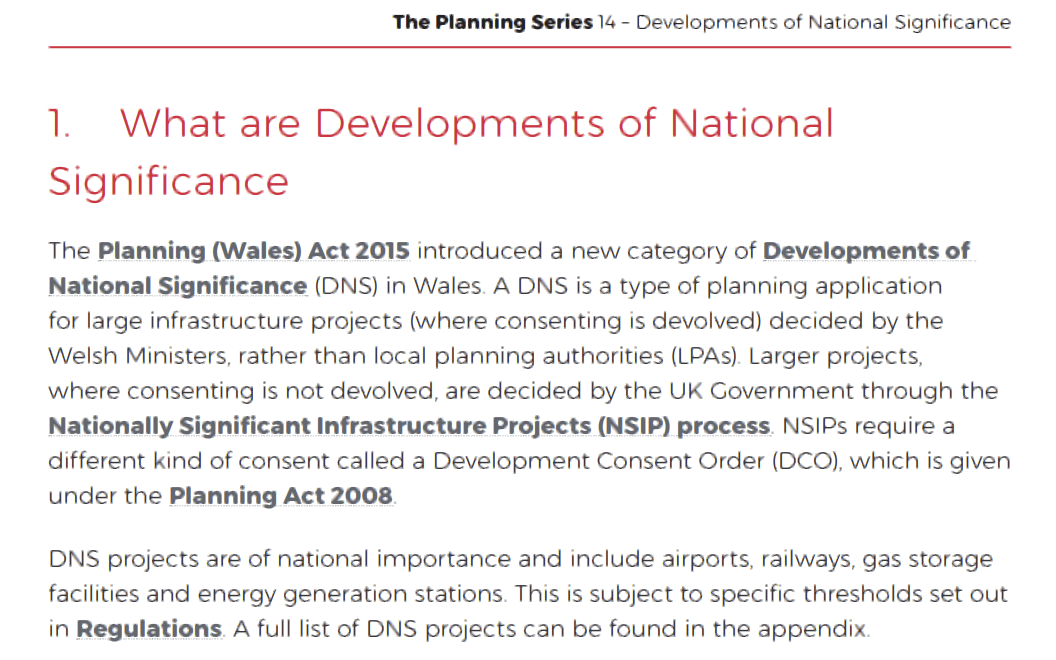
Prior to this, an inspector’s decision was almost the final word. But now it was being over-ridden using the legislation that gave us Developments of National Significance.

From now on ‘Welsh Ministers’ had authority to rule on electricity generation projects with an installed capacity of 10MW to 50MW. Below that, responsibility lies with local authorities; and above, it’s the UK government.

Which means that developers pitch their projects in the 10 – 50MW ‘sweet spot’.

The main director of Hendy Wind Farm Ltd was Stephen John Radford. He had other wind companies including, in Wales, Rhoscrowther Wind Farm Ltd, on the Haven, and Bryn Blaen Wind Farm Ltd, near Llangurig.

Radford was very close to, if not fronting for, the U+I group. Though it seemed he also had his own piggy-bank in Njord Energy Ltd.

Lobbying Powys councillors on behalf of the Hendy wind farm was Anna McMorrin. She was seen at a meeting on 27 April 2017, desperately trying to hand a note to councillors considering the project.

She was working for Invicta Public Affairs, which has its headquarters in Newcastle, but also a presence in Edinburgh, and Glasgow.

She had been working as a Spad in Corruption Bay, for which she was rewarded by being selected as the Labour candidate for Cardiff North. In June 2017 she became the MP.

Maybe this is the first instance of someone working simultaneously for the Labour party and wind energy developers. There have been many more since Anna McMorrin.

Once they got to know each other, I’m sure Radford made the boys from Parabola understand that to get anything done in Wales you must have people working for you inside the Labour party.

THEY MEET, AND THE BOYS FROM PARABOLA BECOME BUTE

In September 2018 Windward Generation Ltd was launched; the name changed to Bute Energy the following month, and finally became RSCO 3750 Ltd in March 2020.

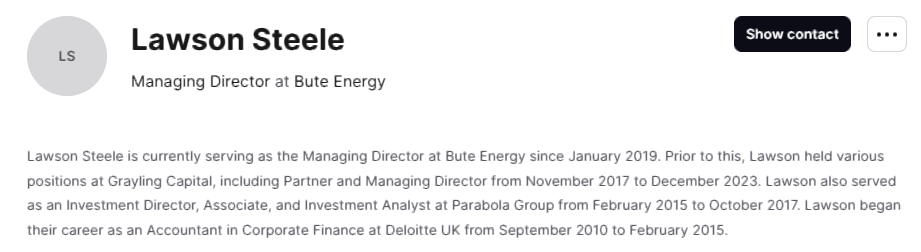
The founding directors were Oliver James Millican and Lawson Douglas Steele, who were joined a week later by Radford. The man from Hendy left in December 2019 and was replaced by Stuart Allan George, who’d left Parabola with Millican and Steele.

But I want to go back a little further, and consider the ‘Windward’ name.

Just before Christmas 2014 Windward Enterprises Ltd was launched. This company’s stated business was ‘Financial management’. The sole director was Oliver James Millican, using secretarial services in Edinburgh, but a Newcastle office address for himself. (Newcastle being where Parabola started out.)

This was a long time before any interest was expressed in wind turbines.

In November 2016 the address switched to Broadgate Tower in London, where we now find Parabola; and the company name changed in August 2018 to WELN1 Ltd.

We encounter the ‘Windward’ name a number of times early on in this saga, but what if it has nothing to do with wind power, and instead refers to the Windward Islands in the Caribbean?

I’m thinking now of tax havens. Just a thought.

If you study the timeline of company formations, you’ll see that the first ‘Bute’ company, Windward Global Ltd, wasn’t formed until May 2017. This is now the holding company for the Bute empire, controlled by Oliver James Millican.

Millican’s father, Peter John Millican, runs the Parabola property empire, with more companies under the umbrella than I was able to count. As we’ve seen, son Oliver ceased being a director at Parabola late in 2017.

Steele was employed as Investment Director at Parabola. He left in October 2017.

Click to open enlarged in separate tab

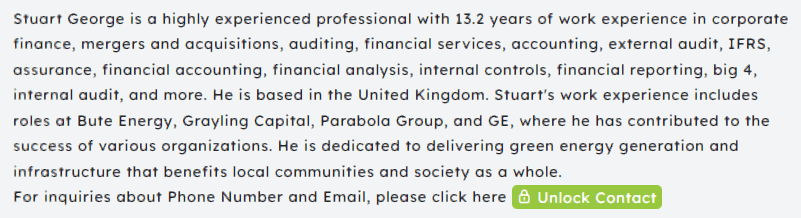
Stuart George was also a Parabola employee.

Click to open enlarged in separate tab

And there seems to have been a fourth departure. For on 31 May 2018, in addition to Windward LS Ltd (Lawson Steele), and Windward SG Ltd (Stuart George), a company called Windward BW Ltd was launched.

The ‘BW’ is Barry Woods. I can’t tell you much about him, except that he’s Irish, and he’d also worked for Parabola. In fact, he was a designated partner, along with Parabola Real Estate Investment Management LLP, in Parabola Partners LLP.

Just like Millican, Steele and George, Woods quit Parabola in November 2017.

He then seems to have parted company with the other three on 24 September 2019. The last trace of Woods sees him running Woods Investment Management Ltd in Edinburgh, which folded after a couple of years, in March 2021.

So we have four men, all in their thirties, and all working for a major property and investment group (one of them the boss’s son); but late in 2017 they apparently hear the planet calling, sever their ties with Parabola, and go off to erect wind turbines in Wales.

Do you buy that?

Something else that gives off a bit of a whiff is that if the four of them had started up on their own, I would have expected to see them as partners. But Millican Junior in control suggests a continuing link with his father’s business empire.

Using the Parabola address at the Broadgate Tower, 20 Primrose Street, London EC2A 2EW is also a bit iffy.

It’s far more likely that, in 2017, the four turbineers started setting up companies in Wales, ultimately owned and controlled by Parabola, to capitalise on the ‘How many turbines would you like, duckie?’ DNS system.

MONEY, MONEY, MONEY

Funding is a vital consideration because more than 20 wind farms, an unknown number of solar arrays, at least 6 Battery Energy Storage System (BESS), and mile after mile of pylons, requiring connectors and other whatsits, do not come cheap.

Admittedly, nothing has yet been built, but even so, Bute employs dozens of people, rents or leases office space, and promotes itself relentlessly by sponsoring everything from the Ystradgynlais Wet T-shirt Olympics to the Llanfair Caereinion Refuge for Distressed Ferrets.

So where’s the money coming from to fund this unrivalled extravaganza of bird dicing?

We can (perhaps surprisingly) rule out the Development Bank of Wales, a soft touch that throws moolah at magic bean salesmen and landfill-owning friends of politicians.

Instead, our attention must turn to the two stated funding sources: Copenhagen Infrastructure Partners (CIP), and the local councils’ Wales Pension Partnership (WPP).

The WPP involvement is a bit of nonsense that it’s hoped will give the impression Wales is benefitting from wind power. Though on a more practical and political level I suppose it gives Bute even more leverage in Corruption Bay.

I’m going to focus on Copenhagen Infrastructure Partners and see where that takes us.

Now the first thing to make clear is that CIP is not a bank, it does not provide funding. The clue appears to be in ‘Partners’, for it seems investors looking for green projects go to CIP, which then finds them the right fit.

Or it could be t’other way around. Either way, we can be sure CIP takes its cut.

The funding from CIP for Bute is channelled through CI IV Dragon Lender Ltd. This is owned by CI IV Dragon Holdco Ltd. Both companies are based in Rotherham, South Yorkshire.

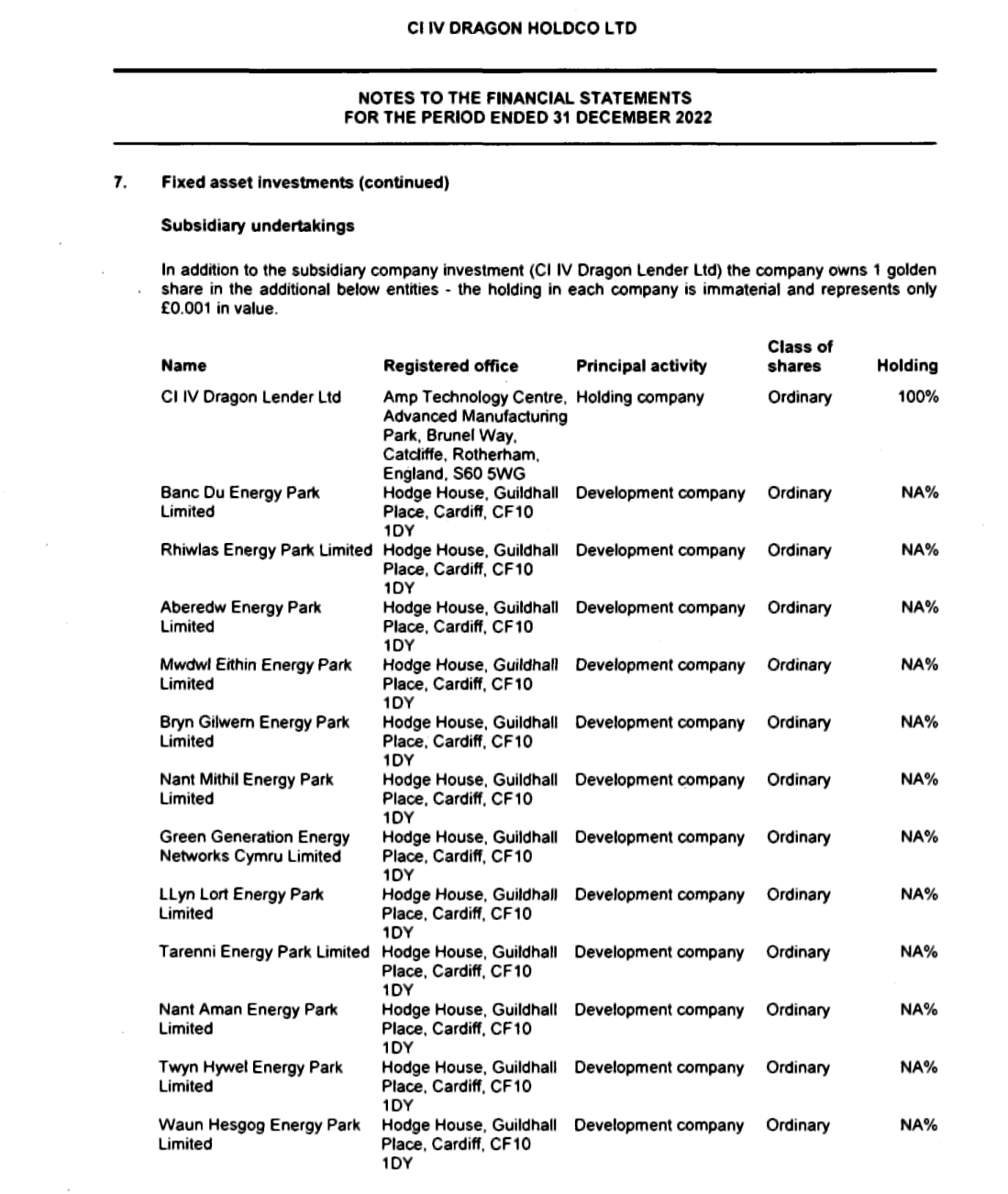
The latest accounts for CI IV Dragon Holdco (y/e 31.12.2022) give a list of ‘Subsidiary undertakings’ (page 20) in which the company holds a ‘golden share’. These are Bute companies, including Green Generation Energy Networks Cymru Ltd, which wants to build a network of pylons.

Click to open enlarged in separate tab

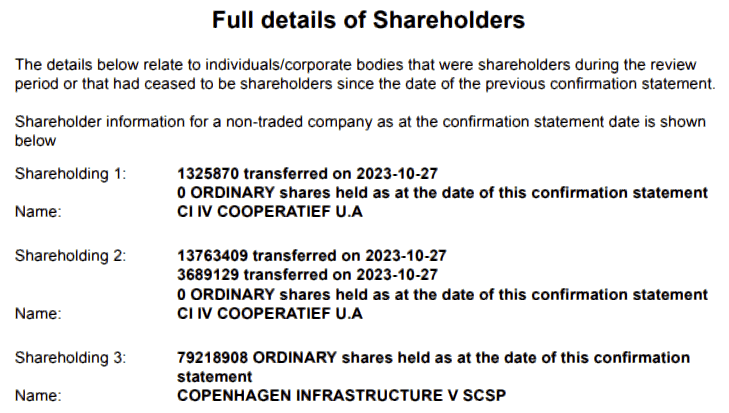
And as you can see below, since October last year all 79,000,000 shares in the holding company are in the possession of Copenhagen Infrastructure V SCSp.

Click to open enlarged in separate tab

Which can be found at 16 Rue Eugene Ruppert, L2453, Luxembourg, the EU’s internal tax haven.

Click to open enlarged in separate tab

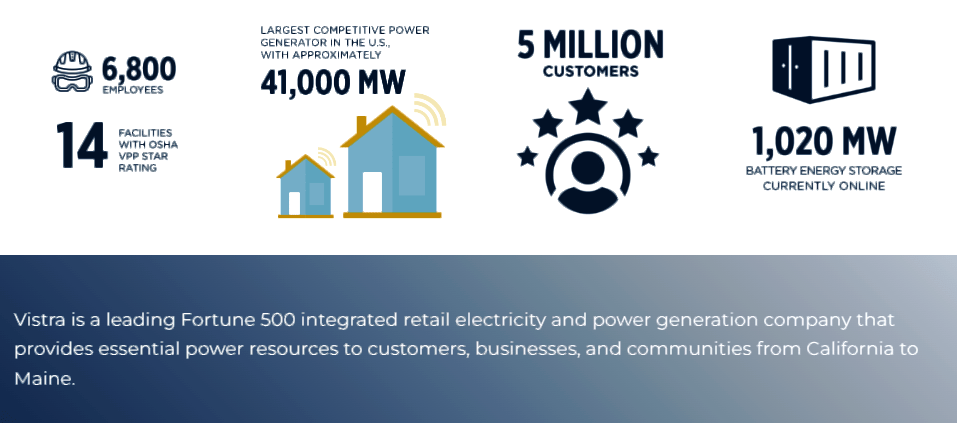
And at that address we find an outfit called Vistra. So who are they? It turns out they’re a Fortune 500 company from the Lone Star State. Well, Ye haw!

Vistra is big itself in electricity production and supply, but it also ‘partners with suppliers’, which would presumably include Bute.

Click to open enlarged in separate tab

But why is Bute dealing with Copenhagen Investment Partners which is dealing with a US company working out of an office in Luxembourg? Especially when Vistra has offices in the UK.

Among them, a very familiar address in Edinburgh. In fact, if you close in on this Google maps capture you’ll see the Vistra plate, top right.

Click to open enlarged in separate tab

The name Vistra was vaguely familiar, but not in connection with Bute. It was linked more with the Bristol address you see above, and Galileo, which wants a wind farm at Bryn Cadwgan, to the east of Lampeter.

All explained in this piece from last November, A Change Of Tack?

Galileo is based in Zurich, Switzerland. It began life locally at Vistra’s Bristol office before moving to Edinburgh. But there’s also Galileo Empower Wales Ltd which has a presence on Cathedral Road in Cardiff.

Its directors are Italian, German, Scottish and Irish. A typical ‘Welsh’ company.

The Bute companies are fronting for Vistra of Texas through Copenhagen Infrastructure Partners. The ‘golden share’ in so many Bute companies means that those projects are effectively owned by Vistra.

With an obvious connection via Oliver Millican to his father’s Parabola group. Which we must assume is also getting a cut.

The sequence would appear to be: Parabola spawns Bute, Bute goes to CIP, CIP finds Vistra, and Vistra either puts in its own money, or it finds funding from . . .

UPDATE 30.04.2024: A reliable source draws my attention to another link between Copenhagen and Vistra. There are many more.

UPDATE 2: 30.04.2024: Another source reminded me there are many Njord companies. Often linked to CIP. A little digging brought up yet another, and an intriguing connection.

Copenhagen Offshore Partners A/S has an office at 10 George Street, Edinburgh. At the same address we find Rathbone Investment Management (£60bn assets). A member of the Rathbone family is Jenny Rathbone MS, who sits on the Climate Change Committee.

Her Partner, John Uden, was recruited (for no obvious reason) to sit on Bute’s Welsh Advisory Board.

I think we’re at the stage now where so many Labour people (some I’ve never mentioned) are benefitting financially from Bute / CIP  that an independent inquiry is needed.

CONCLUSION

The situation is that through Developments of National Significance, and now the Infrastructure Bill, Wales is being desecrated and exploited by foreign corporations.

The ferrets of Llanfair Caereinion notwithstanding, there are no real benefits for us; nothing in terms of jobs, or anything else.

The real beneficiary is England, where communities can and do object to wind farms. Which is why, as reliable sources of electricity generation are phased out on the orders of Globalist ‘environmentalists’, electricity generated in Wales must go to England, and this explains the need for so many pylons.

The wind farms, solar arrays and pylons in Wales (and Scotland), are also needed to help the UK / England meet its Net Zero commitments. Which I suppose raises the possibility of political pressure being applied from London.

What’s happening is so obvious that I even find myself in agreement with the leftist(s) who wrote, ‘Neoliberalism Has Quietly Flourished Under Welsh Labour – It’s Time To Break The Silence‘. (The comrades love slick and catchy titles!)

Joking aside, and looming over all other considerations, my biggest worry is that even though we can now identify Bute, and Parabola, and CIP, and Vistra, we still can’t be sure where the money for these projects begins its journey.

Which provides two major headaches.

If the Bute funding needs to be ‘filtered’ so many times (with everybody taking a slice) then it raises suspicions that the original funder may not be entirely acceptable.

And if we don’t know who ultimately owns the installations, then how do we get these sites restored when they come to the end of their working lives?

Instead of being suckered by those fronting these projects those pretending to run this country need to establish who is ultimately funding each and every project operating in Wales or proposed for Wales.

We also need to look into the relationship between Bute Energy / Parabola / CIP / Vistra and the ‘Welsh Government’. In particular, how it’s grown to the point where Bute has a position close to being a state-sponsored monopoly.

♦ end ♦

© Royston Jones 2024