Nathan Gill, Ukip MEP, Another Dishonest Politician?

Evidence has come to light suggesting that one of our recently elected tribunes may have been less than honest with us. (Well, with you, actually, because I don’t believe in any of the buggers.) I appreciate that the very thought of an untruthful politician may be a shock to some of the more delicate among you, so I can only suggest you gird up your loins, grit your teeth, and perform any other contortions that might help you endure what follows.

As the title of this post informs you, the politician in question is Nathan Gill, the Ukip candidate elected on May 22 to the European Parliament. Now Mr Gill looks a presentable forty-years-old man; happily married with five beautiful children, a dutiful son and a successful businessman to boot. It can be guaranteed that he gained the votes of many women, especially those of a certain age. That’s the JFK factor, exploited, since Dallas and the arrival of wall-to-wall television and social media, by Clinton, Blair, Obama, Cameron, and many other politicians in the English-speaking world. With the predictable corollary that those who fail the JFK test often suffer politically: Richard Nixon, Michael Howard, Gordon Brown et al. Lies may have forced Nixon from the White House but liars who pass the test are more likely to escape, or at least delay, retribution. This worshiping of the photogenic is yet another example of the superficiality of the Anglo-Saxon world today, the victory of style over substance. But I digress . . .

There are three specific areas in which Mr Gill was less than honest with the electors of Wales. The first two can be dealt with fairly quickly, but the third is a little more involved, so you’ll need to pay attention. It might also help you understand this post if you could refer back to an earlier post, Nathan Gill, Ukip No 1 in Wales; I would suggest keeping that earlier post open in a different window (or browser) so you can refer to it when necessary. (Here’s the link to the Ukip website from which the information came), with the bio panel from the site below.

NATHAN GILL, MORMON

People tell me that on other election literature produced by Ukip there were references to Gill being a ‘Christian’, which is unlikely to alarm anyone, but the Ukip election leaflet delivered to my house went straight in the bin, so I don’t know what it said. This was partly due to my views on English supremacism and partly a reaction to some of the insulting rubbish put out by Ukip in Wales. Whatever the leaflets may have said, none mentioned that Mr Gill is a Mormon. My belief is that few would have refused to vote for a ‘Christian’, but many would have been less ready to vote for someone belonging to one of the more exotic varieties of Christianity such as the Church of Jesus Christ of Latter-Day Saints (LDS).

Nathan Gill
Click to Enlarge

Seeing as Mr Gill is a Mormon, what is his attitude to gays and same-sex relationships? Come to that, what does he think of the kind of heterosexual relationships enjoyed by that pork swordsman, legendary drinker, and all round sybarite, Nigel Farage? Does he really see his party leader as ‘a bit of a lad’, Everyman re-born for the twenty-first century, or a sinner bound for Hell?

The fact is, we should have been told that Nathan Gill is a Mormon. We were not. The information was deliberately withheld. That was dishonest.

NATHAN GILL, PROFESSIONAL POLITICIAN

Ukip makes great play on the claim that they, unlike the ‘established’ (and discredited) political parties, are not made up of ‘professional politicians’ but of ordinary people who’ve just had enough of the professional political class. There’s no doubt that this plays well with an electorate that now puts politicians on a par with sellers of ‘pre-loved’ automobiles, and vendors of dwellings whose descriptions bear no reality to their true condition.

This situation is alleged to have come about due to young people studying politics, then working as assistants or advisors to politicians, before going on to become tribunes themselves. This process, it is alleged, divorces its practitioners from ‘real life’ and the concerns of ‘real people’, for whom Ukip of course speaks. It’s a message that resonates and, unlike most of Ukip’s messages, this one is based in truth.

In the address I used in the earlier post (right) Mr Gill first says, “From an early age I have been interested in politics . . . “, before telling us that he resigned from the Conservative Party to join Ukip in 2005. But then, confusingly, he proudly and emphatically states, “I am not a career politician”. Which is it? Maybe if we ask what he was doing prior to his election it might help. Ah, yes, he was working as assistant to his predecessor as Ukip MEP, John Bufton. So he’s a professional politician just like those his party vilifies. Another question mark against Nathan Gill’s honesty.

NATHAN GILL, BUSINESSMAN

In the earlier post I mentioned a number of business ventures with which Gill and his family had been, or still are, involved. One was Burgill Ltd, compulsorily wound up in February 2009 with debts of some £116,000. This was involved in the letting of property, Incorporated with Companies House on St. Patrick’s Day 2004. The directors at Incorporation, each having one share, were Nathan Gill and his mother; with Gill’s address given as 51 Park Road, Sproatley, Hull, East Yorkshire, England, and his mother living at a house in Bryan (sic) Aethwy, Menai Bridge, Anglesey, England (sic). The proposed Registered Office was in Scarborough, North Yorkshire, with the Agent in Preston, Lancashire.

I was unable to get much more information on Burgill at the time I wrote the earlier post, and felt disinclined to pay for documents from Companies House. That all changed late on Thursday night when I received a strange comment (since removed) to the post, some of which I can paraphrase here: “Nathan Gill . . . Burgill . . . migrants mainly from Poland . . . housed 46 people in one very large house on Holderness Road, Hull, 6 bunk beds per room . . . a perfect candidate for Ukip?” It would have been easy to dismiss this comment as coming from someone with a grudge against Gill or an anti-Ukip agenda, but when I made further enquiries things began to look less far-fetched.

Below you’ll find a series of documents linked to Burgill Ltd bought from Companies House. In chronological order, they are: 1/ Certificate of Incorporation (17 March, 2004); 2/ Debenture referring to mortgage taken out by Burgill (13 June, 2005); 3/ Annual Return (March 17, 2008) which now has the Registered Office in Llangefni, Nathan Gill living at a different address in the town, and his father having joined as a shareholder (Anglesey has now relocated from England to Gwynedd. Still wrong, but an improvement.); 4/ Details of the winding-up (12 February, 2009); 5/ the Current Appointments Report I downloaded on Friday May 30, which confirms the compulsory liquidation, tells us the accounts are long overdue, and reminds us that Burgill’s business was “Letting of own property”. (If they don’t show, then click here.)

Further enquiries revealed more information on Burgill and Nathan Gill which ties in with the mysterious comment sent to my blog. For example, trawling the internet I came across this piece which locates Burgill Ltd at 778 Holderness Road in Hull. More digging unearthed information about a planning application from Burgill, to Hull city council, for a new detached dwellinGill Holderness Roadg close to 709 Holderness Road. Also on Holderness Road, at 443, is a care home which seems to have been Gill’s parents’ business. Incorporated on March 27, 2001 it traded as the Pink Panther Resource Centre until it changed its name in March 2003 to Gill Enterprises Yorkshire Ltd, though now based in Menai Bridge. The attraction of Holderness Road may be explained by the fact that a Mormon church is located on this thoroughfare. No. 778 is almost directly opposite the church, across the dual carriageway of the A165 Holderness Road. (Click to enlarge aerial view below.)

UPDATE JUNE 3: I now learn there was yet another property on Holderness Road, this one No. 711 (also known as ‘Tower Grange’).  This is the most likely candidate to be “the very large house on Holderness Road, Hull, 6 bunk beds per room . . . ” mentioned in the comment to the earlier post on Gill. According to my informant this substantial building was Google Earth aerial view 2sold to another company, by Burgill Ltd, with planning permission for a two-storey extension of nine two-bedroom and five one-bedroom ‘apartments’, which would tie in with this document. Though Gill’s original planning application was for a three-storey extension of eleven two-bedroom ‘apartments’ and five one-bed. (This may also be relevant.) Elsewhere in that city with which we are becoming familiar, you may recall that on the Certificate of Incorporation for Burgill Ltd Gill’s address is given as 51 Park Road, Sproatley (a commuter village to the north east of the city). Well, I’m told that Gill “had four Polish guys living there and he never declared the cash”.

In what they say will be their last communication, my informant also refers to a church – presumably in Hull – owned by Gill for which planning permission was refused . . . with the building subsequently suffering a “mysterious fire”. (Though I make no connection between the two.) After which a compulsory purchase order was issued by Hull city council. I fear that in Nathan Gill we could be dealing with a very naughty boy, a very naughty boy indeed (even by the standards of Ukip), and a man totally unfit to represent Wales in the European Parliament. As ever, I would be grateful for more information.

Mentioning the Mormons again makes me ask out loud a question that keeps nagging at me. In my experience many religious sects have a very unChristian regard for lucre. They seem not to have read about Jesus expelling the money changers from the Temple. So while this post is premissed on the assumption that Nathan Gill was in business for personal profit, what if Burgill Ltd was in reality being run on behalf of The Church of Jesus Christ of Latter-Day Saints?

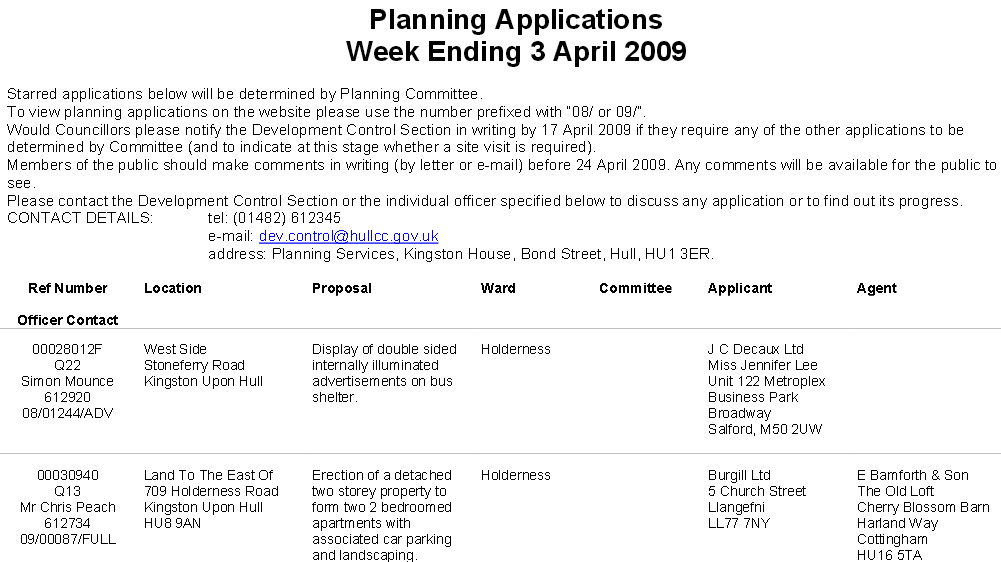
Returning to the planning application (details below) for a new detached dwelling close to 709 Holderness Road, this is dated 3 April, 2009, despite the petition to liquidate Burgill being presented and heard at Llangefni county court by district judge Jones-Evans on 26 November, 2008, and the company registered as liquidated by Companies House on 12 February 2009! So how can a company that to all intents and purposes has ceased to exist have a live planning application? I’m open to explanations.
Gill Holderness Road 2

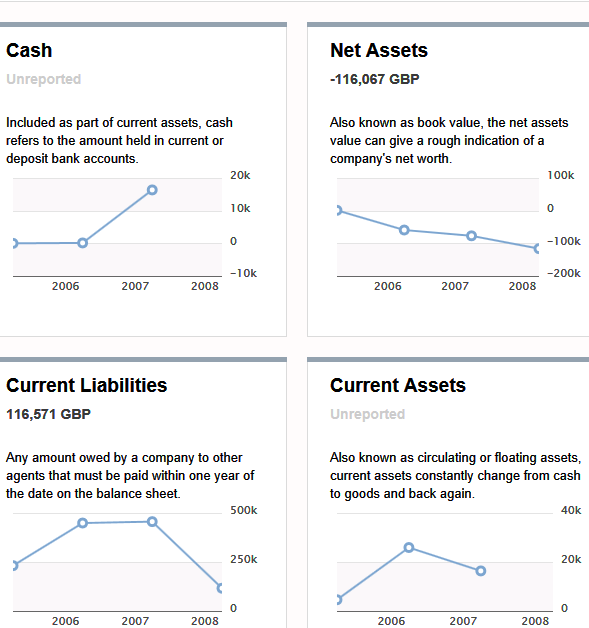
Next stop was the DueDil website, which has yielded much information in the past, and came up with the goods again. The chart below gives a pretty good outline of the rise and fall of Burgill. It starts in March 2005 with the company having assets of some £230,000 – a property, maybe accounting for the mortgage referred to above? – with assets peaking at £405,525 on 30 March, 2006 (was another property bought?). Things changed little until March 2007, after which it was downhill all the way, with no recording of cash after that date. Suggesting (and I stress suggesting) that after March 2007 assets were sold to pay off liabilities, for these always exceeded assets, and the last entries tell us that by March 2008 Burgill Ltd had liabilities of £116,571 and assets of just £504.00.

So what was Burgill’s business? Did it involve, as my informant suggests, Polish migrant workers and bunk beds? That scenario is not so implausible. Due to its location on England’s east coast Hull has always traded with the Baltic and would have been a port of entry for people from that region when Poland and the three Baltic States joined the EU on May 1, 2004. (Remember, Burgill was Incorporated on March 17, 2004.) An enterprising young fellow, with local links, might see money to be made. What we know for certain is that Nathan Gill was involved in the property business in Hull during that period, so if not Polish migrants packed in like sardines, what type of business was he running?

At this point let me briefly mention other information received that refers to “sub-letting”, and the suggestion that what’s on paper may not be a true reflection of Burgill’s financial position, as Nathan Gill is alleged to be a man who likes to deal in cash . . . much of which is said to have gone missing as Burgill dived south . . . which set off alarm bells with the tax authorities. It is also alleged that ‘Bishop’ Gill had another wife, with whom he was involved in an acrimonious custody battle, and that – how can I put this? – imaginative means were employed allowing the cash-rich Mr Gill to claim legal aid. These are all serious allegations, and there may be more ready to surface.

Burgill finances

Perhaps we should expect no better, for Ukip is a Ship of Fools, skippered by an arsehole and crewed by chancers and oddballs who regard probity, fidelity, and the better angels of our nature as irritants or obstacles to the satisfying of their baser instincts. They don’t much care about the destination of their craft – they signed on simply to enjoy the cruise and rake in the hated Euros. Far from being a break with a corrupt system Ukip is all the problems of modern politics magnified and made more repugnant. Nathan Gill adds another ingredient to the Ukip mix with his Mormon beliefs. Can we in future expect to see Ukip emulate the Tea Party in the USA by attracting Christian Fundamentalists and Evangelicals?

All this would be bad enough, but for a Welshman there is another consideration. Ukip is, as I mentioned earlier, an English supremacist party; it is the political voice of every social media bigot and internet troll who thinks we Welsh are an inferior people who would be ‘nothing without the English’, and that everything Welsh is, by definition, inferior to what England has to offer. The sort of swivel-eyed nutter, eaten up with hatred – often, it must be admitted, self-hatred – who will not be happy until every last vestige of Welshness is destroyed and Wales fully assimilated into England. It is scum like these that keep the Ship of Fools afloat in Wales.

I shall end this post by calling on Nathan Gill to, finally, be honest. Tell us why you withheld the information about being a Mormon, and how that faith influences your attitudes to contemporary issues. Why did you try to present yourself as a political virgin when you clearly are not? What exactly were (or are) your business interests in Hull with Burgill Ltd, and perhaps other companies; was it the exploitation of migrants from that place you hate so much – ‘Europe’? Finally, Nathan Gill, do you really think it’s wise to go to the European Parliament accompanied by so many skeletons, with others almost certain to emerge?

Trying to bluff it out will only make things worse, Mr Gill; I suggest you reconsider your position as an MEP.

Euro Elections: Picking Through The Bones

Now that the dust has settled let’s see who’s still standing, who counts as walking wounded, and who might be deserving of a coup de grâce. Below you’ll find a table I’ve compiled giving a breakdown of the results. (Click to enlarge.) For comparison, the 2009 results can be found lower down. (Again, click to enlarge.) Further statistics and tables for 2014 can be found at the Pembrokeshire County Council website or at Welsh not British, where young Mr Evans has produced yet more easy-to-read graphics. (Though I got confused!)

Recent posts may also be of interest. First, my Wales Euro Election 2014: Runners and Riders and then my brief, pre-election biography of Nathan Gill, Ukip No 1 in Wales. Finally, bear in mind that the results were declared by local authority not by Westminster or Assembly constituencies. So while Anglesey council is the same as the constituency, this is rarely the case elsewhere, with some authorities containing more than one constituency and some constituencies straddling local government boundaries.

First, let’s get some of the minor parties out of the way. I cannot understand why NO2EU, Socialist Labour and the Socialist Party of Great Britain bothered standing. These three hard Left parties got a total of just 1.2% of the vote. I suppose it’s a platform, and a way of advertising themselves, but beyond that . . .

Moving over to the other extreme of the political spectrum we find the British National Party and its former members in Britain First. Their combined total was 1.9%. A great disappointment for the BNP, which got 5.4% of the vote at the previous Euro elections. I shall return anon to the BNP.

The performance of the Greens was patchy, ranging from 2.3% in Blaenau Gwent to 8.0% in Ceredigion. Nationally the party got 4.5% which was down on the 5.6% of five years ago. With all the environmentalist brainwashing going on in our schools I would have expected the Green vote to be rising. Then again, maybe many Greens ‘lent’ their vote to Plaid Cymru this time round to save Plaid’s skin. (Something else I shall return to.)

                                                *

Young Liberal badge
Click to Enlarge

One of the shocks of this election was of course the near-annihilation of the Liberal Democrats. Now you know my views on the Lib Dems, but I’m not a man to gloat, so (putting aside the party hat and champagne bottle) I will stick with the facts. Nationally, the Lib Dem vote dropped from 10.7% in 2009 to 3.9% last Thursday. The candles in the gloom were where you’d expect to find them: 12.9% in Powys and 11.4% in Ceredigion. But even these were poor figures considering that we are dealing here with areas containing (or until recently containing) Liberal Democrat AMs and MPs.

Elsewhere, the picture is one of unrelieved bleakness: votes of less than 3% in Anglesey, Blaenau Gwent, Bridgend, Caerphilly, Carmarthenshire, Denbighshire, Gwynedd, Merthyr Tydfil, Neath Port Talbot, Pembrokeshire, Rhondda Cynon Taff and Torfaen. The centre ground is obviously overcrowded, and being in coalition with the Tories has its price. This result is part of a decline also found outside Wales, and when we add in the findings of opinion polls, it could be that the Liberal Democrats are coming to the end of the line as a serious political party.

                                                 *

Euro election 2009Given the result achieved by Ukip, and the added factor this time round of having been in government at Westminster for four years, the Conservatives will be quite satisfied – if not relieved – to have hung on to 17.4% of the vote, down from 21.2% in 2009. The Tories’ lowest vote was 6.2% in Blaenau Gwent, and they got votes below 10% in three other Valleys authorities; with the highest vote, unsurprisingly, being 33.2% in Monmouthshire. This year’s vote was just two percentage points down from 2004.

As for Labour, 28.1% looks excellent when compared with 20.3% in 2009. But 2009 was an election influenced by Gordon Brown being PM and leading an unpopular government heading for defeat in the general election of 2010. To put Labour’s result last Thursday into a longer term perspective, their 28.1% takes them closer to the 32.5% they achieved in 2004. Labour’s lowest vote was 10.3% in Ceredigion and the highest 46.5% in Blaenau Gwent. Which leaves us with just Ukip and Plaid Cymru to consider. Plaid first.

                                                *

Plaid scraped home to retain its MEP by just a few thousand votes and a share of 15.3%, compared with 18.5% in 2009 and 17.4% in 2004. The percentage share varied wildly, from 43.5% in Gwynedd to 6.3% in Monmouthshire. Only four local authorities (out of 22) gave Plaid a percentage share above 20%. I have made my views on Plaid Cymru / The Party of Wales known in many previous posts: they are a party that reached a ‘plateau’ of support under Dafydd Wigley from which they have been falling back steadily since he was deposed. And if, as we were being told prior to the voting, many Greens, Liberal Democrats and other ‘progressive elements’ were voting Plaid in order to stop Ukip getting a second seat, then the result is even worse.

Plaid’s support was concentrated along the west side of the country, as it has been throughout the party’s history, and even though 118,479 people in the south decided to stick two fingers up to the three main UK parties they chose to do it by voting Ukip rather than Plaid Cymru. Think about that – tens of thousands of working class Welsh people in the Valleys chose ex-public school ‘Frenchy’ Farage and his golf club bigots in preference to Plaid Cymru. Plaid Cymru has completely failed to break through in Denis Balsom’s ‘Welsh Wales’, among those who described themselves as ‘Welsh Only’ in the 2011 census; this failure, coupled with its heartland being colonised (without any protest from Plaid!) guarantees the eventual – and hopefully speedy – demise of this faux national party.

Yet there are those thankful for a ‘nationalist’ party as incompetent and unthreatening as Plaid Cymru. Given the fact that Plaid losing its MEP might have set in train events resulting in consequences unpalatable to such people, I can’t help wondering if, somewhere along the road to Abergwaun, Wales didn’t experience another deus ex machina moment to compare with what happened in Carmarthen back in September 1997.

                                               *

Now we come to the undoubted stars of the show, even if they didn’t quite manage to top the bill: Ladies and gentlemen – the United Kingdom Independence Party! Let me concede that this was a spectacular result for Ukip, so let’s consider where it might lead. But before that, let’s set the context by saying that Ukip’s share of the vote has risen from 10.5% in 2004 to 12.8% in 2009 to 27.6% in 2014. By any standards, quite spectacular; though it’s not immediately obvious where the votes came from.

By which I mean, between 2009 and 2014 the Ukip vote increased by 114,398, and in percentage share terms from 12.8 to 27.6. In other words, it more than doubled. Yet the Labour vote also increased from 138,852 to 206,332, or 20.3% to 28.1%. So little if any of Ukip’s vote came from Labour. We can also safely assume that few would make the switch from Plaid Cymru to Ukip. Which leaves the Tories, Liberal Democrats and the British National Party. Yet the Tory vote was down by less than 20,000 on 2009, so we must assume that many who had previously used the Lib Dems as their protest vote switched to Ukip this time. (While others went to Labour.) Another source of votes was obviously the BNP; something admitted by leader Nick Griffin, who says his lost supporters will be back when they realise Ukip can’t deliver on immigration. (And the BNP can!) Finally, while Ukip may have picked up the votes of the disenchanted and the gullible in the Valleys; in Powys, the north, and rural areas, we can safely say that Ukip had far more appeal to English residents than to Welsh.

If those are the sources of Ukip’s votes then these, I believe, are the factors that helped Ukip achieve its success. First, the desire among a large section of the electorate to use elections that don’t really matter to put the boot into established politics, and lazy and corrupt establishment politicians – so they voted for ‘Farage the outsider’. Second, genuine, but non-racist, concerns about immigration and how it affects the social life or character of communities. Third, a protest against something very few of them really understand called ‘Europe’ and its increasing control over their lives. Fourth, Lib Dem voters deserting to what they perceive to be another ‘protest’ party. Fifth, Ukip still has novelty value and has been promoted by large sections of the media, including the BBC, which made Farage almost a permanent member of the Question Time panel and other programmes. Which raises an intriguing question . . .

Many can see that the BBC has in the past few years has taken on the role of State broadcaster. Whether this was as a result of a decision taken within the BBC, or a role taken on at the behest of others, need not bother us here. This change has manifested itself in the plethora of programmes now prefixed by ‘Great British’ and the clear bias in reporting the Scottish referendum debate. So the question has to be, why is the BBC giving a free ride to this threat to the established order, portraying Farage as a good egg who enjoys a pint and a ciggie? I’m open to suggestions, but my belief is that we are witnessing here the ‘elastic theory’ in practice; by which I mean, Ukip is being used to legitimise certain issues that were previously taboo, or the preserve of extremists, and therby move political debate to the Right. From the confusion created by this shift will soon emerge – to steal Ukip’s clothes – a ‘repositioned’ Conservative Party. There may even be a place for the unquestionably popular Nigel Farage in the New Conservative Party. Either way, it will mean the end of Ukip as a major political force. Though of course, there were those who thought they could do something similar with Hitler in 1930s Germany.

                                                *

Looking ahead, I see that Mr Gill, our new Ukip MEP, is quoted as saying, “the Valleys are ours for the taking”, meaning that he expects to win Westminster and Assembly seats in this region. I have no way of knowing from which of his orifices these words emanated, but Mr Gill is an Englishman, living on Anglesey, who knows as much about the Valleys as I do about the Hindu Kush. Which is why I never talk of that region. Ergo he talks bollocks. For he knows as well as I do – or should – that Ukip is a protest vote for elections that people don’t take seriously. Which explains why the party has not a single MP, MSP or AM. Ukip has as much chance of winning Merthyr or Blaenau Gwent next year, or in 2016, as I have of winning the Kentucky Derby. And yet . . .

The threat of Ukip having some success in England at next year’s general election, and perhaps holding the balance of power, remains. (I have heard electoral pacts with the Conservatives mooted.) So put yourself in the position of someone in Scotland who has not yet decided how to vote in the independence referendum. Maybe you’re having a pint in an East End bar, or relaxing at home in Inverurie, when who pops up on the television but Nigel Farage. He says that you Scottish chaps (and he’ll use the word ‘chaps’) should be very grateful to be ruled by chaps like him; so you should forget all this independence nonsense because you’re ‘too wee and too poor’ (said in an appalling Scottish accent, an attempt at humour). Then he signs off with ‘Toodle-pip’. Do you think this intervention, and the possibility of a Tory-Ukip coalition after May 2015, might influence Scottish voters?Farage Salmond Tweet

We all know the answer, yet some Ukip people are urging Farage to get involved in the Scottish referendum debate, to put Alex Salmond in his place. (Telling us that Nathan Gill isn’t the only Ukipper struggling with political and other realities.) Which takes me back to the BBC. Why is the Great British Broadcasting Corporation giving an armchir ride to the man who could ‘lose’ Scotland? For no matter what some in Ukip may think I must believe that wiser counsels will tell Farage to stay out of the Scottish independence debate because, being so quintissentially English in a rather annoying way, he can only harm the Unionist cause. But will he listen? We shall see. Whatever the future holds the way Farage and Ukip have been handled thus far by both the political establishment and the mainstream media is perplexing. I can only assume that there is a longer game being played.

                                               *

In conclusion, let me just say a few things that might, hopefully, summarise what I feel about Ukip and the wider Welsh political scene. First, we should thank Ukip for exposing that the ‘socialist roots’ of the Valleys are, for many Valleys’ residents, as shallow as their own leader. When working class and unemployed Welsh people in some of the most deprived parts of Europe can vote for a party whose social policies come close to advocating sterilisation of the poor, then we know that the old certainties are gone, and it’s all up for grabs.

A Welsh academic, writing on Daily Wales, suggested that Ukip, by demanding that immigrants become fluent in English, had somehow released a genie that allowed language activists to demand that people moving into the Welsh-speaking areas of the west should learn Welsh. My comments can be found on the article. But he’s half right. The real lesson though is that by detoxifying the subject of immigration Ukip should have made it easier for us to discuss English immigration into Wales. Far greater in scale and effect than anything England is experiencing.

Finally, given the slow death of Plaid Cymru and other changes taking place in Welsh politics, I feel that the time is now right for nationalists to at least discuss setting aside their differences and uniting behind agreed Regional List candidates for the 2016 elections to the Notional Assembly. The advantages could be many. The elections would provide a platform to promote a more focused message than our people have heard for decades. It would also give the opportunity to challenge Ukip in the only route by which they can hope to achieve Assembly Members. And for Plaidistas reading this, it might provide the kick up the arse most of you know your party needs.

Nathan Gill, Ukip No 1 in Wales

I don’t want anyone to think I’m picking on Ukip, or indeed, Nathan Gill; but as the BBC and other media have been making clear, these European elections are most definitely about Ukip, and as Mr Gill is the lead candidate, and therefore almost certain to be representing us – we Welsh – in the European Parliament, I have every right to know more about the man, and to present my findings – and indeed my impressions – to a wider audience of potential voters. The best place to start is with what Nathan Gill has to say about himself. Here’s a link to what you see in the panel (click to enlarge).Nathan Gill And for your further delectation, here’s a link to a piece on Ukip I posted earlier this month.

                       *

The first thing that struck me was that this is very badly written, in so many ways. While criticising syntax may be ‘picky’, criticising bad spelling and ludicrous capitalisations is not. For example (final paragraph) there is no ‘d’ in privilege. In the previous paragraph it should be ‘candidates’. How are we to interpret “our Great Nation” (and to which nation does it refer?). Why does he write “Domiciliary and Home Care for the Elderly” when no capitalisation is required? Amazing, that these people, so intolerant of other languages, are so careless with their own.

Over and above these childish mistakes there are other sections that cause amusement or alarm. Let’s start with the funny – well, sort of – bit at the start of the fifth paragraph, where he says, “I am not a career politician”, which is something Ukip candidates have been playing on in this campaign; in other words, ‘Trust us – we are not part of the corrupt system’. Now I don’t wish to go too far in this observation, but this ‘innocent outsider’ ploy was used by the Nazis: ‘Vote for us – we are not part of the corrupt Weimar system’. Yet he ends the preceding paragraph by saying that the aim is to “raise UKIP’s profile as a professional mainstream party”. If Nathan Gill and Ukip succeed in that ambition he will no longer be able to capitalise on his political virginity. In short, there is a glaring contradiction due to whoever wrote this garbage either forgetting what they’d just written or being unable to grasp that contradiction.

Less amusing is this section, immediately before the bit about professionalising Ukip: “I resigned my membership (of the Tories) and joined UKIP in February of 2005 deciding then and there, that this was a fight worth fighting. I was not being asked to stand in the trenches, or storm the beaches of Normandy for my country. This was to be a long and mainly thankless battle to inform the public, and raise UKIP’s profile . . .”. God Almighty! Stand in the trenches! Storm the beaches! What is it with the English Right that it can think of no other way to serve its country than by donning khaki and killing foreigners? We used to be told that this attitude was confined to the extreme Right, the National Front or the BNP, but Ukip now claims to represent mainstream English opinion. If so, God help us!

                                                 *

How does Mr Gill earn his crust? Because he makes reference to “the family business” I made some enquiries and turned up a number of companies connected with Nathan Gill, four departed, one still clinging to life. The first of the four was Compactor Ltd of Bridlington, in Gill’s native East Riding of Yorkshire, Company No 06329258. Compactor seems to have lasted from July 2007 until March 11, 2011 and the Second Notification of Strike-Off Action in the London Gazette. Other directors were Mrs Elaine Gill (his mother, presumably) and Mr Brian Lynn Quilter. The company was listed as a manufacturer of telegraph and telephone apparatus and equipment.

Another that fell by the wayside was Humview Ltd, of Church Street, Llangefni, Company No 06166193. The other directors were Ms Jana Lyn Gill (wife?) and Mr Richard Bruce Worsey. Humview was Incorporated on March 16, 2007 and the Second Notification, etc was dated May 30, 2009. The third dead company was Picture Perfect (GB) Ltd, back in Bridlington, Company No 05781088. The only other name mentioned, as Company Secretary was, again, Ms Jana Lyn Gill. Picture Perfect first saw the light of day in April 2006 and breathed its last on November 19, 2010 via the London Gazette, departing this mortal coil with debts of just over £11,000.

Finally, we come to Burgill Ltd, Company Number 05076906, which was in the business of ‘letting of own property’ and ‘renting and operating of housing association real estate’. (Intriguing.) This company was also registered at Church Street, Llangefni, with Nathan Gill and his mother serving as directors, but may have operated in Hull. Alas, early in 2009, the company was forceGill Burgilld into compulsory liquidation owing £116,067. On the left you will find a screenshot of Burgill’s life support system just before it was switched off by the Official Receiver in Chester. (Yes, folks, Chester; after a millennium of that city’s parasitism and 15 years of devolution, it seems the Official Receiver for North Wales is still based in Chester.)

So there appears to be just one company with which Ukip’s local hetman is involved that still trades – Gill Enterprises Yorkshire Ltd, Company No 04188257 which, despite the name, has its registered office in Menai Bridge. It was Incorporated on March 27, 2001 and until March 2003 was known as The Pink Panther Resource Centre Ltd. Googling Pink Panther Resource Centre turned up a care home in Hull. Gill Enterprises could be the “family business” referred to in the bio, for his parents were both directors at one time. The only problem being that unless he was an adult student he would have left Coleg Menai around July 1991, ten years before the company was incorporated. Yet there seems to be no contender for the title of “family business” other than this company which currently has just two directors, Nathan Gill and his mother. The business seems to bob along, keeping its head above water, with net worth equalling current liabilities and a few grand in the bank.

All this digging got me wondering about Nathan Gill’s parents, were there other companies that might fit the “family business” label? Well, for a start, and in addition to Compactor and Burgill, Mrs Elaine Gill had also served as a director of Gillshill Ltd, which seems to have enjoyed a lifespan of just two years, from January 1992 until its Final Dissolution on St. David’s Day 1994. The only other director was her husband, Michael Ronald Gill. Though perhaps more interesting from a Welsh perspective is yet another company, Home Comforts (Gwynedd) Ltd, also registered in Menai Bridge, where the other director was again her husband, and she is listed as a ‘care home proprietor’. This company, number 02939007, was registered in August 1994 and dissolved in April 1996.

I don’t profess to know a lot about business and investment, and I can’t afford to pay for the documents that would throw more light on the Gill family’s business ventures (sob!); but it looks a chequered history to me, and I’d certainly like to know more about the disastrous Burgill Ltd. But after all that, I still don’t know what Nathan Gill actually does to support his wife and five children. Perhaps he should have been more specific in his bio rather than making a vague reference to the family business before taking us off to war while painting himself as the political innocent.

UPDATE MAY 29: Since writing this post I have learnt that Gill’s ‘job’ was personal assistant to the Ukip MEP (2009 – 2014), John Bufton. Why so reticent? Perhaps because it would have undermined his claim to not be “a career politician”. At least he’s got a real job now . . . but one he doesn’t want to do!

Additionally, Gill is a Mormon, it seems they have a ‘Meetinghouse’ in Gaerwen, and he may have come to Wales as a ‘missionary’. In my area it’s Jehovah’s Witnesses, a whole congregation, complete with patriarch, decamped from somewhere in northern England. Sometimes this village is under siege as they descend on us mob-handed . . . people diving under tables, turning televisions off, clapping hands over kids’ mouths . . . I know Wales is a third world country but do we really have to suffer white missionaries?

Seeing as Gill belongs to the Church of Jesus Christ of Latter-Day Saints (to give them their full name, often abbreviated to LDS) what is his attitude to gays and same-sex relationships? Come to that, what does he really think of that pork swordsman extraordinaire, legendary drinker and all round sybarite, his party leader, Nigel Farage? Does he really see him as ‘a bit of a lad’ or a sinner bound for hell?

When you think about it, there’s a few things here we should have been told before the election, but it’s pretty obvious why we weren’t.

                                                *

If the Ukip bandwagon isn’t halted soon then, some time after the general election of May 7 next year, the UK could have a Conservative-Ukip coalition government. I say this because many Conservatives are quietly supportive of Ukip, while Tory supporters in the media and elsewhere hope to use Ukip to pull the party to the Right. They believe that encouraging Farage and his cohorts to change the terms of debate on Europe, immigration, and other issues, prepares the ground for a ‘repositioned’ Conservative Party to reap the rewards. Which, again, reminds me of 1930s Germany; and the way in which big business, the army, and other establishment elements thought they could use and control Hitler before disposing of him. It didn’t work then, and England’s own ‘funny little man’ may prove equally difficult to ditch.

Nor should we ignore the fact that Ukip sees itself fighting on two fronts. The first is obviously ‘Europe’ and what it interprets as interference in Britain’s internal affairs, the second is the crusade to keep Britain English. Therefore Welsh identity of any kind, when seen through Ukip rifle sights on this second front, is a threat to the desired social and cultural cohesion. Which is why devolution – despite what Ukip may say publicly – would soon be phased out by a Tory-Ukip coalition government. (With the support of many in the Labour Party.)

For these and so many other reasons we must oppose this irredeemably English party for which Wales and Scotland are merely colourful appendages to be disempowered and eventually integrated. Despite the presence of three gullible Welsh candidates on the Ukip list the one topping that list, the one very likely to be elected, is Englishman Nathan Gil, which is how it must be, seeing as Ukip is appealling primarily to the English living in Wales. If Nathan Gill is elected he will sit in the European Parliament representing English interests . . . but in the name of Wales. This is why the fight against Ukip must not end with this week’s elections.

Ukip Should Copy Sinn Fein

It’s been difficult to avoid the UK Independence Party lately, the media loves them and has been promoting them so enthusiastically that one could easily forget that Ukip doesn’t have a single MP, does not control one local authority, has no representatives in the Scottish Parliament or the Notional Assembly for Wales, and is just a rag-bag assortment of fruitcakes and bigots led by a back-slapping, ‘Did you hear the one about . . . ?’ type you avoid at social occasions, a man who appeals to that section of English society which views itself as being a cut above the average BNP English nationalismsupporter. More couth, innit!

I say ‘English’ rather than British because Ukip is fundamentally an English phenomenon. Something we have always known, and was recently confirmed by research conducted by the Scottish Centre on Constitutional Change, the Wales Governance Centre (Cardiff University), and Institute for Public Policy Research. The findings were that within England Ukip support was strongest among those who identified themselves as being English rather than British. With the result that 29% of people in England told researchers they planned to vote for Ukip in this month’s elections to the European Parliament; in Wales the figure was 20%; and in Scotland 10%. We can safely predict, for reasons that need not detain us, those areas of Wales, and those sections of Wales’ population, from which Ukip will get most support. Which ties in with a well-documented and growing sense of English nationalism.

But this is very different to the English nationalism of the imperial heyday, or even that of WWII; for this is not pride in success, or even obduracy; this is something much more difficult to admire. It’s a resentful and hating Englishness. One result of which is – perhaps for the first time since the Norman takeover – many English now view themselves almost as the underdogs; beset by enemies within and without, those enemies having one thing in common – they’re all bloody foreigners. A nationalism that is both self-pitying and ready to lash out in all directions. (So beware! for in this weltanschauung we Celts – certainly those of us who oppose English domination – are little different to ‘bloody foreigners’.)

Ukip letter WM
Click to Enlarge

Worrying though that might be, there is at least a logical linkage in the rise of such a sentiment and the growing support for Ukip. That said, there are also glaring inconsistencies in Ukip’s position. An obvious one was highlighted by a letter in today’s Wasting Mule from a Derek Griffiths of Llandaff. Before launching into a paean to the EU Mr Griffiths makes the more valid point that, “Ukip is inviting us to return its candidates to the very institution from which it is campaigning for the UK’s withdrawal”.

My immediate thought on reading that sentence was, ‘Well said, that man . . . but, wait, isn’t there another political party in these islands that contests elections to an institution from which it wishes to disengage?’ Yes, there is, and how does this other party deal with the dilemma? The party I’m talking about is of course Sinn Féin.

The answer is abstentionism, which has been a central tenet of Irish republicanism for over a century, and is still followed by the five Sinn Féin MPs elected from the Six Counties to the Westminster parliament. Which seems to me and, I’m sure, many other people, to be a logical, and morally defensible, position. So why doesn’t Ukip follow Sinn Féin’s lead and refuse to send its elected representatives to the European Parliament in Strasbourg? After all, if Ukip voters are as sincere in their opposition to political links with the Mainland as Sinn Féin voters are in their opposition to the English connection, then there should be no problem. Otherwise, the fact that Ukip’s MEPs do go to Strasbourg could be misinterpreted.

So I suggest that, in order to avoid the accusation that they are just a bunch of two-bit chancers and hypocritical gravy train riders, Ukip candidates for the Euro elections on May 22nd should state in advance that, if elected, they will adopt the principled and ideologically consistent position of refusing to take their seats in the European Parliament.

P.S. For those minded to be silly, or hoping to cause a distraction, here is a statement from Sinn Féin regarding Westminster expenses.

Cymrophobia and the Many Identities of Jacques Protic

There are many people who, quite frankly, hate us for being Welsh. We hear it regularly from smart-arse stand-ups and oh-so-clever calumnists. They can say and write things about us that would get them prosecuted if ‘Black’, ‘Jewish’, ‘Irish’, ‘Pakistani’ or any other group was substituted for ‘Welsh’. Most are thankfully outside of Wales, but there are some living among us.

This latter group doesn’t like Wales being in any way ‘different’ to England. They are not prepared to tolerate a separate, Welsh national identity, and the thought of any of us speaking a language other than English makes some of them apoplectic. (Especially when reminded, or informed, that Welsh was spoken in England long before English.) The people I’m describing won’t really be satisfied until every last vestige of a separate Welsh identity has disappeared.

Though I will concede that antipathy towards Welsh identity and traditions is something of which we ourselves have sometimes been guilty. Our own aristocracy and gentry couldn’t drop the ap and the ab quick enough once they were sure Harri Tudur was secure on the throne of the newly-minted Englandandwales. A few centuries later the rise of socialism, and especially the growth of the English-Irish Labour Party, saw Welshness again rejected, this time because it was ‘holding us back’. (From what exactly, was never adequately explained.)

Today, the anti-Welshness we experience is different because it cannot be explained by self-interest or warped political dogma; and it’s much less likely to come from within the Welsh nation itself. Which makes what we are experiencing today pure, naked racism.

To some extent it stems from what political analysts describe as a ‘growing sense of English identity’. Which need not be a bad thing when preached by, say, Billy Bragg; but Bragg’s interpretation of Englishness hardly resonates outside of folk clubs. Whereas what I’m thinking of – even without invoking the BNP or EDL – is rather intolerant and xenophobic. Expressed in its attitudes to ‘Europe’, immigration, ‘ungrateful’ Jocks and other villains . . . with foreign aid and further grievances being unearthed by politicians and media on an almost daily basis. In this scenario we Welsh are nothing but a bunch of sponging indigenous primitives to be ridiculed and despised. A bit like Aborigines, but with the saving grace that, being white, we can be anglicised and assimilated.

But of course none of this can be said openly (outside of the Daily Mail) which makes it very difficult for those who hate us for just being Welsh to express their true feelings. Nor do we provide a ‘hook’ on which they can hang their prejudices. For we have never attacked other nations. We have not in recent times waged guerilla warfare against England. We certainly don’t covet any far-off islands. We don’t commit more crimes than other groups. We are not religious zealots. And the smell of cawl being carried on the breeze shouldn’t offend anyone. Nor is there any reason to envy us, as the English envy the Germans for being richer, or the French for being more sophisticated. All of which gives a certain irony when standing up for what you are results in being called “an intolerant Welsh bastard” by Ukip supporters who fled Birmingham because they refused to live among other races and cultures.

Being unable to admit their ugly sentiments those I’m discussing must couch their hatred in what they hope sounds more rational language. They tell us they are opposed to further devolution, because it’s ‘too expensive’ . . . never because it gives power to a people they despise. Or they argue – on purely educational grounds, you understand – against the teaching of the Welsh language, or Welsh history, in our schools. Another favourite is the ‘waste of money’ on bilingualism – ‘cos we all speaks English, innit’. In fact anything distinctively Welsh is condemned as ‘divisive’ . . . whereas flying a flag that ignores Wales is, bizarrely, ‘inclusive’! And ninety-nine times out of a hundred it comes in the ‘package’. What’s the ‘package’? Well, just ask yourself, ‘How many people do I know who are rabidly hostile to the Welsh language but support greater devolution?’

Lest you think I’m exaggerating, or focusing too much on the realignment of identification taking place among Protic 2the English, I shall broaden the scope of this opus to prove that Cymrophobia is a condition that can afflict individuals with roots far away, in lands of which we know little; belonging to nations with whom our fathers had no quarrel. Such a man is Jacques Protic. (Click to enlarge.)

Many of you may be unfamiliar with the name, but if you follow Welsh political blogs then you will have read his comments under a host of pseudonyms, ‘Jon Jones’, ‘Mo Patel’, etc. Once one is exposed another emerges. He also comments as Jacques Protic. The giveaway is that they often appear on the same post ‘supporting’ each other. On Twitter, Protic can – or could until recently – be found hiding behind a number of handles including: @gogwatch, @GLASNOSTORGUK, @cymnot, @Plaidodo (also used as an e-mail address), and @momopatel1960. This ‘Mo Patel’ Twitter account has now closed, but I’m told it started off using my gravatar with the eyes scratched out and the mouth taped over! There are almost certainly other identities. Though strangely, for a high-powered, international businessman, I can’t find a Twitter account in his own name.

(Protic thinks he’s been a clever boy recently by ‘naming’ me. Ooooo! Sorry, Jacques, but just about everybody knows I’m Royston Jones, originally from Swansea, now living near Tywyn.)

Protic is also, allegedly, the man behind the now defunct Gogwatch website and it is further suggested that he ran the Glasnost blog. Given his obsessive hatred for the teaching of Welsh (read this), there are many who believe that Protic was also BiLingo. Although not naming Protic this blog establishes the link between BiLingo and Gogwatch. BiLingo caused a great deal of hurt to good people, dedicated teachers, through having its lies repeated by English newspapers.

These Twitter accounts, blogs, and handles claim to speak for “the silent majority”, giving the impression of an army of concerned parents ready to rise up to fight the oppressor forcing the Welsh language down the throats of their darling offspring. And yet . . . where are they? Do we ever see them protesting outside council offices or schools? Is there an organisation claiming to represent them (other than Gogwatch, Glasnost, BiLingo)? I don’t deny there may be a minority that would prefer their children weren’t reminded they are in Wales, but they’re not bothered enough to make a fuss about it. That is left to a tiny number of obsessives like Protic, a man so eaten up with hatred, and so detached from reality, that he may believe his countless pseudonyms are real peopProticle – maybe his fabled ‘majority’!

Not only does Protic sometimes write in his own name, he has even stood for election. In May this year he offered himself to the electors of the Aethwy ward on Ynys Mon as an Independent candidate . . . he gained 3% of the vote. (Click to enlarge.) Maybe we shouldn’t read too much into a single election, but given that his views on the Welsh language and associated issues would have been the only reason the voters would have heard of him, his share of the vote gives a fair indication of how much support his views really have, at least in that corner of the island. It indicates the yawning gulf between his imagined ‘majority’ and the cruel truth.

Protic and his kind are obviously objectionable, but shouldn’t be a problem to any proud and confident nation. But we Welsh are not a proud and confident nation. Which explains why there are many in Wales afraid to confront him and his odious kind. Arguing that we should ‘reach out’, ‘reason with them’, ‘engage them in dialogue’. Being reasonable with people who are only going to laugh at us and interpret our reasonableness as weakness is the mistake we’ve been making for the past few centuries, and look where it’s got us – a country poorer than Bulgaria, an Assembly run by English civil servants, and our people a minority in large areas of Wales . . . If we aren’t very careful we are going to be so damn ‘reasonable’ that we shall cease to exist.

Finally, and I was hoping to avoid this, but it has to be said – Protic is a Serb. Now many of you will know that over the years I have defended the Serbs against their many detractors, but I was never blind to the atrocities committed – by all sides – in the Balkan wars. So, tell us, Jacques; would a Croat, or an Albanian, or a Bosnian Muslim, have the freedom, in Serb-controlled territory, to mouth hatred of Serbs in the way that you spew out your hatred for us Welsh?

P.S. If I have wrongly attributed to Jacques Protic a website, blog, Twitter account, ‘handle’ or anything else, I will retract without hesitation if the person to whom it does belong can satisfactorily identify himself / herself.